In an era where industrial pollutants have permeated the most remote corners of the globe, researchers at the Helmholtz-Zentrum Dresden-Rossendorf (HZDR) are spearheading a critical scientific initiative to neutralize one of the most persistent environmental threats of the modern age. The focus of their intensive investigation is the destruction of per- and polyfluoroalkyl substances (PFAS), a diverse group of more than 10,000 synthetic chemicals characterized by their near-indestructible nature. These substances, colloquially known as "forever chemicals," have become a focal point for environmental regulators and health officials worldwide due to their tendency to bioaccumulate and their resistance to traditional water treatment methodologies.
The HZDR team is currently refining two distinct but potentially complementary technologies: hydrodynamic cavitation and cold atmospheric plasma. Unlike conventional filtration methods, which merely capture and relocate PFAS molecules—often creating a secondary waste problem—these new approaches aim to systematically dismantle the molecular structure of the chemicals, rendering them harmless. Initial findings, validated through rigorous analysis by specialists at the Helmholtz Centre for Environmental Research (UFZ), confirm that these processes successfully break the formidable carbon-fluorine bonds that define PFAS, resulting in the measurable release of fluoride ions into the treated water.
The Chemistry of Persistence: Why PFAS Defy Destruction
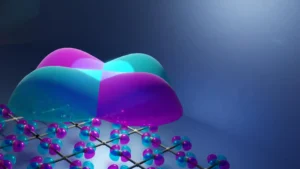
To understand the significance of the HZDR research, one must first grasp the chemical architecture that makes PFAS so resilient. These compounds consist of a chain of carbon atoms bonded to fluorine atoms. The carbon-fluorine (C-F) bond is widely recognized as the strongest single bond in organic chemistry. This stability is the reason PFAS have been utilized since the 1940s in a staggering array of industrial and consumer products, ranging from non-stick cookware and grease-resistant food packaging to fire-fighting foams and water-repellent textiles.
However, the same properties that make these chemicals useful in industry make them an environmental nightmare. They do not biodegrade in the sun, they do not break down in soil, and they are largely unaffected by the bacteria typically used in wastewater treatment plants. As these chemicals leach from landfills or are discharged from industrial sites, they enter the hydrological cycle. Recent environmental surveys have detected alarming concentrations of PFAS in major European waterways, including the Elbe River. This contamination poses a direct threat to aquatic ecosystems and, by extension, to human populations that rely on these sources for drinking water and agriculture.
Health studies, though still evolving, suggest that exposure to certain PFAS compounds is linked to a variety of adverse outcomes. These include developmental delays in children, decreased fertility in women, interference with the body’s natural hormones, increased cholesterol levels, and a heightened risk of certain cancers, such as kidney or testicular cancer. The sheer volume of different PFAS compounds—exceeding 10,000 variations—complicates the regulatory landscape, as traditional testing often focuses on only a handful of well-known variants like PFOS (perfluorooctane sulfonate) and PFOA (perfluorooctanoic acid).
Hydrodynamic Cavitation: Harnessing the Power of Collapsing Bubbles
The first of the two technologies under investigation at HZDR is hydrodynamic cavitation. This process, led by postdoctoral researcher Dr. Ysabel Huaccallo-Aguilar since its inception in 2022, utilizes the physical principles of fluid dynamics to create localized environments of extreme energy.
The mechanism involves forcing PFAS-contaminated water through a specific constriction within a pipe. As the water accelerates through this narrow passage, the local pressure drops below the vapor pressure of the liquid, causing the formation of millions of microscopic vapor bubbles. As the water exits the constriction and the pressure rises again, these bubbles collapse violently.
Dr. Sebastian Reinecke, head of the Department of Water and Environmental Technologies at HZDR, explains that the process is particularly effective for long-chain PFAS. These molecules are surface-active, meaning they naturally migrate to the interface between the water and the vapor bubble. When the bubble collapses, the energy released creates "hot spots" with local temperature spikes reaching several thousand degrees Celsius. This intense heat is sufficient to sever the carbon-fluorine bonds.
Beyond thermal degradation, cavitation also triggers the formation of highly reactive hydroxyl radicals. These short-lived molecules are aggressive oxidants that attack the intermediate products of the PFAS breakdown. In preliminary trials using tap water enriched with PFOS, the team achieved a 37 percent degradation rate. While this figure represents a significant breakthrough, the researchers are currently optimizing the system to reach a target of over 80 percent degradation and 50 percent mineralization of the fluorine content.
Cold Atmospheric Plasma: A High-Energy Molecular Assault
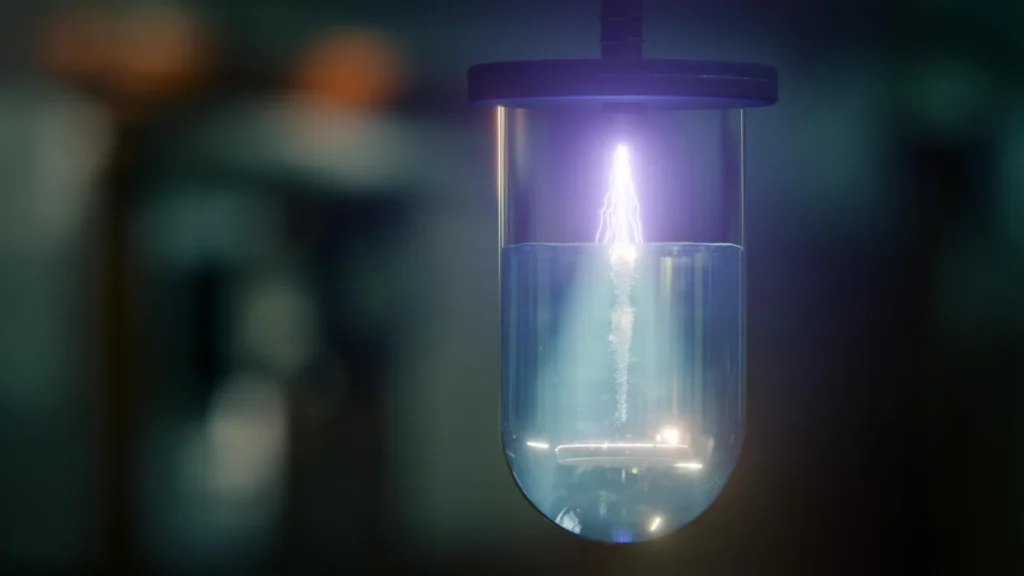
The second technology, developed by environmental engineer Dr. Amit Kumar, employs cold atmospheric plasma combined with gas dispersion. Plasma, often referred to as the fourth state of matter, consists of an ionized gas containing a high concentration of reactive species, including ions, electrons, and radicals.
In Dr. Kumar’s experimental setup, plasma is generated at the surface of the contaminated water while gas is simultaneously bubbled through the liquid. The PFAS molecules attach to the rising gas bubbles and are transported to the surface, where they are directly exposed to the plasma. This method has shown remarkable efficiency, almost completely degrading both long-chain and short-chain PFAS variants.
The primary advantage of the plasma approach is its speed; the reaction kinetics are significantly faster than those observed in hydrodynamic cavitation. In laboratory settings, the treatment released approximately 35 percent of the bound fluorine atoms, converting them into stable fluoride salts. However, the technology currently faces two major hurdles: energy consumption and the formation of unknown transformation products.
"While this method has significantly faster reaction kinetics than cavitation, it also consumes far more energy per volume unit," Dr. Reinecke noted. Furthermore, the high-energy environment of the plasma can create gaseous transformation products that have yet to be fully characterized. Ensuring that the destruction of PFAS does not inadvertently create new, volatile toxins is a primary focus of the team’s current safety evaluations.
A Chronology of Innovation and Scaling
The HZDR research program follows a strategic timeline designed to move these technologies from the laboratory bench to industrial application.
- 2022: Launch of the preliminary study led by Dr. Ysabel Huaccallo-Aguilar, focusing on the viability of hydrodynamic cavitation for PFAS degradation in tap water.
- 2023: Integration of cold atmospheric plasma experiments. Dr. Amit Kumar adapts his previous research on micropollutants to target the specific challenges of the carbon-fluorine bond.
- 2024 (Current Phase): Scaling up the plasma system. The team has successfully increased the reaction volume from 50 milliliters to five liters by utilizing multiple electrodes and advanced technical gas injectors.
- 2025 and Beyond: The researchers aim to develop a hybrid system that combines the two technologies. By integrating the reactive species of plasma with the mechanical energy of cavitation, the team hopes to create a highly efficient, lower-energy solution for industrial-scale water treatment.
Broader Impact and the National Water Strategy
The work being conducted at HZDR is not happening in a vacuum. It is a vital component of Germany’s "National Water Strategy," a comprehensive policy framework adopted by the Federal Cabinet to secure the country’s water supply in the face of climate change and chemical pollution. A key pillar of this strategy is the "polluter pays" principle and the systematic reduction of persistent chemicals at their source.
By targeting wastewater at industrial discharge points before it enters the public sewer system or natural water bodies, the HZDR technologies provide a proactive defense against environmental accumulation. If successful, these methods could be implemented at chemical manufacturing plants, textile factories, and airports (where PFAS-heavy firefighting foams are frequently used).
The financial and institutional support for this research underscores its importance. Funded by the Helmholtz Association’s Impulse and Networking Fund through the Clean Water Technology Lab (CLEWATEC), the projects "HyKaPro" and "Plasma4PFAS" represent a collaborative effort supported by both the European Union (via EFRE funds) and the Saxon Parliament.
Future Outlook: Toward a PFAS-Free Future
The scientific community generally agrees that the era of unregulated PFAS use is coming to an end. In the European Union, proposals for a near-total ban on the production and use of PFAS are currently under consideration. However, even if a total ban were implemented tomorrow, the legacy of "forever chemicals" already present in the environment would persist for centuries.
The technologies developed at HZDR represent the "missing link" in the circular economy of water. While the plasma method offers rapid destruction, the cavitation method offers potential energy efficiency. By merging these two paths, Dr. Reinecke and his team are moving toward a scalable, robust solution that can handle the massive volumes of water required by modern industry.
The ultimate success of these technologies will depend on their ability to be integrated into existing infrastructure without prohibitive costs. As the researchers continue to refine their degradation rates and investigate the safety of transformation products, the goal remains clear: to ensure that the water flowing into our rivers and oceans is free from the invisible, indestructible chains of the past century’s chemical legacy. The progress made in Dresden-Rossendorf suggests that while these chemicals may be designed to last forever, their tenure in our environment may finally have an expiration date.