ESA’s Industry Space Days (ISD) is set to convene at ESA-ESTEC in the Netherlands on September 16-17, 2026, bringing together a vibrant ecosystem of European startups with groundbreaking ideas for leveraging space. This pivotal event, now in its latest iteration, serves as a crucial platform for Europe’s burgeoning space industry to foster collaboration, exchange knowledge, and explore commercial opportunities within the rapidly evolving space sector. The focus this year will be on the innovative contributions of startups, many of whom are supported by ESA’s extensive network of Business Incubation Centres (BICs).
A Hub for Innovation and Collaboration
The Industry Space Days event is designed to be a dynamic marketplace of ideas and capabilities. Over its two-day duration, attendees will engage in a series of pre-planned business meetings, absorb insights from presentations by ESA directors and industry leaders, and participate in forums dedicated to sharing innovative concepts and fostering collaborative ventures for new commercial applications of space. This initiative underscores ESA’s commitment to nurturing the growth of its member states’ space industries, particularly small and medium-sized enterprises (SMEs) and startups, which are increasingly driving innovation in both upstream (spacecraft, launch) and downstream (satellite data applications) markets.
Jens Kauffmann, Head of ESA’s SME Section, highlighted the significance of the event for emerging companies: "At Industry Space Days, there will be thousands of pre-planned business meetings, presentations from ESA directors and industry leaders, and forums to share ideas and collaborate on new commercial uses of space. This is an opportunity for startups to introduce themselves to other industry players of all sizes for potential collaboration."

The ESA BIC Village: A Showcase for Emerging Talent
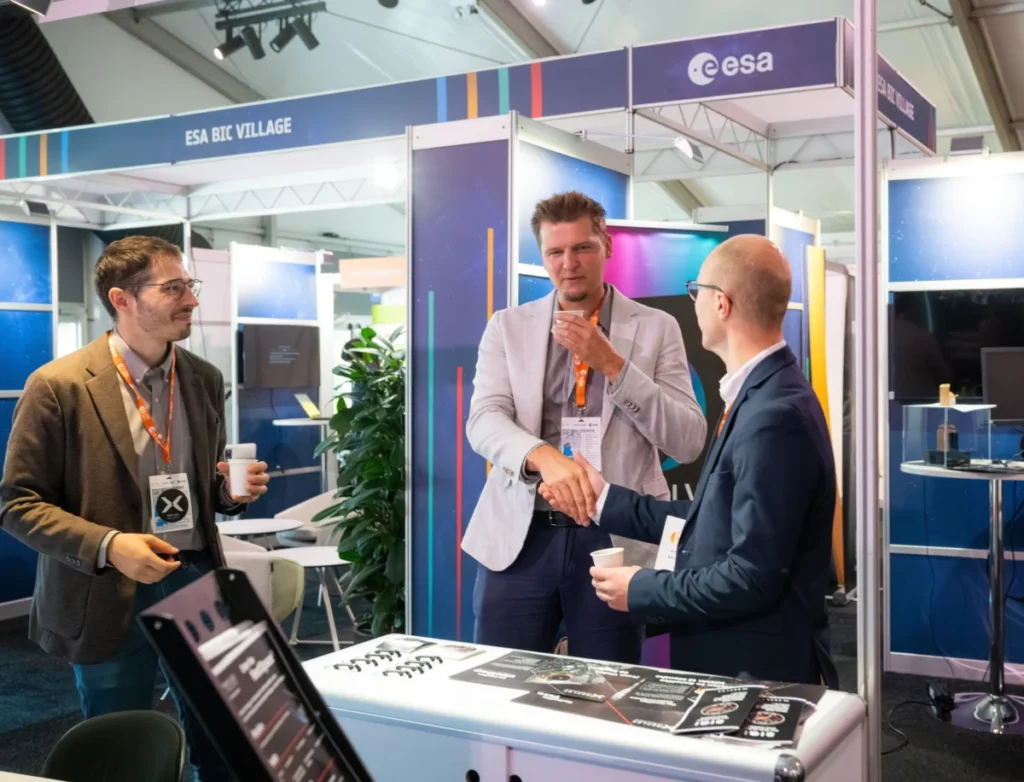
A central feature of ISD 2026 will be the "ESA BIC Village," a dedicated exhibition area within the main hall. Here, 32 selected startups, each benefiting from the business support provided by ESA’s network of 40 Business Incubation Centres (BICs) spread across 23 European Participating States, will have the opportunity to present their innovations. These BICs are instrumental in providing tailored business advice, technical support, and access to funding for over 250 new space-based startups annually, cultivating a fertile ground for the next generation of space enterprises.
Each startup in the ESA BIC Village will share a booth with another company for a day, maximizing their exposure to potential customers, investors, and strategic business partners. This collaborative exhibition format encourages cross-pollination of ideas and can lead to unexpected synergies. The startups exhibiting represent a diverse range of cutting-edge technologies and services, spanning critical areas of the space value chain.
Featured Innovations from the ESA BIC Village
This year’s Industry Space Days will prominently feature a selection of startups poised to make significant contributions to the space sector. Their innovations address critical challenges and unlock new possibilities, from advanced manufacturing and materials science to intelligent navigation and vital infrastructure monitoring.

Alloy Additive: Revolutionizing Metal Part Manufacturing
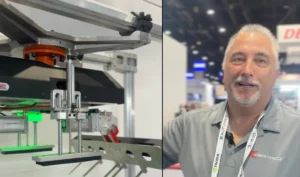
German startup Alloy Additive is set to impress attendees with its advanced TIG-Wire Arc Additive Manufacturing (WAAM) technology. This innovative approach slashes lead times for custom titanium, nickel, and stainless-steel parts from months to mere days. Their high-performance components are ideal for launcher sub-assemblies, large-scale structural metal parts, and lightweight pressure vessels specifically optimized for space missions.
Mehmet Çetinkaya, CEO and Founder of Alloy Additive, expressed his enthusiasm for the event: "Joining an event like this brings us directly to the centre of the European space business ecosystem. At the ISD, we hope to connect with prime integrators looking to drastically reduce lead times for large-scale metal components, while demonstrating how our 3D-printing technology makes space hardware manufacturing faster, cleaner, and more cost-effective." Alloy Additive is actively seeking partnerships with launch vehicle manufacturers, satellite and spacecraft producers, space-system integrators, propulsion companies, and Tier-1 aerospace suppliers who require faster, more adaptable solutions for their large-scale, high-performance metal component needs.
CompPair Technologies: Pioneering Self-Repairing Composites
Hailing from Switzerland, CompPair Technologies is showcasing its revolutionary composite materials equipped with ultra-fast self-repair capabilities through its proprietary HealTech™ technology. These materials hold immense promise for space applications, offering the ability to repair matrix microcracks via a simple thermal activation process. This innovation directly contributes to extending component lifespan and significantly enhancing reliability in the harsh environment of space.

Amaël Cohades, CEO of CompPair Technologies, emphasized the strategic importance of ISD: "Industry Space Days is a key event for connecting with the European space community and strengthening collaborations across the sector." He elaborated on their vision: "We are developing advanced healable composite technologies that will soon make repairable spacecraft structures possible, improving reliability, durability and sustainability for future space missions. Our projects with ESA, Genesis and First!, are helping to enable a more sustainable and competitive space transportation ecosystem that supports Europe’s vision of reusable, low-impact space infrastructure."
Marine Weather Intelligence (MWI): Enhancing Maritime Safety with AI
French deeptech startup Marine Weather Intelligence (MWI) leverages artificial intelligence to optimize maritime routings, refine weather forecasts, and bolster safety at sea. Their sophisticated solutions cater to a wide range of maritime professionals, facilitating smarter and safer navigation while actively contributing to reducing the carbon footprint of marine activities. MWI will be presenting its "proximity alert system," a key innovation designed to proactively anticipate hazardous weather phenomena, a critical capability in an era of increasingly unpredictable climate patterns.
Basile Rochut, CTO and Co-founder at Marine Weather Intelligence, shared his objectives for ISD: "At ISD we hope to explore data partnerships with ESA and connect with potential clients and fellow ESA BIC startups, as well as investors interested in space, deeptech, artificial intelligence and maritime topics."
Nautilus: Enabling Autonomous Satellites

Italian startup Nautilus is at the forefront of developing autonomous navigation and guidance technology for satellites. Their offerings include the EON flight unit, an onboard system for autonomous navigation and collision avoidance, which interfaces seamlessly with NEMO, their highly automated, ground-based flight dynamics software. This integrated solution supports a wide spectrum of missions, from low Earth orbit to deep space, and is designed to streamline the management of satellite fleets.
Mattia Pugliatti, Head of On-Board Systems at Nautilus, noted their return to ISD after a positive experience in 2024: "That first experience helped us understand the event’s format and connect with key players in the European space ecosystem. This year we’re returning with a more targeted plan for partnerships and visibility." Nautilus is particularly interested in connecting with satellite integrators, potential customers for EON and NEMO, and early adopters keen on integrating autonomous navigation into their daily operations.
ARKai: Satellite-Powered Dam Safety Solutions
ARKai, a startup based in Latvia, is pioneering the use of satellite data for enhanced dam safety. By combining satellite-derived ground deformation data (InSAR) with existing in-situ sensors and operational records, ARKai empowers dam and hydropower operators to identify potential risks at an earlier stage. They are currently developing a comprehensive dam-monitoring platform that integrates multiple data sources, enabling operators to detect movement, differentiate between normal seasonal variations and hazardous changes, and generate compliance-ready risk intelligence.
Alberto Manuel García Navarro, CTO and co-founder of ARKai, sees significant potential beyond the initial focus: "Dam owners and operators have expressed significant interest in our technology which is transferable to railways, mining and other critical infrastructure. At ISD, we hope to meet ESA technology and research partners, especially dam operators interested in pilot projects in Europe and Asia."

The Broader Context: Europe’s Strategic Space Ambitions
The Industry Space Days event is more than just a trade fair; it is a strategic initiative by ESA to bolster the competitiveness and innovation capacity of the European space sector. With the global space economy projected for continued substantial growth, estimated to reach over $1 trillion by 2040 according to various industry analyses, fostering a dynamic startup ecosystem is paramount. ESA’s investment in supporting these nascent companies through its BICs and flagship events like ISD is a direct reflection of its commitment to securing Europe’s position as a leading global player in space exploration and utilization.
The rise of "New Space" – characterized by private sector investment, rapid technological advancements, and innovative business models – has democratized access to space and opened up new avenues for commercialization. Startups are at the vanguard of this transformation, developing solutions that range from advanced propulsion systems and miniaturized satellites to sophisticated data analytics and space-based services. Events like ISD provide these agile companies with the crucial connections and visibility needed to scale their operations and contribute to the wider European space economy.
Looking Ahead: The Impact of ISD 2026
The upcoming Industry Space Days in September 2026 is poised to be a critical juncture for the European space industry. The insights gained, partnerships forged, and innovations showcased will undoubtedly shape the trajectory of space-based applications and technologies in the coming years. By bringing together established industry giants with the disruptive energy of startups, ESA continues to foster an environment where ambitious visions for space can be transformed into tangible realities, contributing to economic growth, scientific advancement, and societal benefit.

For those interested in participating, further information and registration details for Industry Space Days 2026 are available on the official Industry Space Days website. The event promises to be an indispensable gathering for anyone involved in the future of European space endeavors.