The European Space Agency (ESA) is poised to offer a front-row seat to a rare and breathtaking celestial event: a total solar eclipse gracing the skies of Europe on August 12, 2026. For those unable to witness the phenomenon firsthand, the ESA will commence a comprehensive live broadcast at 1:30 p.m. EDT (19:30 CEST), allowing a worldwide audience to experience the awe-inspiring spectacle from the comfort of their homes. This broadcast promises not only a visual feast but also an educational journey into the science and wonder of solar eclipses.
Understanding the Celestial Dance: What is a Total Solar Eclipse?
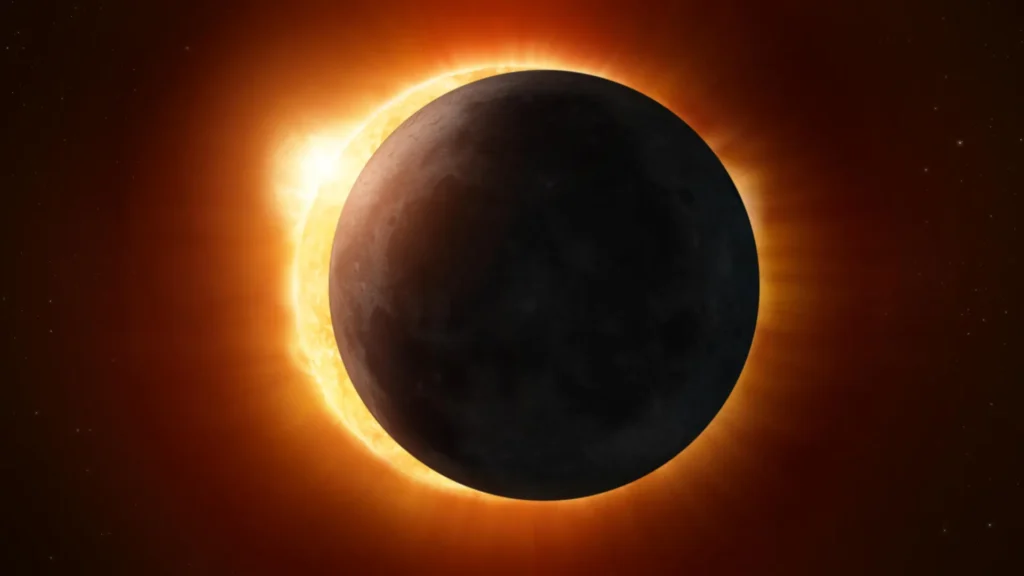
A solar eclipse is a profound astronomical event that occurs when the Moon, in its orbit around the Earth, precisely aligns itself between our planet and the Sun. This alignment casts a shadow upon a specific region of Earth, plunging it into a temporary and localized darkness. During a total solar eclipse, the Moon completely obscures the Sun’s brilliant photosphere, the luminous surface we typically see.
This obscuration reveals the Sun’s ethereal outer atmosphere, known as the corona. The corona, normally invisible due to the overwhelming glare of the Sun, becomes a majestic halo of pearly white light, stretching outward in wispy tendrils. This dramatic unveiling can transform the daytime sky, making it appear as if twilight has descended prematurely. Amidst this ethereal glow, stars and planets, typically hidden by daylight, may become visible, adding to the surreal atmosphere. Beyond the visual spectacle, a total solar eclipse can trigger noticeable environmental changes. Temperatures can plummet significantly, and winds may pick up, further enhancing the sense of an otherworldly shift. For many observers, the most enchanting effect is on the natural world; birds have been known to cease their songs and roost as if night has fallen, and insects may exhibit similar nocturnal behaviors, responding to the sudden and unexpected dimming of the sky.
The Path of Totality: A Narrow Corridor of Darkness
On August 12, 2026, the celestial alignment will create a path of totality – the narrow band across Earth’s surface where the Sun will be completely hidden by the Moon. This select corridor will traverse across Greenland, Iceland, a small northeastern portion of Portugal, and then sweep across mainland Spain. These locations will experience the full, unadulterated glory of totality, a phenomenon that lasts only a few precious minutes.
For the vast majority of Europe, and indeed much of the world, the eclipse will be experienced as a partial solar eclipse. In these areas, the Moon will only partially obscure the Sun, creating the visual effect of the Moon taking a significant "bite" out of the solar disk. While this will not result in complete darkness, it will cause a noticeable dimming of daylight, a subtle yet profound alteration of the familiar sunlit world. The degree of dimming will vary depending on the observer’s proximity to the path of totality, with regions closer to the path experiencing a more significant reduction in light.
ESA’s Grandstand View: A Live Broadcast from Spain
Recognizing the profound scientific and public interest in this astronomical event, the ESA has meticulously planned a comprehensive live broadcast originating from the Observatorio Astrofísico de Javalambre in Teruel, Spain. Spain’s strategic location along the path of totality, coupled with its generally favorable weather conditions, makes it an ideal vantage point for observing and broadcasting the eclipse as it progresses from west to east across the country.
The ESA’s broadcast, accessible via ESA Web TV and the agency’s official YouTube channel, is scheduled to commence at 1:30 p.m. EDT (19:30 CEST) on August 12, 2026. This timing ensures that viewers across various time zones can tune in to witness the event. The broadcast promises to be an engaging and informative experience, expertly hosted by the acclaimed space scientist and science communicator, Dame Dr. Maggie Aderin. She will be joined by a distinguished panel of experts, including ESA’s Director of Science, Professor Carole Mundell, and a lineup of ESA scientists: Andy To, Miho Janvier, and Martin Hewitson. The director of the Javalambre Observatory, Javier Cenarro, will also contribute his insights.
The program will feature live interviews, expert explanations, and striking imagery designed to illuminate various facets of eclipse science. Discussions will delve into the intricate nature of the Sun and its corona, historical eclipses that have revolutionized our understanding of fundamental physics, such as Albert Einstein’s theory of general relativity, and ESA’s cutting-edge work in simulating solar eclipses in space through dedicated missions and experiments. This multi-faceted approach aims to cater to both seasoned astronomy enthusiasts and curious newcomers, making the complex science of eclipses accessible and captivating.
The Climax: 81 Seconds of Totality at Javalambre
The highlight of the eclipse, the moment of totality, will occur at approximately 2:31 p.m. EDT (11:31 a.m. PDT). At the Observatorio Astrofísico de Javalambre, this brief but profound period will last for precisely 1 minute and 21 seconds. During this fleeting interval, the Moon will completely eclipse the Sun, casting the observatory and its surroundings into an awe-inspiring, momentary darkness.
The broadcast coverage will be dynamic and multifaceted, incorporating real-time telescope views that will provide an up-close perspective of the lunar disk sliding across the Sun. Drone footage will offer a broader, contextual view of the unfolding spectacle against the Spanish landscape. The reactions of Dame Dr. Aderin and Professor Mundell as they witness the totality will undoubtedly add an emotional and human element to the broadcast, capturing the shared wonder of this extraordinary natural phenomenon. The broadcast is anticipated to conclude around 2:45 p.m. EDT (11:45 a.m. PDT), leaving viewers with lasting impressions and a deeper appreciation for the cosmos.
Javalambre: A Premier Site for Celestial Observation
The Observatorio Astrofísico de Javalambre is not merely a convenient location; it is a world-class astronomical facility strategically positioned directly within the path of totality. Its primary mission involves conducting wide-sky astronomical surveys using its two powerful professional telescopes. These surveys are instrumental in advancing our understanding of distant galaxies, the enigmatic nature of dark energy, and the grand architecture of the universe on its largest scales.
Beyond its scientific prowess, Javalambre is exceptionally well-suited for eclipse viewing. The region is characterized by a low incidence of cloud cover, minimal light pollution that could detract from celestial observations, and a remarkably clear view towards the western horizon. This last feature is particularly advantageous for the August 12th eclipse, as the Sun will be descending towards sunset as the Moon makes its transit. This alignment promises a particularly dramatic and photogenic backdrop for the totality.
To further enhance the eclipse viewing experience, several smaller, specialized telescopes will be deployed at the observatory specifically for the event. These instruments will provide continuous, high-resolution live feeds, meticulously capturing the gradual progression of the Moon across the Sun’s face and documenting each distinct phase of the eclipse. During the broadcast, Javier Cenarro, the observatory’s director, will offer insights into Javalambre’s unique capabilities and its crucial role in supporting future ESA space science missions, underscoring the observatory’s long-term significance in astronomical research.
Redundancy and Reach: Multiple Live Feeds for Uninterrupted Coverage
To ensure the highest probability of capturing clear, high-quality views of the eclipse, even in the face of unpredictable atmospheric conditions, ESA will leverage multiple live feeds. These supplementary feeds will originate from additional locations situated within the path of totality, providing a robust and redundant observational network.
One such feed will emanate from ESA’s public event being organized in León, Spain, a region that will also experience totality. A second critical feed will originate from Frómista, located in the province of Palencia, Spain. At this site, collaborator Alejandro Sánchez de Miguel, affiliated with the Institute of Astrophysics of Andalusia, the Complutense University of Madrid, and the Stars4All Foundation, will conduct independent eclipse observations. The strategic deployment of these multiple feeds significantly enhances the likelihood of uninterrupted and visually stunning coverage of this rare celestial event, ensuring that viewers worldwide can share in the wonder of the August 12, 2026, total solar eclipse. This multi-pronged approach underscores ESA’s commitment to making significant astronomical events accessible and educational for a global audience.