Researchers at the forefront of theoretical and experimental physics, spearheaded by the University of Warwick, have unveiled a groundbreaking unified methodology for identifying "spacetime fluctuations." These minute, random distortions in the very fabric of spacetime represent a critical theoretical link in the ongoing endeavor to reconcile quantum physics with gravity, a challenge that has vexed physicists for nearly a century. This novel approach promises to translate abstract theoretical predictions into concrete, measurable signals, thereby accelerating the quest for experimental evidence of quantum gravity.
The Elusive Nature of Spacetime Fluctuations: Bridging the Quantum-Gravity Divide
The concept of spacetime fluctuations, often referred to as "spacetime foam," was first hypothesized by the visionary physicist John Wheeler in the 1950s and 60s. Wheeler posited that at infinitesimally small scales – specifically, the Planck length (approximately 10^-35 meters) and Planck time (approximately 10^-43 seconds) – the smooth, continuous manifold of spacetime described by Einstein’s theory of general relativity would give way to a tumultuous, frothing quantum realm. In this chaotic domain, spacetime would constantly warp and change topology, akin to the unpredictable bubbling of a quantum foam. These minute variations are considered a natural consequence of applying quantum mechanics to gravity, suggesting that spacetime itself is not merely a passive backdrop but an active, quantized entity.
The reconciliation of quantum mechanics, which elegantly describes the universe at subatomic scales, and general relativity, which governs gravity and the large-scale structure of the cosmos, remains one of the most significant unsolved problems in theoretical physics. A unified theory of quantum gravity is essential for understanding extreme phenomena such as the Big Bang, the interiors of black holes, and the very early universe. Various leading quantum gravity theories – including string theory, loop quantum gravity, and causal set theory, among others – predict the existence of these spacetime fluctuations. However, a major impediment to experimental verification has been the lack of a coherent, universally applicable framework. Each theory often predicts distinct types of fluctuations, characterized by different amplitudes, correlation lengths, and frequency spectra. This theoretical diversity has left experimental physicists in a challenging position, akin to searching for a needle in a haystack without knowing what the needle looks like or where to begin.
A Unified Framework for Experimental Detection
The new research, recently published in the prestigious journal Nature Communications, directly addresses this critical experimental bottleneck. The Warwick-led team has developed a unified framework that systematically groups spacetime fluctuations into three primary categories. This categorization is based on their fundamental behavior and characteristics across both space and time, offering a structured approach to a previously amorphous problem. For each of these categories, the researchers have meticulously identified clear, distinctive, and crucially, measurable patterns.
These patterns are specifically designed to be detectable using highly sensitive laser interferometers. These instruments, renowned for their unparalleled precision in measuring minute changes in distance, range from colossal observatories like the 4-kilometer-long Laser Interferometer Gravitational-Wave Observatory (LIGO) to more compact, advanced experimental setups. Notable among these smaller-scale projects are QUEST (Quantum Enhanced Spacetime Telescope), under development at Cardiff University in the UK, and GQuEST (Gravitational Quantum Experiment for Spacetime), being pioneered at Caltech in the USA. The framework provides a crucial Rosetta Stone, translating the abstract language of theoretical physics into the tangible signals that experimentalists can actively search for.
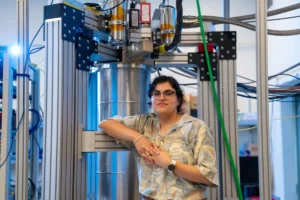
Dr. Sharmila Balamurugan, Assistant Professor at the University of Warwick and the study’s first author, articulated the significance of this breakthrough: "Different models of gravity predict very different underlying trends in the random spacetime fluctuations, and that has left experimentalists without a clear target. Our work provides the first unified guide that translates these abstract, theoretical predictions into concrete, measurable signals." Dr. Balamurugan emphasized the immediate impact of this development: "It means we can now test a whole class of quantum-gravity predictions using existing interferometers, rather than waiting for entirely new technologies. This is an important step towards bringing some of the most fundamental questions in physics firmly into the realm of experiment." Her statement underscores the practical and immediate utility of the framework, moving the field from purely theoretical speculation to empirical investigation.
Historical Context: From Wheeler’s Foam to Modern Interferometry
The journey to experimentally probe spacetime fluctuations began conceptually decades ago with John Wheeler’s pioneering work. His idea of spacetime foam emerged from the logical consequence of applying quantum principles to the gravitational field. Just as quantum mechanics describes particles as waves and fields as quantized excitations, it suggests that spacetime itself must be quantized at the Planck scale, leading to inherent uncertainties and fluctuations in its geometry. For many years, this concept remained firmly in the realm of thought experiments and theoretical musings, far beyond any conceivable experimental reach.
The advent and remarkable success of laser interferometry have fundamentally shifted this landscape. Originally conceived in the late 20th century, instruments like LIGO were designed to detect gravitational waves – ripples in spacetime predicted by Einstein’s general relativity, generated by cataclysmic astrophysical events like colliding black holes or neutron stars. LIGO’s historic first detection of gravitational waves in 2015, a century after Einstein’s prediction, demonstrated the extraordinary sensitivity of these instruments. It showed that they could detect changes in arm length smaller than one ten-thousandth the diameter of a proton, opening an entirely new window into the universe.
While gravitational waves represent macroscopic distortions of spacetime, the challenge of detecting quantum spacetime fluctuations is orders of magnitude greater, requiring even finer precision and a different approach to signal analysis. The theoretical predictions for these quantum fluctuations often fall within frequency ranges and amplitude scales that are still at the very edge, or even beyond, the current capabilities of even the most advanced interferometers. This is precisely where the Warwick framework provides its critical value: by defining specific, categorized signatures, it offers a more targeted and efficient search strategy, allowing experimentalists to optimize their instruments and data analysis for specific types of signals.
The Power of Interferometry: Tools for the Unseen
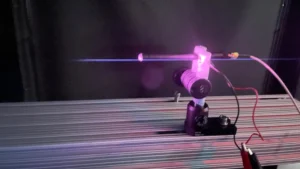
Laser interferometers operate on the principle of interference, where laser beams are split, sent down long arms, reflected, and then recombined. Any minute change in the length of these arms, caused by a passing spacetime distortion, alters the phase of the laser light, resulting in a detectable interference pattern. LIGO, with its L-shaped detectors in Hanford, Washington, and Livingston, Louisiana, each with arms 4 kilometers long, exemplifies the scale required for such measurements. Its success in detecting gravitational waves has paved the way for even more ambitious endeavors.
The development of projects like QUEST and GQuEST signifies the ongoing evolution of this technology. These next-generation interferometers, while potentially smaller in scale than LIGO, are designed with enhanced sensitivity and noise reduction techniques, specifically tailored to probe the quantum realm of spacetime. QUEST, led by Cardiff University, is exploring novel quantum measurement techniques to push the boundaries of sensitivity. Similarly, GQuEST at Caltech is focused on developing and implementing advanced quantum technologies to detect the faint whispers of quantum gravity. The unified framework’s ability to provide concrete targets for these diverse experimental setups is paramount. It allows researchers to optimize their detector designs, filtering algorithms, and data analysis pipelines for the most promising signals, maximizing the chances of a discovery.
Expert Insights and Scientific Endorsement
Dr. Sander Vermeulen, a co-author of the study from Caltech, underscored the unique capabilities of interferometers in this quest: "Interferometers can measure spacetime with extraordinary precision. However, to measure spacetime fluctuations with an interferometer, we need to know where – i.e., at what frequency – to look, and what the signal will look like. With our framework, we can now predict this for a wide range of theories. Our results show that interferometers are powerful and versatile tools in the quest for quantum gravity." His comments highlight the critical gap the new framework fills, transforming a broad, undirected search into a focused, informed investigation.
The broader scientific community, long accustomed to the theoretical abstractness of quantum gravity, is likely to view this development with significant optimism. The ability to translate theoretical predictions into experimentally verifiable signals is a hallmark of scientific progress. This work moves quantum gravity from a purely mathematical exercise into the realm of empirical science, where theories can be tested, refined, or even refuted by observation. This shift is not merely academic; it promises to invigorate research in both theoretical and experimental physics, fostering new collaborations and innovative approaches. The implications extend to the very funding landscape for fundamental physics, as more concrete experimental targets can attract greater investment and accelerate technological development.
Broader Implications and Future Horizons
A significant strength of this newly developed framework lies in its inherent flexibility. It is not tethered to any single, specific explanation for the origin of spacetime fluctuations. Instead, it requires only a mathematical description of the proposed fluctuations and detailed information about the measurement setup. This adaptability makes it an invaluable tool not only for the study of quantum gravity but also for investigating a broader spectrum of fundamental physical phenomena. For instance, it can be applied to analyze stochastic gravitational waves – a background hum of gravitational waves from countless unresolved astrophysical sources – or to search for potential signals from dark matter, which constitutes a significant portion of the universe’s mass but remains elusive. Furthermore, the framework can aid in better understanding and mitigating certain types of experimental noise, a constant challenge in high-precision measurements.
Professor Animesh Datta, Professor of Theoretical Physics at Warwick and a key contributor to the study, elaborated on this versatility: "With this methodology, we can now treat any proposed model of spacetime fluctuations in a consistent, comparable way. In the coming years, we can use this to design smarter tabletop interferometers to confirm or refute possible theories of quantum or semiclassical gravity and even test new ideas about dark matter and stochastic gravitational waves." This vision suggests a future where smaller, specialized interferometers could become powerful instruments for probing fundamental physics, offering a cost-effective and agile alternative or complement to larger, more complex observatories.
The implications of this research are profound. Should these predicted spacetime fluctuations be detected, it would provide the first empirical evidence for quantum gravity, ushering in a new era of physics. Such a discovery would not only validate theoretical models but also offer unprecedented insights into the fundamental nature of reality at its most basic level. Conversely, a sustained absence of these predicted signals, even with optimized search strategies, would compel physicists to re-evaluate current quantum gravity theories, potentially steering research in entirely new directions. This framework thus provides a clear path forward, whether to confirmation or critical re-evaluation, both of which are vital for scientific progress.
The work was made possible through crucial financial backing from the UK STFC "Quantum Technologies for Fundamental Physics" program (Grant Numbers ST/T006404/1, ST/W006308/1, and ST/Y004493/1), alongside support from the Leverhulme Trust under research grants ECF-2024-124 and RPG-2019-022. This funding highlights the strategic national and international investment in foundational physics research, recognizing the long-term societal benefits of unraveling the universe’s deepest mysteries. The collaborative effort across institutions and the interdisciplinary nature of the research – bridging theoretical predictions with experimental design – exemplify the modern approach to tackling humanity’s most challenging scientific questions. As the scientific community embarks on this renewed search, the Warwick framework stands as a beacon, guiding the way through the quantum foam towards a deeper understanding of spacetime itself.