A pioneering research team at Penn State University has developed a revolutionary new fabrication technique capable of producing multifunctional "smart synthetic skin." This adaptable material, inspired by the remarkable camouflage abilities of cephalopods, can be programmed to perform a diverse array of tasks, including hiding and revealing information on demand, enabling sophisticated adaptive camouflage, and providing essential support for emerging soft robotic systems. The breakthrough, led by Assistant Professor Hongtao Sun of Industrial and Manufacturing Engineering (IME), promises to redefine the capabilities of synthetic materials across numerous scientific and industrial sectors.
The research team’s innovative approach centers on the creation of a programmable smart skin engineered from hydrogel, a soft, water-rich polymer known for its biocompatibility and flexibility. Unlike conventional synthetic materials, which typically possess fixed behaviors and properties, this newly developed smart skin exhibits a tunable responsiveness, allowing its appearance, mechanical properties, surface texture, and even its ability to change shape to be precisely controlled when exposed to specific external triggers. These triggers can range from variations in temperature and the presence of certain solvents to the application of physical stress.
The findings of this groundbreaking research were formally published in the prestigious scientific journal Nature Communications. The significance of the study was further underscored by its selection for the journal’s highly regarded Editors’ Highlights section, a testament to its innovative nature and potential impact.
Mimicking Nature’s Masters of Disguise: The Octopus Inspiration
The conceptual genesis of this advanced synthetic material can be traced back to the extraordinary natural abilities of cephalopods, such as octopuses and squids. These marine invertebrates are renowned for their unparalleled capacity to rapidly alter the visual appearance and tactile texture of their skin. This dynamic control over their integument serves crucial evolutionary purposes, enabling them to seamlessly blend into their surroundings for predator evasion or prey capture, and to communicate complex signals to other members of their species.
"Cephalopods utilize an incredibly intricate system of muscles and nerves to achieve dynamic control over the appearance and texture of their skin," explained Hongtao Sun, the principal investigator of the project and a faculty member with affiliations in biomedical engineering, materials science and engineering, and the Materials Research Institute at Penn State. "Inspired by these remarkably adaptable soft organisms, we set out to develop a synthetic, soft material that could capture that same level of dynamic responsiveness."
Professor Sun characterized the fabrication process as "4D printing," a term that signifies a departure from traditional three-dimensional printing. In 4D printing, the printed objects are not static entities; instead, they possess the inherent ability to actively change and transform in response to their environmental conditions over time. This temporal dimension of change is what imbues the material with its "smart" capabilities.
Encoding Digital Instructions for Material Behavior
The key to achieving this remarkable adaptability lies in a sophisticated fabrication method known as halftone-encoded printing. This technique involves the conversion of complex image or texture data into a binary code of ones and zeros. This digital information is then directly embedded within the hydrogel material during the printing process. The principle is analogous to how halftone dots are employed in traditional printing, such as in newspapers and photographs, to create the illusion of continuous tones and intricate images.
By precisely encoding these digital patterns within the hydrogel matrix, the researchers can effectively program how specific regions of the smart skin will react to various external stimuli. The arrangement and density of the printed patterns dictate the localized response of the material. For instance, certain areas might be engineered to swell or shrink more significantly than others when exposed to temperature fluctuations, immersion in specific liquids, or the application of mechanical forces. Through meticulous design of these encoded patterns, the research team gains granular control over the material’s overall macroscopic behavior.
"In straightforward terms, we are essentially printing instructions directly into the material itself," Professor Sun elaborated. "These embedded instructions act as a latent command system, dictating precisely how the synthetic skin will react when presented with changes in its surrounding environment."
Unveiling and Concealing Information: A Digital Palette
One of the most compelling demonstrations of the smart skin’s capabilities showcased its ability to conceal and subsequently reveal visual information with remarkable clarity. Haoqing Yang, a doctoral candidate in IME and the lead author of the published paper, highlighted this specific functionality as a key indicator of the smart skin’s vast potential.
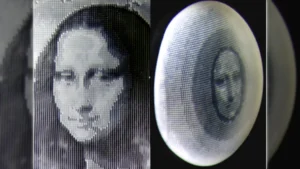
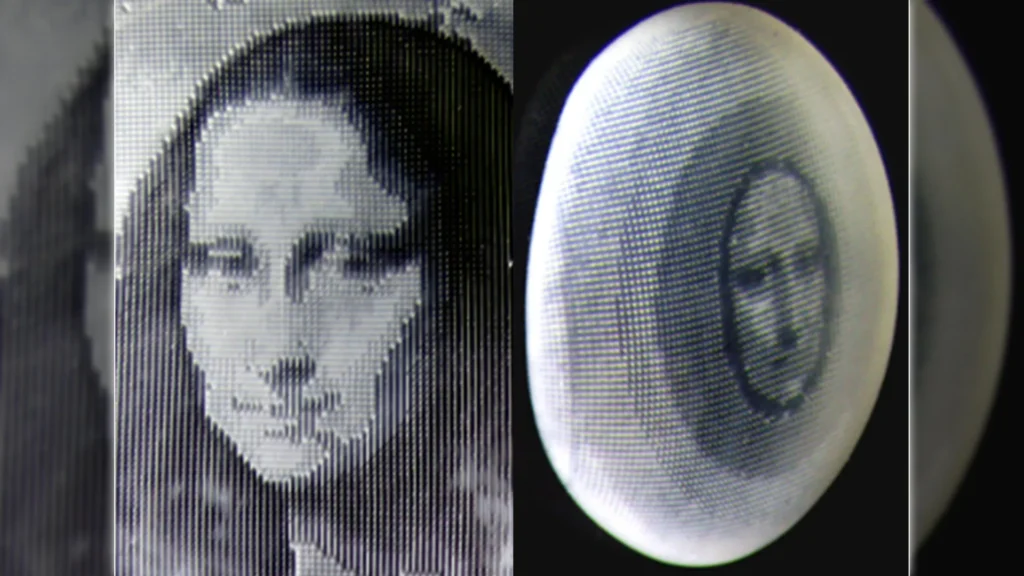
To illustrate this remarkable attribute, the research team meticulously encoded an image of Leonardo da Vinci’s iconic Mona Lisa into a thin film of the hydrogel. The experiment demonstrated that when this film was treated with ethanol, it became completely transparent, rendering the embedded image entirely invisible. The hidden Mona Lisa then reappeared, sharp and distinct, only after the film was immersed in ice water or subjected to gradual warming.
Yang emphasized that the choice of the Mona Lisa was purely illustrative; the underlying printing technique is versatile enough to encode virtually any image into the hydrogel material. "This dynamic capability has profound implications for applications such as adaptive camouflage, where a surface can seamlessly blend into its environment, or for advanced information encryption, where sensitive messages can be hidden and only revealed under precisely defined conditions," Yang stated.
Beyond visual revelation, the researchers also demonstrated an additional layer of security and functionality. They found that concealed patterns could be detected not only visually but also through mechanical interaction. By gently stretching the material and employing digital image correlation analysis to study its deformation patterns, they could discern the presence of hidden information. This dual-mode detection mechanism significantly enhances the potential for secure data storage and retrieval.
Seamless Shape-Shifting Without Complex Construction
The smart synthetic skin also exhibited extraordinary flexibility in its ability to change shape. Professor Sun noted that the material can readily transition from a simple, flat sheet into complex, bio-inspired three-dimensional forms, complete with intricate surface textures. A critical advantage of this transformation is that it does not necessitate the use of multiple layers or disparate materials, a common limitation in other shape-changing technologies.
Instead, the entire control over the changes in shape and texture is managed by the digitally printed halftone patterns embedded within a single, homogenous sheet of hydrogel. This elegant solution allows the material to precisely replicate the sophisticated effects observed in the dynamic skin of cephalopods.
Building upon this foundational capability, the team successfully demonstrated that multiple functions could be programmed to operate in concert. Through the careful design of the halftone patterns, they were able to encode the Mona Lisa image into flat films that subsequently transformed into three-dimensional structures. As these sheets curved to form dome-like shapes, the previously hidden image gradually materialized. This groundbreaking achievement underscored the material’s capacity to coordinate changes in both its physical form and its visual appearance within a single, unified material.
"Much like how cephalopods fluidly coordinate their body shape and skin patterning, our synthetic smart skin can simultaneously manage its visual appearance and its physical deformation, all within the confines of a single, soft material," Professor Sun remarked.
Expanding the Horizons of 4D-Printed Hydrogels
This latest research represents a significant advancement building upon the team’s prior work on 4D-printed smart hydrogels, which was also published in Nature Communications. The earlier study focused on integrating mechanical properties with programmable transitions from flat to three-dimensional configurations. In the current research, the team has further expanded this paradigm by employing halftone-encoded 4D printing to imbue a single hydrogel film with an even greater diversity of integrated functions.
Looking toward the future, the researchers’ primary objective is to develop a scalable and highly versatile platform. This platform will enable precise digital encoding of multiple, distinct functions within a single adaptive material, paving the way for a new generation of intelligent synthetic materials.
"This interdisciplinary research, situated at the nexus of advanced manufacturing, intelligent materials science, and mechanics, unlocks novel opportunities with far-reaching implications," Professor Sun concluded. "These include advancements in stimulus-responsive systems, biomimetic engineering, sophisticated encryption technologies, and the development of next-generation biomedical devices, among many other fields."
The study also benefited from the contributions of other Penn State researchers, including doctoral candidates Haotian Li and Juchen Zhang from IME, and Tengxiao Liu, a lecturer in biomedical engineering. Additionally, Professor H. Jerry Qi from the Georgia Institute of Technology’s mechanical engineering department provided valuable collaboration on this pioneering project. The research was supported by grants from the National Science Foundation (NSF) and the U.S. Department of Defense.