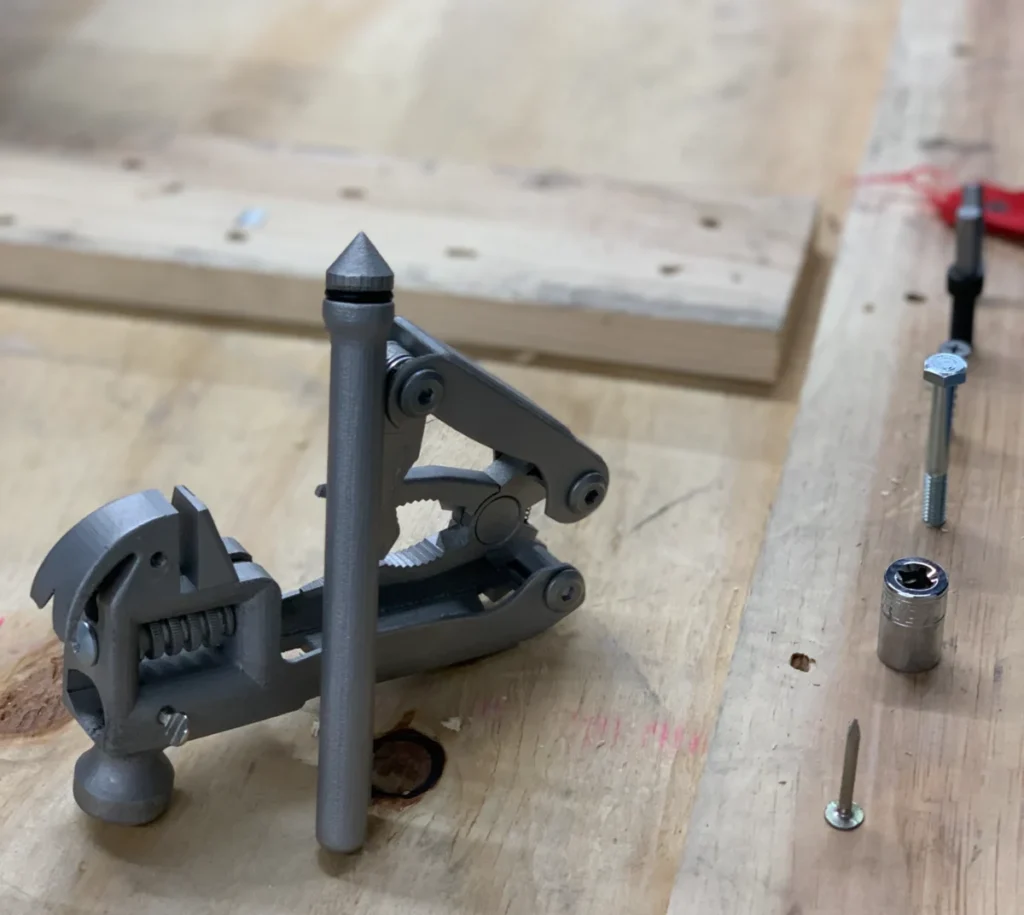
A team of ambitious students from the University of Texas at El Paso (UTEP) has achieved a significant victory, clinching first place at America Makes’ third annual AM in Steel competition with their ingeniously designed and 3D-printed stainless steel multi-tool. The achievement, spearheaded by UTEP’s W.M. Keck Center for 3D Innovation under the team name Borderland Steel, highlights the growing prowess of additive manufacturing in creating functional, everyday carry (EDC) items with complex geometries and optimized material usage.
The AM in Steel competition is a prestigious event that challenges university student teams to conceptualize, design, and engineer tangible, visibly 3D-printed metal multi-tools. These tools, commonly found in sectors ranging from demanding industrial environments to critical medical applications, serve as a benchmark for assessing students’ abilities in design for additive manufacturing (DfAM), material science, and post-processing techniques. The competition aims to foster innovation and provide a platform for emerging talent to showcase their understanding of advanced manufacturing technologies.
The journey for Borderland Steel began with a comprehensive design and prototyping phase. Initially, the team explored multiple design iterations using readily available PLA (polylactic acid) on in-house desktop 3D printers. This iterative process allowed them to quickly test different form factors and functional elements, laying the groundwork for the final metal prototype. The transition to metal additive manufacturing involved the selection of stainless steel 316L, a material renowned for its corrosion resistance and mechanical properties, making it suitable for robust, long-lasting tools.
A key aspect of Borderland Steel’s success lies in their sophisticated approach to design consolidation. The team initially conceived of 20 distinct parts for their multi-tool. However, through strategic application of DfAM principles, they managed to consolidate these into approximately five integrated components. This remarkable feat was achieved by combining features, standardizing interfaces for modularity, and ingeniously incorporating lattice structures. The use of lattice structures is particularly noteworthy, as it allows for significant material reduction while simultaneously maintaining the structural integrity and critical load paths required for a functional tool. This not only minimizes material waste but also contributes to a lighter, more efficient final product.
Following the initial design and consolidation, the team meticulously 3D-printed multiple iterations of their refined design. This phase was crucial for optimizing the tolerances and ensuring smooth, reliable movement between the integrated components. Achieving precise fit and function in a multi-tool, especially one with moving parts, requires a deep understanding of the nuances of the chosen additive manufacturing process and the material’s behavior during printing and subsequent treatments.
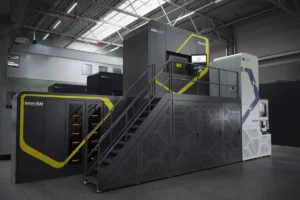
The selected manufacturing process for the final prototype was Laser Powder Bed Fusion (LPBF), also known as Selective Laser Melting (SLM). LPBF is a metal additive manufacturing technology that uses a laser to selectively fuse powdered material layer by layer. This process is well-suited for producing complex, high-precision metal parts that are difficult or impossible to create with traditional subtractive manufacturing methods. The team utilized an EOS M290 system, a widely recognized industrial-grade LPBF machine, to bring their design to life.
The post-processing stage was equally critical in achieving the desired functionality and finish for the multi-tool. After the printing process, the parts underwent electrical discharge machining (EDM) and sandblasting. EDM is a non-traditional machining process that uses electrical discharges to remove material, often employed for creating precise features and finishing hardened surfaces. Sandblasting, a form of abrasive blasting, is used to clean surfaces, remove scale, and impart a uniform texture. These post-processing steps are vital for ensuring that the moving parts of the multi-tool function smoothly and that the overall aesthetic and durability meet high standards.

The culmination of Borderland Steel’s efforts was their presentation at the AM in Steel competition, which was held in conjunction with RAPID + TCT 2026 in Boston, Massachusetts. This prominent industry event brings together leaders, innovators, and researchers in additive manufacturing, providing an ideal platform for student teams to showcase their advanced projects to a discerning audience and expert judges. The team’s winning design impressed the judges with its innovative approach to design consolidation, efficient material utilization, and functional robustness.
The Significance of the AM in Steel Competition
America Makes, the National Additive Manufacturing Innovation Institute, plays a pivotal role in advancing additive manufacturing technologies in the United States. The AM in Steel competition, now in its third year, is a testament to their commitment to nurturing future talent and pushing the boundaries of metal 3D printing. By focusing on functional multi-tools, the competition addresses a practical application of additive manufacturing that resonates with real-world industrial and consumer needs. Multi-tools, with their inherent complexity of integrated functions and moving parts, serve as an excellent testbed for evaluating the capabilities of additive manufacturing in producing robust and reliable mechanical devices. The competition’s emphasis on "visibly 3D printed" also encourages teams to explore aesthetic and design elements that showcase the unique possibilities of additive manufacturing.
Past iterations of the AM in Steel competition have also highlighted the ingenuity of student teams. For instance, the 2025 competition featured a multi-tool designed and engineered by students from the University of Louisville, which was explored in an episode of "The Cool Parts Show." This continuity underscores the enduring relevance and growing sophistication of the challenges presented in this competition. The fact that the winning design from 2025 was highlighted on "The Cool Parts Show," a platform known for showcasing exceptional additive manufacturing applications, further validates the caliber of work produced by student participants.
Technical Specifications of the Winning Multi-Tool
The technical details of Borderland Steel’s multi-tool provide insight into the advanced manufacturing techniques employed:
- Material: Stainless steel 316L was chosen for its excellent combination of strength, corrosion resistance, and biocompatibility, making it suitable for a wide range of applications. Its weldability and formability also contribute to its versatility in additive manufacturing.
- Design Software: Materialise Magics slicing software was instrumental in preparing the 3D models for printing. This software is a leading solution for preparing, supporting, and optimizing complex CAD data for additive manufacturing, ensuring accurate layer-by-layer fabrication.
- Process: Laser Powder Bed Fusion (LPBF) was the core additive manufacturing technology used. This process allows for the creation of intricate internal structures and complex geometries that would be impossible with traditional manufacturing.
- System: The EOS M290 printer provided the industrial-grade platform for executing the LPBF process. EOS is a globally recognized manufacturer of industrial 3D printing systems, known for their reliability and precision.
- Postprocessing: Electrical discharge machining (EDM) and sandblasting were employed to achieve the desired surface finish, dimensional accuracy, and functional movement of the multi-tool’s components. EDM is particularly effective for finishing hardened metal parts and creating precise features.
Broader Implications and Future Outlook
The success of Borderland Steel at the AM in Steel competition carries significant implications for the future of additive manufacturing, particularly in the realm of functional metal components. It demonstrates that university students are not only grasping the theoretical aspects of DfAM but are also capable of translating that knowledge into tangible, high-performing products. The ability to design and produce complex, multi-functional tools with optimized material usage points towards a future where additive manufacturing plays an increasingly central role in the production of customized, on-demand, and high-value metal parts across various industries.
The consolidation of multiple parts into fewer, integrated components through additive manufacturing offers substantial benefits. This can lead to reduced assembly time, fewer potential points of failure, and improved overall product reliability. Furthermore, the strategic use of lattice structures, as seen in Borderland Steel’s design, showcases a sophisticated understanding of how to leverage additive manufacturing’s unique capabilities for weight reduction and material efficiency – crucial considerations in fields like aerospace and automotive manufacturing where every gram counts.
The competition also serves as a vital talent pipeline for the additive manufacturing industry. By providing students with hands-on experience and a platform to showcase their skills, America Makes and UTEP are contributing to the development of a skilled workforce ready to tackle the challenges and opportunities of advanced manufacturing. The skills honed in competitions like AM in Steel – including CAD design, DfAM, material selection, process optimization, and post-processing – are highly sought after by companies investing in additive manufacturing technologies.
The ongoing advancements in metal additive manufacturing, coupled with the increasing accessibility of sophisticated design and printing tools, suggest that we will continue to see innovative applications emerge. Projects like Borderland Steel’s multi-tool are not just academic exercises; they are precursors to the next generation of manufactured goods, where complexity is embraced, and functionality is redefined through the power of 3D printing. The collaboration between academic institutions like UTEP and organizations like America Makes is crucial for driving this innovation forward, ensuring that the United States remains at the forefront of additive manufacturing technology and its applications. The insights gained from these student projects often inform industrial research and development, accelerating the adoption of new techniques and materials in commercial settings.