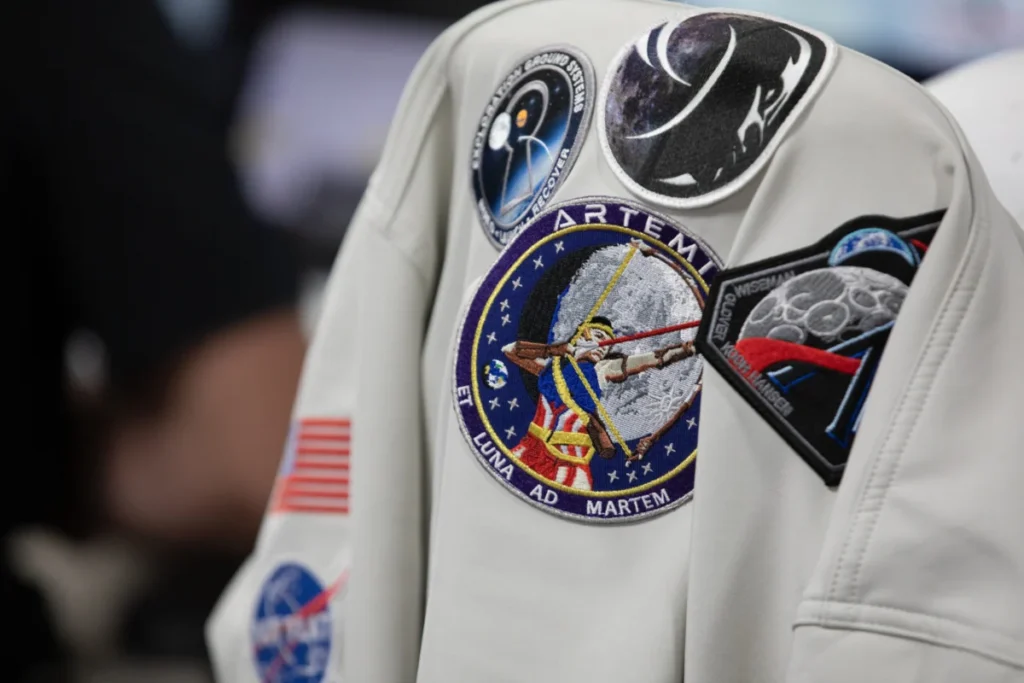
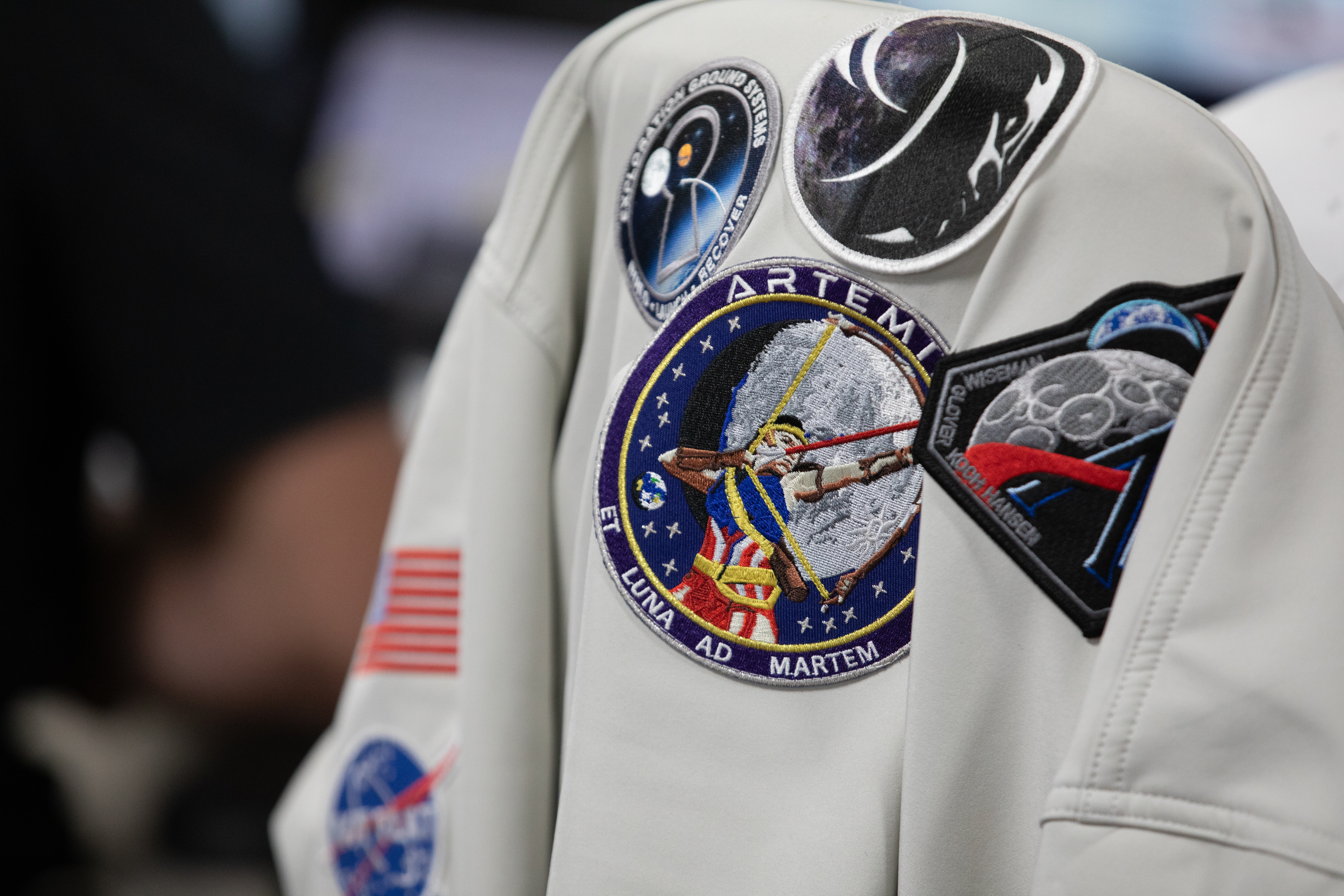
The Rocco A. Petrone Launch Control Center at NASA’s Kennedy Space Center in Florida recently played host to a pivotal moment in the ambitious Artemis program: a comprehensive terminal countdown simulation for the forthcoming Artemis III mission. Conducted on Thursday, August 6, 2026, by NASA’s Exploration Ground Systems team, this exercise meticulously replicated the final five hours leading up to a launch, culminating in a detailed simulation of the crucial terminal count—the intensely focused final ten minutes before liftoff. This simulation is a vital step in ensuring the flawless execution of Artemis III, a mission designed to achieve a series of critical objectives in low Earth orbit, serving as a crucial precursor to future lunar landings, commencing with Artemis IV. The image of a jacket adorned with Artemis I and II mission patches, alongside other NASA insignia, hanging on a chair within the historic launch control center, served as a tangible reminder of the program’s progression and the accumulating experience guiding this next phase of human space exploration.
A Legacy of Lunar Ambition: The Artemis Program’s Genesis
The Artemis program represents NASA’s renewed commitment to lunar exploration, aiming to establish a sustainable human presence on the Moon and ultimately pave the way for missions to Mars. Named after the Greek goddess of the hunt, twin sister to Apollo, the program embodies a continuation and evolution of the spirit of discovery that characterized the Apollo era. Unlike its predecessor, which focused on reaching the Moon, Artemis is designed to build a long-term infrastructure, including a lunar Gateway outpost in orbit and a surface habitat. This foundational work is crucial for enabling scientific research, resource utilization, and the development of technologies necessary for deep space travel.
The Artemis I mission, launched in November 2022, served as an uncrewed test flight of the Space Launch System (SLS) rocket and the Orion spacecraft, successfully completing a journey around the Moon and demonstrating the performance of these critical systems in the space environment. Artemis II, planned as a crewed mission, will take astronauts further into lunar space than ever before, testing Orion’s life support systems with humans aboard. Artemis III, the mission that underwent this recent simulation, is slated to be the first human landing on the Moon since the Apollo 17 mission in 1972, carrying the first woman and first person of color to the lunar surface.
The Significance of the Terminal Countdown Simulation
The terminal countdown simulation is far more than a routine exercise; it is a rigorous test of both human coordination and technological readiness. This simulation plunges the mission control teams into the high-pressure environment of the final hours before launch, demanding precise execution of pre-programmed sequences, communication protocols, and decision-making processes. The Exploration Ground Systems (EGS) team, responsible for the infrastructure and operations at Kennedy Space Center, plays a pivotal role in orchestrating these complex simulations.
During a terminal countdown, every second is accounted for. Systems are checked, re-checked, and verified. Fueling operations, final vehicle configurations, and the readiness of the crew are all under intense scrutiny. The simulation allows controllers to practice identifying and resolving anomalies that may arise during this critical phase, ensuring that contingency plans are robust and that the team can respond effectively to unexpected events. The inclusion of the terminal count—the final ten minutes—is particularly important, as it represents the period of highest intensity and the closest proximity to actual launch, where abort decisions could be made.
The objectives of Artemis III in low Earth orbit are multifaceted. They are designed to validate the capabilities of the Orion spacecraft and its integrated systems for extended duration missions, to test the performance of the lunar lander systems in preparation for descent and ascent, and to refine the communication and navigation procedures essential for lunar operations. These demonstrations are not merely for Artemis III itself but are foundational for the subsequent Artemis IV mission and beyond, which will utilize the lunar Gateway as a staging point for more complex lunar surface operations.
A Glimpse into the Launch Control Center: A Hub of Activity
The Rocco A. Petrone Launch Control Center, a National Historic Landmark, is steeped in the history of American spaceflight. It was from this very facility that the Apollo missions, including the historic Apollo 11 landing, were managed. The presence of the Artemis I and II mission patches on a jacket within its walls signifies the continuity of expertise and the iterative learning process that underpins NASA’s human spaceflight endeavors. The EGS team, drawing upon decades of experience and leveraging cutting-edge technology, operates within this environment to ensure the safe and successful launch of the most powerful rocket ever built, the Space Launch System.
The personnel involved in such simulations are highly trained professionals, including flight directors, launch controllers, engineers, and technicians. Their roles are clearly defined, and their ability to communicate effectively under pressure is paramount. The simulation tests not only their technical proficiency but also their teamwork and their capacity to make critical decisions with incomplete information, a common challenge in real-time space operations.
Supporting Data and Technological Advancements
The Artemis program relies on a suite of advanced technologies. The Space Launch System (SLS) rocket, the most powerful rocket ever developed, is designed to carry large payloads, including the Orion spacecraft and lunar landers, into deep space. Its development has involved significant advancements in propulsion, materials science, and structural engineering. The Orion spacecraft, designed for deep space human exploration, is equipped with state-of-the-art life support systems, navigation, and communication capabilities.
For Artemis III, the integration of the Human Landing System (HLS) is a critical component. NASA has contracted with private companies to develop these landers, a departure from the government-developed lunar modules of the Apollo era. This approach fosters innovation and competition within the commercial space sector. The successful testing and integration of these HLS elements are crucial for the mission’s success.
The simulations conducted by the EGS team also involve sophisticated modeling and simulation software that replicates various mission phases and potential failure scenarios. This allows for a comprehensive assessment of system performance and the identification of potential risks. Data gathered from previous missions, including Artemis I, are continuously analyzed to refine operational procedures and improve the reliability of all systems.
Chronology of Artemis Program Milestones
- November 16, 2022: Artemis I mission launches, an uncrewed test flight of SLS and Orion.
- December 11, 2022: Orion spacecraft splashes down in the Pacific Ocean, successfully completing the Artemis I mission.
- November 2023 (Projected): Artemis II mission, the first crewed flight of SLS and Orion, set to orbit the Moon.
- August 6, 2026: Terminal countdown simulation for Artemis III conducted at Kennedy Space Center.
- Late 2026/Early 2027 (Projected): Artemis III mission, aiming for the first human lunar landing since Apollo 17.
- Post-Artemis III: Subsequent Artemis missions, including Artemis IV, will focus on establishing a sustained lunar presence and utilizing the lunar Gateway.
Official Responses and Expert Analysis
While specific official statements regarding this particular simulation are not detailed in the provided text, the nature of such exercises within NASA implies a high level of engagement from leadership. NASA Administrator Bill Nelson and other senior officials consistently emphasize the importance of rigorous testing and preparation for the Artemis program. The successful completion of simulations like this terminal countdown would undoubtedly be met with expressions of confidence in the program’s progress and the dedication of the teams involved.
Experts in aerospace engineering and space policy view these simulations as essential checkpoints. Dr. Emily Carter, a leading aerospace analyst, commented, "The terminal countdown simulation is where theory meets practice in the most intense way. It’s about ironing out every last wrinkle before the ultimate test. The fact that NASA is investing this level of detail into Artemis III, especially after Artemis I’s success, speaks volumes about their commitment to a safe and methodical approach to returning humans to the Moon."
Broader Impact and Future Implications
The Artemis program, with Artemis III as a pivotal milestone, carries profound implications for scientific discovery, technological innovation, and international collaboration. A successful human landing on the Moon would not only reignite public fascination with space exploration but also provide unprecedented opportunities for scientific research. Studying lunar geology, searching for water ice, and understanding the Moon’s formation can offer insights into the early history of our solar system.
Furthermore, the technological advancements spurred by the Artemis program—from advanced propulsion and life support to robotics and materials science—have the potential for significant terrestrial applications, benefiting industries ranging from medicine to energy. The international partnerships fostered through the Artemis Accords, a set of principles guiding space exploration, are also crucial for ensuring peaceful and cooperative endeavors in space.
The successful execution of the Artemis III mission, underpinned by rigorous simulations like the recent terminal countdown, will be a testament to human ingenuity and perseverance. It will mark a significant step in humanity’s ongoing journey to explore the cosmos, extending our reach beyond Earth and deepening our understanding of our place in the universe. The legacy of this mission, much like the enduring spirit of the Apollo era, will undoubtedly inspire future generations of scientists, engineers, and explorers.