China has demonstrably accelerated its pursuit of reusable rocket technology, achieving two distinct and significant recovery milestones in just over a month. These breakthroughs, involving both state-backed and commercial entities, underscore a rapid advancement in the nation’s space capabilities, with implications that extend well beyond the commercial launch sector to potentially reshape geopolitical dynamics and military strategy. The successful controlled recovery of orbital-class rocket boosters represents a critical step towards significantly reducing the cost and increasing the frequency of access to space, a capability that has proven transformative for leading global space powers.
A Month of Milestones: LandSpace and CASC Lead the Way
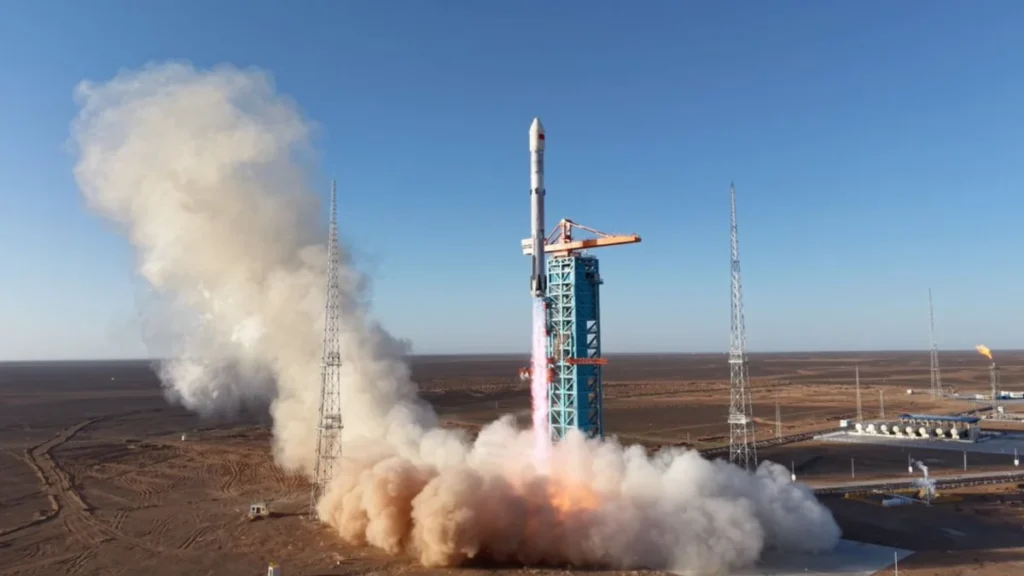
The most recent achievement occurred on August 19, when Chinese commercial launch company LandSpace successfully executed a vertical landing of the first stage of its Zhuque-3 rocket on solid ground following an orbital launch. This feat marked a pivotal moment for China’s burgeoning private space industry, demonstrating a capability essential for routine and cost-effective space access. The Zhuque-3, a methane-liquid oxygen rocket, performed a powered descent, utilizing its engines for deceleration and deploying landing legs for a precise touchdown, echoing the recovery methods pioneered by companies like SpaceX.
Preceding LandSpace’s achievement, in July, the state-owned China Aerospace Science and Technology Corporation (CASC) made its own landmark contribution to China’s reusable space ambitions. CASC successfully recovered a Long March 10B first stage using an innovative net-based system on an offshore platform. This demonstration, China’s first controlled recovery of an orbital-class rocket booster, showcased an alternative approach to reusability. Instead of a vertical landing, the booster was guided into a large net, which Chinese officials suggest could offer advantages in terms of reduced weight penalty (by eliminating the need for heavy landing legs) and a wider capture margin.
These two distinct recovery methods, demonstrated within such a short timeframe, highlight China’s comprehensive and multi-faceted approach to mastering reusable launch technology. It signals a concerted national effort, leveraging both established state expertise and the agility of commercial innovation, to rapidly close the gap with global leaders in space launch capabilities.
The Global Pursuit of Reusability: Context and Comparison
The fundamental advantage of rocket reusability is straightforward: by recovering and reusing the most expensive components of a launch vehicle, the cost of reaching orbit can be drastically reduced, while launch frequency can be dramatically increased. This paradigm shift has already revolutionized the U.S. space ecosystem, primarily through SpaceX, whose Falcon 9 rocket has demonstrated unprecedented reliability and reusability, driving down launch costs and enabling a rapid expansion of satellite constellations and other space infrastructure.
Globally, the race for reusable launch systems has intensified over the past decade. While SpaceX remains the undisputed leader, with hundreds of successful booster landings and re-flights, other nations and private companies are actively developing their own solutions. Blue Origin, for instance, is developing its New Glenn rocket with a similar vertical landing capability. The European Space Agency (ESA) and various European commercial entities are also exploring reusable technologies, albeit at an earlier stage.
China’s recent successes place it firmly among the frontrunners in developing these critical capabilities. While the LandSpace Zhuque-3’s vertical landing is conceptually similar to SpaceX’s Falcon 9, CASC’s net-based recovery presents an interesting divergence. Proponents of the net capture method argue that it can reduce the structural mass required for vertical landing systems, potentially allowing for greater payload capacity or reducing overall vehicle mass. However, it introduces different operational complexities, such as the need for specialized recovery vessels and precise guidance into a moving target. Both methods, however, aim at the same ultimate goal: making space access more affordable and accessible.
China’s Broader Space Ambitions and Strategic Imperatives
These reusable rocket breakthroughs are not isolated technical achievements but rather integral components of China’s ambitious and rapidly expanding space program. Beijing has outlined a comprehensive strategy for space dominance, encompassing a wide array of civilian, scientific, and military objectives.
On the civilian front, China has steadily advanced its Tiangong space station program, with multiple modules launched and permanent human presence established. Its lunar exploration program, Chang’e, has achieved multiple successful robotic landings and sample returns, with plans for a crewed lunar mission in the coming decade. The Tianwen-1 mission successfully landed a rover on Mars, showcasing deep-space exploration capabilities. Furthermore, China has developed its indigenous BeiDou Navigation Satellite System, a global alternative to GPS, which is critical for both domestic applications and international influence.
Reusable rockets are crucial enablers for these grand strategic goals. The ability to launch satellites and spacecraft more frequently and at a lower cost will significantly accelerate the deployment and maintenance of large-scale space infrastructure, such as mega-constellations for broadband internet (e.g., China’s own proposed Guowang constellation) or Earth observation. This cost-effectiveness and increased tempo are vital for sustaining long-term space endeavors and asserting China’s position as a leading space power.
Military Implications: Bolstering the PLA’s "Kill Chain"
Beyond commercial and scientific applications, the military implications of China’s reusable rocket advancements are profound and are being closely watched by defense analysts globally. As highlighted by reports from the South China Morning Post and The War Zone, these breakthroughs could significantly enhance the People’s Liberation Army’s (PLA) growing dependence on satellites for critical military operations.
Modern warfare is increasingly reliant on space-based assets. Satellites provide indispensable capabilities for Command, Control, Communications, Computers, Intelligence, Surveillance, and Reconnaissance (C4ISR), as well as Positioning, Navigation, and Timing (PNT). For the PLA, these capabilities are crucial for detecting, tracking, and potentially targeting U.S. and allied forces across the vast Indo-Pacific region. They form vital links in what is commonly referred to as the "kill chain" – the sequence of actions from target detection to engagement.
Cheaper and faster launches directly translate into enhanced satellite network resilience during a conflict. If communication or ISR satellites were damaged or destroyed by anti-satellite weapons or other means, a rapid and less expensive launch system would theoretically allow replacement spacecraft to be deployed more quickly. This "surge capability" could make attempts to disrupt the space-based links in a military "kill chain" less effective over time, reducing the impact of such attacks and allowing the PLA to maintain operational continuity.
The War Zone specifically noted that reusable boosters could similarly help China increase its launch tempo and expand an already rapidly growing military and national-security space enterprise. The ability to quickly replenish or augment satellite constellations would diminish a long-standing U.S. advantage in access to space for both commercial and national-security purposes. This shift could alter strategic calculations in potential regional conflicts, providing China with greater strategic depth and resilience in its space-based military support systems.
From Recovery to Routine Reuse: The Next Frontier
While the successful recovery of orbital-class boosters is a monumental achievement, it is crucial to understand that recovery is merely the first step towards true reusability. The ultimate goal is routine, cost-effective re-flight of these recovered stages after minimal refurbishment. China has not yet publicly demonstrated the re-flight of its recovered boosters.
Both LandSpace and CASC have indicated their commitment to achieving routine reuse. LandSpace has stated that its Zhuque-3 first stage is designed for multiple flights, implying that the current recovery is part of a broader development roadmap towards operational reusability. Similarly, CASC continues to work on developing robust reusable launch architectures that can withstand the rigors of multiple launches and re-entries.
The technical challenges inherent in routine reuse are formidable. They include:
- Structural Integrity: Ensuring the booster can withstand the immense stresses of multiple launches, re-entries, and landings without significant structural degradation.
- Engine Reliability: Guaranteeing the engines can be reliably restarted for landing burns and perform flawlessly across numerous flights.
- Thermal Management: Protecting sensitive components from the extreme heat of re-entry.
- Refurbishment Time and Cost: Developing efficient processes for inspecting, repairing, and preparing boosters for subsequent flights, minimizing turnaround time and associated expenses.
The pace of China’s recent progress, however, suggests a strong determination to overcome these challenges. The demonstration of two distinct recovery methods – vertical land landing and offshore net capture – indicates a willingness to explore different engineering solutions and adapt best practices. This dual approach allows for parallel development and potentially faster maturation of reusable technologies tailored to different mission profiles or rocket designs.
Economic and Geopolitical Implications
Should reusable rockets mature into an operational capability for China, paired with the nation’s rapidly expanding satellite manufacturing capabilities, the economic and geopolitical ramifications would be substantial.
Economically, it would significantly boost China’s domestic commercial space sector, fostering innovation and competition. Reduced launch costs would make space access more affordable for a wider range of businesses, potentially leading to an explosion in satellite applications, remote sensing services, and even future space tourism. It could also enhance China’s competitiveness in the global launch market, offering attractive pricing for international customers.
Geopolitically, the ability to launch and replenish orbital infrastructure rapidly and affordably would further solidify China’s position as a leading global space power. This would not only enhance its scientific and economic influence but also provide a potent strategic advantage. In a crisis, the capacity to quickly expand or restore its satellite networks could prove decisive, enhancing the resilience of its military operations and projecting an image of technological self-sufficiency and strategic depth.
The rapid advancements in China’s reusable rocket technology, culminating in two successful orbital-class booster recoveries in little over a month, represent a critical inflection point. These achievements underscore China’s unwavering commitment to becoming a dominant force in space, with profound implications for the global space industry, military strategy, and the geopolitical landscape of the 21st century. The world watches keenly as China transitions from recovery demonstrations to the ultimate test of routine, cost-effective space reuse.