For the first time, an international team of researchers has definitively demonstrated that quantum fluctuations inherent in a vacuum can be harnessed to significantly enhance superconductivity. This groundbreaking discovery, published in the prestigious journal Nature, unveils a novel, non-contact method for manipulating unusual states of matter and presents a paradigm shift in how scientists perceive and interact with the quantum vacuum. The implications are profound, potentially paving the way for advanced quantum technologies and a deeper understanding of fundamental physics.
The collaborative study was spearheaded by Profs. Changgan Zeng and Guanghui Cheng of the University of Science and Technology of China (USTC) within the Chinese Academy of Sciences. Key contributions also came from Prof. Qingdong Jiang of Shanghai Jiao Tong University and the esteemed Nobel laureate Prof. Frank Wilczek of the Massachusetts Institute of Technology (MIT), alongside other dedicated researchers. Their collective work marks a pivotal moment in condensed matter physics, bridging theoretical predictions with experimental validation regarding the active role of the quantum vacuum.
Understanding the Quantum Vacuum: Far from Empty Space
To appreciate the magnitude of this discovery, it is essential to first reconsider the conventional understanding of a vacuum. In everyday parlance, a vacuum is synonymous with absolute emptiness – a void devoid of matter, energy, or even light. However, the realm of quantum physics, specifically quantum electrodynamics (QED) and the Heisenberg uncertainty principle, paints an entirely different, far more dynamic picture.
According to quantum theory, even the lowest energy state, what we perceive as empty space, is never truly inert or perfectly still. Instead, it is a seething cauldron of activity, where "virtual particles" – ephemeral particles and antiparticles – spontaneously flicker into and out of existence for infinitesimally short periods before annihilating each other. This constant creation and annihilation generates an omnipresent background of quantum fluctuations, an inherent jitteriness of spacetime itself.
These quantum vacuum fluctuations are not mere theoretical constructs or abstract mathematical curiosities. Their effects have been experimentally observed and are well-established phenomena in physics. Notable examples include:
- The Lamb Shift: A tiny but measurable shift in the energy levels of electrons in atoms, first observed in hydrogen, which cannot be explained by classical electromagnetism alone but is accurately predicted by QED’s account of vacuum fluctuations.
- Spontaneous Emission: The process by which an excited atom emits a photon and decays to a lower energy state, even in the absence of external electromagnetic fields. This phenomenon is attributed to the interaction of the atom with the fluctuating vacuum electromagnetic field.
- The Casimir Effect: This striking phenomenon demonstrates a measurable attractive force between two uncharged, parallel conducting plates in a vacuum. It arises because the plates restrict the spectrum of virtual photons that can exist between them, leading to a lower energy density (and thus an attractive force) compared to the outside region.
These foundational observations have cemented the understanding that empty space is, in fact, a vibrant, quantum mechanical medium with tangible effects on matter and energy.
The Genesis of an Idea: From Manipulating Forces to Controlling States
The current breakthrough is not an isolated event but rather the culmination of years of meticulous research and theoretical development by the involved teams. For several years prior, Profs. Zeng and Cheng’s teams at USTC had been deeply engaged in investigating how these enigmatic vacuum fluctuations could influence condensed matter systems.
Their earlier work had already yielded significant insights. In a preceding study, these researchers demonstrated a remarkable ability to directly manipulate vacuum fluctuations. By employing a magnetic field, they were able to reversibly switch the Casimir force – the subtle attraction between objects in a vacuum – between attraction and repulsion. This pioneering experiment provided concrete evidence that the quantum vacuum was not merely a passive backdrop but an active, manipulable entity.
This initial success naturally led to a more profound and ambitious question: If quantum vacuum fluctuations could be controlled to alter forces, could they also be leveraged to control macroscopic quantum states of matter, such as superconductivity?
Simultaneously, Prof. Jiang’s group at Shanghai Jiao Tong University had been approaching the same overarching problem from a theoretical vantage point. Their research focused on how specially engineered quantum vacuum environments could potentially influence and shape different states of matter. This theoretical exploration led them to introduce the concept of "vacuumronics," a visionary framework where meticulously designed vacuum environments are utilized to control electronic and photonic behavior in materials. This theoretical groundwork proved instrumental, providing a crucial conceptual framework for understanding the superconductivity enhancement later observed in the new experiments.
The Experimental Breakthrough: Engineering the Vacuum to Strengthen Superconductivity
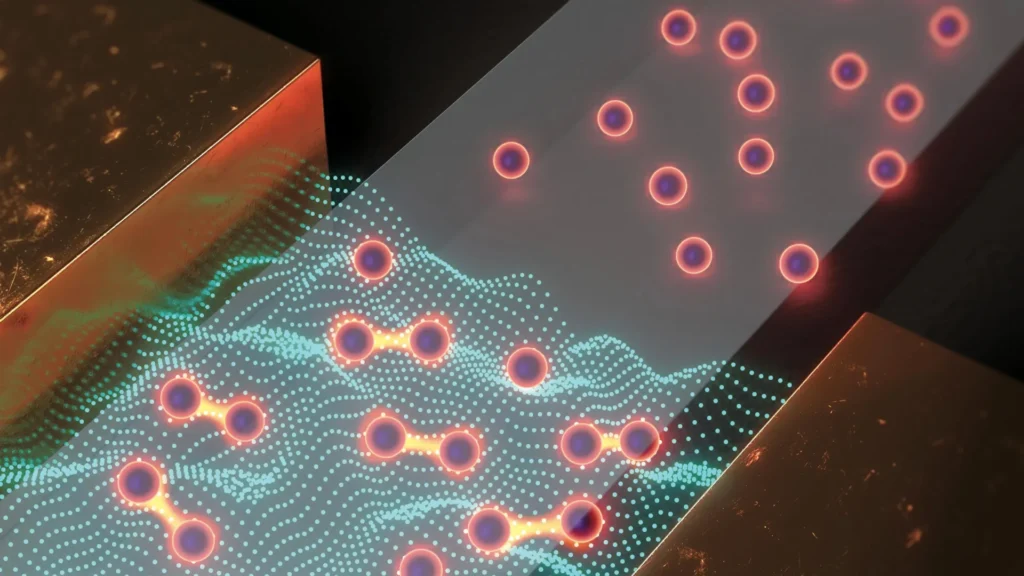
The primary challenge in harnessing vacuum fluctuations for macroscopic effects lies in their inherent weakness in free space. "Vacuum fluctuations in free space are generally too weak to produce observable effects in macroscopic condensed-matter systems," explained Prof. Zeng, highlighting the core hurdle. To surmount this limitation, the research team devised an ingenious solution: they introduced a terahertz split-ring resonator, often referred to as a "dark cavity."
A dark cavity is not just an empty enclosure; it is a specially designed electromagnetic environment engineered to "reshape" the electromagnetic vacuum and, crucially, to substantially amplify the quantum fluctuations within it. These cavities can selectively enhance specific modes of the electromagnetic field, effectively concentrating the virtual particles at particular frequencies.
To test their hypothesis experimentally, the researchers selected niobium diselenide (NbSe2), a well-characterized layered transition metal dichalcogenide known for its superconducting properties. They meticulously placed a sample of NbSe2 inside the terahertz dark cavity. This arrangement created a coupled system where the superconducting material was intimately interacting with the specially engineered electromagnetic environment inside the cavity.
The critical phase of the experiment involved a direct comparison: observing the material’s superconducting behavior both inside and outside this engineered cavity. The results were unambiguous and highly significant. Placing the NbSe2 device within the dark cavity demonstrably and substantially increased its superconducting critical temperature (Tc). The critical temperature is a fundamental property of a superconductor, defining the temperature below which the material transitions into its superconducting state, characterized by zero electrical resistance and the expulsion of magnetic fields (the Meissner effect).
Quantifying the Enhancement: A Tangible Boost to Superconducting Properties
The experimental findings provided compelling quantitative evidence of the vacuum’s influence. "We observed that the critical temperature can increase by up to 5.4% in a six-layer NbSe2 device," stated Prof. Cheng, emphasizing the measurable and significant enhancement. "Furthermore, the critical current and critical magnetic field are significantly enhanced near the superconducting transition. This represents the first experimental observation of vacuum-fluctuation-enhanced superconductivity."
The critical current refers to the maximum current a superconductor can carry before resistance reappears, while the critical magnetic field denotes the maximum magnetic field it can withstand before losing its superconducting properties. The enhancement of all three critical parameters (temperature, current, and magnetic field) collectively underscores a robust strengthening of the material’s superconducting state, not just a marginal shift. For a material like NbSe2, whose bulk critical temperature is typically around 7.2 K (Kelvin), a 5.4% increase, though seemingly small in absolute terms, represents a substantial improvement in its operational window and potential utility.
Rigorous Validation: Ruling Out Conventional Explanations
Given the unprecedented nature of the observation, the researchers undertook a comprehensive series of control experiments to meticulously rule out any conventional explanations for the observed enhancement. It was crucial to demonstrate that the effect was indeed due to quantum vacuum fluctuations and not merely attributable to more mundane changes to the material or experimental setup.
They systematically varied several properties of their experimental configuration:
- Cavity geometry: Altering the physical shape and dimensions of the dark cavity.
- Characteristic frequency: Tuning the specific resonant frequency of the cavity.
- Material thicknesses: Testing NbSe2 samples with varying numbers of atomic layers.
- Dielectric materials: Changing the insulating materials used within the cavity.
- Metallic strips: Modifying the metallic components of the resonator.
Through this rigorous process, the team was able to confidently exclude a range of alternative explanations, including:
- Strain effects: Physical deformation of the material that could alter its electronic properties.
- Material degradation: Changes in the material’s quality over time or due to experimental conditions.
- Inhomogeneity: Variations in the material’s composition or structure.
- Metallic screening effects: Conventional electromagnetic shielding by metallic components.
One of the strongest pieces of evidence supporting the vacuum fluctuation hypothesis came from the relationship between the superconductivity enhancement and the characteristic frequency of the dark cavity. Instead of a smooth, gradual change, the enhancement exhibited a distinct, resonance-like peak at a particular frequency. This "resonant enhancement" is a hallmark of strong coupling between two oscillating systems.
"This result, closely tied to the cavity’s photonic properties, provides strong experimental evidence of the coupling between the superconducting state and dark-cavity modes," Prof. Zeng elaborated. This resonant behavior strongly suggests that the enhancement is not a generic physical effect but specifically arises from a quantum mechanical interaction at a particular energy scale.
Theoretical Framework: Virtual Photons at Play
To provide a robust theoretical explanation for the experimental observations, Prof. Jiang’s team collaborated with Prof. Wilczek to develop a theoretical model. This model was based on the well-established Ginzburg-Landau framework, a phenomenological theory widely used to describe superconductivity near its critical temperature.
Their interpretation posits that the superconducting state within the NbSe2 device exchanges virtual photons with the engineered electromagnetic field of the dark cavity. This continuous, quantum mechanical interaction effectively lowers the overall energy of the superconducting state. A lower energy state implies greater stability, and by making the superconducting state more stable, the interaction effectively strengthens it, leading to the observed increase in critical temperature, critical current, and critical magnetic field.
"When the characteristic energy of the cavity mode matched the low-energy superconducting fluctuations, the NbSe2 device exhibited resonant enhancement, producing the peak in superconductivity enhancement," Prof. Jiang explained, perfectly linking the theoretical model to the experimental resonance observation. This elegant explanation unifies the empirical data with a coherent quantum mechanical mechanism.
"Vacuumronics" and a Paradigm Shift in Physics
This monumental achievement fundamentally reshapes the conventional understanding of the vacuum’s role in physics. Traditionally, physicists have largely considered the vacuum as a passive, inert backdrop against which physical phenomena unfold. The findings from this study, however, elevate the quantum vacuum to an active participant, a manipulable entity that can directly influence the fundamental properties of matter.
"In most practical physics, the vacuum serves merely as the passive stage on which phenomena play out. This work shows that the background itself can become an actor – engineered to strengthen superconductivity and reshape the behavior of quantum matter," remarked Prof. Wilczek, underscoring the profound conceptual shift this research represents. This active role of the vacuum could unlock entirely new avenues for fundamental research and technological innovation.
The concept of "vacuumronics," as proposed by Prof. Jiang’s group, moves from a theoretical framework to a tangible experimental reality. It envisions a future where precisely designed vacuum environments become a new tool in the physicist’s arsenal, allowing for unprecedented control over electronic and photonic properties of materials without direct material modification or external driving forces.
A New Way to Control Quantum Matter: Implications and Future Directions
The ability to strengthen superconductivity without directly driving the material with an external energy source is a significant advance. Instead of injecting energy or applying strong fields to the material itself, the researchers effectively "re-engineer" the surrounding quantum vacuum environment. This constitutes a non-contact, subtle, yet powerful method for influencing a quantum state of matter.
This non-invasive approach holds immense promise. Superconductors, with their perfect electrical conductivity and unique magnetic properties, are crucial for a range of advanced technologies, including:
- Energy transmission: Zero-loss power grids.
- Medical imaging: High-field MRI machines.
- Particle accelerators: Powerful electromagnets.
- Quantum computing: Superconducting qubits for quantum processors.
However, the widespread application of current superconductors is limited by their requirement for extremely low operating temperatures, typically sustained by expensive and cumbersome liquid helium. While a 5.4% increase in critical temperature might not immediately push NbSe2 into the realm of room-temperature superconductivity, it demonstrates a principle that could, with further optimization, be applied to other materials or amplified to achieve more substantial gains.
The research opens up a vast landscape for future exploration. "With further optimization of cavity structures and material systems, vacuum-fluctuation coupling may enable more pronounced and widely applicable control of quantum states," predicted Prof. Zeng. Future research will likely focus on:
- Exploring different materials: Applying this technique to other superconductors, particularly those with higher critical temperatures, to see if similar or even greater enhancements can be achieved.
- Optimizing cavity designs: Developing more sophisticated dark cavity geometries and materials to maximize the amplification and coupling of vacuum fluctuations.
- Understanding the mechanism in detail: Further theoretical and experimental work to precisely characterize the interaction between virtual photons and the superconducting condensate.
- Extending to other quantum states: Investigating if engineered vacuum fluctuations can influence other exotic states of matter, such as topological insulators, quantum magnets, or even quantum fluids.
This pioneering work establishes a powerful new direction for condensed matter physics and quantum engineering. By demonstrating that the quantum vacuum is not a passive void but an active, manipulable medium, the researchers have not only deepened our fundamental understanding of nature but also provided a novel pathway for the control and enhancement of quantum materials, potentially ushering in an era of "vacuumronic" technologies that could revolutionize computing, energy, and beyond.