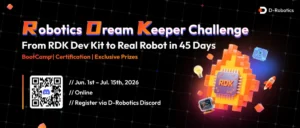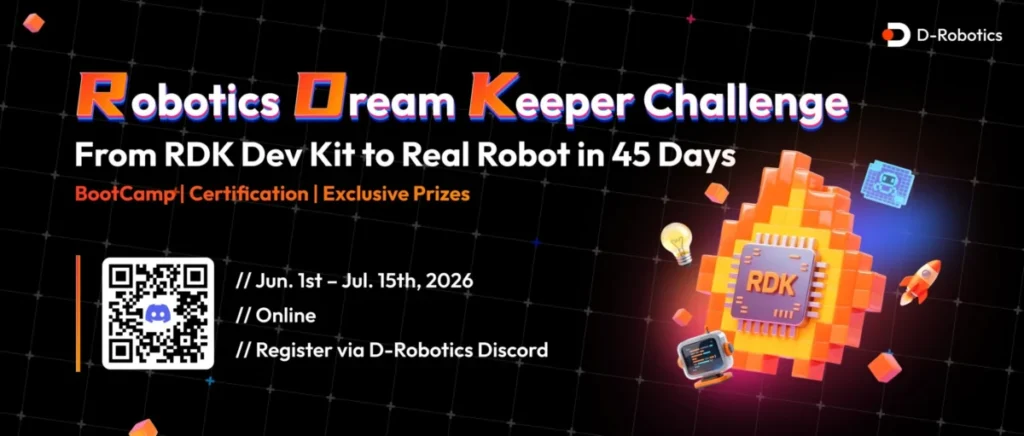
The burgeoning field of robotics and artificial intelligence has captivated the collective imagination for decades, promising a future where intelligent machines assist, automate, and innovate across countless domains. Yet, for many enthusiasts, students, and even experienced developers, the journey from an ingenious robot concept to a tangible, working prototype remains fraught with formidable challenges. Common impediments include the intricate complexities of hardware integration, the steep learning curve of advanced software frameworks, and the perennial question of where to even commence such an ambitious undertaking. These hurdles often relegate brilliant ideas to the realm of forgotten aspirations. Addressing this critical gap, D-Robotics has unveiled the Robotics Dream Keeper Challenge (RDK Challenge), a meticulously structured program designed to empower a diverse community of innovators to transform their visions into reality using the potent yet accessible RDK X5 edge AI development board.
The RDK Challenge is more than just a competition; it is a comprehensive, community-driven initiative aimed at democratizing access to sophisticated AI robotics development. It targets a wide spectrum of participants, from novice makers taking their first steps in robotics to seasoned engineers seeking a robust platform for advanced projects. At its core is the RDK X5, an edge AI development board that, while currently a "hidden gem" in the vast landscape of embedded systems, possesses the computational muscle and versatility to handle complex AI workloads directly on the device. This capability is crucial for creating truly autonomous and responsive robots, bypassing the latency and connectivity issues associated with cloud-based AI processing.
The Evolution of DIY Robotics and the Rise of Edge AI
The landscape of do-it-yourself (DIY) robotics has undergone a remarkable transformation over the past two decades. What began with hobbyists tinkering with basic microcontrollers and sensors has evolved into a sophisticated ecosystem supported by powerful single-board computers, open-source software, and a global community of innovators. Early robotic projects often focused on mechanical design and simple programming logic. However, with the exponential advancements in artificial intelligence, particularly machine learning and computer vision, the demand for embedded platforms capable of running these complex algorithms locally has surged.
Edge AI, where AI computations are performed near the data source rather than exclusively in centralized cloud servers, represents a pivotal shift. This paradigm offers numerous advantages for robotics, including reduced latency for real-time decision-making, enhanced privacy by keeping sensitive data on the device, lower bandwidth requirements, and improved energy efficiency. These factors are paramount for autonomous systems that need to react instantly to their environment, operate in remote locations, or maintain data integrity without constant reliance on network connectivity. The RDK X5 positions itself squarely within this revolutionary trend, providing the necessary hardware foundation for developers to leverage the full potential of edge AI in their robotic creations. D-Robotics, through its commitment to accessible yet powerful technology, aims to foster innovation in this critical frontier.
A Deep Dive into the RDK X5 Edge AI Development Board
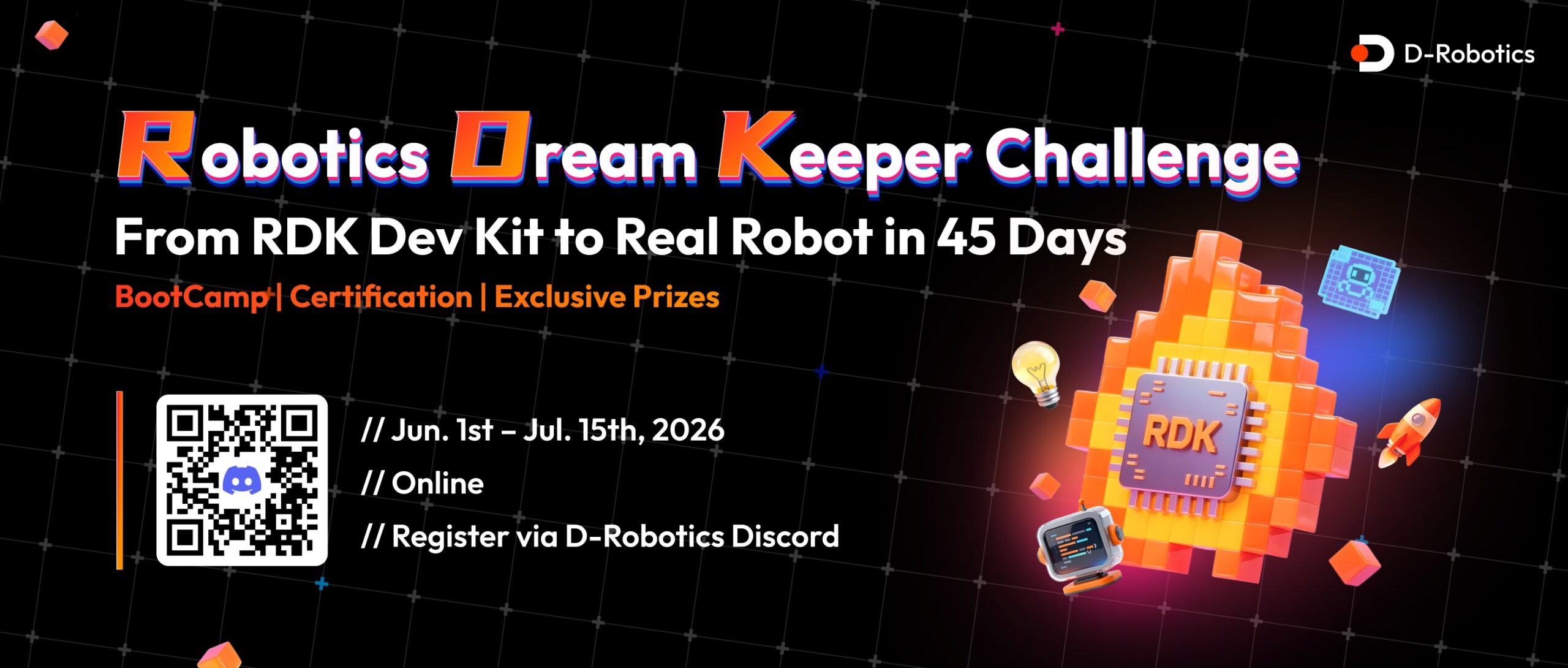
The RDK X5 serves as the technological cornerstone of the Dream Keeper Challenge, distinguished by its robust architecture tailored for demanding AI applications at the edge. While specific technical specifications are often detailed on the manufacturer’s product page, an edge AI board of this caliber typically integrates a high-performance System-on-Chip (SoC) that combines a multi-core central processing unit (CPU), a graphics processing unit (GPU), and a dedicated Neural Processing Unit (NPU) or AI accelerator. This specialized hardware, particularly the NPU, is designed to significantly accelerate machine learning inference, allowing AI models to execute rapidly and efficiently without consuming excessive power. This means robots can perform tasks like real-time object detection, facial recognition, natural language processing, and complex decision-making directly on the device, enabling truly intelligent and autonomous behavior.
Beyond its processing power, the RDK X5 is engineered for versatility and expandability. It likely features a comprehensive array of connectivity options essential for robotics, including General Purpose Input/Output (GPIO) pins for interfacing with sensors and actuators, I2C, SPI, and UART interfaces for communicating with various peripherals, and multiple USB ports for cameras, external storage, and human interface devices. Ethernet, Wi-Fi, and Bluetooth modules are also standard, providing robust networking capabilities for remote control, data logging, and over-the-air updates.
From a software perspective, the RDK X5 typically runs a Linux-based operating system, such as Debian or Ubuntu, providing a familiar and flexible development environment. It would support popular AI frameworks like TensorFlow Lite, PyTorch Mobile, and OpenVINO, allowing developers to deploy pre-trained models or train their own custom AI solutions. The mention of "RDK Studio" suggests a proprietary or customized integrated development environment (IDE) that simplifies the development workflow, potentially offering tools for model deployment, debugging, and system configuration. This combination of powerful hardware and a supportive software ecosystem makes the RDK X5 an ideal platform for both sophisticated AI research and practical, hands-on robot building, striking a balance between raw performance and developer-friendliness.
The Robotics Dream Keeper Challenge: A Structured Pathway to Innovation
The RDK Challenge is meticulously structured into three progressive stages, designed to guide participants from foundational concepts to the realization of a fully functional, intelligent robot. Spanning approximately 35-45 days, this phased approach ensures a manageable learning curve and sustained engagement, preventing the common burnout associated with unstructured, complex projects.
Stage 1: Ignite (5-10 Days) – Powering On the Robot’s Brain
The initial phase, "Ignite," focuses on familiarizing participants with the RDK X5 and establishing a foundational understanding of edge AI principles. This stage is engineered for rapid initial success, aiming to get participants up and running swiftly. Upon unboxing their RDK X5, participants are guided through the essential setup procedures, which typically involve flashing an SD card with the operating system, configuring network settings, and establishing SSH access – tasks familiar to anyone who has worked with single-board computers like a Raspberry Pi. The primary objective here is to successfully power on the board, activate its core sensors (e.g., camera modules), and deploy a rudimentary AI demonstration. This could involve running a pre-trained model for basic object detection, image classification, or a simple voice command recognition task. The emphasis is on demystifying the initial technical barriers, providing a tangible "win" early in the challenge, and proving the board’s immediate capabilities. This hands-on experience builds confidence and serves as a crucial springboard for more complex endeavors.

Stage 2: Build (10-15 Days) – From Concept to Blueprint
With the fundamentals mastered, Stage 2, "Build," transitions participants into the creative and architectural phase of their robot project. This is where individual ideas begin to take concrete form. Participants are tasked with defining their unique project concept, articulating the problem their robot aims to solve, or the function it will perform. A critical component of this stage is architecting the AI pipeline—determining which AI models will be used, how data will flow from sensors to the AI, and how the AI’s output will control actuators. Concurrently, participants must finalize their hardware setup, selecting appropriate sensors (e.g., cameras, depth sensors, microphones), actuators (e.g., motors, servos), and structural components.
A key differentiator of the RDK Challenge is the integrated mentorship program. During Stage 2, participants receive guidance from experienced mentors who help sanity-check their project plans. This expert review is invaluable, identifying potential technical roadblocks, suggesting alternative approaches, and ensuring that the proposed solution is feasible within the challenge’s scope and the RDK X5’s capabilities. This collaborative refinement process minimizes the risk of participants venturing down unproductive paths, fostering a more efficient and rewarding development experience.
Stage 3: Launch (20 Days) – Realization and Refinement
The final and most intensive phase, "Launch," is dedicated to the integration, optimization, and polish of the intelligent robot system. This is where all the conceptual work and hardware assembly culminate in a functional prototype. Participants meticulously wire up all components, write the necessary software to connect their AI models with the physical hardware, and perform rigorous testing. A critical aspect of this stage involves optimizing AI inference using the RDK X5’s BPU (AI accelerator). This optimization ensures that AI models run with maximum efficiency and minimal latency, crucial for real-time robotic applications.
The ultimate goal of Stage 3 is to produce a "polished, shareable project package"—a working, demo-ready AI robot that not only fulfills its intended function but is also well-documented and presentable. This completed project serves as a tangible portfolio piece, a powerful demonstration of the participant’s skills in AI, robotics, and system integration. Such a creation can be showcased in various professional and academic contexts, from YouTube demonstrations and conference presentations to crucial elements in job interviews, significantly enhancing a participant’s profile in the competitive tech landscape. The detailed task guidelines for all three stages are openly accessible on GitHub, providing complete transparency and a clear roadmap for every participant.
Showcasing Innovation: Early Success Stories with RDK X5
Even in its early stages, the RDK X5 has proven its versatility and power through a diverse array of innovative projects already developed by makers. These examples not only highlight the board’s capabilities but also inspire future participants by demonstrating the breadth of possibilities within reach.

One such groundbreaking project is the OpenDuck Mini – RDK X5, developed by AI Researcher and Robotics Developer Frank Fu. This brilliant creation is a reinforcement-learning bipedal robot that has achieved remarkable "sim-to-real" walking. Reinforcement learning is an advanced AI technique where an agent learns optimal behaviors through trial and error, receiving rewards for desired actions. The "sim-to-real" challenge refers to the notoriously difficult task of transferring a robot’s learned behaviors from a simulated environment to the physical world, where real-world physics, sensor noise, and actuator limitations often cause significant discrepancies. The OpenDuck Mini’s success in achieving stable, dynamic bipedal locomotion in the real world, powered by the RDK X5, underscores the board’s capacity for complex real-time AI processing and control, making it suitable for cutting-edge robotics research and development.
Venturing beyond traditional robotic forms, MateoTechLab conceptualized and built An Arc Reactor That Beats With My Heart. This highly creative project demonstrates the RDK X5’s potential for interactive art and novel applications. The Arc Reactor, a glowing visual display, synchronizes its pulsating light effects with the user’s heartbeat, captured via a smartwatch or other biosensors. This project exemplifies how the RDK X5 can integrate biometric data, process it with AI (perhaps for pattern recognition or anomaly detection in heart rate data), and drive an engaging, responsive output. It showcases the board’s flexibility for projects that blend IoT, AI, and artistic expression, proving its utility extends far beyond just autonomous vehicles or industrial robots.
Further illustrating the RDK X5’s capability in human-robot interaction is the Valentine’s Day AI Robot with RDK X5 by Pro Know. This adorable interactive companion boasts a suite of features including vision capabilities, touch sensitivity, sound reactions, and a charming personality. The RDK X5 enables this robot to perceive its environment through cameras, respond to physical touch inputs, interpret spoken commands or ambient sounds, and generate expressive behaviors. This project highlights the board’s ability to handle multimodal sensor data fusion and complex AI models for natural human-robot interaction, making it possible to create emotionally engaging and personalized robotic companions.
These diverse builds collectively affirm the RDK X5’s strong on-device AI performance while emphasizing its maker-friendly design. The fact that these projects were showcased in live demos on the Make: YouTube channel further validates the platform’s practical applicability and the tangible results achievable through the D-Robotics ecosystem. For anyone who has been searching for the right platform to bring their intelligent robot ideas to fruition, the RDK Challenge offers not just the hardware but also the structured support necessary for success.
A Nurturing Ecosystem: Support and Community-Driven Growth
The D-Robotics Dream Keeper Challenge distinguishes itself not merely by its advanced hardware and structured curriculum but also by its unwavering commitment to fostering a supportive, community-driven ecosystem. This isn’t a high-pressure, sink-or-swim competition designed to leave beginners behind; instead, it is a collaborative journey where participants are actively supported at every step.

A cornerstone of this support system is the provision of free bootcamps. These intensive training sessions are designed to equip participants with the foundational knowledge and practical skills required to navigate the RDK X5 platform and tackle complex AI robotics tasks. Covering topics from basic board setup to advanced AI model deployment, these bootcamps ensure that all participants, regardless of their prior experience, can confidently engage with the challenge. Complementing the bootcamps, a dedicated team of mentors provides personalized guidance, offering technical advice, troubleshooting assistance, and strategic insights into project development. This direct access to experts is invaluable, helping participants overcome hurdles and refine their designs.
The challenge also incorporates weekly events, which could range from Q&A sessions with D-Robotics engineers, workshops on specific AI techniques, to informal project showcase opportunities where participants can share their progress and receive feedback. These events foster a sense of camaraderie and continuous learning. Furthermore, a wealth of open resources—including comprehensive documentation, code examples, tutorials, and reference designs—is made available to ensure participants have all the necessary tools at their fingertips.
The heart of this nurturing ecosystem resides within the Discord community. Structured as a clear "growth ecosystem," it guides members through distinct progression paths: Explorer ➡️ Builder ➡️ Creator ➡️ Core Developer. This tiered system encourages new members (Explorers) to learn from more experienced peers (Builders and Creators) and eventually contribute their expertise, potentially becoming Core Developers who actively shape the platform’s future. This framework promotes peer-to-peer learning, collaborative problem-solving, and the organic growth of a vibrant, self-sustaining community. The value of such a robust community in open-source hardware and software development cannot be overstated, as it provides a dynamic environment for sharing knowledge, overcoming challenges, and celebrating collective achievements.
Rewards, Incentives, and Future Prospects
D-Robotics has strategically crafted a compelling array of rewards and incentives to motivate participants and recognize their dedication throughout the Dream Keeper Challenge. These incentives are designed to appeal to both newcomers and seasoned developers, providing tangible benefits that extend beyond the immediate satisfaction of building a robot.
The most direct financial incentive is a full cash rebate on the purchase of the RDK X5 and accessory kits for all participants who successfully complete all three challenge stages. This effectively transforms the hardware investment into a risk-free opportunity, lowering the financial barrier to entry and making advanced robotics more accessible. Beyond this, the challenge offers competitive prizes for outstanding innovation: the most exceptional project will be awarded a substantial $1,000 grand prize, recognizing superior technical execution, creativity, and practical utility. Additionally, top community advocators, those who actively contribute to supporting and inspiring their peers, can earn an extra $500 cash reward, highlighting D-Robotics’ appreciation for community engagement and knowledge sharing.

Looking ahead, D-Robotics has hinted at a series of "surprises" that will be gradually unlocked, promising even more profound opportunities for participants. These include the potential for direct collaboration with the D-Robotics team, which could manifest as internships, contract work, or even funding for promising projects, offering a direct pathway into the professional robotics industry. Participants may also gain opportunities for interviews with global developers, providing invaluable exposure and networking possibilities within the international tech community.
A highly anticipated incentive is the chance to participate in the annual D-Robotics Developers Conference, offering a platform to present their projects, learn about the latest advancements, and connect with industry leaders and fellow innovators. Perhaps the most enticing future reward is the opportunity to win a visit to the Robot Innovation Center in Shenzhen. Shenzhen, often referred to as the "Silicon Valley of Hardware," is a global hub for robotics manufacturing and R&D. A visit to such a center would provide an unparalleled immersive experience, offering insights into cutting-edge robotic technologies, manufacturing processes, and the vibrant innovation ecosystem that drives the industry forward. These long-term incentives demonstrate D-Robotics’ commitment to fostering a sustainable community of talent and providing meaningful career and growth opportunities for its participants.
How to Jump In: A Call to Action
For individuals ready to embark on this transformative journey into the world of AI robotics, joining the Robotics Dream Keeper Challenge is straightforward. The first step is to immerse oneself in the vibrant D-Robotics ecosystem by joining the lively Discord community. This platform serves as the central hub for communication, collaboration, and support throughout the challenge. Next, prospective participants are required to submit a quick application form, providing D-Robotics with essential information about their background and aspirations. Following this, downloading and registering with RDK Studio is crucial, as this integrated development environment will be the primary software tool for project development.
To begin building, participants will need to acquire the essential hardware. The RDK X5 development board and its complementary accessory kits are available through D-Robotics’ official partnered channels. Details on official distributors and available accessories can be found on the D-Robotics website, ensuring that participants can easily obtain the necessary components for their projects.
This challenge represents a unique opportunity to delve into the cutting edge of modern robotics and embodied AI, backed by strong guidance, a supportive community, and attractive prizes. The RDK X5 is still an emerging platform, and those who participate in this inaugural challenge will play a pivotal role in shaping its future, contributing to its community, and gaining an early advantage in mastering its capabilities. The time for passive observation is over. The D-Robotics Dream Keeper Challenge is an invitation to actively build, innovate, and contribute to the next wave of intelligent machines. Grab your board, join the Discord, and unveil your robotic dream to the world.