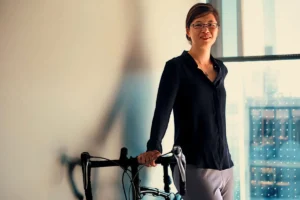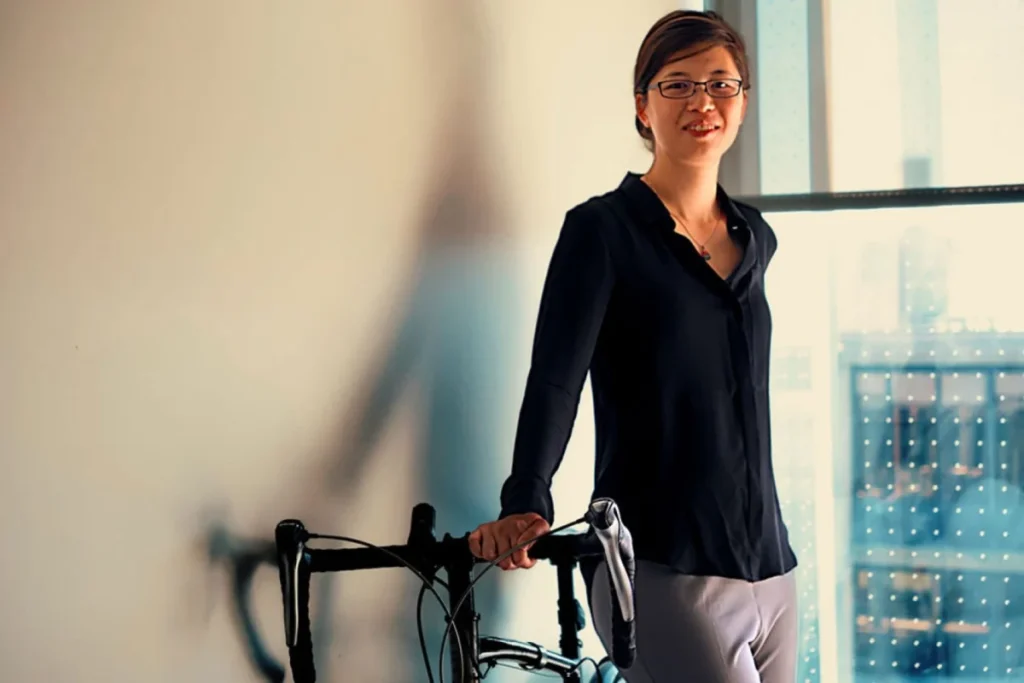
Cathy Wu, an associate professor at the Massachusetts Institute of Technology (MIT) and a leading researcher in artificial intelligence for complex systems, is at the forefront of a transformative wave in transportation engineering. Her work, deeply rooted in a personal desire to improve lives and informed by early experiences with urban planning and simulated worlds, is now yielding significant breakthroughs in designing safer, more efficient, and environmentally conscious transportation networks. Wu’s research, particularly her innovative application of reinforcement learning (RL), promises to revolutionize how we approach everything from traffic management to the integration of autonomous vehicles and the promotion of sustainable driving practices.
From Childhood Dreams to MIT’s Cutting Edge
Wu’s journey into the intricate world of transportation systems began not in a bustling metropolis, but in a quieter, more introspective setting shaped by her family’s experiences. As the daughter of Taiwanese immigrants, she witnessed firsthand the sacrifices made to build a better life. Her father’s lengthy commute, a daily battle against traffic congestion, often meant precious time away from his family. This, coupled with the limitations of staying indoors on a busy street, led Wu and her siblings to find solace and engagement in the digital realm of computer games. Titles like "SimCity," a popular city-building simulation, offered a playground for her burgeoning problem-solving instincts. These early experiences, she notes, were the foundational seeds for her future career.
"As far back as I can remember, I wanted to find ways to solve problems to improve people’s lives," Wu stated in a recent interview. This intrinsic motivation, combined with the tangible realities of urban mobility challenges and the analytical thinking honed by strategic gaming, coalesced into a powerful drive to design transportation systems that are not only efficient but also inherently safe and equitable.
The Promise of Reinforcement Learning in Transportation Design
The complexity of modern transportation systems presents a formidable challenge for traditional analytical methods. Designing and optimizing these networks, which involve a myriad of interconnected variables, often requires modeling and analyzing hundreds, if not thousands, of potential scenarios. Wu argues that current tools often fall short of providing an evidence-driven approach that can truly grapple with this scale of complexity.
"Designing transportation systems consists of modeling and analyzing dozens, if not hundreds or thousands, of variants, which means that an evidence-driven approach to designing those systems is simply not within reach of today’s tools," Wu explained. "This is the role that RL plays. If successful, it would free transportation researchers and enable their practitioner partners to design the systems they want."
Reinforcement learning, a subfield of machine learning where an agent learns to make a sequence of decisions by trying to maximize a reward it receives for its actions, offers a powerful new paradigm. Instead of pre-programming every possible outcome, RL algorithms learn through trial and error, adapting to dynamic environments and discovering optimal strategies that might not be immediately apparent to human designers.
A Mentorship-Driven Path to Innovation
Wu’s academic trajectory at MIT was significantly shaped by influential mentors. Her interest in improving people’s lives, a value instilled by her older sister, found a natural outlet in the interconnectedness that transportation provides. "I like transportation because it connects everyone. We all use it, we all experience it, we all have issues with it. So, at some level, we’re all interested in the system being better," she remarked.
Her initial foray into applying artificial intelligence to transportation occurred during her undergraduate studies at MIT. A pivotal moment was an Independent Activities Period lecture on autonomous vehicles by the late Professor Seth Teller. This lecture, delivered during a robotics competition that Wu herself won, sharpened her focus. She began working with Professor Teller, and when his research interests shifted, he guided her towards Professor Daniela Rus, a renowned researcher in robotaxis.
"I’m very grateful to the people who helped me explore those interests and helped me become the person I am now," Wu acknowledged, specifically mentioning Teller, Rus, and her internship experience at Dropbox, which further fueled her interest in transportation-specific issues.
From Berkeley to Breakthroughs: The RL Journey
Following her master’s degree at MIT, Wu pursued her Ph.D. at the University of California, Berkeley. During this period, she observed the painstaking efforts of transportation researchers who dedicated years to developing optimization methods for single system variants. Her computer science background, focused on developing RL and optimization methodologies, presented a promising avenue for achieving exponential improvements in efficiency.
A significant milestone occurred in 2018, Wu’s final year at UC Berkeley. She successfully applied RL to a critical traffic problem: automatically analyzing the potential traffic flow impact of autonomous vehicles across diverse traffic networks. This research garnered considerable attention and was widely shared online, signaling the potential of RL in this domain.
However, the path forward was not without its challenges. Wu describes RL as a "flighty friend." After her Ph.D., she pursued a postdoc at Microsoft, delving deeper into RL theory, before returning to MIT. She was drawn to the Department of Civil and Environmental Engineering’s (CEE) sustainability focus and the Institute for Data, Systems, and Society’s (IDSS) commitment to integrating data science across disciplines. Yet, for the subsequent two years, her attempts to apply RL to traffic problems proved unsuccessful.
"That was stressful," Wu admitted. "It was unclear whether the problem was me (the advisor), my students, the traffic domain, or RL itself." Despite these setbacks, the earlier research served as a crucial proof-of-concept, demonstrating RL’s potential for transportation systems.
Overcoming Sensitivity: The Contextual RL Breakthrough
The turning point arrived in 2022 when Wu and her students identified a key characteristic of RL: its extreme sensitivity. An algorithm that performed well on one problem might fail on even a closely related one. This realization marked the beginning of a new research direction.
A significant breakthrough, which Wu describes as "the light at the end of a long tunnel of negative results," came in 2023. She and her team devised a method to circumvent RL’s sensitivity. They discovered that while RL algorithms might struggle to train effectively on a large percentage of problems, they could perform exceptionally well on a smaller subset. By training RL models on these select, well-performing problems, the resulting models could then generalize effectively to a broader range of related issues, including those that would have been intractable through direct training.
The team developed an algorithm to strategically identify which problems were most suitable for RL training. This approach dramatically improved training efficiency, reducing the need for hundreds of training models to as few as three in some cases – a potential efficiency gain of up to 30 times.
"This work gave me back the confidence that reinforcement learning can play an important role in solving hard optimization problems, including in transportation," Wu stated. "Now, a good chunk of my group works on the topic of contextual RL, which is the setting where RL seeks to solve a space of related problems."
Impactful Applications: Eco-Driving and Policy Implications
Wu’s more recent research showcases the practical and policy-relevant applications of her work. One significant area of focus is the application of RL to optimize "eco-driving" measures. This involves intelligently controlling vehicle speeds to minimize excessive stopping and starting, a common cause of fuel inefficiency and increased emissions.
Her research demonstrates that such intelligent speed control could lead to substantial reductions in vehicle emissions, estimated to be between 11 and 22 percent. This finding provides compelling evidence that policies mandating these measures could significantly enhance system efficiency and contribute to environmental sustainability.
"This is a demonstration that RL can be used to inform transportation policy on problems of practical importance," Wu emphasized. Her commitment to evidence-based policy is deeply ingrained, stemming from a belief in its role in fostering a thriving democratic society. "People can bicker forever about what’s better or worse, but I do believe that there are questions we bicker about that can be analyzed systematically using data and have objective answers. A large part of the reason I am in academia is to better understand how technology can support democratic societal decision-making."
Use-Inspired Research and the Future of Transportation
Wu’s research methodology is rooted in "use-inspired basic research." This approach tackles practical problems by developing fundamental knowledge that often has broad applicability across various domains. Her students are encouraged to investigate consequential issues in transportation, such as safety, congestion, and accessibility, identifying where existing methods fall short. The problems themselves, in turn, guide the direction of the research.
Beyond her research, Wu is deeply committed to her role as an educator and mentor. She finds immense satisfaction in teaching and witnessing students grasp complex concepts. "I love working with students, both in the classroom and research mentoring," she shared. "It makes my day when I am able to teach someone something – when I see that light bulb go on in a student."
Her dedication to teaching has been recognized with prestigious awards, including the Ole Madsen Mentoring Award in 2025, alongside academic honors like the 2023 National Science Foundation Faculty Early Career Development Award.
For students grappling with dauntingly complex problems, Wu offers sage advice: "Be patient. Start small. Societal impact is a lifelong endeavor, not something to be accomplished in a few years. It will take years to really understand what’s going on and where the real problems are. In the meantime, try to be helpful. Be curious. Ask many questions."
Wu’s pioneering work in reinforcement learning for transportation systems is not just advancing theoretical knowledge; it is paving the way for tangible improvements in the way we move, interact, and experience our urban environments. Her research holds the promise of making our roads safer, our journeys more efficient, and our planet healthier, embodying a powerful fusion of personal dedication and cutting-edge scientific inquiry.