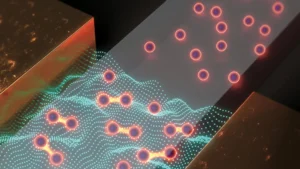
The explosive growth of electric vehicles (EVs) has intensified the global search for innovative ways to make electric motors more energy-efficient, a critical factor in extending range, reducing charging times, and mitigating environmental impact. A persistent and significant challenge in this pursuit is "iron loss," also known as magnetic hysteresis loss. This phenomenon occurs when the magnetic fields within a motor’s core repeatedly reverse direction during operation, leading to a wasteful conversion of electrical energy into heat. This heat not only represents lost energy but also poses a substantial problem for motor longevity and performance, as high operating temperatures can partially demagnetize the very soft magnetic materials crucial to the motor’s function, thereby exacerbating the energy loss issue. Understanding and mitigating these losses is paramount for the continued advancement of electric propulsion and other high-efficiency motor applications across various industries.
The Unseen Battle for Efficiency: Electric Vehicles and Iron Loss
The global automotive landscape is rapidly transforming, with electric vehicles at the forefront of this revolution. In 2023, global EV sales surpassed 14 million units, representing a significant portion of new car sales and an upward trend that analysts project will continue to accelerate, potentially reaching 40% of the total market by 2030. This exponential adoption, driven by climate concerns, government incentives, and technological advancements, places immense pressure on engineers and scientists to optimize every component of the electric powertrain. The electric motor, the heart of any EV, is a primary focus for efficiency improvements.
At the core of an electric motor lies its stator and rotor, often made from specialized soft magnetic materials designed to channel and amplify magnetic fields. These materials, typically laminations of silicon steel or newer amorphous alloys, are chosen for their ability to be easily magnetized and demagnetized. However, no material is perfect, and each cycle of magnetization and demagnetization incurs a small energy penalty. This is iron loss, a composite of hysteresis loss and eddy current loss. Hysteresis loss, the focus of the recent research, arises from the energy required to reorient the microscopic magnetic domains within the material. Eddy current losses, conversely, are caused by induced currents circulating within the core material itself, generating heat. While both contribute to inefficiency, hysteresis loss is particularly complex due to its intimate connection with the material’s inherent magnetic structure. For every percentage point of efficiency gained in an electric motor, the benefits are substantial: increased vehicle range, reduced battery size and cost, faster charging, and a smaller thermal management system, all contributing to a more sustainable and economically viable electric mobility ecosystem.
Unraveling the Magnetic Maze: A Century-Old Challenge
The behavior of magnetic materials has fascinated scientists for centuries, with early observations leading to fundamental theories of electromagnetism. The concept of magnetic domains, tiny regions within a magnetic material where atomic magnetic moments are aligned in the same direction, was first proposed by Pierre-Ernest Weiss in 1906. The arrangement and structure of these domains are critical; they dictate how a material responds to external magnetic fields and, crucially, how much energy is lost during magnetic reversal.
Among the myriad domain structures, some soft magnetic materials exhibit highly intricate patterns known as "maze domains." These structures are aptly named for their zig-zag, labyrinth-like appearance, a visual manifestation of the complex interplay of internal magnetic forces. Unlike simpler domain patterns, maze domains are notoriously dynamic, undergoing abrupt and often unpredictable changes as temperatures fluctuate. This thermal sensitivity directly impacts energy loss, making them a focal point for researchers striving to improve motor efficiency. However, despite decades of study, a comprehensive understanding of maze domains has remained elusive. The difficulty stems from the multitude of interacting factors at play: the material’s unique microscopic crystal structure, the dynamic influence of temperature, and the subtle nuances of energy stability within the magnetic system. Conventional experimental methods can reveal their existence and behavior, but quantifying the precise cause-and-effect relationships has been a formidable challenge.
Tokyo University of Science Leads Innovative Research with eX-GL Model
Addressing this intricate scientific puzzle, a team of researchers led by Professor Masato Kotsugi and Dr. Ken Masuzawa from the Department of Material Science and Technology at Tokyo University of Science (TUS), Japan, embarked on a groundbreaking study. Recognizing the limitations of traditional approaches, they sought to bridge the gap between macroscopic observations and microscopic magnetic phenomena. Their ambitious project involved a robust collaborative effort, bringing together expertise from the University of Tsukuba, Okayama University, and Kyoto University, underscoring the interdisciplinary nature required to tackle such a complex problem.
The team’s central innovation is a novel computational framework: the entropy-feature-eXtended Ginzburg-Landau (eX-GL) model. The Ginzburg-Landau theory, originally developed in the 1950s to describe superconductivity, is a phenomenological theory that describes phase transitions. The TUS team’s "eXtended" version leverages this theoretical foundation but significantly enhances it by incorporating advanced analytical techniques and machine learning, tailored specifically to the intricacies of magnetic materials. "Conventional simulations oversimplify real materials, while experiments reveal complexity without a clear way to quantify cause and effect," explains Professor Kotsugi. "Our physics-based explainable artificial intelligence framework addresses these limitations and is designed to mechanistically explain temperature-dependent magnetization reversal process." This new model represents a significant leap forward, offering a quantitative and mechanistic explanation for phenomena that previously defied precise understanding. The findings from this pivotal research were published in the prestigious journal Scientific Reports, marking a milestone in materials science and magnetic engineering.
The eX-GL Model: A Fusion of Physics and AI
The methodology employed by the TUS-led team is a sophisticated blend of experimental observation, advanced mathematics, and artificial intelligence. To investigate the temperature-dependent behavior of maze domains and their role in magnetization reversal, the researchers first meticulously captured microscopic images of magnetic domains within a rare-earth iron garnet (RIG) sample across a range of temperatures. RIGs are complex magnetic materials known for their unique properties, making them an ideal candidate for studying intricate domain structures.
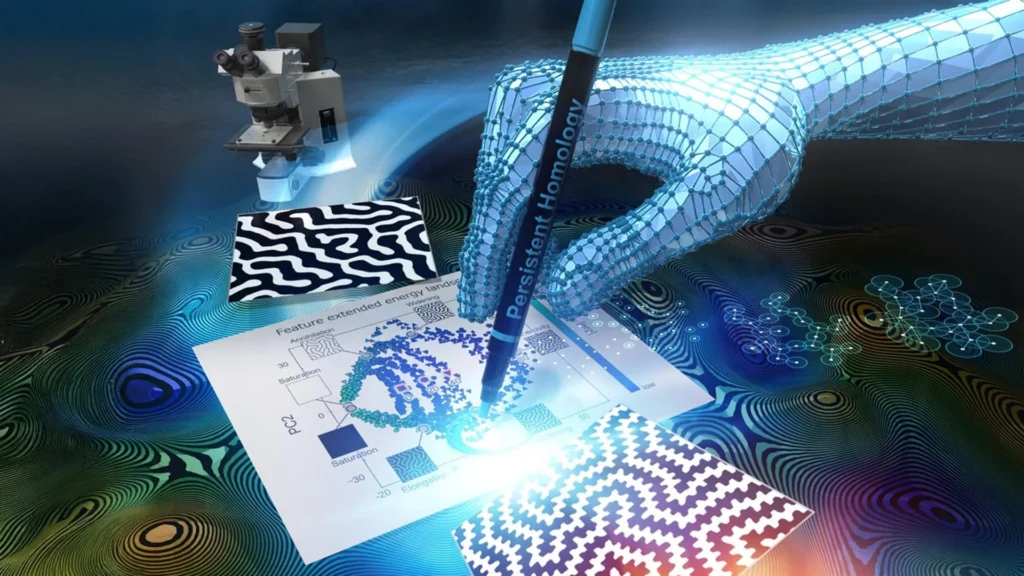
These high-resolution images then became the input for the multi-stage eX-GL model. The first stage utilized Persistent Homology (PH), a cutting-edge mathematical method from the field of topological data analysis. PH is designed to identify and quantify "topological features" – the holes, components, and voids – within data, regardless of scale. In this context, PH allowed the team to precisely detect and characterize the uneven structural characteristics and complex connectivity within the magnetic domain images. This quantitative description of the domain morphology was crucial for moving beyond qualitative observations.
Following the PH analysis, the data transitioned to a machine learning-based pattern recognition stage. Here, algorithms were trained to identify the most significant features extracted by PH, distilling complex topological information into a manageable set of critical parameters. This process culminated in the generation of a digital free-energy landscape. This landscape is a conceptual map that visualizes how magnetic microstructures evolve as the system’s energy changes, providing a comprehensive overview of the material’s magnetic stability and transitions. Finally, a rigorous mathematical analysis linked these microscopic domain structures, as represented by the free-energy landscape, to the larger, observable magnetization reversal process. This multi-layered approach allowed the researchers to connect the atomic-scale interactions to macroscopic material behavior.
Through this innovative method, the researchers successfully identified a dominant feature, termed PC1 (Principal Component 1), which remarkably captured the entire magnetization reversal process. By establishing a direct link between PC1 and fundamental physical properties, the team was able to visualize and quantify four major energy barriers. These barriers, previously hidden or only indirectly inferred, were revealed to exert a strong influence on the dynamics of magnetization reversal, providing unprecedented insight into the energy dissipation mechanisms within the material.
Revealing Hidden Barriers: Key Findings and Mechanistic Insights
A detailed analysis of these newly identified energy barriers and their associated microstructures unveiled the intricate ways in which different forms of energy contribute to magnetization reversal. The researchers meticulously measured energy transfer involving three critical interactions: exchange interactions, demagnetizing effects, and entropy.
Exchange interactions are quantum mechanical forces that align the magnetic moments of adjacent atoms, forming the basis of magnetic domains. Demagnetizing effects arise from stray magnetic fields created by the domain walls themselves, which tend to oppose the overall magnetization. Entropy, a measure of disorder, plays a crucial role in thermal effects, as higher temperatures lead to increased thermal fluctuations and a greater tendency towards disorder in the magnetic system. The team’s model elucidated how the interplay of these forces dictates the stability and transitions of maze domains.
A particularly significant discovery was the observation that maze domains grow increasingly complex as the length of their domain walls increases. This escalating complexity is not random but is specifically driven by the interactions between entropy and exchange forces. As temperature rises, the entropic drive towards disorder competes with the exchange forces seeking to maintain order, leading to more convoluted domain wall configurations. This finding provided critical clarification regarding the physical mechanisms underpinning maze-domain reversal behavior, offering a mechanistic explanation for previously observed but poorly understood phenomena.
Professor Kotsugi emphasized the broader utility of their novel framework: "Our eX-GL approach effectively automates the interpretation of complex magnetization reversal process and enables identification of hidden mechanisms, difficult to discern using conventional methods." He further added, "In addition, since free energy is a universal thermodynamic metric, our model can be extended to other systems with similar characteristics." This statement highlights the potential for the eX-GL model to transcend the specific study of maze domains and become a versatile tool for investigating complex energy landscapes in a wide array of magnetic systems and other related physical materials, opening new avenues for materials discovery and optimization.
Broader Implications for Electric Mobility and Beyond
The implications of this research extend far beyond the laboratory, promising significant advancements across multiple sectors. For electric vehicles, a deeper understanding of iron loss and the ability to engineer materials with reduced hysteresis could lead to substantial improvements in motor efficiency. Imagine EVs with extended ranges without needing larger batteries, or with lighter, more compact powertrains due to reduced heat generation. This could translate into lower manufacturing costs, making EVs more accessible, and ultimately accelerate the global transition to sustainable transportation. A mere 1-2% improvement in motor efficiency, scaled across millions of EVs, could save gigawatt-hours of energy annually, equivalent to powering hundreds of thousands of homes.
Beyond EVs, the impact on other applications reliant on high-performance electric motors is equally profound. Industrial machinery, robotics, aerospace systems, and even household appliances could benefit from more efficient, cooler-running, and longer-lasting motors. The principles derived from this study could guide the development of new soft magnetic materials specifically tailored to minimize energy loss under various operating conditions, including high temperatures and frequencies. This could spark a new era of material design, moving from trial-and-error to AI-guided predictive engineering.
The Dawn of AI-Driven Materials Discovery
This research also signifies a paradigm shift in scientific methodology, showcasing the immense power of integrating advanced physics with artificial intelligence. The eX-GL model is a prime example of "explainable AI" (XAI) in action, where the AI not only provides results but also offers mechanistic insights into why those results occur. This transparency is crucial in scientific discovery, fostering trust and enabling researchers to build upon the AI’s understanding. By automating the interpretation of complex data and identifying previously hidden mechanisms, the model empowers scientists to explore vast material landscapes more efficiently and effectively. This synergistic approach between human ingenuity and computational power is poised to accelerate discovery in materials science, chemistry, and physics, tackling challenges that have long been considered intractable.
Funding and Collaborative Excellence
Such pioneering research requires substantial support and a spirit of collaboration. This study was made possible through a Japan Society for the Promotion of Science (KAKENHI) Grant-in-Aid for Scientific Research (A) (21H04656), a testament to its recognized scientific merit and potential impact. Additional crucial support was provided by JST-CREST (Grant No. JPMJCR21O1), further solidifying the backing from national scientific bodies. Furthermore, Dr. C. Mitsumata received dedicated support from the Tsukuba Research Center for Energy Materials Science (TREMS) at the University of Tsukuba, highlighting the interconnectedness of research institutions in fostering scientific breakthroughs. This collaborative funding model exemplifies the commitment to advancing fundamental science for societal benefit.
Looking Ahead: The Future of Efficient Motors
The study not only sheds critical light on the complex mechanics of maze domains but also introduces a broader, robust strategy for investigating complex energy landscapes in magnetic systems and other related physical materials. As Professor Kotsugi alluded, the universality of free energy as a thermodynamic metric means the eX-GL model holds promise for application across diverse fields. Future research may focus on extending this model to other types of magnetic materials, exploring different operating conditions, and collaborating with industry partners to translate these fundamental insights into practical, deployable technologies. The quest for ultra-efficient electric motors is far from over, but the work of Professor Kotsugi and his team represents a significant stride forward, bringing the world closer to a future powered by cleaner, more efficient, and more sustainable energy systems.