In a strategic move to future-proof its robust manufacturing sector, the state of Alabama has officially launched the Alabama Mobility and Power (AMP) Center in Tuscaloosa. This pioneering initiative marks a significant commitment to positioning Alabama at the forefront of battery research, advanced manufacturing, and power systems innovation, ensuring the state remains a critical hub in the rapidly electrifying global economy. For the past two decades, Alabama has cultivated an impressive manufacturing landscape, attracting global giants like Airbus, Boeing, GE Aerospace, Honda, Hyundai, Mercedes-Benz, and Toyota. This diverse industrial base, deeply embedded in the state’s economic fabric, now faces the transformative shift towards electrification, demanding proactive measures to adapt and thrive. The AMP Center is Alabama’s answer, a collaborative powerhouse designed to equip its industries and workforce with the tools necessary to lead in this new era.
Housed on the sprawling campus of the University of Alabama, the AMP Center is a testament to the power of public-private partnerships. It brings together the academic prowess of the university with the industrial might of Alabama Power Co. and Mercedes-Benz U.S. International Inc. This tripartite collaboration underscores an industry-driven research and economic development initiative with a clear mission: to accelerate advancements in battery manufacturing, energy storage solutions, and next-generation power systems. Beyond technological breakthroughs, the center is also deeply invested in human capital, offering invaluable hands-on educational experiences for aspiring engineers. These programs are meticulously designed to impart the specialized skills required for careers in advanced manufacturing, thereby cultivating a homegrown talent pipeline essential for sustained growth.
A Strategic Hub for Advanced Mobility and Power
The vision behind the AMP Center is articulated by its executive director, Mike Oatridge, who emphasizes its foundational role in connecting diverse stakeholders. "The AMP Center was created to connect industry, academia and state initiatives around the future of mobility and power," Oatridge states, highlighting the integrative nature of the project. He envisions the center as a "world-class research and development hub for creating and sustaining modern technologies, developing charging infrastructure and managing power delivery to support large-scale growth in electric vehicles and battery energy storage systems." This holistic approach acknowledges that the transition to electrification extends far beyond just battery chemistry, encompassing the entire ecosystem from production to grid integration and end-user experience.
What truly distinguishes the AMP Center, according to Oatridge, is its unique operational model. "What makes AMP unique is its model, bringing together industry, academia and government in a single environment where companies can collaborate, test technologies and develop workforce talent," he explains. This integrated approach fosters a synergistic environment, enabling innovations to traverse the critical journey "from concept to commercialization," particularly within the dynamic battery and electrification ecosystem. By offering a real-world platform for collaboration and validation, AMP minimizes the inherent risks and accelerates the adoption of groundbreaking technologies, a crucial factor in the fast-paced mobility sector. This model is critical given the estimated global electric vehicle market size of over $380 billion in 2023, projected to grow at a compound annual growth rate (CAGR) of over 17% through 2030, according to various market research reports. For Alabama to capture a significant share of this growth, such integrated innovation centers are indispensable.
State-of-the-Art Facilities Driving Innovation
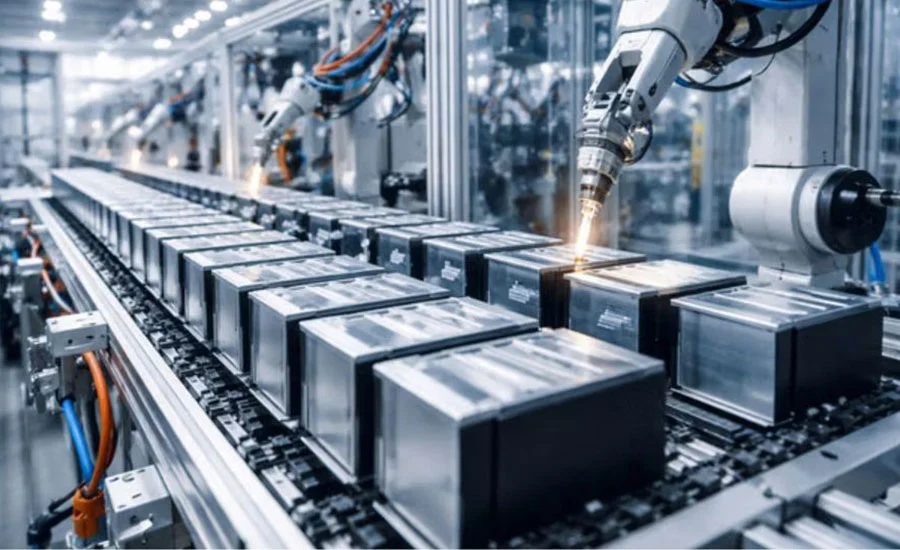
The physical infrastructure of the AMP Center is designed to match its ambitious mission, featuring two state-of-the-art laboratories. The AMP Battery Research Lab is a dedicated nexus for innovation, testing, and manufacturing. It boasts pilot-scale manufacturing and testing capabilities, allowing companies to rigorously evaluate processes and technologies within an environment that closely mirrors actual production conditions. This includes specialized setups for coin cell assembly and advanced pouch cell fabrication – critical steps in developing and validating new battery designs. The ability to conduct pilot-scale manufacturing is a distinct advantage, enabling partners to identify and resolve potential issues long before committing to full-scale commercial production, significantly de-risking investment and accelerating market entry.

Further enhancing its capabilities, the Battery Research Lab is equipped with Honeywell’s AI-powered Battery Manufacturing Excellence Platform (Battery MXP). This automated system is engineered to optimize manufacturing operations by leveraging artificial intelligence, leading to tangible improvements such as enhanced cell yields and expedited facility start-ups for battery manufacturers of all scales. The integration of AI represents a forward-looking approach, recognizing that the efficiency and quality of battery production will be key differentiators in a competitive market.
Complementing the battery-focused lab is AMP’s Power Research Lab, which zeros in on grid resilience, electrification, and comprehensive energy systems testing. This facility provides a crucial testing ground for utilities, manufacturers, and suppliers to validate next-generation power systems essential for supporting electrified transportation and advanced energy infrastructure. By offering a controlled environment, the Power Research Lab enables meticulous evaluation of how emerging technologies interact with the existing grid, ensuring seamless integration and reliability before large-scale deployment. This focus on grid interaction is particularly important as the proliferation of EVs and battery storage systems places new demands on national power grids, necessitating robust and intelligent energy management solutions.
Cultivating a Collaborative Ecosystem: The AMP Consortium
The strength of the AMP Center lies not just in its facilities but in its expansive collaborative network. It operates as a consortium comprising over 45 partner organizations spanning industry, academia, government, and workforce development sectors. This broad base ensures a comprehensive approach to tackling the multifaceted challenges of electrification. Within the University of Alabama, AMP actively engages a diverse array of faculty, researchers, and students from multiple disciplines, including engineering, business, and applied sciences. This multidisciplinary involvement reflects the inherent cross-functional nature of modern battery manufacturing, complex power systems, and advanced mobility solutions, fostering a rich environment for interdisciplinary breakthroughs.
Brad Whisenant, AMP’s consortium development manager, elaborates on the center’s dynamic interaction with key industry players. "We work directly with automakers, suppliers and technology companies through our industry consortium and project-based collaborations," Whisenant explains. These partnerships are mutually beneficial: industry partners engage with AMP to test and validate technologies, scale manufacturing processes, gain access to cutting-edge pilot-scale research infrastructure, collaborate with university researchers, and actively help shape future workforce training programs. This creates a powerful two-way relationship where industry insights directly inform research priorities, and AMP, in turn, delivers solutions that are immediately applicable to real-world manufacturing and deployment scenarios. Such a model ensures that research remains relevant and impactful, directly addressing industry needs.
The research agenda at the AMP Center is strategically aligned with the evolving battery and energy ecosystem. Whisenant outlines several key focus areas: battery manufacturing and materials science, cell performance testing and validation, robust power systems and grid resiliency, advanced EV charging infrastructure and energy delivery mechanisms, automation and advanced manufacturing techniques, and crucial workforce development and training initiatives. Furthermore, AMP provides vital business intelligence and consumer research capabilities, assisting industry partners in making informed decisions regarding technology deployment and market strategy, thereby bridging the gap between scientific innovation and commercial success.
Addressing Critical Challenges in Battery Technology and Electrification
A critical aspect of AMP’s mission is its technology-agnostic approach to battery chemistry. While the center primarily supports lithium-ion (Li-ion) technologies today, reflecting their current commercial dominance and market relevance, its facilities and research methodology are intentionally designed to accommodate emerging chemistries. This includes next-generation and advanced battery technologies as they mature, ensuring AMP remains at the cutting edge of innovation irrespective of specific material science breakthroughs. This flexible infrastructure is vital for supporting innovation across the rapidly evolving battery landscape, which constantly sees new chemistries and designs vying for commercial viability.

One of the most pressing challenges AMP is directly addressing is bridging the chasm between lab-scale research and full-scale production in battery manufacturing. The cell, pack, and EV manufacturing group at AMP focuses intently on this transition. Key areas of concentration include optimizing electrode and cell manufacturing processes, such as coating and formation; rigorous cell performance testing and lifecycle validation; efficient pack integration and system-level considerations; enhancing manufacturing efficiency, yield optimization, and automation; and implementing stringent quality control and data-driven production improvements. AMP’s approach is deeply rooted in process scale-up and manufacturability, providing industry partners with a streamlined pathway to move nascent technologies into efficient production.
Through its pilot manufacturing capabilities and advanced electrochemical testing infrastructure, the Battery Research Lab plays a crucial role in reducing technical risk, improving cell performance, and accelerating the commercialization of next-generation battery technologies. The center’s pouch cell pilot line, for instance, supports the validation of battery production processes across the core stages of Li-ion battery manufacturing. This pilot-scale environment offers partners an invaluable opportunity to refine production workflows, meticulously evaluate new materials, and conclusively demonstrate manufacturability before committing to costly commercial-scale deployment.
Automation is another pivotal area of focus. Whisenant confirms AMP’s deep engagement with advanced manufacturing and smart factory technologies. This includes sophisticated process monitoring and optimization systems, seamless data integration and digital manufacturing platforms, cutting-edge robotics and autonomous systems, robust industrial IoT (Internet of Things) infrastructure, and advanced wireless communications tailored for manufacturing environments. A concrete example of this work involves projects utilizing secure private 5G open radio access network infrastructure and industrial IoT to support autonomous charging systems and connected energy technologies, showcasing a commitment to integrated, intelligent manufacturing.
Artificial intelligence (AI) is also being strategically woven into AMP’s R&D activities. "Yes, AMP is incorporating AI-enabled technologies into several research and manufacturing initiatives," Whisenant affirms. A prime example is the integration of Honeywell’s Battery MXP platform, specifically designed to optimize manufacturing operations. Beyond this, AMP is actively exploring the broader applications of AI to support critical areas such as predictive maintenance, smart energy management, manufacturing optimization, and the development of autonomous infrastructure systems, signaling a comprehensive embrace of Industry 4.0 principles.
A significant hurdle for widespread EV adoption remains "range anxiety"—the concern among consumers about the limited driving range and availability of charging infrastructure. Whisenant acknowledges this challenge: "Range anxiety remains a challenge because consumers want confidence that EVs can reliably meet their daily transportation needs without inconvenience—particularly for long-distance travel, charging availability and charging speed." He emphasizes that addressing this issue demands a holistic approach, extending beyond mere battery improvements. It necessitates expanding robust charging infrastructure, enhancing grid reliability, dramatically reducing charging times, and improving overall system integration. AMP is actively tackling these multifaceted challenges through targeted research and strategic partnerships focused on battery performance and validation, robust charging infrastructure development, grid resiliency and power delivery, smart charging systems, and pioneering autonomous and mobile charging technologies. The ultimate goal is to foster a more reliable and scalable electrification ecosystem that progressively builds consumer confidence.
Finally, while fully electric vehicles are the ultimate goal, hybrid vehicle technologies continue to play an important transitional role. Whisenant notes that manufacturers still grapple with challenges such as cost, system complexity, battery optimization, supply chain intricacies, and the delicate balance between efficiency and vehicle performance in hybrids. While AMP is not developing specific hybrid platforms, its role is to bolster the foundational technologies underpinning electrified transportation broadly. This includes advancing battery manufacturing, optimizing energy storage performance, developing efficient charging and power systems, and refining advanced manufacturing processes that benefit both hybrid and fully electric vehicles. By offering pilot-scale research capabilities and fostering industry collaboration, AMP empowers companies to evaluate technologies and manufacturing approaches that can enhance efficiency, scalability, and long-term reliability across the entire electrification market.
Broader Economic and Societal Impact
The establishment of the AMP Center transcends mere technological advancement; it represents a significant economic and societal investment for Alabama. Economically, it promises to further diversify the state’s manufacturing base beyond traditional internal combustion engine vehicles, attracting new investments in the burgeoning EV and battery sectors. This diversification is crucial for long-term resilience, especially as global automotive trends shift. Projections suggest that the global market for EV batteries alone could reach over $200 billion by 2030, and Alabama aims to secure a substantial portion of this value chain. The center is expected to directly create high-skill jobs in research, engineering, and advanced manufacturing, while also indirectly supporting a wider ecosystem of suppliers and service providers. This move is consistent with national efforts, such as the Inflation Reduction Act (IRA), which has spurred billions in EV and battery manufacturing investments across the U.S., positioning Alabama to compete effectively.

For instance, Governor Kay Ivey, in an inferred statement, might emphasize, "The AMP Center is a testament to Alabama’s foresight and commitment to innovation. It ensures our state remains a powerhouse in manufacturing, creating high-paying jobs and securing a prosperous future for our citizens in the electrified economy." Similarly, the University of Alabama President, Dr. Stuart R. Bell, could highlight the academic impact: "This center elevates the University of Alabama’s research prominence, offering unparalleled opportunities for our students and faculty to contribute directly to solving global energy challenges and educating the next generation of leaders." Executives from Alabama Power and Mercedes-Benz U.S. International would likely underscore their commitment to sustainable innovation and local economic development.
The center’s focus on workforce development is particularly critical. By providing hands-on training and educational pathways for young engineers, AMP is addressing a looming skills gap in advanced manufacturing. This not only prepares Alabama’s talent for future careers but also helps retain graduates within the state, preventing a "brain drain" and fostering a self-sustaining innovation ecosystem. This initiative aligns with broader national priorities to strengthen STEM education and ensure a competitive workforce.
Technologically, AMP’s work on grid resilience and charging infrastructure is vital for the successful widespread adoption of EVs. A robust and smart grid capable of handling increased electricity demand and intermittent renewable energy sources is foundational. By testing and validating next-generation power systems, AMP directly contributes to energy security and the modernization of the national power infrastructure, fostering a more sustainable energy future.
The Road Ahead: Securing Alabama’s Future in Electrified Manufacturing
In conclusion, the Alabama Mobility and Power Center is more than just a research facility; it is a strategic declaration of intent. It signifies Alabama’s proactive stance in embracing the electrification revolution, leveraging its existing manufacturing strengths to build a resilient and innovative future. By fostering unparalleled collaboration between industry, academia, and government, and by investing in both cutting-edge infrastructure and human talent, AMP is poised to deliver significant technological advancements in battery development, manufacturing processes, and energy systems. The center’s comprehensive approach to addressing challenges from battery chemistry to range anxiety and grid integration positions Alabama as a key player in the national and global race towards sustainable mobility. As the world transitions to an electrified future, the AMP Center ensures that Alabama will not only remain "sweet home" to leading manufacturers but will also be a beacon of innovation and a driving force in shaping the future of mobility and power.