The San Mateo County Event Center recently transformed into a sprawling laboratory of absurdist engineering and high-tech creativity as Open Sauce returned for its second consecutive year in the Bay Area. Originally conceived as a spiritual successor to the legendary Maker Faire but tailored specifically for the era of the "engineering YouTuber," Open Sauce has rapidly evolved from a niche gathering into a cornerstone event for the global maker community. This year’s iteration saw a significant expansion in both physical footprint and exhibitor diversity, filling multiple halls with a chaotic yet meticulously engineered array of robotics, combat bots, interactive art, and open-source hardware. As the creator economy continues to blur the lines between digital entertainment and industrial design, Open Sauce serves as a physical manifesto for a generation that prioritizes iterative learning, community transparency, and the sheer joy of building things that probably shouldn’t exist.
The Evolution of the Maker Convention
Open Sauce was founded by YouTube personality William Osman with the intent of bridging the gap between the digital "science and technology" community and the physical world of hands-on fabrication. While traditional industry trade shows focus on corporate enterprise and B2B networking, Open Sauce prioritizes the "prosumer" and the hobbyist. The event’s relocation to the San Mateo County Event Center is historically significant; for over a decade, this venue served as the flagship home of Maker Faire Bay Area, the event that effectively launched the modern maker movement in 2006.
The 2024 event demonstrated a clear upward trajectory in scale. Organizers reported a marked increase in the number of exhibits, which spanned from high-budget professional prototypes to "garage-built" curiosities. The financial commitment from participants also highlighted the seriousness of the movement; one team famously showcased a "couch car"—a fully functional, motorized sofa—that required an investment of approximately $9,000 to realize. This blend of high-level engineering and whimsical application defines the "Sauce" ethos, where technical proficiency is used to solve problems that are often intentionally trivial or comedic.

Navigating the Algorithm: The Creator Panels
Central to the Open Sauce experience is its programming, which features two main stages dedicated to the nuances of the creator economy and the technical hurdles of modern making. This year’s panels featured a wide array of talent ranging from veteran engineers to cosplay experts. A notable highlight was a morning discussion led by Jim Louderback, the CEO of VidCon, which focused on the "Algorithm"—the invisible hand of platforms like YouTube and TikTok that dictates which projects go viral and which languish in obscurity.
The discussions were characterized by a surprising level of transparency. Creators spoke candidly about the financial and emotional toll of high-stakes making. One panelist revealed the staggering reality of the industry, noting they had once spent $50,000 on a project that ultimately failed to produce a viable video. The consensus among the experts was that while the barrier to entry for starting a channel is lower than ever, the cost of staying relevant has skyrocketed. The advice given to aspiring makers was consistent: focus on volume and iterative improvement rather than perfection. For many attendees, these sessions provided a rare look behind the curtain of "Science YouTube," humanizing the figures who often appear invincible behind a layer of polished editing.

Robotics and the Legacy of Combat Engineering
Robotics remains the undisputed heart of the convention. The presence of BattleBots teams provided a bridge to mainstream televised engineering, offering fans a close-up look at the kinetic energy and structural integrity required for heavy-metal combat. However, the robotics on display weren’t limited to destruction. The Bay Area Droid Builders returned with a fleet of highly detailed, screen-accurate replicas from the Star Wars universe. These builds, including K-2SO units and B1 battle droids, represent thousands of hours of 3D printing, circuit design, and weathering techniques.
Beyond the cinematic, the event showcased the democratization of walking robotics. Dorian Todd’s "Sesame" robot served as a prime example of this trend. Sesame is a tiny, affordable quadruped designed to make complex locomotion accessible to students and hobbyists. By hosting tabletop "futbol" matches with these robots, Todd demonstrated that sophisticated gait algorithms and servos can be packaged into a form factor that is both educational and entertaining. This shift toward "desktop robotics" signifies a broader trend in the industry where high-end components are becoming increasingly commodified.

Community Stakes: The Hacker Dojo and Local Hackerspaces
Despite the celebratory atmosphere, the event also highlighted the precarious nature of the physical spaces that make the maker movement possible. The Hacker Dojo, one of the oldest and most influential hackerspaces in Silicon Valley, maintained a significant presence at the show. As a non-profit hub that has birthed numerous startups and patents, the Dojo’s current struggle to maintain its physical location served as a sobering reminder of the rising real estate costs in tech hubs.
To engage the public, the Dojo hosted a workshop where children could customize and take home toy cars, emphasizing the importance of early STEM exposure. They also showcased intricate brick-based artwork that had been three years in the making. The organization used the platform to launch a fundraiser, illustrating that even in the heart of Silicon Valley, the grassroots infrastructure of innovation requires constant community support to survive.

Innovations in Health and Manufacturing
While much of Open Sauce is dedicated to entertainment, several exhibitors focused on solving pressing environmental and manufacturing challenges. Joel Hartlaub, known online as JoelCreates, introduced the "OddCube," a repairable, open-source air purifier kit. In an era of increasing wildfire smoke and urban pollution, Hartlaub’s project aims to move away from the "planned obsolescence" of consumer electronics. The OddCube is designed to be easily serviced by the user, utilizing standard filters and 3D-printed components, aligning with the "Right to Repair" movement that has gained legislative momentum across the United States.
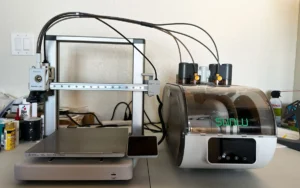
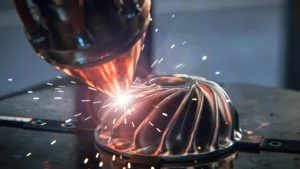
In the realm of advanced manufacturing, Whitcorp Labs showcased the cutting edge of 3D photogrammetry and industrial-grade printing. Their exhibit featured a photogrammetry dome capable of creating high-resolution digital twins of physical objects in seconds. This technology, combined with their custom-built high-speed 3D printers, pointed toward a future where "on-demand" manufacturing is not just a buzzword but a viable alternative to traditional supply chains.

The Intersection of Gaming and Custom Hardware
The gaming hall at Open Sauce provided a venue for "alt-ctrl" (alternative control) creators—developers who build custom hardware interfaces for specific software experiences. Bryan Racic’s "Klorbiest Catch" was a standout in this category. Racic developed an open-source, 3D-printable nautical controller featuring a physical throttle and ship’s wheel. The game, a whimsical crab-fishing simulator, required players to use these tactile inputs to navigate treacherous digital waters. This movement toward bespoke hardware reflects a growing fatigue with standardized controllers and a desire for more immersive, haptic-driven experiences.
Art at Scale: Subverting the Instinctive
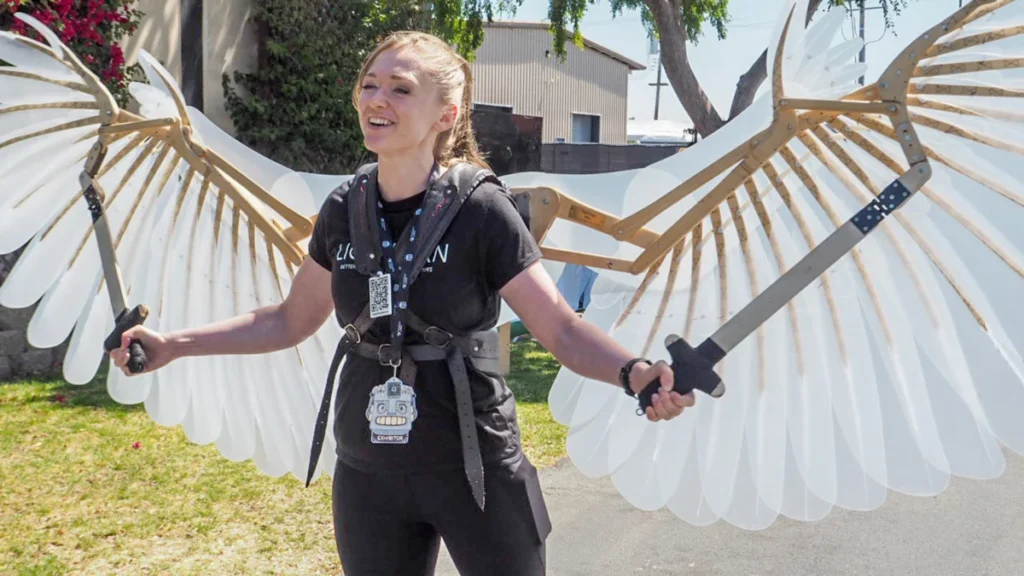
Large-scale art installations served as the visual anchors of the event. Project Empire, a massive, meticulously detailed art car, and the giant inflatable costumes from Devising Delight provided a sense of wonder that defined the outdoor spaces. Indoors, a giant housefly sculpture by Lexi Tayte and Jessica Crafternoon drew significant crowds.

Built from soft materials and magnified to a human scale, the fly sculpture was designed to subvert the typical human "flight or fight" response to insects. By presenting the creature as a soft, approachable entity, the artists forced viewers to confront the intricate biology of a common pest in a new light. Whether viewed as a profound commentary on biodiversity or simply as an impressive feat of soft-sculpture engineering, the fly epitomized the "why not?" attitude that permeates Open Sauce.
Analysis: The Broader Impact of the "Sauce" Movement
The success of Open Sauce 2024 suggests a fundamental shift in how technical knowledge is disseminated. For decades, engineering was a discipline locked behind the doors of academia and corporate R&D. The "Open Sauce" generation has effectively "open-sourced" this expertise through high-quality video tutorials, shared GitHub repositories, and collaborative Discord servers.

Economically, this movement is significant. The creator economy is currently estimated to be a $250 billion industry, and a substantial portion of that growth is driven by STEM-related content. Events like Open Sauce act as physical marketplaces where creators can find sponsors, manufacturers can find beta testers, and hobbyists can find mentors. Moreover, the emphasis on "open hardware" ensures that the innovations showcased at the event are not just spectacles but building blocks that others can use for their own projects.
Looking Ahead: The 2027 Horizon
As the event concluded, organizers announced that the next Open Sauce is scheduled for July 17th and 18th, 2027. The three-year gap between major iterations suggests a move toward a biennial or triennial schedule, possibly to allow makers enough time to complete the increasingly complex projects that the audience has come to expect.

For those who cannot wait until 2027, the return of Maker Faire Bay Area continues to provide a more frequent outlet for the community. However, Open Sauce has carved out a unique identity that is distinctly more "online" and "engineering-heavy" than its predecessor. By focusing on the personalities behind the projects and the transparent sharing of both successes and failures, Open Sauce has created a new template for the modern technology convention—one where the "sauce" is always open for everyone to taste.