As global temperatures continue their relentless ascent, the world is grappling with an escalating onslaught of extreme weather phenomena. Catastrophic floods, increasingly severe hurricanes and cyclones, and wildfires exacerbated by prolonged droughts are no longer isolated incidents but rather a stark new reality impacting communities worldwide. Despite the undeniable urgency, the critical tools relied upon by local communities, emergency and public safety agencies, and the sophisticated insurance and risk markets have largely failed to keep pace with the rapidly evolving, up-to-date data and advanced modeling necessary for accurately predicting the genesis, trajectory, and intensity of these unprecedented events. This critical gap between scientific understanding and actionable foresight has left countless populations vulnerable and infrastructure exposed.
Recognizing the profound implications of this shortfall, the Massachusetts Institute of Technology (MIT) launched its ambitious 2022 Climate Grand Challenges initiative. This monumental undertaking sought to accelerate the development of science-based solutions to the planet’s most pressing climate problems. Among the five pivotal research areas selected was "Preparing for a New World of Weather and Climate Extremes," a dedicated focus on engineering innovative tools and methodologies to meticulously evaluate a given location’s vulnerabilities to a spectrum of climate-related threats, including but not limited to intensified flooding, severe cyclones, and debilitating humid heat waves.
Four years into this groundbreaking endeavor, the collaborative spirit among more than 40 faculty and student researchers engaged in the Weather and Climate Extremes projects has yielded remarkable progress. Their collective efforts have culminated in 29 published research papers, alongside a suite of digital tools and datasets that are either already actively in use or poised for imminent deployment. The individual projects span a wide spectrum of critical areas, encompassing refined forecasting techniques, advanced risk assessment models, practical on-the-ground planning frameworks, and the design of inherently resilient infrastructure. This interdisciplinary approach, a hallmark of MIT’s research ethos, is proving instrumental in bridging the divide between theoretical science and real-world application.
"Communities across the United States and indeed around the world are already confronting the severe and often devastating consequences of extreme weather," stated Evelyn Wang, MIT’s vice president for energy and climate, whose office has been a primary funding and support conduit for all the Grand Challenges since 2024. "Through the Climate Grand Challenges, an unparalleled interdisciplinary team at MIT is not only advancing the fundamental science but also developing the cutting-edge technologies and practical strategies vitally needed to help communities anticipate these escalating risks and build significantly greater resilience against future impacts."
The Genesis of the Climate Grand Challenges
The MIT Climate Grand Challenges initiative was conceived in response to a growing global consensus on the existential threat posed by climate change. Launched in 2022, the program sought to leverage MIT’s unparalleled scientific and engineering prowess to tackle complex climate issues that demand novel, scalable solutions. The initiative cast a wide net, inviting proposals from across the institute’s diverse departments, ultimately selecting five broad research themes, each addressing a critical facet of the climate crisis. "Preparing for a New World of Weather and Climate Extremes" emerged as a priority, underscored by the escalating human and economic toll of recent climate disasters.
The urgency of this research is starkly illustrated by global trends. The World Meteorological Organization (WMO) has repeatedly highlighted that the number of weather-related disasters has increased five-fold over the past 50 years, causing over 2 million deaths and costing trillions of dollars. In the United States alone, the National Oceanic and Atmospheric Administration (NOAA) reported 28 separate billion-dollar weather and climate disasters in 2023, shattering previous records and incurring estimated costs exceeding $92.9 billion. These figures, which continue to rise annually, provide a sobering backdrop to MIT’s focused efforts, emphasizing the immediate need for improved predictive capabilities and robust adaptive strategies.
Refining the Science: Unpacking Extreme Weather Dynamics
A cornerstone of the "Weather and Climate Extremes" initiative involves deep dives into the fundamental science underpinning these increasingly volatile events. Paul O’Gorman, the Robert R. Shrock Professor of Earth and Planetary Sciences at MIT and co-lead of the Weather and Climate Extremes program, is at the forefront of refining the scientific models behind forecasting extreme weather. His work gains particular resonance in the wake of events like the unprecedented flooding in Central Texas and Pakistan in 2022, which collectively displaced millions and caused billions in damages.
"There have been a lot of unprecedented, record-breaking events," O’Gorman observed, reflecting on the escalating frequency and intensity of climate disasters. "Our goal is to understand precisely how they are changing as the climate warms, and critically, how these changes manifest differently across various regions of the globe."
One significant area of his group’s research has focused on the complex relationship between extreme rainfall events and a warming climate. Conventional climate models have long predicted that extreme rainfall increases less in summer compared to other seasons in many parts of the United States and Europe. O’Gorman’s team has made a crucial discovery, finding that these observed seasonal shifts are influenced not solely by the amount of water vapor present in the atmosphere, typically measured by specific humidity, but also by how close the atmosphere is to its saturation point, a metric captured by relative humidity. "We found that changes in relative humidity played a big role, which was something that hadn’t been fully appreciated before," he explained. "This is a critical factor that we absolutely need to integrate into our future models and predictions."
Modeling relative humidity, however, presents substantial challenges due to its dependence on a multitude of interconnected factors, including intricate air circulation patterns, the differential warming rates of land relative to oceans, soil moisture content, and the presence and type of vegetation. "It’s a complex story," O’Gorman conceded, "but gaining this deeper understanding significantly helps us to unravel and more accurately predict evolving precipitation patterns." This improved understanding has direct implications for agricultural planning, urban drainage system design, and flood preparedness strategies.
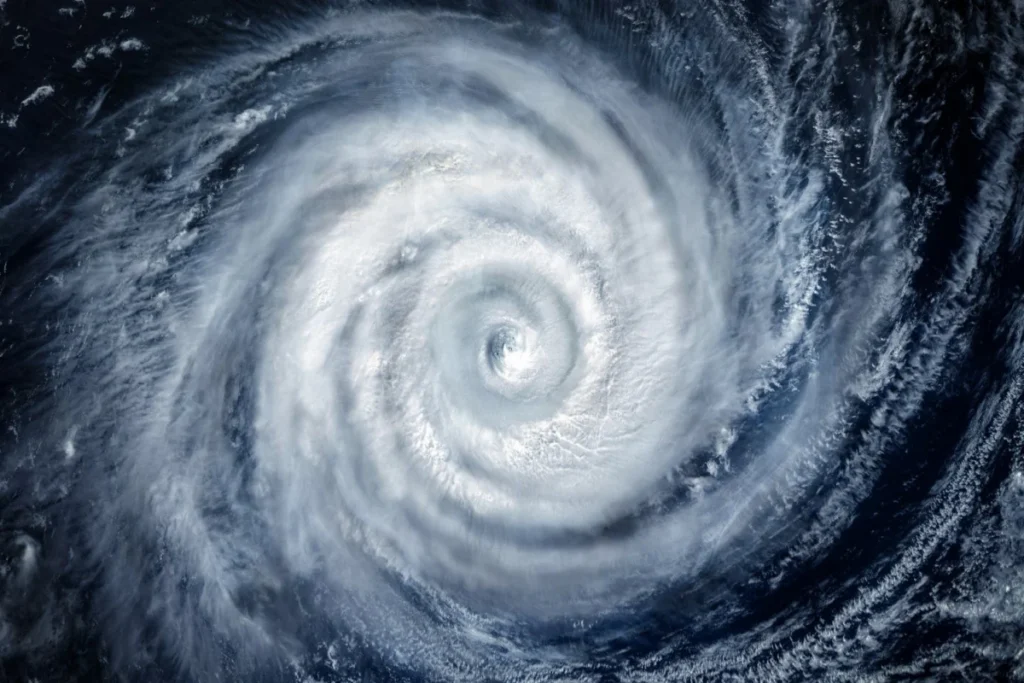
Complementing this work, Kerry Emanuel, an MIT professor (post tenure) in the Department of Earth, Atmospheric and Planetary Sciences and also a co-lead of Weather and Climate Extremes, has dedicated his research to developing superior methods for estimating the risks associated with extreme hurricanes and severe convective storms, such as powerful thunderstorms and devastating tornadoes. "For hurricanes, we’re pretty much there," Emanuel stated confidently. "We can reproduce the statistics of real hurricanes extremely well using just coarse-grained weather data that doesn’t explicitly contain hurricanes." This breakthrough, rooted in advanced statistical mechanics and atmospheric physics, allows for robust probabilistic forecasts of hurricane intensity and frequency under various climate scenarios.
However, the challenge remains formidable for severe convective storms. "We’re not close to being there for these," Emanuel admitted, highlighting a critical area for ongoing research. The urgency for progress in this domain is underscored by the fact that these storms, often characterized by rapid onset and localized devastation, "in the last decade have cost more lives and more damage than hurricanes." The economic toll of tornadoes and severe thunderstorms, often overlooked in the shadow of major hurricanes, is immense, impacting agriculture, small communities, and critical infrastructure.
Despite these ongoing challenges, Emanuel noted that the research into the fundamental physics of storms is already significantly influencing practical applications. For instance, First Street Foundation, a prominent non-profit technology company, leverages Emanuel’s sophisticated methodologies to provide detailed environmental risk assessments for every piece of private property across the United States. These assessments guide local governments, insurance providers, real estate developers, and prospective homebuyers in making informed decisions about flood, fire, and wind risk, transforming abstract climate science into tangible, actionable data for millions.
Translating Science to Action: Enhancing Community Resilience
Beyond the purely scientific advancements, another crucial phase of the Grand Challenge, spearheaded by Miho Mazereeuw, an associate professor in MIT’s Department of Architecture and a leading expert in resilient design, focuses on translating complex scientific modeling and data collection into practical, user-friendly tools for on-the-ground planners and community stakeholders. Her team’s work, exemplified by collaborations with community leaders and residents in diverse locations such as Boston and Broward County, Florida, has led to the development of intuitive, interactive web-based platforms. These tools empower communities to plan more effectively for various impacts, such as widespread flooding, across a broad spectrum of future climate scenarios.
"When an extreme event occurs, there’s often a significant gap between the wealth of scientific knowledge available and truly actionable public information," explained Aditya Barve, a research scientist within Mazereeuw’s Urban Risk Lab. This disconnect manifests at multiple levels: from the immediate need to disseminate real-time information to affected populations, to the systematic collection of post-event data for long-term planning, and finally, to the effective communication and widespread adoption of those plans within vulnerable communities. "The core idea is to specifically target and bridge this gap through innovative tools in community emergency data collection, proactive recovery planning, and AI-assisted visualization tools for at-scale projection of future climate impacts. This ensures that communities are not just reactive but truly prepared when something happens."
A key focus of Mazereeuw’s team has been to make intricate flood modeling outputs accessible and usable by a much wider range of stakeholders, particularly in scenarios where the requirement for specialized software or advanced technical expertise can significantly impede decision-making across various city departments. "Users can ask practical, real-world questions, such as identifying which schools are likely to remain driest across different flood scenarios, and receive answers grounded in sophisticated flood models and comprehensive city datasets within seconds," Barve highlighted. This democratized access to critical data empowers non-technical decision-makers to integrate climate risk into everyday urban planning and emergency preparedness.
Looking beyond immediate response, Mazereeuw underscored a critical deficiency in current disaster planning: while most municipalities possess an emergency response plan, very few proactively create a comprehensive recovery plan that includes crucial elements like housing before a disaster strikes. She emphasized that communities with pre-existing recovery plans are far better positioned to strategically leverage the often substantial emergency relief funding that becomes available post-disaster. "In almost all cases, the resources available after a disaster are much larger," she noted. "By having a well-articulated plan in place, those resources can be channeled effectively to fit the vision of the place moving forward, facilitating not just rebuilding but also building back better and more resiliently." This forward-thinking approach transforms disaster into an opportunity for strategic urban development and enhanced community safety.
Fortifying Critical Infrastructure: Energy Systems in a Changing Climate
The escalating frequency and intensity of extreme weather events pose a direct and increasingly severe threat to critical infrastructure, none more so than our complex energy systems. Associate Professor Michael Howland, the Jeffrey Cheah Career Development Professor of Civil and Environmental Engineering at MIT, is leading a team including Jessika Trancik, a professor in the MIT Institute of Data Systems and Society (IDSS), and Saurabh Amin, the Edmund K. Turner Professor in Civil Engineering at MIT, to meticulously analyze these impacts. Their research specifically targets the electrical power system, aiming to optimize decisions regarding the placement and sizing of new energy infrastructure to withstand future climate shocks while simultaneously supporting the transition to renewable energy.
Howland articulated the dual pressures currently reshaping electrical power systems: "First, the rapid proliferation of renewable energy and storage technologies, and second, large-scale changes in weather patterns and extreme events driven by climate change." He cautioned that "each of these would independently push our electrical power system potentially outside of what we are used to, and their combined, synergistic impacts could be even larger because they are occurring simultaneously." This confluence of factors creates an unprecedented challenge for grid stability and energy security.
The integration of advanced climate modeling with sophisticated grid-infrastructure analysis has dramatically accelerated practical insights into how societies can both adapt to climate change and mitigate its causes simultaneously. Howland explained that such modeling can inform infrastructure decisions in ways that are not immediately obvious. For example, their optimization model for the strategic siting of power resources in Texas surprisingly recommended placing a significant number of wind power plants along the Gulf Coast. "If you look at an average wind speed map," he remarked, "you would typically say this doesn’t make much sense, because it’s really windy in northwest Texas on average, and much less windy along the Gulf Coast."
However, their model revealed a critical nuance: the typical daily cycle of winds along the Gulf Coast is complementary to those in northwest Texas. This means that wind farms distributed between both locations tend to smooth out overall generation, reducing intermittency and better complementing solar power generation, thereby easing critical burdens on the grid. "Now," Howland elaborated, "we’re trying to take it further, not just by smoothing the generation, but actually aligning it with the time- and space-varying electricity demand so that we can reduce storage, transmission, and other backup generation needs." This holistic approach promises to create a more resilient, efficient, and cost-effective energy system.
This ongoing work holds immense promise for directly assisting utility grid planners and regulators by providing actionable information on the optimal siting and sizing of various electrical infrastructure resources. "We want to continuously push on model realism and accuracy to eventually make it more of a practical and useful tool for grid planners," Howland affirmed, highlighting the commitment to translating complex research into tangible benefits for the energy sector.
Impact and Early Successes: A Glimpse into the Future
The initial four years of the "Preparing for a New World of Weather and Climate Extremes" Grand Challenge have laid a robust foundation for future innovation. The 29 published research papers signify a substantial contribution to the scientific understanding of climate extremes, advancing fields from atmospheric physics to urban planning. The development and deployment of digital tools and datasets represent concrete, practical outcomes that are already beginning to inform decision-making in real-world scenarios.
The collaborations fostered within MIT, bringing together diverse disciplines from earth sciences and architecture to civil engineering and data systems, underscore the necessity of an interdisciplinary approach to tackling complex climate challenges. This holistic strategy ensures that scientific breakthroughs are not isolated but are instead integrated into comprehensive solutions that address both the physical and societal dimensions of climate change.
Broader Implications and the Road Ahead
The work emanating from MIT’s Climate Grand Challenges carries profound implications for policy, industry, and global collaboration. Policymakers, armed with more precise predictive models and vulnerability assessments, can enact more effective zoning regulations, update building codes to withstand future extremes, and allocate disaster relief funding more strategically. The insurance industry, currently grappling with unprecedented losses and rapidly increasing premiums, can leverage these advanced risk models to develop more accurate underwriting practices and potentially design new products that incentivize climate resilience.
For urban planners and infrastructure developers, the tools for assessing flood risks, optimizing energy grids, and planning for post-disaster recovery will be invaluable in designing cities and critical systems that are inherently more resilient. Furthermore, the emphasis on community engagement and the creation of user-friendly platforms empower local populations to actively participate in their own preparedness and recovery efforts, fostering a bottom-up approach to climate adaptation.
Despite these significant strides, the journey is far from over. The scale of the climate crisis demands sustained effort, continued innovation, and broader implementation of these scientific and technological advancements. As Kerry Emanuel aptly concluded, the Weather and Climate Extremes Grand Challenge, along with other projects aimed at pinpointing the specific risks associated with a changing climate, has generated a wealth of detailed information that could fundamentally guide political, economic, and civic decision-making. However, applying this knowledge effectively in the real world can be a slow process, akin to "steering a supertanker." Yet, with the momentum generated by initiatives like MIT’s Climate Grand Challenges, there is a clear and compelling path forward, ensuring that progress, however gradual, will undoubtedly come. The continued investment in cutting-edge research and the fostering of interdisciplinary collaboration remain critical to safeguarding humanity against the escalating threats of a new world of weather and climate extremes.