MOUNTAIN VIEW, Calif. — C-Infinity, a leader in advanced manufacturing software, is set to introduce AutoAssembler v4 at the International Manufacturing Technology Show (IMTS) 2026. This groundbreaking software integrates artificial intelligence (AI) with physics-based reasoning to fundamentally transform how product designs are translated into executable manufacturing process plans. AutoAssembler v4 aims to proactively identify and resolve potential assembly problems long before physical production commences, thereby streamlining workflows, reducing costs, and accelerating time-to-market for complex products across various industries. The unveiling at IMTS 2026 positions C-Infinity at the forefront of the smart manufacturing revolution, offering a sophisticated solution to long-standing challenges in product development and production.
The Dawn of Intelligent Manufacturing Planning
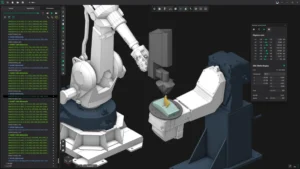
AutoAssembler v4 represents a significant leap forward in automating the intricate planning work traditionally performed by manufacturing engineers. This new version is specifically engineered to analyze comprehensive product geometry, intricate motion sequences, and critical spatial constraints. By leveraging a sophisticated blend of AI algorithms and physics-based simulations, the software can meticulously identify a myriad of potential issues that typically plague the assembly process. These include, but are not limited to, part interference, misalignment, infeasible configurations due to design flaws or manufacturing tolerances, critical tool-access and motion concerns, and sub-optimal assembly sequencing. Furthermore, it proactively suggests design-for-assembly improvements, empowering engineers to refine product designs for manufacturability at an earlier stage, significantly reducing costly rework downstream.
Beyond problem identification, AutoAssembler v4 boasts the capability to automatically generate essential manufacturing documentation directly from product models. This includes comprehensive manufacturing bills of materials (BOMs) and detailed bills of process (BOPs). The automated creation of these critical documents eliminates manual data entry, reduces human error, and ensures consistency across all production planning stages, from procurement to final assembly. This level of automation is crucial for modern manufacturing environments striving for higher efficiency and data integrity in an increasingly complex global supply chain.
Addressing Critical Industry Challenges with Agile Engineering Change Management
One of the most impactful features of AutoAssembler v4 is its robust focus on engineering change management. In today’s dynamic product development cycles, design iterations are frequent and often necessitate extensive re-evaluation of production plans. Traditionally, any modification to a product design would require engineers to manually reassess the entire assembly process, a time-consuming and error-prone endeavor often leading to significant delays and cost overruns. AutoAssembler v4 fundamentally alters this paradigm. When a product design undergoes a revision, the software intelligently analyzes the updated model and automatically identifies and updates only the affected production planning information. This targeted approach dramatically reduces the workload on engineering teams, ensures that changes are propagated accurately and efficiently, and maintains the integrity of the manufacturing process plan throughout the product lifecycle.
Sai Nelaturi, co-founder and CEO of C-Infinity, articulated the company’s vision for this transformative technology. "Engineering and manufacturing teams shouldn’t have to rely on spreadsheets and legacy software systems to determine how products get built," Nelaturi stated. "The complexity of modern products, coupled with the speed required for market entry, demands a more intelligent approach. AutoAssembler acts as a manufacturing compiler, transforming what must be built into how it will be built, enabling a seamless transition from design intent to manufacturing execution. This isn’t just about automation; it’s about intelligent automation that learns, reasons, and adapts." His statement underscores the industry’s shift away from disparate, manual processes towards integrated, AI-driven solutions that can handle the intricacies of contemporary manufacturing.
IMTS 2026: A Global Stage for Innovation
The International Manufacturing Technology Show (IMTS) 2026 serves as the ideal launchpad for AutoAssembler v4. Held biennially in Chicago, IMTS is one of the world’s premier industrial trade shows, attracting over 100,000 visitors and 2,000 exhibitors from more than 100 countries. It is a critical forum for showcasing groundbreaking technologies in metalworking, automation, digital manufacturing, and advanced materials. The event typically features sprawling exhibition halls dedicated to various aspects of manufacturing, including controls and CAD/CAM, fabrication and lasers, quality assurance, and manufacturing systems. For decades, IMTS has been synonymous with innovation, serving as a bellwether for the future direction of the manufacturing industry.
At IMTS 2026, a significant focus is anticipated to be on the continued integration of artificial intelligence, machine learning, and digital twin technologies into manufacturing processes. Exhibitors are expected to highlight solutions that enhance automation, improve data analytics, and foster greater interconnectivity within the factory ecosystem. C-Infinity’s AutoAssembler v4 aligns perfectly with these prevailing themes, demonstrating how AI and physics can be combined to solve real-world production challenges. Its introduction at such a prestigious event is poised to generate considerable interest among manufacturing executives, engineers, and technology enthusiasts seeking to future-proof their operations.
The Evolution of Design-to-Production Workflows: A Timeline
The journey from product concept to manufactured reality has undergone several transformative phases. Early manufacturing relied heavily on manual drafting and experiential knowledge, a process prone to errors and incredibly time-consuming.

- 1960s-1970s: Emergence of CAD/CAM: Computer-Aided Design (CAD) revolutionized drafting, allowing engineers to create digital models. Concurrently, Computer-Aided Manufacturing (CAM) began automating machine tool programming. This era digitized parts of the design and production process, but the link between them remained largely manual and interpretive.
- 1980s-1990s: PLM and ERP Foundations: Product Lifecycle Management (PLM) systems began to manage product data from conception to retirement, while Enterprise Resource Planning (ERP) systems integrated business processes. These systems aimed to centralize information but often struggled with the granular details of manufacturing process planning.
- 2000s-2010s: Rise of Digital Prototyping and Simulation: Advanced simulation tools allowed for virtual testing of designs, reducing physical prototypes. However, the conversion of design data into detailed assembly sequences and production instructions still required extensive human intervention and expert knowledge.
- 2010s-Present: Industry 4.0 and AI Integration: The advent of Industry 4.0 emphasized connectivity, cyber-physical systems, and data-driven decision-making. Artificial intelligence began to show promise in optimizing various manufacturing functions, from predictive maintenance to quality control. This set the stage for solutions like AutoAssembler v4, which bridge the gap between design intelligence and manufacturing execution intelligence.
C-Infinity’s AutoAssembler v4 represents the next logical step in this evolution. By applying AI and physics-based reasoning directly to the CAD model, it aims to create an intelligent, automated bridge that transcends the historical divide between product design and production planning, thereby fulfilling a core promise of Industry 4.0: a truly integrated and optimized manufacturing ecosystem.
Seamless Integration and Data Sovereignty
A key consideration for any advanced manufacturing software is its ability to integrate seamlessly within an existing enterprise technology stack. AutoAssembler v4 is designed with extensive connectivity in mind, capable of interfacing directly with leading CAD (Computer-Aided Design) and PLM (Product Lifecycle Management) systems. This ensures that the software can pull up-to-date product models and associated data without friction.
Furthermore, its structured output can be readily consumed by other critical enterprise systems, including ERP (Enterprise Resource Planning), MES (Manufacturing Execution Systems), and various factory automation systems. This interconnectedness is vital for establishing a holistic digital thread across the entire manufacturing value chain. By enabling a smooth flow of data from design to planning to execution, AutoAssembler v4 helps eliminate data silos, reduce manual transcription errors, and ensure that all stakeholders are working from a single, accurate source of truth. This level of integration is essential for achieving the full benefits of smart factory initiatives, where real-time data exchange drives efficiency and responsiveness.
Recognizing the paramount importance of data security and intellectual property for manufacturers, C-Infinity has engineered AutoAssembler v4 for deployment in customer-controlled environments and private cloud infrastructures. This design philosophy ensures that manufacturers can retain complete control and ownership of their sensitive engineering data, mitigating concerns about proprietary information residing on external, third-party servers. For industries dealing with highly sensitive designs or classified projects, this capability is not merely a feature but a critical requirement, fostering trust and enabling wider adoption.
Broader Implications for the Manufacturing Sector
The introduction of AutoAssembler v4 carries significant implications for the broader manufacturing sector, promising to drive improvements across several key performance indicators:
- Enhanced Efficiency and Productivity: By automating tedious and complex planning tasks, engineers can reallocate their time to more innovative and strategic work. The reduction in manual processes directly translates to faster planning cycles and increased throughput.
- Significant Cost Reduction: Proactive identification of assembly issues before production begins dramatically reduces the likelihood of costly rework, scrap, and production delays. Automated BOM/BOP generation also minimizes administrative costs and errors.
- Improved Product Quality: Catching design and assembly flaws in the virtual realm ensures that products enter production with a higher degree of manufacturability, leading to fewer defects and higher overall quality.
- Accelerated Time-to-Market: The ability to rapidly generate and update manufacturing plans, coupled with reduced rework, allows companies to bring new products to market faster, gaining a crucial competitive edge.
- Addressing Skilled Labor Shortages: As the manufacturing industry faces a growing shortage of experienced manufacturing engineers, tools like AutoAssembler v4 can democratize expertise, allowing less experienced personnel to contribute effectively to planning processes, guided by the software’s intelligence.
- Increased Agility and Resilience: In an era of volatile supply chains and rapidly changing market demands, the ability to quickly adapt production plans to design changes or new manufacturing constraints is invaluable. AutoAssembler v4 fosters this agility, making manufacturers more resilient to disruptions.
Industry analysts are likely to view AutoAssembler v4 as a pivotal development in the quest for truly autonomous and intelligent manufacturing. Its capacity to act as a "manufacturing compiler" suggests a future where the gap between design intent and physical realization shrinks considerably, paving the way for more agile, efficient, and cost-effective production systems.
The Future of Assembly and Manufacturing
C-Infinity’s AutoAssembler v4 is not an isolated innovation but rather a potent manifestation of the ongoing convergence of AI, advanced simulation, and automation in industrial applications. As manufacturing continues its trajectory towards increasingly complex products and customized solutions, the need for intelligent planning tools will only intensify. This kind of software enables manufacturers to move beyond merely automating existing processes to fundamentally rethinking and optimizing their entire production paradigm.
While AutoAssembler v4 takes center stage at IMTS 2026, the broader landscape of smart manufacturing is vibrant and dynamic. Similar products and innovations focusing on enhancing assembly and manufacturing efficiency are expected to be showcased at other prominent industry events, such as the ASSEMBLY Show, which takes place annually in Chicago, typically in the last week of October. These concurrent developments highlight a collective industry drive towards leveraging digital technologies to overcome traditional manufacturing hurdles. The ultimate vision is a future where product development is a seamless, highly optimized journey from digital concept to physical reality, driven by intelligent systems that learn, predict, and adapt, ultimately leading to a new era of manufacturing excellence.