Published: October 12th, 2026
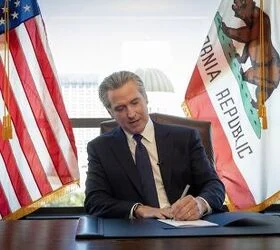
For decades, a sophisticated tax avoidance scheme, colloquially known as the "Montana loophole," allowed affluent Californians to circumvent the state’s substantial sales and use taxes on high-value vehicles. By strategically titling luxury cars, exotic sports cars, and high-end recreational vehicles to shell corporations established in Montana, wealthy residents effectively shielded their assets from California’s tax collectors. However, a new legislative measure, Senate Bill 1406 (SB 1406), signed into law by Governor Gavin Newsom, has dramatically rewritten the rules, effectively closing this long-standing avenue for tax evasion and reclaiming millions in lost state revenue.
The Mechanics of the Montana Loophole
The allure of the Montana loophole stemmed from a combination of Montana’s exceptionally favorable tax environment for vehicle ownership and a critical oversight in California’s existing tax laws. Montana, a state with no statewide sales tax, no vehicle registration fees, and no mandatory vehicle inspections or smog checks, presented an attractive jurisdiction for vehicle titling. Crucially, Montana law permitted non-residents to register vehicles within the state, even if those vehicles were primarily operated elsewhere.
This enabled Californians to establish limited liability companies (LLCs) in Montana. Under the guise of these out-of-state entities, they would purchase vehicles – often costing hundreds of thousands of dollars – and register them with Montana plates. The vehicle itself would then be driven and enjoyed on California’s roads, while its tax liability was theoretically situated in Montana. The scheme effectively created a scenario where the vehicle "lived" in one state but its tax obligations were non-existent or negligible in another.
California’s Sales and Use Tax Law did possess provisions designed to capture vehicles registered to businesses. However, a significant gap existed: under the previous legislation, if a majority of a business’s ownership, or the majority of its operational nexus, was demonstrably outside of California, the vehicle could escape the state’s Use Tax. This typically involved an ownership-percentage test, where maintaining more than 50% of the company’s stake outside the state was sufficient to bypass California taxation. This loophole was particularly effective for individuals who had no genuine business operations in Montana but merely used the state for registration purposes.
The Legislative Response: Senate Bill 1406
The financial implications of this loophole were substantial. The California Department of Tax and Fee Administration (CDTFA) estimated that the state was losing approximately $20 million annually in uncollected revenue, funds that could have been allocated to critical infrastructure projects like road repairs and other essential public services. Official data indicated that since 2023 alone, the scheme had been identified in at least 2,500 vehicle sales linked to California residents.
Recognizing the escalating financial drain and the blatant disregard for tax obligations, state Senator Jerry McNerney, a Democrat from Pleasanton and Chair of the Senate Revenue and Taxation Committee, championed SB 1406. Senator McNerney articulated the problem as a growing trend of tax evaders exploiting convoluted corporate structures to avoid sales tax on high-value assets. His bill was specifically crafted to "close the Montana Loophole for good" and restore vital revenue streams.
The core of SB 1406 lies in a deceptively simple yet profoundly impactful change to the definition of a California resident for tax purposes. The legislation effectively eliminates the old 50-percent ownership threshold for determining whether a business entity is considered Californian. In its place, SB 1406 expands the definition of residency to encompass shell companies with even a single California-based owner.
Under the new law, a shell company is deemed a California resident for tax purposes if any of its shareholders, partners, members, or beneficial owners reside in California. This single-owner residency test is a stark departure from the previous majority-stake requirement. If even one individual with a stake in the out-of-state LLC lives in California, the company is now classified as Californian, and consequently, any vehicles it owns are subject to California’s sales and use taxes.
Furthermore, SB 1406 broadens the scope of business entities targeted by the legislation. While the previous law primarily addressed corporations and LLCs, the revised definition now explicitly includes partnerships, limited partnerships, and limited liability partnerships. This comprehensive approach aims to prevent individuals from simply reorganizing their holdings into different, previously untaxed business structures.
Identifying and Addressing Shell Companies
The legislation also provides clear criteria for identifying and defining a "shell company" for tax enforcement purposes. SB 1406 outlines several key indicators that can mark a business as a shell entity. These include:
- Lack of Specific Business Activity or Purpose: The company engages in no discernible business operations or has no clear commercial objective.
- Absence of a Physical Location Outside California: The entity does not maintain a tangible business presence or office in a state other than California.
- No Payroll with W-2 Wage and Tax Statements: The company does not employ individuals who are issued W-2 forms, indicating a lack of formal employment within its purported location.
- Failure to File Federal or State Tax Returns: The business does not file federal income tax returns or any required tax returns in a state other than California.
These criteria are designed to precisely describe the nature of the entities that facilitated the Montana loophole: companies that exist primarily as legal filings, devoid of real-world operations, employees, or tax compliance in their purported location. The law does not require proof of intent to evade taxes; rather, it focuses on the demonstrable lack of substance within the business entity.
Personal Liability and Criminal Exposure
Perhaps the most significant deterrent introduced by SB 1406 is the imposition of personal liability on individuals involved with these shell companies. The law empowers the California Department of Tax and Fee Administration (CDTFA) to directly assess the tax liability, including accumulated interest and penalties, against the individual members of a shell company. This means that officers, managers, partners, beneficial owners, and any members of the entity can be held personally responsible for unpaid taxes.
The shield that the shell company once provided is now significantly compromised. Ownership of even a partial stake in such an entity now directly links the individual to the tax obligations associated with the vehicle. The consequences extend beyond financial penalties; the law stipulates that the non-payment of taxes owed by a shell company on a vehicle purchase may constitute a criminal offense. This elevates the stakes considerably, transforming a perceived tax dodge into a potential criminal act.
Enforcement and Broader Implications
The enforcement of SB 1406 has already begun, underscoring the state’s commitment to eradicating this tax evasion tactic. A sweeping criminal investigation has targeted individuals allegedly operating a tax evasion scheme built on the Montana loophole. This investigation has already implicated 14 Californians, who are accused of evading over $1.8 million in California taxes and failing to report more than $20 million worth of luxury vehicle purchases.
The implications of SB 1406 extend beyond the immediate closure of the Montana loophole. It signals a broader shift in California’s tax enforcement strategy, demonstrating a willingness to close intricate legal avenues that facilitate tax avoidance. For wealthy residents who have historically relied on such schemes, the message is clear: the era of exploiting out-of-state entities to avoid California taxes is over.
For individuals who currently have vehicles titled to out-of-state LLCs, particularly those in Montana, the practical advice is to reassess their situation. The single-owner residency test established by SB 1406 means that such entities are almost certainly now classified as Californian for tax purposes. The previous strategies of manipulating ownership percentages or reorganizing into different partnership structures are no longer effective.
The most prudent course of action is to treat any existing Montana-titled vehicle as a liability that needs to be resolved, rather than a position to defend. This involves accounting for California’s use tax in the cost of acquiring or maintaining such vehicles, rather than assuming a paper company can continue to make these substantial tax obligations disappear. The financial and legal ramifications of non-compliance are now too significant to ignore.
The closure of the Montana loophole is a significant victory for California’s tax integrity and a testament to the state’s ability to adapt its laws to combat sophisticated tax evasion tactics. It ensures that a greater portion of revenue generated by the state’s affluent residents is reinvested in the services and infrastructure that benefit all Californians.
(Image sources: California Governor’s Office, Montana Department of Justice, Ferrari, Porsche, Lamborghini)