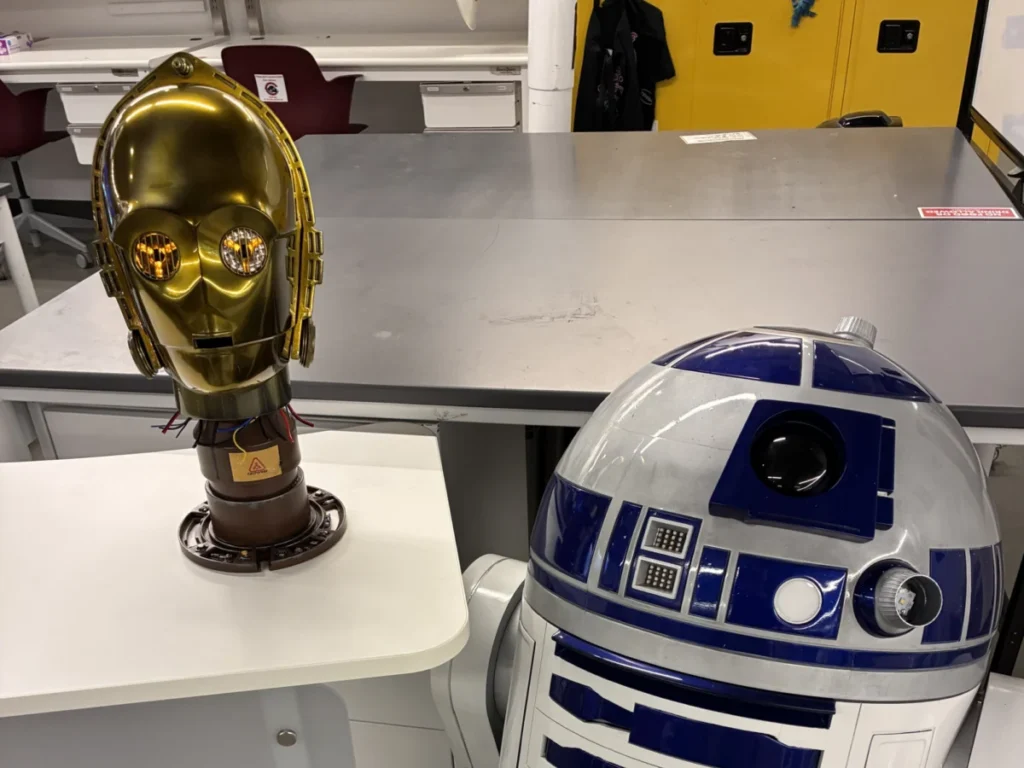
In an era saturated with digital chatbots, a student project from Chapman University has elevated the concept of conversational AI by embedding it within a meticulously crafted, physical manifestation of one of cinema’s most iconic droids: C-3PO. This ambitious endeavor, spearheaded by Sam Potozkin, transcends a mere technical demonstration, venturing into the nuanced realm of human-AI interaction and the profound impact of physical embodiment on our perception and engagement with artificial intelligence. Potozkin’s "Threepio" project is not just a testament to engineering prowess and artistic dedication but also a practical exploration of theoretical frameworks in communication and AI, aiming to replicate the familiar experience of interacting with a character from a 50-year-old film in a contemporary, tangible form.
The Genesis of an Embodied AI: Bridging Fiction and Reality
The inspiration for Potozkin’s project undeniably stems from George Lucas’s original 1977 film, Star Wars: A New Hope, which introduced audiences to C-3PO, a protocol droid fluent in "six million forms of communication" and imbued with a distinct, often anxious, personality. While modern AI chatbots are commonplace, often accessible through myriad devices and platforms, their existence is primarily digital, confined to screens or disembodied voices. Potozkin sought to challenge this paradigm, bringing AI off the screen and into a physical, interactive system. His objective was to create an "embodied AI" that possesses a tangible presence, a distinct voice, and a personality that resonates in the real world, much like the fictional character it emulates.
The meticulous attention to detail in the physical construction of Threepio is a cornerstone of its appeal. Potozkin utilized 3D printing technology to fabricate the droid’s head, dedicating significant effort to post-processing. This involved extensive sanding to achieve a smooth, metallic finish, eradicating visible layer lines that are often characteristic of 3D-printed objects. The addition of "greeblies"—small, intricate details typically found on science fiction models to enhance realism—to the display stand further anchors the project in the aesthetic of the Star Wars universe. This commitment to visual authenticity is crucial, as the project aims to leverage the inherent familiarity and emotional connection people have with the fictional C-3PO to explore how these sentiments translate to an embodied AI.
Technical Architecture and Overcoming Engineering Challenges
At the heart of Potozkin’s C-3PO lies a robust local AI chat stack, powered by a Raspberry Pi 5. The Raspberry Pi series, particularly its latest iteration, has emerged as a formidable platform for hobbyists and professionals alike, offering significant computational power in a compact, energy-efficient package. The Raspberry Pi 5, with its improved processor, graphics capabilities, and increased memory bandwidth, enables local processing of complex AI algorithms that might typically require cloud-based services. This local execution is a critical design choice, offering advantages in terms of privacy, reduced latency, and independence from internet connectivity, thereby enhancing the immediacy and responsiveness of the interaction.
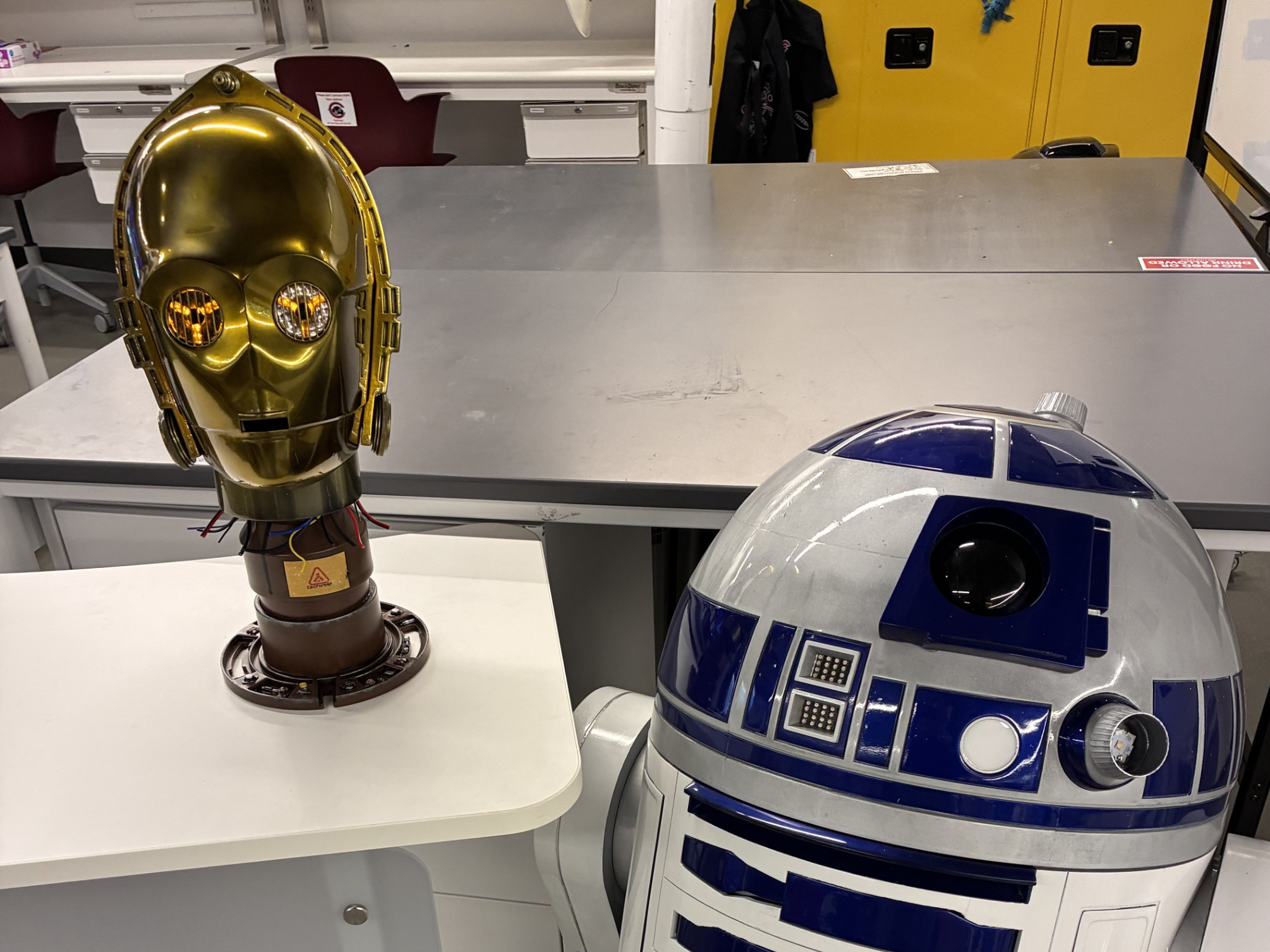
Beyond the computational core, Potozkin innovated in the realm of audio delivery. Instead of employing a conventional speaker, he integrated an exciter, a device that transforms any surface into a speaker. In this application, the exciter is affixed internally to the 3D-printed head, making the entire head resonate and project sound. This creates the illusion that the voice emanates directly from the droid’s physical form, a subtle yet powerful effect that significantly enhances the sense of embodiment and realism. Potozkin invested considerable time in refining these audio effects, fine-tuning the pitch, tone, and vocal characteristics to authentically mimic C-3PO’s distinctive voice, further blurring the lines between the physical construct and its fictional counterpart.
The development journey was fraught with challenges, typical of ambitious DIY robotics projects. Potozkin recounted the necessity of learning new skills, including soldering, which is fundamental to electronics assembly. The painstaking process of sanding 3D prints, dealing with surface imperfections like "orange peel" texture, and even recovering from a dropped head—a common mishap in intricate builds—underscores the dedication required. These practical hurdles highlight the often-unseen effort behind seemingly seamless technological creations, emphasizing the blend of engineering, craftsmanship, and perseverance.
The Philosophical Underpinnings: Exploring Human-AI Interaction
Potozkin’s Threepio project is not merely an engineering feat but a scholarly endeavor, accompanied by a detailed paper exploring human-AI interaction. In this paper, he investigates why individuals react differently to contemporary AI, often perceived as abstract algorithms or disembodied voices, compared to a character like C-3PO, which despite its age, continues to evoke a strong sense of familiarity and personality.
His research posits that the physical embodiment of AI plays a crucial role in shaping human perception and interaction. As Potozkin articulated in his paper: "This project explores the translation of a fictional character into a real-world, embodied AI system. Developing this system required translating and combining abstract concepts from both AI and communication theory into a functional, working architecture. The goal of the project was to explore what happens when conversational AI moves off the screen and into a physical, interactive system. Rather than treating AI as something purely digital, this build focuses on embodiment, giving the system a presence, voice, and personality that can be experienced in the real world."
This perspective aligns with growing academic interest in Human-Robot Interaction (HRI), a field that studies the interaction between humans and robots. Researchers in HRI often emphasize the psychological impact of a robot’s physical form, its gestures, and its perceived personality on user engagement and trust. Projects like Threepio offer invaluable real-world data points for understanding phenomena such as anthropomorphism—the attribution of human traits, emotions, or intentions to non-human entities—and its role in fostering more natural and intuitive interactions with artificial intelligence. The familiarity derived from a beloved character like C-3PO can bypass some of the initial hesitations or "uncanny valley" effects sometimes associated with more generic humanoid robots, providing a unique lens through which to study human-AI relationships.

The Broader Landscape of AI and DIY Robotics
The Threepio project emerges against a backdrop of rapid advancements in both artificial intelligence and the democratized field of DIY robotics. The global AI market is projected to grow exponentially, with conversational AI being a significant segment. While large language models (LLMs) like those powering popular chatbots have made incredible strides in linguistic fluency and contextual understanding, the challenge remains in integrating these capabilities into physical forms that can interact meaningfully with the real world.
The rise of accessible development boards like the Raspberry Pi, coupled with the widespread availability of 3D printing technology, has fueled a vibrant maker community. This ecosystem empowers individuals like Potozkin to bring complex technical visions to life without needing access to industrial-scale manufacturing or prohibitive budgets. The open-source nature of many such projects, including Potozkin’s Threepio build, which provides schematics and code on platforms like GitHub, further accelerates innovation. This collaborative environment allows enthusiasts worldwide to customize, extend, and build upon existing designs, fostering a collective advancement of technology. For instance, the instruction to add the "other 5,999,999 languages" to Threepio is a playful nod to C-3PO’s lore, but also a practical invitation for the community to enhance the project’s capabilities.
This project also fits within a larger trend of Star Wars-inspired droid building. The Star Wars universe, with its diverse array of droids, has long captivated the imaginations of engineers and hobbyists. From the meticulously crafted R2-D2 units built by the R2-D2 Builders Club to custom-designed astromechs, the desire to bring these fictional companions into reality is a powerful motivator. Experienced R2-D2 builders often advise newcomers to start with the dome, acknowledging the significant time and effort involved in perfecting the most expressive and recognizable part of a robot. Potozkin’s focus on C-3PO’s head aligns with this wisdom, maximizing the impact of the build where personality and communication are paramount.
Implications for Future Robotics and Human-AI Coexistence
The implications of projects like Threepio extend far beyond a mere fan tribute. They offer tangible insights into the future of human-AI coexistence, particularly in areas such as companion robotics, educational tools, and assistive technologies. By demonstrating how a carefully designed physical form, coupled with advanced conversational AI, can evoke strong emotional responses and facilitate natural interaction, Potozkin’s work contributes to the ongoing discourse about the role of anthropomorphism in technology.
In educational contexts, such embodied AI systems could serve as interactive learning companions, making complex subjects more engaging through personalized, conversational instruction. For assistive technologies, a robot with a familiar and comforting persona could provide support to individuals in need, offering companionship and practical assistance in a way that feels less clinical and more human-like. Furthermore, the local processing capability of Threepio addresses growing concerns about data privacy and security, as user interactions do not necessarily need to be transmitted to remote servers.

The challenge of creating truly robust and ethical embodied AI systems remains. Issues such as potential algorithmic bias, the ethical implications of creating entities that mimic sentience, and ensuring transparency in AI’s capabilities are critical considerations. However, projects like Threepio, by making AI tangible and approachable, provide a valuable platform for exploring these complex questions in a practical and engaging manner.
Conclusion: A Golden Standard for Embodied AI
Sam Potozkin’s Threepio project stands as an absolutely impressive achievement, setting a high standard for what can be accomplished at the intersection of popular culture, advanced technology, and academic inquiry. By faithfully recreating the iconic protocol droid with a deep understanding of both engineering and human-AI interaction principles, Potozkin has not only built a remarkable piece of hardware but has also contributed meaningfully to the ongoing conversation about how humans will interact with artificial intelligence in an increasingly automated world. The project demonstrates that while AI chatbots may be ubiquitous, those that go the "extra mile" in terms of personality, physical presence, and meticulous execution are the ones that truly stand out, offering a glimpse into a future where our digital companions might become our physical confidantes. As technology continues to advance, the Threepio project serves as a golden example of how creativity, technical skill, and a touch of nostalgic inspiration can push the boundaries of what is possible in the realm of embodied AI.