Published: October 23rd, 2026
The global automotive industry is witnessing a significant strategic shift as Chinese automakers, grappling with an intense and potentially crippling domestic price war, turn their gaze toward the lucrative United States market. This pursuit is not merely opportunistic; it represents a critical lifeline for an industry facing razor-thin profit margins and mounting financial pressures. The U.S., with its unparalleled consumer spending power and established automotive infrastructure, is seen as the ultimate prize. As Michael Dunne, a former General Motors executive and a keen observer of the automotive landscape, aptly described, access to the American market would be "like a giant tank of life-saving oxygen" for these companies.
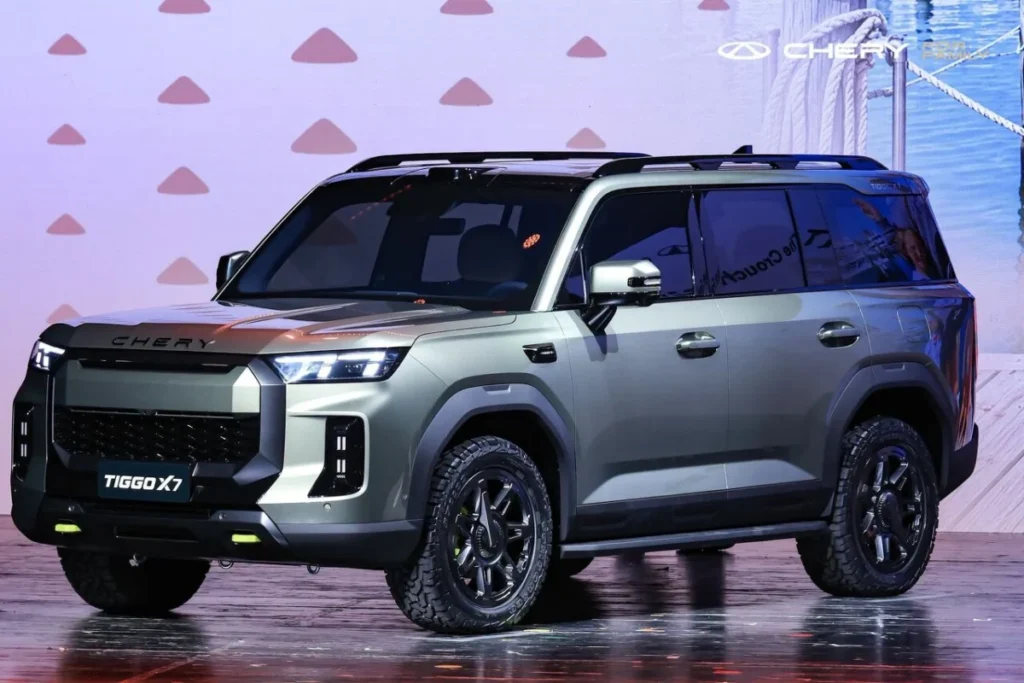
Chery, one of China’s most prominent automotive exporters, has publicly articulated this ambition, signaling a willingness to forge partnerships with American manufacturers to achieve its goal. This move, while bold, highlights the multifaceted challenges Chinese carmakers face in penetrating the U.S. market, a landscape currently fortified by substantial trade barriers and stringent regulatory measures.
The U.S. Market: A Highly Protected Fortress
The primary obstacle for Chinese automakers like Chery is the formidable protectionist stance of the U.S. government. A steep 100 percent tariff on imported Chinese vehicles effectively doubles their cost, rendering them largely uncompetitive. Compounding this, a sweeping ban on Chinese vehicle software further complicates any potential entry strategy. This regulatory environment has been designed to shield the domestic auto industry from foreign competition, particularly from nations perceived as economic rivals.
Chery’s vice president, Charlie Zhang, has articulated a strategy that aims to circumvent these barriers through technical ingenuity and strategic alliances. He stated in remarks to Reuters that the company is "very open to different options, even a potential partnership with American automakers." Crucially, Zhang emphasized Chery’s confidence in its ability to engineer solutions that bypass existing restrictions, asserting, "Definitely from a technical point of view, we will be able to find a China-free solution in terms of hardware and software." The ultimate objective, as framed by Zhang, is to design and produce vehicles that are entirely independent of Chinese hardware and software components.
Potential Partnership Models: A Glimpse into the Future
A tangible manifestation of such a partnership could involve established American automakers, such as Ford or General Motors, manufacturing vehicles for Chery on U.S. soil. This arrangement would grant Chery a crucial manufacturing and distribution presence within the United States, while ostensibly adhering to U.S. import tariff regulations and software bans. The financial resources for such an endeavor are not a constraint for Chery. The company boasts substantial sales and profits across diverse global markets, including Europe, the Middle East, Latin America, and Southeast Asia. It is recognized as a leading car exporter from China, operating under its own brand and through its export-focused Omoda and Jaecoo sub-brands.
The global success of these sub-brands is already making waves. The Jaecoo 7, for instance, achieved the remarkable feat of topping the U.K. sales charts, becoming the first Chinese car to do so. Despite this commercial success, the vehicle faced some critical commentary, with the British press humorously dubbing it a "Temu Range Rover" due to its striking resemblance to the Range Rover Velar. This anecdote underscores both the growing capability of Chinese automakers and the continued scrutiny they face regarding design originality and market positioning.
Navigating the Connected Vehicle Rule and Regulatory Minefield
The most significant regulatory hurdle is the Connected Vehicle Rule, set to be strictly enforced from the 2027 model year. This rule explicitly prohibits the sale and import of connected vehicles and associated software that have any demonstrable ties to China and Russia. The Bureau of Industry and Security (BIS), a division of the U.S. Department of Commerce responsible for export and security controls, is the enforcer of this critical regulation. The impact of this rule has already been felt, with reports indicating that it has contributed to the withdrawal of Geely-owned Polestar from the U.S. market due to its software dependencies.
Circumventing these regulations is a complex undertaking, far more intricate than simply rebranding or rerouting supply chains. Sun Kuo-hsiang, an expert in international relations and commerce at Taiwan’s Nanhua University, cautions against overly simplistic solutions. He points out that strategies such as changing brand names, establishing U.S. distributors, or attempting to import through neighboring countries like Mexico or Canada "will not automatically bypass the restrictions."
Furthermore, any proposed deals involving acquisitions, significant investments, or real estate transactions by foreign entities are subject to rigorous review by the Committee on Foreign Investment in the United States (CFIUS). CFIUS scrutinizes such transactions for potential national security risks. Therefore, the ultimate success of any partnership hinges on the willingness of American companies to absorb the associated commercial and political risks, and on the proposed arrangement’s ability to withstand intense regulatory scrutiny.
The Volvo Model: A Rare Precedent
A singular precedent exists for a Chinese-owned automaker successfully navigating these complex regulations: Volvo. The Swedish marque, acquired by China’s Geely, is the only Chinese-owned automotive entity to have secured a formal exemption from the Department of Commerce concerning connected vehicle technology. U.S.-based China analyst Wang He notes that despite Geely’s ownership, Volvo has maintained a degree of operational independence. Critically, the technical architecture derived from Geely in Volvo vehicles imported into the U.S. constitutes a minimal fraction of the overall vehicle’s composition.
The majority of Volvo vehicles entering the U.S. market are manufactured in Europe or within the United States itself. The company has also made substantial commitments regarding its corporate governance, technical architecture, and data security protocols, ensuring a clear separation from its Chinese parent company’s operations where necessary. Wang refers to this as the "Volvo model"—a strategy that involves acquiring an established overseas brand, maintaining a degree of separation in operations, and then marketing its products in the American market. This path, however, is exceptionally narrow, with Volvo being the sole entity to have successfully traversed it.
United Front Against Chinese Incursion
The resistance to Chinese automakers entering the U.S. market is remarkably unified, encompassing industry groups, labor unions, and political factions. Six major U.S. automotive industry organizations have jointly petitioned the federal government to maintain existing restrictions on Chinese automakers, regardless of whether they seek to import vehicles or establish domestic production facilities. In a separate but related development, a coalition of trade groups representing manufacturers, dealerships, and suppliers has urged a reconsideration of any potential softening of these policies. The powerful United Auto Workers (UAW) union is also unlikely to welcome such an influx, as it poses a direct threat to American jobs and labor standards.
Washington’s stance largely mirrors these concerns. More than two dozen Democratic lawmakers have voiced their support for maintaining the current restrictions. Simultaneously, bipartisan legislative efforts aimed at banning Chinese automakers are progressing through Congress. Senator Elissa Slotkin has framed the issue as a fundamental question of national economic security and manufacturing sovereignty, emphasizing the importance of retaining the capacity for domestic vehicle production and a manufacturing base that can adapt to geopolitical shifts.
The U.S. automotive industry’s objections are blunt and rooted in competitive realities. Nissan Americas chairman Christian Meunier, while acknowledging the quality of Chinese products, pointed to aggressive pricing strategies, describing the contest as being against "their governments rather than their automakers." Dunne offers an even more stark forecast, predicting that Chinese automakers "would quickly overwhelm America’s auto industry, just as it is now ravaging Europe." This assertion is supported by data: Chinese brands’ market share in Europe has surged from virtually zero in 2020 to approximately 12%, meaning roughly one in every ten cars sold on the continent now carries a Chinese badge.
A Question of "When," Not "If"
Despite the formidable opposition, leaders within the U.S. automotive industry acknowledge that the eventual entry of Chinese automakers into the American market is a matter of "when," not "if." Ford CEO Jim Farley has publicly stated that U.S. automakers cannot assume a permanent exclusion of Chinese brands and has predicted that the U.S. market could be breached within the next five to ten years. Meunier echoes this sentiment, advising, "We need to get ready for the day when they come to the U.S. because it will happen one day. Hopefully not tomorrow, but it will happen one day."
The current administration has, at times, indicated a degree of openness. Former President Trump, for instance, suggested he might be "OK" with Chinese automakers if they established domestic manufacturing operations, echoing earlier sentiments about welcoming foreign investment that creates American jobs.
Chery, meanwhile, is strategically positioning itself to capitalize on any potential openings. The company is already active in the Mexican market and has set its sights on a Canadian debut in early 2027. Wang interprets this sequence of moves as a clear roadmap: once Chery establishes a foothold in Canada, where emissions and safety regulations are largely harmonized with those of the United States, the next logical progression would be to target the U.S. market.
The immediate question remains whether any American automaker will break ranks and forge a partnership. The experience of Stellantis offers a cautionary tale. While the company took a significant 21% stake in Leapmotor and formed a majority-controlled venture, a subsequent plan to build Leapmotor vehicles at its idled Brampton, Ontario, plant was ultimately shelved. This situation illustrates that while collaboration with Chinese automotive entities may be easier to announce than to execute, the path to genuine integration is fraught with challenges.
The critical factors to monitor in the coming months and years will be the stringent enforcement of the 2027 Connected Vehicle Rule, the progress of bipartisan legislative efforts to ban Chinese automakers, and, crucially, whether Chery’s proposed "China-free solution" can successfully navigate the Commerce Department’s review process, akin to the exemption granted to Volvo. The demand for entry is palpable on one side of the equation. The ultimate narrative will be written by whether any entity in Detroit is willing to engage.
[Images: Chery, WhiteHouse.gov, Ford]