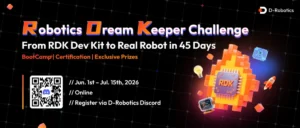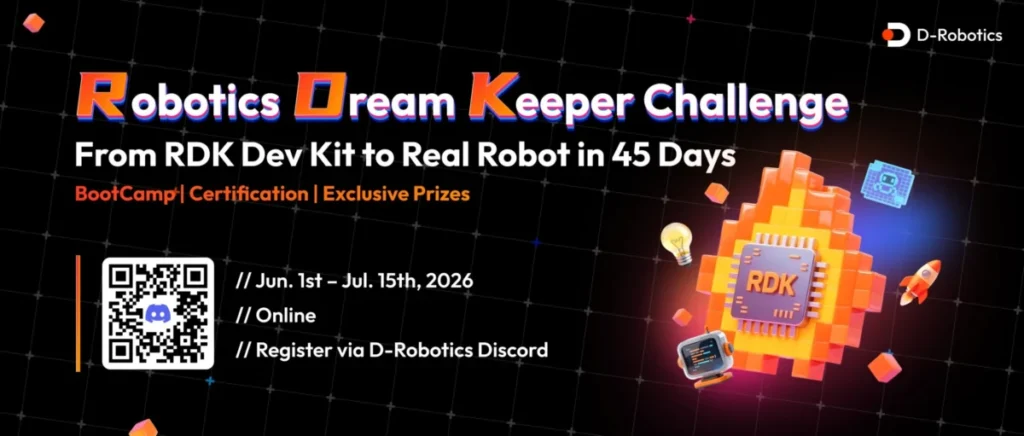
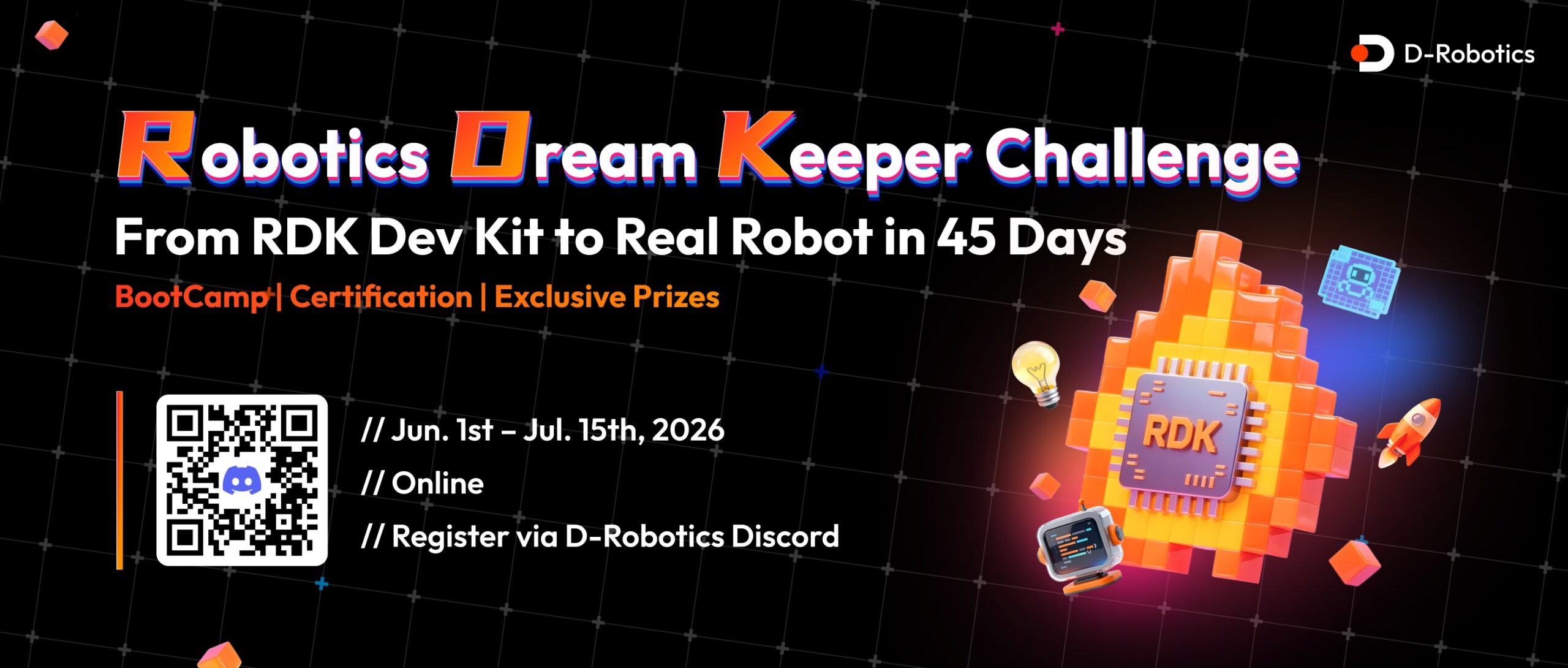
In a significant move poised to democratize access to advanced artificial intelligence and robotics, D-Robotics has officially launched the Robotics Dream Keeper Challenge (RDK Challenge). This initiative aims to bridge the gap between aspirational robot concepts and tangible creations, providing makers, students, hobbyists, and seasoned developers with a structured, supportive pathway to build intelligent robots using the RDK X5, an innovative edge AI development board. The challenge addresses a common frustration among aspiring roboticists: the daunting complexity, fragmented software ecosystems, and high entry barriers that often relegate groundbreaking ideas to the realm of mere thought experiments.
For years, the dream of building autonomous companions, smart assistants, or sophisticated robotic systems has been tantalizingly close for many enthusiasts. However, the practicalities—ranging from intricate wiring and complex software configurations to the fundamental question of "where to begin"—have proven to be significant deterrents. The RDK Challenge, powered by the RDK X5, is designed to dismantle these obstacles, offering a comprehensive program that guides participants from concept to a fully functional, demo-ready AI robot. This strategic push by D-Robotics not only highlights their commitment to fostering innovation but also positions the RDK X5 as a pivotal tool in the evolving landscape of accessible AI hardware.
The Expanding Horizon of Edge AI and Consumer Robotics
The global market for AI in robotics is experiencing explosive growth, projected to reach hundreds of billions of dollars in the coming decade, driven by advancements in machine learning, sensor technology, and more powerful, compact processing units. Edge AI, specifically, is a burgeoning segment, enabling AI computations to be performed directly on devices rather than relying solely on cloud infrastructure. This paradigm shift offers numerous advantages, including reduced latency, enhanced privacy, lower power consumption, and improved reliability, making it ideal for real-time robotic applications.
Despite this rapid expansion, the development of sophisticated AI-powered robots remains a specialized field. While platforms like Raspberry Pi and Arduino have lowered the barrier for basic electronics and programming, integrating advanced AI capabilities, such as real-time object recognition, complex motion planning, and natural language processing, often requires a deeper understanding of specialized hardware, frameworks, and optimization techniques. This is precisely where the RDK X5 and the RDK Challenge step in, aiming to make these advanced capabilities accessible to a broader audience.
A D-Robotics spokesperson, speaking on the launch, articulated the company’s vision: "We recognized a significant unmet need in the maker community. Many individuals possess incredible creativity and innovative ideas for robots, but they often lack the integrated tools and guided support to bring these complex AI-driven projects to fruition. The RDK Challenge, coupled with the power and simplicity of the RDK X5, is our answer to that. We want to empower everyone to become a ‘dream keeper,’ transforming their robotic visions into reality."
Unveiling the RDK X5: A Catalyst for Creation
At the heart of the Robotics Dream Keeper Challenge lies the RDK X5, an edge AI development board designed for both performance and ease of use. While specific, in-depth technical specifications of the RDK X5 are typically detailed in its accompanying documentation, its description as "powerful yet approachable" suggests a balanced architecture optimized for on-device AI inference. Such boards typically feature a System-on-Chip (SoC) with dedicated AI acceleration hardware, such as a Neural Processing Unit (NPU) or an optimized Graphics Processing Unit (GPU), alongside general-purpose processing cores (CPUs). This configuration allows the RDK X5 to execute complex AI models, like those used in computer vision or advanced control systems, efficiently and with minimal latency.
The "maker-friendly" aspect implies robust connectivity options (e.g., GPIO, I2C, SPI, UART, USB, Ethernet, Wi-Fi), comprehensive software development kits (SDKs), and well-documented APIs that simplify hardware interaction and AI model deployment. These features collectively reduce the traditional headaches associated with integrating diverse components and complex software stacks, allowing developers to focus more on innovation and less on debugging foundational issues. The fact that D-Robotics showcased live demos of the RDK X5 during Make: YouTube channel livestreams underscores its readiness and effectiveness in real-world applications, building confidence among potential participants.

Inspiring Innovation: Projects Already Forged with the RDK X5
Even before the formal launch of the challenge, the RDK X5 has proven its versatility through a diverse array of projects. These early builds serve as compelling proof-of-concept for the board’s capabilities and the creative potential it unlocks:
-
OpenDuck Mini – RDK X5: Developed by AI Researcher and Robotics Developer Frank Fu, the OpenDuck Mini is a bipedal robot that utilizes reinforcement learning to achieve "real sim-to-real walking." Reinforcement learning is a cutting-edge AI technique where an agent learns to make decisions by performing actions in an environment and receiving rewards or penalties. The ability to translate simulated learning into real-world robotic locomotion ("sim-to-real") is a significant technical achievement, often fraught with challenges due to discrepancies between virtual and physical environments. OpenDuck Mini demonstrates the RDK X5’s capacity to handle the intensive computations required for such advanced control algorithms, making complex robotics research more accessible to individual developers.
-
An Arc Reactor That Beats With My Heart: This project, created by MateoTechLab, transcends traditional robotics, showcasing the RDK X5’s creative potential beyond mere movement. The device is a glowing, heartbeat-synchronized Arc Reactor, famously known from popular culture. It integrates bio-sensing technology (likely via a heart rate monitor connected to the RDK X5) with expressive lighting, demonstrating the board’s flexibility in managing sensor inputs and controlling outputs for artistic and interactive installations. This project highlights that the RDK X5 is not just for building functional robots but also for crafting imaginative, interactive experiences that blend technology with personal expression.
-
Valentine’s Day AI Robot With RDK X5: From Pro Know, this adorable interactive companion exemplifies the RDK X5’s capabilities in human-robot interaction. The robot integrates vision, touch, and sound reactions, endowing it with a charming personality. Such a project typically involves real-time image processing for facial recognition or object detection (vision), haptic feedback or sensor input (touch), and audio processing for voice commands or expressive sounds. This project underscores the RDK X5’s ability to facilitate multi-modal AI, creating robots that can perceive and respond to their environment in nuanced and engaging ways, pushing the boundaries of what consumer-level companion robots can achieve.

These examples collectively illustrate the RDK X5’s robust on-device AI performance and its adaptability across a spectrum of applications, from complex locomotion to artistic installations and interactive companions. They also serve as an inspiration, showing prospective participants the caliber of projects achievable within the challenge framework.
The Robotics Dream Keeper Challenge: A Three-Stage Journey to Mastery
The RDK Challenge is meticulously structured into three progressive stages, designed to provide a manageable yet comprehensive learning experience over approximately 35-45 days. This phased approach ensures that participants, regardless of their initial skill level, can build confidence and expertise incrementally, without feeling overwhelmed. Mentorship and community support are integral to each stage, ensuring no participant is left to navigate complex technical hurdles alone.
Stage 1: Ignite (5-10 Days) – Powering the Brain
The initial phase is focused on foundational understanding and achieving quick wins. Participants begin by unboxing their RDK X5 and familiarizing themselves with its basic setup. The core objective is to successfully power on the board, activate essential sensors, and deploy a rudimentary AI demonstration. This could involve running a pre-trained object detection model on a camera feed or a simple voice command recognition task. The "Ignite" stage is crucial for demystifying the hardware and software, providing a tangible sense of accomplishment, and building a solid base for more complex endeavors. For anyone with prior experience in single-board computers like Raspberry Pi, the initial setup will feel familiar, but with the added dimension of dedicated AI processing.
Stage 2: Build (10-15 Days) – Designing the Intelligent System
Following the foundational "Ignite" stage, participants move into the "Build" phase, where they transition from executing pre-made demos to conceptualizing their own intelligent robot systems. This stage emphasizes design thinking, problem-solving, and architectural planning. Participants are tasked with defining their project concept, outlining the AI pipeline (e.g., what AI models will be used, how data flows through the system), and finalizing their hardware setup. Mentors play a critical role here, offering guidance and "sanity-checking" plans to ensure feasibility and optimize resource allocation before participants commit to extensive building. This iterative process of design and feedback is vital for developing robust and practical robotic solutions.

Stage 3: Launch (20 Days) – Delivering a Demo-Ready AI Robot
The final "Launch" stage is where all the pieces come together. This is the integration phase, requiring participants to assemble all hardware components, wire them correctly, and integrate the chosen AI models with the physical robot. A key aspect of this stage is optimizing AI inference using the RDK X5’s BPU (Brain Processing Unit) acceleration capabilities, ensuring efficient and real-time performance. The ultimate goal is to produce a polished, working, and demo-ready AI robot, complete with a shareable project package. This final output serves as a powerful portfolio piece, showcasing practical skills and innovation—ideal for YouTube demonstrations, conference presentations, or enhancing a professional resume for job interviews in the burgeoning field of robotics and AI.
Detailed task guidelines and resources for each stage are readily available on the D-Robotics GitHub repository, providing a transparent and comprehensive roadmap for success: github.com/D-Robotics/Robotics-Dream-Keeper-Challenge.
A Supportive Ecosystem: You’re Not Alone in This Journey
One of the distinguishing features of the RDK Challenge is its strong emphasis on community and support. Unlike traditional, high-pressure contests that often leave beginners feeling isolated, this challenge fosters a collaborative and educational environment. Participants gain access to structured stages, free bootcamps, dedicated mentors, weekly interactive events, and a wealth of open resources. This holistic support system is designed to minimize frustration and maximize learning, allowing participants to focus on the creative aspects of robot building.
The Discord community, specifically, is structured as a dynamic "growth ecosystem": Explorer → Builder → Creator → Core Developer. This tiered system not only provides clear milestones for personal development but also encourages peer-to-peer learning and mentorship. Explorers can learn from Builders, who in turn are guided by Creators, and so forth. This ensures that everyone, from novices taking their first steps into robotics to experienced developers pushing the boundaries of AI, can find their place and contribute to a vibrant, evolving community. Regular interactions within this community provide invaluable troubleshooting assistance, inspiration, and networking opportunities.

Attractive Rewards and Future Opportunities
D-Robotics has curated a robust incentive program to motivate and reward participants for their dedication and innovation. The primary financial incentive is a full cash rebate on the purchase of the RDK X5 and accessory kits for all participants who successfully complete all three challenge stages. This effectively makes the hardware investment risk-free for those committed to the program. Beyond the rebate, the most outstanding project will be honored with a grand prize of $1,000, while top community advocates, recognized for their contributions and support within the Discord ecosystem, can win an additional $500 cash reward.
The rewards extend beyond immediate financial incentives, offering unprecedented opportunities for career growth and industry recognition. D-Robotics has indicated that "more surprises will be gradually unlocked," including:
- Opportunity to work with the D-Robotics team: This could translate into internships, project collaborations, or even full-time employment, offering invaluable professional experience in a leading robotics company.
- Interviews with global developers: A chance to gain exposure, share their work, and connect with influential figures in the international AI and robotics community.
- Participation in the annual D-Robotics Developers Conference: A platform to showcase their projects, learn about the latest advancements, and network with industry experts.
- A chance to win a visit to the Robot Innovation Center in Shenzhen: Shenzhen, China, is widely recognized as a global hub for hardware innovation and robotics manufacturing. A visit to such a center would offer participants an immersive experience, providing insights into cutting-edge research, development, and production processes.
These long-term incentives underscore D-Robotics’ commitment to cultivating a skilled and engaged developer community, investing not just in their immediate participation but in their future growth and potential contributions to the field.
Embarking on Your Robotics Journey: How to Join

Participation in the Robotics Dream Keeper Challenge is designed to be straightforward and accessible. Prospective innovators can initiate their journey by following these simple steps:
- Join the lively Discord community: This is the primary hub for interaction, support, and announcements. The community is welcoming and serves as an excellent resource for all stages of the challenge.
- Submit the quick application form: A brief form collects essential information, allowing D-Robotics to understand the participant’s background and aspirations.
- Download RDK Studio and register: RDK Studio is the integrated development environment (IDE) that will likely provide the necessary tools and software libraries for developing on the RDK X5, streamlining the coding and deployment process.
To acquire the necessary hardware, participants can obtain the RDK X5 and any required accessory kits through D-Robotics’ official partnered channels. The availability through official distributors ensures authenticity and support, while a dedicated accessories page simplifies the process of gathering all components needed for a project.
The Broader Implications: Shaping the Future of Robotics
The Robotics Dream Keeper Challenge represents more than just a competition; it is a strategic initiative with profound implications for the future of robotics and AI development. By lowering the barriers to entry, providing comprehensive support, and offering compelling incentives, D-Robotics is actively contributing to the democratization of advanced technology. This approach can lead to:
- Accelerated Innovation: A larger, more diverse pool of developers experimenting with edge AI will inevitably lead to novel applications and breakthroughs that might not emerge from traditional research institutions or large corporations alone.
- Skill Development and Workforce Readiness: The challenge provides invaluable hands-on experience in cutting-edge technologies, equipping participants with skills highly sought after in the modern job market, thereby addressing the growing demand for AI and robotics professionals.
- Growth of the Open-Source Ecosystem: By encouraging community contributions and sharing project designs, the challenge can foster a vibrant open-source hardware and software ecosystem around the RDK X5, further enhancing its capabilities and adoption.
- Establishment of a Platform Standard: A successful challenge and a growing community can help establish the RDK X5 as a preferred development platform for edge AI robotics, akin to how other single-board computers have become standards in their respective niches.
This is a rare and timely opportunity to delve into the fascinating world of modern robotics and embodied AI, backed by strong guidance, a supportive community, and tangible rewards. The RDK X5 is still in its early stages of broader recognition, meaning those who engage with this challenge now have the unique chance to shape its community, contribute to its evolution, and build a compelling portfolio of pioneering projects. The time for passive observation is over; the call to build, innovate, and bring dreams to life with D-Robotics and the RDK X5 is here. Join the Discord, grab your board, and contribute to shaping the next generation of intelligent machines.