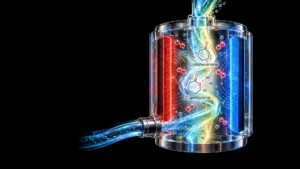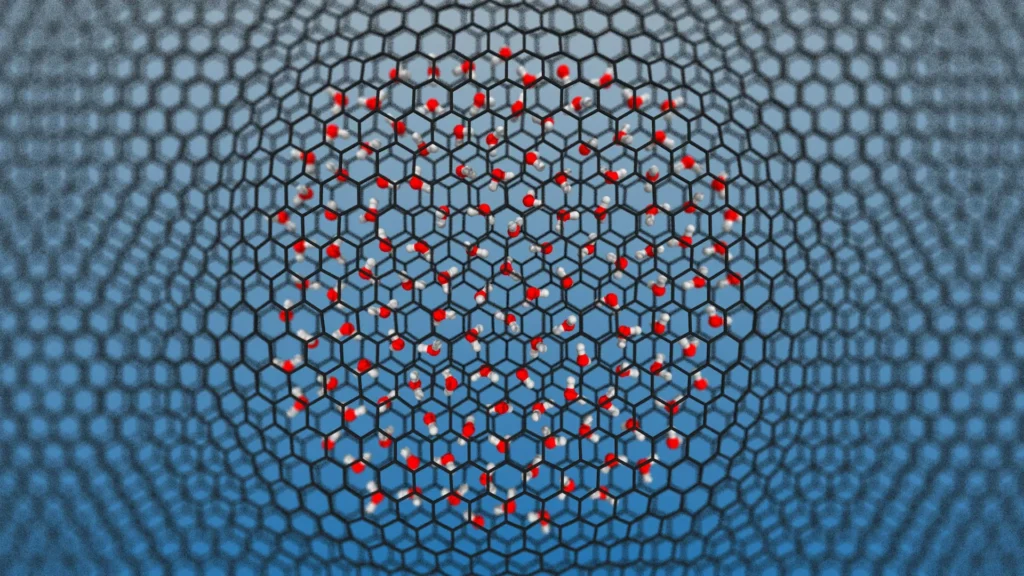
Water is the most scrutinized substance on Earth, serving as the fundamental matrix for life, the primary medium for industrial chemistry, and the critical component in emerging green energy technologies. Yet, despite centuries of rigorous investigation, a fundamental question has remained at the heart of molecular physics: what happens to the chemical behavior of water when it is compressed into channels only a few molecules wide? This question is not merely academic; such "nanoconfined" water exists throughout the natural world, from the microscopic pores in soil and rock to the protein channels in human cells. A landmark study published in the journal Science Advances has finally provided a definitive answer, resolving a decade of scientific friction by identifying the hidden variables that govern water’s reactivity at the nanoscale.
The research, led by a multidisciplinary team from the University of Cambridge, reveals that the perceived changes in water’s chemistry within tiny spaces are not caused by the confinement itself, but rather by the extreme internal pressures and specific surface interactions that occur within those environments. By utilizing sophisticated machine learning simulations, the researchers have created a unified framework that explains why previous experiments yielded such wildly inconsistent results, ranging from claims of hyper-reactivity to observations of total chemical inertia.
The Decade of Contradiction: A Chronology of Research
To understand the significance of this breakthrough, one must look at the timeline of nanofluidics over the last ten to fifteen years. Since the early 2010s, the rise of two-dimensional materials like graphene provided scientists with the tools to create "nano-capillaries"—slots so thin they could trap a single layer of water molecules.
Early experiments in 2014 and 2016 suggested that water under these conditions behaved strangely. Some studies reported that the "dielectric constant" of water—its ability to screen electric charges—dropped precipitously. Others suggested that water became thousands of times more acidic when confined. However, subsequent studies using different materials or slightly different pore sizes often failed to replicate these findings, leading to a fragmented landscape in the scientific literature.
The debate centered on "autoprotolysis," the process by which water molecules (H2O) spontaneously split into hydronium (H3O+) and hydroxide (OH-) ions. This process is the foundation of the pH scale. If confinement inherently increased this splitting, it would mean that the very nature of chemistry changes at the nanoscale. The new study by Advincula and his colleagues clarifies that while reactivity does indeed change, the "intrinsic" nature of water does not; rather, the environment forces water into a high-pressure state that dictates its behavior.
The Mechanics of Water Splitting and the Role of pH
At the macroscopic level, water splitting is rare. In a liter of pure water at room temperature, only a tiny fraction of molecules are dissociated at any given time, resulting in the neutral pH of 7. This balance is delicate and vital. In biological systems, the concentration of these ions determines the folding of proteins and the efficiency of enzymes. In industrial applications, such as the electrolysis used to produce hydrogen fuel, the rate of water splitting is a primary factor in energy efficiency.
The Cambridge study sought to determine if the "confinement effect"—the physical restriction of space—was a catalyst in its own right. "When we compared systems under equivalent thermodynamic conditions—specifically at the same chemical potential—the effect of confinement largely disappeared," explained Xavier R. Advincula, the study’s lead author. This realization is the "Rosetta Stone" for the field, suggesting that scientists were previously comparing "apples to oranges" by not accounting for the hidden pressure variables within their experimental setups.
Machine Learning: The Catalyst for Discovery
The complexity of simulating water at the nanoscale is immense. Traditional computational methods, such as Density Functional Theory (DFT), provide high accuracy by calculating the quantum mechanical behavior of electrons, but they are incredibly slow and limited to very small groups of atoms over short periods. On the other hand, classical simulations are fast but lack the chemical accuracy to model the breaking of molecular bonds.
The research team overcame this hurdle by employing machine learning (ML) potentials. These ML models are trained on quantum mechanical data, allowing them to "learn" how atoms interact. Once trained, they can simulate thousands of atoms with quantum-level precision at a fraction of the computational cost. This allowed the team to explore a vast parameter space, including different temperatures, pressures, and materials, which was previously impossible.
Through these simulations, the team modeled water trapped between sheets of graphene and hexagonal boron nitride (hBN). These materials are structurally similar—both are "honeycomb" lattices of atoms—but they have distinct electronic properties. Graphene is a semi-metal made of carbon, while hBN is an insulator made of boron and nitrogen.
The Discovery of "Invisible" Gigapascal Pressures
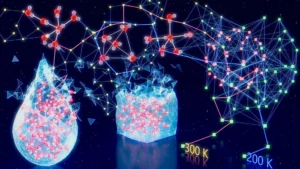
Perhaps the most striking finding of the study is the discovery of the immense pressures that develop naturally within nano-capillaries. The researchers found that water droplets confined between graphene or hBN sheets experience internal pressures of several gigapascals (GPa). To put this in perspective, one gigapascal is roughly 10,000 times the atmospheric pressure at sea level, comparable to the pressures found deep within the Earth’s mantle.
Crucially, this pressure is generated without any external force. It is the result of van der Waals forces—weak attractive forces that exist between all atoms. While these forces are negligible in our daily lives, they become dominant at the nanoscale. When two sheets of graphene are placed in close proximity, the van der Waals attraction pulls them together with such force that they crush any water molecules trapped between them.
The simulations proved that this pressure, rather than the mere lack of space, is what accelerates the splitting of water. When the researchers compared the confined water to "bulk" water (unconfined water) at the same high pressure, the chemical behavior was nearly identical. This debunked the myth that confinement possesses a unique "magic" property to alter water’s covalent bonds.
Material Influence: Graphene vs. Hexagonal Boron Nitride
While pressure is the primary driver, the study also highlighted the critical role of the surrounding material’s surface chemistry. This is where the difference between graphene and hBN became apparent.
In the case of graphene, the surface is chemically inert. It does not want to bond with the H3O+ or OH- ions produced when water splits. Therefore, the water splitting in graphene-confined spaces is driven almost entirely by pressure.
However, hBN tells a different story. The researchers observed that the hydroxide ions (OH-) formed during dissociation were attracted to the boron atoms in the hBN lattice. This chemical bonding "stabilizes" the ions, making it energetically easier for the water molecules to split in the first place. This finding provides a "design principle" for engineers: if you want to increase the reactivity of water at the nanoscale, you should choose a confining material that "likes" the products of the reaction.
Implications for Energy and the Future of Nanofluidics
The implications of this research are far-reaching, particularly in the field of sustainable energy. Hydrogen fuel cells, which combine hydrogen and oxygen to produce electricity and water, rely on the movement of ions through narrow membranes. Understanding how water splits and how ions move in these confined environments is essential for designing more efficient membranes.
Similarly, in the field of desalination, where water is pushed through nanoscale pores to remove salt, the knowledge of how surface chemistry interacts with water can lead to membranes that require less energy to operate. By tailoring the material of the pore to either encourage or discourage certain chemical reactions, engineers can fine-tune the filtration process.
"The work offers a practical design principle for engineering nanoscale chemical environments," said Dr. Christoph Schran of the Cavendish Laboratory. "Rather than focusing solely on the size of pores or channels, we can tailor water reactivity by choosing a confining material whose surfaces interact with the products of water dissociation."
A New Framework for Molecular Science
The study marks a turning point in how physical chemists approach the nanoscale. By identifying that thermodynamics (pressure and chemical potential) and surface chemistry are the two primary levers of reactivity, the research provides a roadmap for future experimentation.
Professor Angelos Michaelides of the Yusuf Hamied Department of Chemistry at the University of Cambridge noted his surprise at the results: "What surprised us most was how much of the apparent confinement effect could be explained by thermodynamics. Once pressure and chemical potential are properly accounted for, a great deal of the complexity simply falls into place."
Moving forward, the research team plans to move beyond idealized, perfect sheets of graphene and hBN. Real-world materials have defects, edges, and impurities. The next phase of the research will involve simulating these "messy" environments to see how they further influence water chemistry. Furthermore, the team is already screening a library of other two-dimensional materials—such as transition metal dichalcogenides (TMDs)—to find the optimal candidates for specific technological tasks, such as carbon capture or advanced battery technologies.
In conclusion, the mystery of nanoconfined water is no longer a matter of conflicting experimental results. It is a predictable outcome of extreme physics. By mastering the interplay between van der Waals-induced pressure and surface-level chemical bonding, scientists are now poised to manipulate the very building blocks of chemistry at the smallest possible scales, paving the way for a new generation of nanofluidic devices that could revolutionize everything from medicine to the global energy grid.