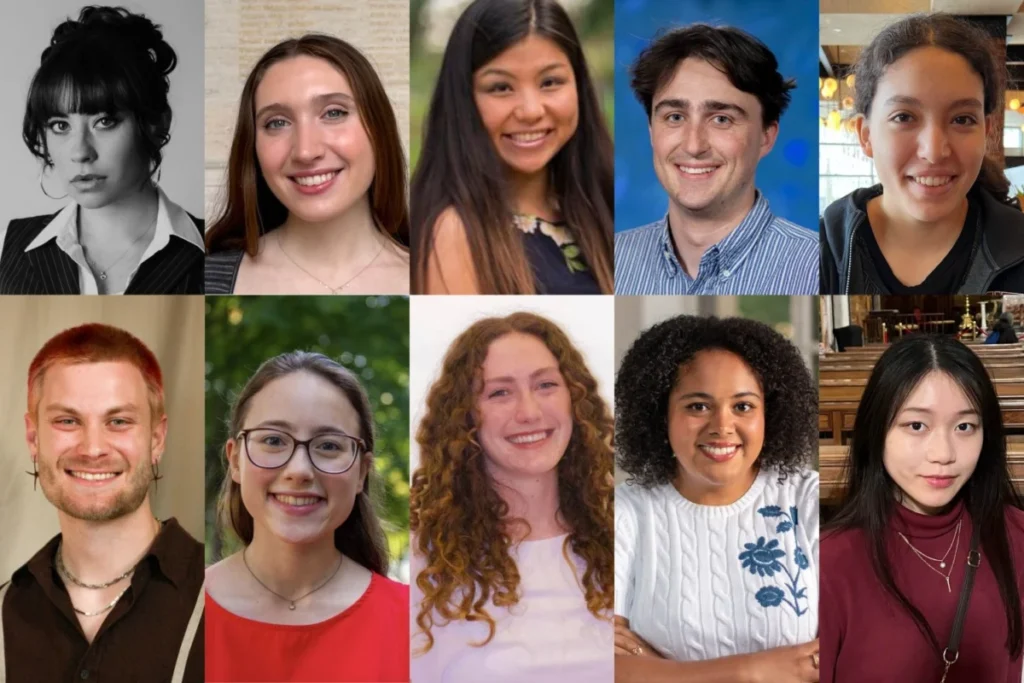
The Massachusetts Institute of Technology (MIT) has announced that 11 of its affiliates—comprising a diverse group of undergraduates, graduate students, and recent alumni—have accepted prestigious Fulbright U.S. Student Program grants for the upcoming academic year. These scholars will travel to various corners of the globe, including Europe, South America, Africa, and Asia, to engage in high-level independent research and English language instruction. The announcement highlights MIT’s continued dominance in the realm of international academic exchange, particularly within the fields of science, technology, engineering, and mathematics (STEM).
The selection process for the 2024-2025 cycle was highly competitive. Out of 30 applicants from the MIT community, 17 were offered awards, representing a success rate of nearly 57 percent. While 11 individuals have formally accepted their grants, five others declined the honor to pursue alternative academic or professional opportunities, and one student remains in the decision-making process. This high yield of awardees underscores the Institute’s reputation for producing scholars whose work resonates on a global stage.
A Legacy of Excellence in STEM Diplomacy
The Fulbright U.S. Student Program is the flagship international educational exchange program sponsored by the U.S. government. Funded primarily through an annual appropriation from the U.S. Congress to the U.S. Department of State’s Bureau of Educational and Cultural Affairs, the program is designed to build lasting connections between the people of the United States and the people of other countries. Since its inception in 1946, the program has provided more than 400,000 participants with the opportunity to exchange ideas and contribute to finding solutions to shared international concerns.
In February 2024, the Fulbright Program officially recognized MIT as the nation’s No. 1 “Top Producing Institution” among special-focus STEM universities. This distinction reflects a strategic effort by the Institute to encourage its students to apply their technical expertise to global challenges. By integrating international research into the STEM curriculum, MIT ensures that its graduates are not only leaders in their respective laboratories but also effective ambassadors of American scientific innovation.
The administration of these fellowships at MIT is managed by the Distinguished Fellowships office within Career Advising and Professional Development (CAPD). Led by Fulbright program advisor Julia Mongo, the office provides comprehensive support to applicants, guiding them through the rigorous process of drafting proposals, securing institutional endorsements, and preparing for the cultural immersion that defines the Fulbright experience.
Advancing Global Health and Biological Engineering
Several of this year’s recipients will focus on the intersection of biological engineering and public health, reflecting MIT’s commitment to addressing medical disparities through technological advancement.
Stella Gassman, a graduating senior in biological engineering with a concentration in women’s and gender studies, will spend her Fulbright year at the University of Copenhagen in Denmark. Gassman’s work at MIT has been deeply rooted in the study of the vaginal microbiome and mucosal membranes, specifically addressing bacterial vaginosis. Her research journey has been characterized by a blend of laboratory rigor and clinical empathy, having spent time at a Massachusetts General Hospital (MGH) gynecology clinic and a clinical trial site in South Africa. In Denmark, she will continue her microbiology research, aiming to bridge the gap between scientific discovery and human impact before returning to the United States to attend medical school.
Similarly, Claire Underwood, a senior in chemical-biological engineering, will travel to the University of Minho in Guimarães, Portugal. Her research will focus on high-throughput fabrication techniques for cell-embedded microtissues, a field with significant implications for drug discovery and personalized medicine. Underwood’s background includes extensive work in the Hammond and Olsen labs at MIT, where she specialized in lipid nanoparticle drug delivery for cancer treatment. Following her time in Portugal, she plans to pursue a PhD in chemical engineering at the University of Texas at Austin.
Innovation in Artificial Intelligence and Robotics
As artificial intelligence continues to reshape the global landscape, MIT Fulbright scholars are at the forefront of applying these technologies to improve human well-being and infrastructure.
Chen Li, who recently earned her master’s in system design and management, has been awarded a Fulbright Iceland-NSF Arctic Research Award. Li’s work will explore how AI and systems thinking can be applied to support health and wellness in Arctic communities. Her previous experience includes developing generative AI tools for patient engagement at Novo Nordisk and applying AI to assist Parkinson’s patients through the MIT–Mexico program. Her work in Iceland will serve as a precursor to her doctoral studies in information and systems science.
In the realm of physical assistance technology, Lilia Ould-Hammou will travel to South Korea as a recipient of the Fulbright U.S.-Korea Presidential STEM Initiative Award. A mechanical engineering major, Ould-Hammou will conduct research at Seoul National University’s Wearable Robotics Laboratory. Her project involves advancing adaptive exosuit control for balance recovery, a critical area for aging populations and those with mobility impairments. A former member of the MIT track and field team, she will continue her studies with a master’s in robotics at Johns Hopkins University after her fellowship.
Josephine Wang, a computer science graduate, will head to Switzerland to work with the NeuroAI Lab at EPFL in Lausanne. Her research will investigate brain-inspired language models, specifically looking at how functionally specialized clusters develop within these models and how disruptions to these clusters affect language behavior. This work bridges the gap between computational neuroscience and artificial intelligence, seeking to understand the fundamental mechanics of cognition.
Environmental Resilience and Sustainable Systems
The urgency of the climate crisis is reflected in the projects of several MIT Fulbright grantees who are seeking sustainable solutions for energy and materials.
Bryan Sperry, a 2023 graduate with dual degrees in physics and mechanical engineering, will conduct research in Brazil. Working with the Cenergia Lab at the Federal University of Rio de Janeiro, Sperry will study pathways to improve climate resilience and energy equity in urban power grids. Having previously worked on superconducting power transmission lines at the startup VEIR, Sperry’s Fulbright work will inform his future studies in urban planning at Columbia University, where he intends to focus on disaster preparedness.
In Sweden, chemical engineering senior Sophie Thompson will test the performance of recycled carbon fiber composites at the Swedish School of Textiles. Thompson’s diverse background includes researching prosthetic sockets for low-resource environments and interning at textile recycling startups. Her work in Sweden aims to advance the circular economy in the textile and materials industries. Upon completion of her grant, she will pursue a PhD in molecular engineering at the University of Chicago.
Earth Sciences and Fundamental Physics
The 2024 cohort also includes scholars dedicated to understanding the fundamental forces of our planet and the universe.
Liam Moser, who is completing his PhD in geophysics through the MIT-WHOI Joint Program, has also received a Fulbright Iceland-NSF Arctic Research Award. Moser will undertake a postdoctoral fellowship at Reykjavík University, using earthquake recordings to study the dynamics of the Hengill volcano and geothermal area. His research into subduction zones and tectonic dynamics is vital for understanding earthquake hazards and geothermal energy potential.
Sophie Vulpe, a senior majoring in physics and mathematics, will travel to the Extreme Light Infrastructure-Nuclear Physics (ELI-NP) institute in Romania. There, she will develop data-processing algorithms for a new monoenergetic gamma ray spectrometer. Vulpe, who has also been an advocate for women in physics at MIT, plans to use this international experience to strengthen her experimental skills before pursuing a PhD in physics.
Science Communication and Global Education
Rounding out the cohort are individuals focused on the dissemination of knowledge and the fostering of international dialogue.
Jessica Chomik-Morales, who earned her master’s in science writing, will travel to Spain to research the science of science communication at Universitat Pompeu Fabra’s Center for Brain and Cognition. Her project will investigate how narrative features in writing affect reader comprehension and trust. As the creator of the Spanish-language neuroscience podcast “Mi Última Neurona,” Chomik-Morales is a leading voice in making scientific discourse more inclusive and emotionally resonant.
Additionally, Alexandra Coston, a senior in architecture and design, has accepted an English Teaching Assistantship in Senegal. Her placement highlights the Fulbright Program’s commitment to educational exchange beyond the laboratory, fostering cultural ties through language instruction and community engagement.
Analysis of Global Implications
The distribution of MIT’s Fulbright winners across such a wide array of disciplines and geographies suggests a significant shift in the landscape of international fellowships. While historically dominated by the humanities, the Fulbright Program has increasingly become a vehicle for "scientific diplomacy." By sending top-tier engineers and scientists abroad, the United States projects soft power through technical collaboration rather than just political or cultural exchange.
For the host countries, the presence of MIT-trained researchers provides access to cutting-edge methodologies and specialized knowledge in fields like AI, robotics, and biotechnology. Conversely, for the MIT scholars, the experience offers a "human context" that is often missing in domestic laboratory settings. As Stella Gassman noted, the ability to see the human faces behind laboratory samples—whether in a clinic in South Africa or a lab in Denmark—is essential for developing technologies that are truly effective in the real world.
As these 11 scholars prepare for their departures, their projects stand as a testament to MIT’s mission of "Mens et Manus" (Mind and Hand), applied on a global scale. The insights gained from the volcanic fields of Iceland, the power grids of Brazil, and the robotics labs of Seoul will likely influence scientific and policy decisions for decades to come.