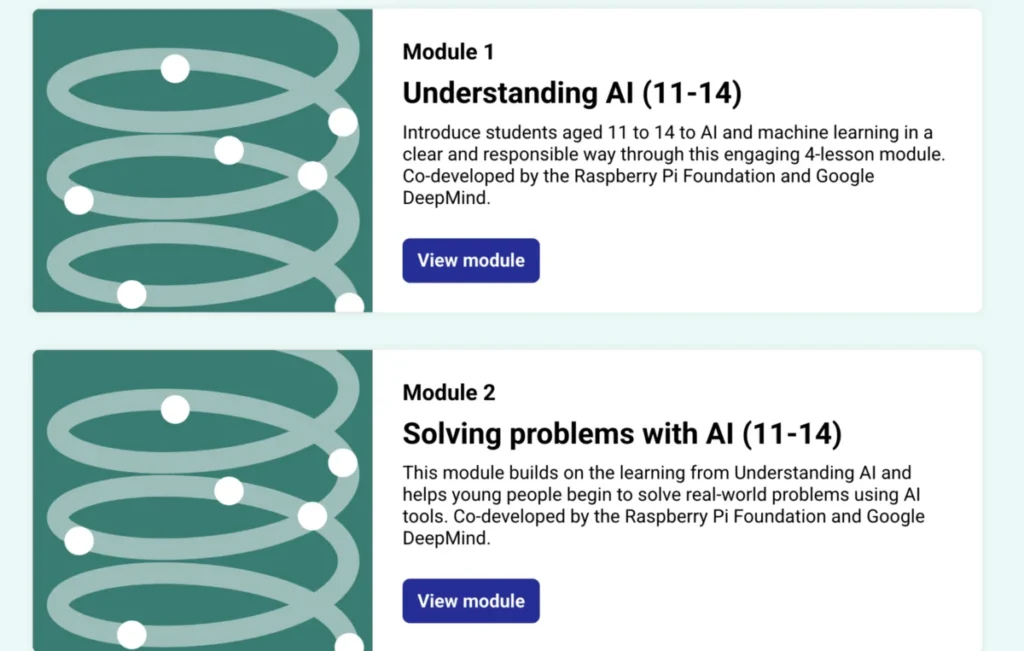
The Raspberry Pi Foundation, in partnership with Google DeepMind, has officially launched an extensive update to its global Experience AI program, marking a significant milestone in the effort to democratize artificial intelligence (AI) education for young people worldwide. This expansion introduces a suite of flexible, thematic resources designed to empower educators—regardless of their technical background—to integrate AI literacy into diverse subjects ranging from geography and art to physics and citizenship. Since its inception in 2023, the initiative has seen unprecedented growth, with its educational materials downloaded over one million times across 195 countries, signaling a profound global demand for structured AI education in the primary and secondary school sectors.
The updated Experience AI suite arrives at a critical juncture in the evolution of educational technology. As generative AI and machine learning continue to reshape the global economy and information landscape, education systems have struggled to keep pace with the rapid rate of innovation. By providing free, research-backed resources, the Raspberry Pi Foundation and Google DeepMind aim to ensure that the next generation does not merely consume AI technologies but understands the underlying mechanisms, ethical implications, and practical applications of these tools.
The Evolution of Experience AI: From Pilot to Global Standard
The journey of Experience AI began as a response to the "black box" problem of modern technology. For many students and teachers, AI remains a mysterious force, often misunderstood or viewed through the lens of science fiction. The Raspberry Pi Foundation, an organization with a long-standing history of making computing accessible to children, recognized that AI literacy was becoming as fundamental as traditional coding.
In early 2023, the foundation joined forces with Google DeepMind, the AI research laboratory, to combine pedagogical expertise with cutting-edge industry insights. The initial rollout focused on foundational concepts, but the scale of the response exceeded all projections. To date, the program has established partnerships with more than 40 organizations globally, training thousands of educators to deliver AI content. This global network has provided a feedback loop that shaped the current update. Data from these partners revealed that while computer science teachers were early adopters, the greatest need for support existed among non-specialist teachers who were eager to discuss AI’s impact on their specific fields but lacked the confidence to do so.
Detailed Breakdown of the Updated Resource Suite
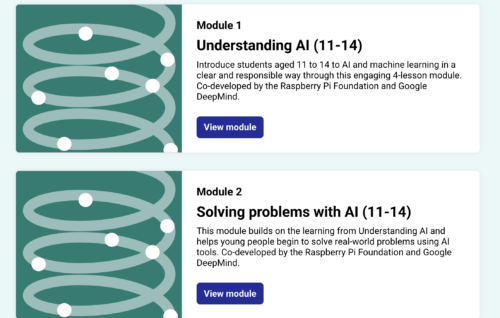
The newly unveiled resources are structured into three distinct tiers, designed to meet learners at different stages of their educational journey and to fit within the constraints of varying national curricula.
Discovering AI: Low-Barrier Entry Points
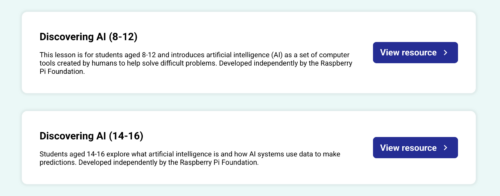
The "Discovering AI" series consists of single-lesson modules tailored for two age brackets: 8–12 and 13–16. These lessons serve as an "on-ramp" for classrooms with zero prior exposure to AI. The curriculum focuses on demystifying how computers "learn" from data, using age-appropriate activities that avoid overly technical jargon. For younger learners, this might involve interactive games that simulate data sorting, while older students may explore the basics of pattern recognition.
Foundations of AI: Deepening Technical Understanding
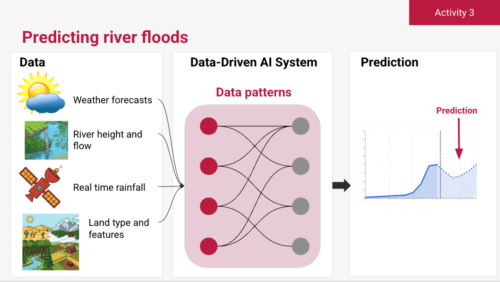
Building upon the introductory lessons, the "Foundations of AI" units provide a more rigorous exploration of machine learning workflows. These units guide students through the lifecycle of an AI system, from data collection and cleaning to model training and deployment. A key feature of this tier is its focus on real-world problem-solving. For instance, students might examine how AI is used in flood forecasting—a topic co-developed with the Canadian partner Digital Moment—allowing them to see the tangible benefits of technology in environmental protection and disaster management.
Thematic Resources: The Cross-Curricular Shift
The most significant departure in the new update is the introduction of a growing collection of thematic resources. Moving away from the traditional model of "AI as a subset of Computing," these resources are organized by topics such as "Creativity," "The Environment," "Ethics," and "Critical Thinking." This approach allows a Geography teacher to use a lesson on the environmental footprint of data centers, or an Art teacher to facilitate a debate on the copyright implications of AI-generated media. By decoupling AI from the computer lab, the program ensures that AI literacy becomes a holistic part of a student’s education.
Data-Driven Insights and Global Impact
The success of Experience AI is reflected in its distribution statistics and the diversity of its user base. Reaching 195 countries implies that the resources are being utilized in nearly every nation on earth, regardless of the local level of technological infrastructure. This is made possible by the "unplugged" nature of many Experience AI activities, which can be taught without high-end hardware or constant internet connectivity.
Supporting data from the Raspberry Pi Foundation indicates that the "Foundations of AI" unit alone has been instrumental in shifting teacher perceptions. Before engaging with the materials, many educators reported high levels of "AI anxiety." Following the training and implementation of Experience AI resources, internal surveys suggested a marked increase in teacher confidence. The partnership with Digital Moment in Canada served as a primary testing ground for this thematic approach. Feedback from Canadian educators highlighted that the flexibility of the materials was their most valuable trait, allowing them to meet provincial curriculum standards while still delivering cutting-edge tech education.
Addressing the Teacher’s Dilemma: Flexibility and Integration
A primary challenge identified by the Raspberry Pi Foundation is the "crowded curriculum." Teachers worldwide are under immense pressure to deliver core subjects, leaving little room for new topics like AI. The Experience AI update addresses this by ensuring that the resources are "plug-and-play."
The thematic approach serves a dual purpose:
- Time Efficiency: By integrating AI into existing subjects like Business Studies or Citizenship, teachers do not need to find "extra" time in the schedule.
- Relevance: Students are more likely to engage with AI concepts when they see them applied to subjects they already care about, such as social media algorithms or climate change modeling.
Furthermore, the resources are designed to be culturally and linguistically adaptable. Through its network of 40+ partners, the Foundation facilitates the translation and localization of materials, ensuring that examples of AI applications are relevant to the local context of the students, whether they are in the United Kingdom, Kenya, or Malaysia.
Fact-Based Analysis of Implications for Education and Policy
The move toward thematic AI literacy represents a broader shift in global educational philosophy. As AI becomes ubiquitous, the distinction between "technical" and "non-technical" roles is blurring. Policymakers are increasingly recognizing that AI literacy is a prerequisite for informed citizenship. Without an understanding of how AI models function, individuals are more susceptible to misinformation, algorithmic bias, and the ethical pitfalls of automated decision-making.
The Experience AI program acts as a bridge between high-level AI research (provided by Google DeepMind) and classroom pedagogy (provided by the Raspberry Pi Foundation). This collaboration ensures that the content is both technically accurate and educationally sound. From a policy perspective, the program offers a blueprint for how public-private partnerships can address the digital divide. By keeping the resources free and accessible, the initiative prevents AI education from becoming a privilege reserved for elite institutions, thereby promoting social mobility and economic equity.
Future Outlook and the Role of Feedback
The Raspberry Pi Foundation has signaled that this update is not the final version of the program but rather a stage in a continuous evolution. As generative AI technologies, such as Large Language Models (LLMs), continue to advance, the "Experience AI" suite will be updated to include more specific modules on prompt engineering, synthetic media, and the future of work.
The Foundation has issued a call to action for educators worldwide to share their stories and feedback. This user-centric development model ensures that the resources remain practical. The upcoming roadmap for Experience AI includes expanding the thematic collection to include "AI in Science" and "AI in History," further cementing the program’s role as a comprehensive cross-curricular tool.

In conclusion, the expansion of Experience AI by the Raspberry Pi Foundation and Google DeepMind represents a proactive and necessary intervention in the global education landscape. By equipping teachers with the tools to demystify AI, the program is fostering a generation of learners who are not only technically proficient but also ethically aware and critically minded. As the million-download milestone suggests, the world is ready for a new era of AI literacy—one that is accessible, flexible, and integrated into the very fabric of modern schooling.