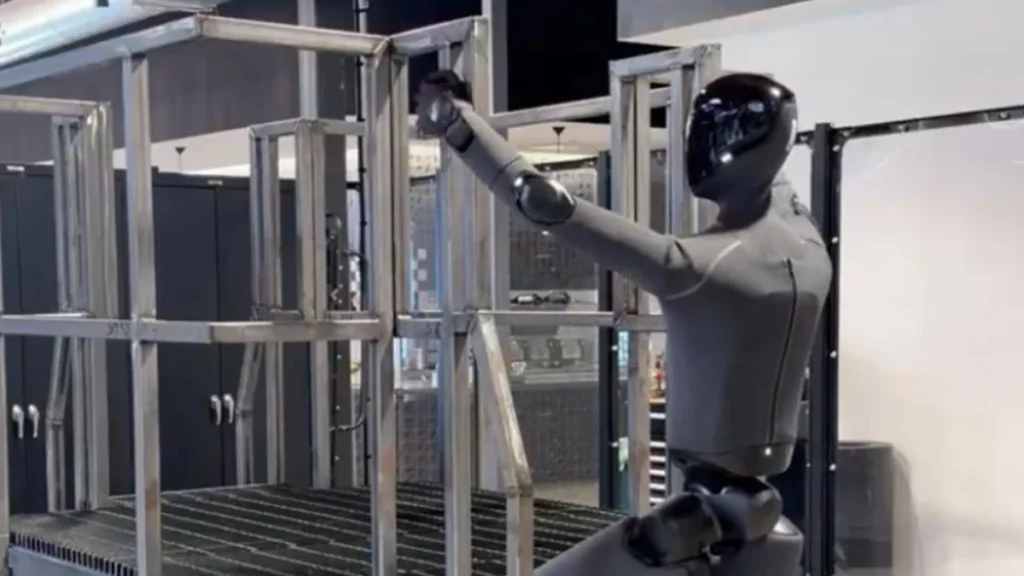
US-based robotics firm Figure has unveiled compelling new video footage demonstrating its Figure 03 humanoid robot autonomously ascending a ladder, a feat that represents a significant milestone in advanced robotic mobility and control. The video, shared by Figure’s founder, Brett Adcock, on the social media platform X, shows the bipedal robot executing the complex maneuver without any visible human intervention or remote control, highlighting the rapid advancements in artificial intelligence and mechanical engineering within the humanoid robotics sector.
This demonstration comes at a pivotal time for Figure, which has recently announced a dramatic scale-up in its production capabilities, accelerating the manufacturing of Figure 03 units from one per day to an impressive one per hour. This increased efficiency has already resulted in the delivery of over 350 robots, underscoring the company’s ambition to move from research and development into widespread deployment. The autonomous ladder climbing capability, powered by Figure’s advanced Helix AI model, further solidifies the robot’s potential for navigating diverse and unpredictable environments, particularly those designed for human interaction.
The Intricacy of Ladder Climbing for Humanoid Robots
For humanoid robots, tasks like climbing a ladder are exceptionally challenging, far surpassing the complexity of traversing flat ground. This is primarily due to the intricate interplay of several critical factors that must be perfectly coordinated in real-time. First, precise coordination of the robot’s arms and legs is paramount. Each limb must move in a synchronized sequence, gripping rungs with appropriate force while simultaneously pushing and pulling to propel the robot upwards. This requires sophisticated motor control and inverse kinematics to plan and execute trajectories for multiple joints simultaneously.
Second, continuous balance adjustments are crucial. As the robot shifts its weight and moves its limbs, its center of mass constantly changes. Maintaining stability on a narrow, vertical structure demands immediate and accurate responses from its whole-body control system to prevent tipping or falling. This is compounded by the dynamic nature of the climb, where sudden shifts in grip or foot placement can throw the robot off balance.
Third, accurate perception of the surrounding environment is indispensable. The robot must precisely identify the location and orientation of each ladder rung, assess its texture for optimal grip, and anticipate its next move based on real-time sensory data. This involves sophisticated vision systems and depth sensing to create a 3D map of the ladder and the robot’s own position relative to it. Successfully performing such a task without human assistance is a testament to significant improvements in the robot’s locomotion algorithms, whole-body control systems, and its ability to make real-time decisions in a complex, dynamic scenario.
Evolution of Figure’s Helix AI: Vision Meets Motion
The breakthrough in ladder climbing is directly attributed to a major upgrade in Figure’s Helix System 0 (S0) AI model. This enhancement has endowed Figure’s humanoid robots with the groundbreaking ability to seamlessly integrate visual perception with whole-body motion control, enabling more capable and autonomous navigation.
Previously, the Helix system relied primarily on proprioception—the robot’s internal awareness of its own joint positions, body movements, and overall balance. While effective for fundamental locomotion tasks like walking on flat surfaces, this proprioception-only approach significantly limited the robot’s capacity to safely and efficiently navigate complex, unstructured environments. Such environments include staircases, uneven terrains, and, notably, ladders, where external visual information is critical for successful traversal.
The updated S0 model marks a paradigm shift by incorporating real-time visual data derived from onboard stereo cameras. These cameras capture RGB images, which the AI then processes to construct a detailed three-dimensional representation of the surrounding environment. This advanced visual processing allows the robot to simultaneously "see" the terrain directly ahead and around it, while continuously monitoring its own body position and orientation. This fusion of internal proprioceptive data with external visual information is transformative, enabling more precise foot and hand placement, significantly improved balance control, and smoother, more adaptive movement across challenging surfaces. The robot can now dynamically adjust its movements based on what it perceives, rather than relying solely on pre-programmed movements or internal state estimations.
Bridging the Sim-to-Real Gap: Reinforcement Learning and Robustness
A critical aspect of Figure’s success with the S0 model lies in its training methodology. The company states that the model was trained end-to-end using reinforcement learning in a highly diverse range of simulated environments. These simulations incorporated a wide array of randomized terrains, varying lighting conditions, and unpredictable obstacles, forcing the AI to learn robust and adaptive behaviors. Reinforcement learning, a machine learning paradigm where an agent learns to make decisions by performing actions in an environment and receiving rewards or penalties, is particularly well-suited for teaching complex motor skills to robots.
Crucially, Figure claims that the learned behaviors transfer directly from simulation to real-world robots without necessitating extensive additional calibration or fine-tuning. This addresses the long-standing "sim-to-real" challenge in robotics, where discrepancies between simulated and physical environments often make direct transfer of learned policies difficult and time-consuming. The ability to seamlessly port behaviors from a virtual training ground to a physical robot signifies a major step forward in the development cycle of complex robotic systems, accelerating the pace of innovation and deployment.
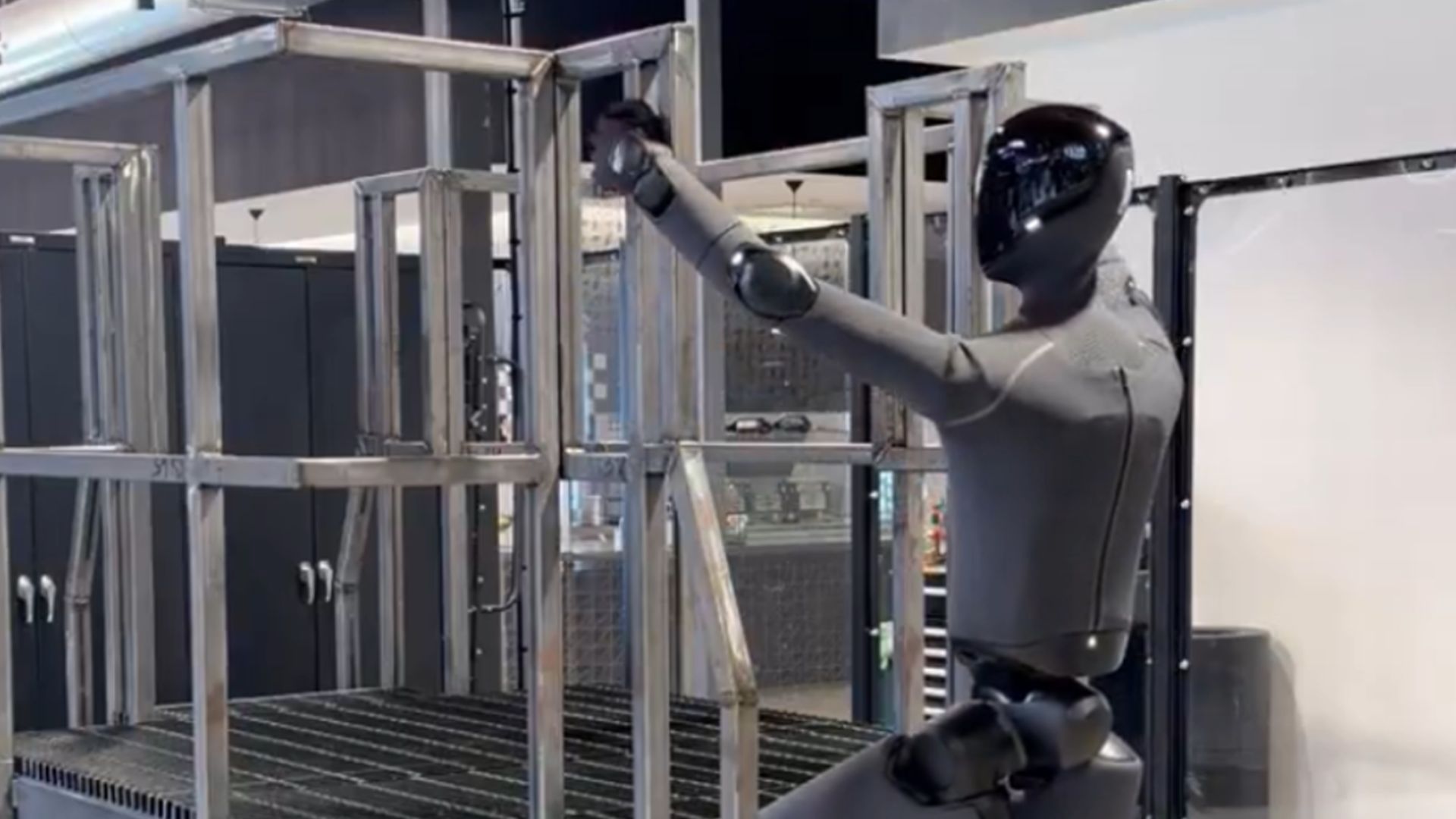
This robust training regimen, combined with the new perception capabilities, enables human-like stability for the Figure 03 robot when traversing stairs, uneven surfaces, and now ladders, even under variable lighting. The perception-driven architecture is designed to support a broader spectrum of environment-aware behaviors, steadily bringing Figure’s humanoid robots closer to achieving fully autonomous and reliable operation in real-world settings that were previously considered too complex or unpredictable for robotic systems.
Strategic Vision and Production Scale-Up
Figure’s advancements in robotic mobility are not isolated technical achievements but are deeply integrated into the company’s broader strategic vision. The rapid increase in Figure 03 production capacity, from one unit per day to one per hour, signifies a clear intent to move beyond experimental prototypes and into commercial-scale deployment. With over 350 robots already delivered, Figure is positioning itself to be a significant player in the burgeoning humanoid robotics market.
Founder Brett Adcock has been a vocal proponent of legged humanoid robots, frequently reiterating his conviction that "wheeled robots are an utter dead end" for many applications. This perspective underscores Figure’s belief that robots designed to mimic human form and locomotion are inherently better suited for environments built by and for humans. These environments include factories, warehouses, offices, and residential homes, where stairs, uneven surfaces, and narrow passages are common. While wheeled robots excel in structured, flat environments like modern logistics centers, their utility diminishes rapidly in more complex or unstructured settings. Humanoid robots, with their bipedal locomotion and dexterous manipulators, are engineered to navigate these diverse spaces, perform tasks requiring human-level dexterity, and integrate seamlessly into existing human infrastructure without requiring costly modifications.
The target applications for Figure 03 are vast. In manufacturing and logistics, these robots could assist with repetitive tasks, material handling, and quality control in environments where human workers currently operate. In hazardous or remote locations, such as disaster zones or industrial inspection sites, humanoids could perform dangerous tasks, reducing risks to human life. The long-term vision extends to domestic environments, where general-purpose humanoids could provide assistance with household chores, elderly care, and companionship. The ability to climb ladders autonomously is particularly relevant for industrial maintenance, construction sites, and even future home assistance scenarios.
Industry Reactions and Broader Implications
The demonstration of Figure 03’s ladder-climbing capability has garnered significant attention within the artificial intelligence and robotics research communities. Many experts have described it as "good progress," acknowledging the technical difficulty and the implications of such a feat. While Figure has not yet disclosed all the intricate technical details of the underlying system, and the demonstration has not been independently verified by external bodies, the visual evidence itself is compelling.
The broader implications of this advancement are substantial. For years, the robotics community has grappled with the challenge of enabling robots to navigate and interact with the world with human-like versatility. Tasks like ladder climbing are benchmarks that signify a robot’s ability to perceive, plan, and execute complex motor skills in dynamic, three-dimensional spaces. Success in these areas moves humanoid robots closer to becoming truly general-purpose machines capable of performing a wide array of tasks in unstructured environments.
This development could accelerate the adoption of humanoid robots across various sectors. For instance, in facility management, robots could inspect and maintain infrastructure, including areas accessible only via ladders. In construction, they could assist with tasks at height. In emergency response, they could navigate debris and access elevated areas to search for survivors or assess damage. The market for humanoid robots is projected to grow significantly in the coming decade, driven by labor shortages, the demand for automation, and technological breakthroughs like those demonstrated by Figure. Companies like Boston Dynamics, Agility Robotics, and Tesla are also heavily invested in developing advanced humanoid platforms, creating a competitive landscape that further fuels innovation.
Remaining Hurdles and the Road Ahead
Despite these impressive advancements, the widespread deployment of humanoid robots like Figure 03 still faces several hurdles. Cost remains a significant factor, with advanced humanoid robots currently costing hundreds of thousands of dollars. For mass adoption, these costs will need to decrease substantially. Energy efficiency is another critical area; maintaining powerful motors and sophisticated onboard computing for extended periods requires substantial battery life, which impacts operational duration and payload capacity.
Dexterity, particularly fine manipulation skills comparable to human hands, is an ongoing research challenge. While Figure 03 demonstrates impressive whole-body control, the nuances of grasping, manipulating tools, and interacting with delicate objects still require further development. Safety is also paramount, especially as robots operate in proximity to humans. Robust safety protocols, fail-safes, and predictable behavior are essential for public acceptance and regulatory approval. Ethical considerations surrounding job displacement, data privacy, and the role of autonomous agents in society will also need careful consideration as these technologies mature.
Furthermore, for the scientific community, greater transparency regarding the technical methodologies and independent verification of claims will be crucial for fostering trust and collaborative progress. As Figure continues its rapid development and scales up production, the world will be watching to see how these general-purpose humanoids transition from impressive laboratory demonstrations to reliable, everyday tools transforming industries and potentially our daily lives. The autonomous ladder climb by Figure 03 is not just a single achievement; it is a clear indicator of the accelerating trajectory of humanoid robotics towards a future where intelligent machines seamlessly integrate into the human world.