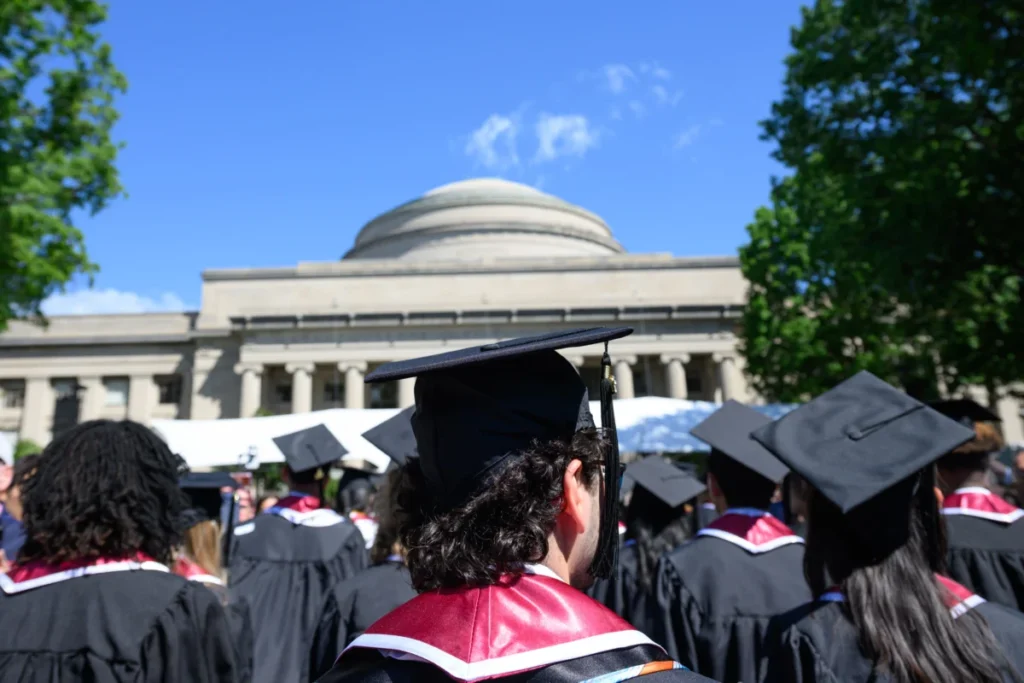
The Massachusetts Institute of Technology (MIT) has once again been named the world’s leading university by the prestigious QS World University Rankings, marking an extraordinary 15th consecutive year at the apex of global higher education. This unparalleled achievement, announced today with the release of the 2027 edition of the rankings, underscores MIT’s sustained excellence in research, innovation, and education, reinforcing its position as a beacon of academic prowess on the international stage.
The full 2027 edition of the QS World University Rankings, meticulously compiled and published by Quacquarelli Symonds—a renowned organization specializing in global education and study abroad—is accessible to the public at TopUniversities.com. These annual rankings are a comprehensive assessment based on a sophisticated methodology that evaluates universities across a spectrum of critical indicators. Key factors influencing a university’s standing include academic reputation, which carries significant weight, alongside employer reputation, reflecting the quality and employability of graduates. Research impact is measured by citations per faculty member, while the learning environment is gauged by the student-to-faculty ratio. Furthermore, the global outlook and diversity of an institution are assessed through the proportion of international faculty and the proportion of international students. MIT’s consistent top ranking across these diverse metrics highlights a holistic strength that few institutions worldwide can rival.
This latest distinction builds upon an already impressive year for MIT, as the Institute had previously been recognized for its exceptional performance in specific academic disciplines. In March of this year, QS announced that MIT was ranked the world’s top university in a remarkable 12 of the subject areas ranked by QS, a testament to its deep and broad expertise across scientific, engineering, and humanities fields. This departmental dominance provides granular insight into the areas where MIT not only excels but sets global benchmarks for research and teaching.
The Institute received a coveted No. 1 ranking in a diverse array of QS subject areas, demonstrating its multifaceted strength. These include Chemical Engineering; Civil and Structural Engineering; Computer Science and Information Systems—a broad category encompassing critical modern disciplines such as artificial intelligence, machine learning, and cybersecurity; Data Science and Artificial Intelligence, a specialized field at the forefront of technological advancement; Electrical and Electronic Engineering; and the overarching category of Engineering and Technology, where MIT’s pioneering spirit is globally recognized. Beyond the traditional engineering powerhouses, MIT also secured the top spot in Linguistics, highlighting its strong interdisciplinary approach and commitment to the humanities; Materials Science; Mechanical, Aeronautical, and Manufacturing Engineering; Mathematics; Physics and Astronomy; and Statistics and Operational Research, a field vital for data-driven decision-making in myriad industries.
Furthermore, MIT demonstrated exceptional breadth by placing second in seven additional subject areas, narrowly missing the top spot but still affirming its elite status. These included Architecture/Built Environment, a field where design meets engineering and urban planning; History of Art, showcasing the Institute’s lesser-known but robust contributions to the humanities; Biological Sciences; Economics and Econometrics, fundamental to understanding global markets and policies; Marketing; Natural Sciences, a broad category encompassing foundational scientific inquiry; and notably, Statistics and Operational Research, where it also secured a No. 1, indicating incredible depth and multiple strengths within the field. This widespread recognition across disciplines underscores MIT’s comprehensive excellence and its capacity to attract and nurture top talent across a vast academic spectrum.
The Genesis of Global University Rankings and QS’s Methodology
The QS World University Rankings have evolved into one of the most widely respected and frequently consulted global comparisons of higher education institutions since their inception in 2004. Alongside the Times Higher Education World University Rankings and the Academic Ranking of World Universities, QS provides prospective students, academics, university administrators, and policymakers with critical data points to assess institutional performance and make informed decisions. The methodology employed by QS is continuously refined to reflect the changing dynamics of global higher education and research.
The six core metrics that form the backbone of the QS ranking system are weighted to provide a balanced perspective:
- Academic Reputation (40%): Derived from a global survey of academics, asking them to identify the institutions they believe are excellent for research and teaching in their field. This significant weighting underscores the importance of peer perception and the collective judgment of the global academic community.
- Employer Reputation (10%): Based on a survey of employers worldwide, who are asked to identify institutions producing the best graduates for employment. This metric directly addresses the employability outcomes of a university’s education, a crucial factor for students and national economies.
- Citations per Faculty (20%): Measures research impact by dividing the total number of citations received by all papers produced by an institution over a five-year period by the number of faculty members. This quantitative measure reflects the influence and relevance of a university’s research output.
- Student-to-Faculty Ratio (20%): An indicator of teaching commitment, representing the number of full-time equivalent students per academic faculty member. A lower ratio generally suggests more personalized teaching and greater access to faculty.
- International Faculty Ratio (5%): The proportion of international faculty members reflects an institution’s ability to attract diverse academic talent globally and contributes to a rich, multicultural learning environment.
- International Student Ratio (5%): The proportion of international students, indicating a university’s global appeal and its capacity to foster an internationalized campus experience, enriching cultural exchange and global perspectives.
MIT consistently achieves near-perfect scores across most of these metrics, particularly in academic and employer reputation, and citations per faculty, which are often the hardest for universities to sustain at elite levels. This consistent high performance across such a rigorous and diverse set of criteria is what truly sets MIT apart.
A Legacy of Sustained Excellence: The 15-Year Streak
The achievement of being ranked the world’s number one university for 15 consecutive years is unprecedented in the history of global university rankings and speaks volumes about MIT’s enduring commitment to excellence. This isn’t merely a snapshot of current performance but a testament to a sustained institutional culture of innovation, rigorous inquiry, and pedagogical leadership that has spanned over a decade and a half. Such a streak reflects not only exceptional leadership but also the consistent quality of its faculty, the brilliance of its students, and the efficacy of its research infrastructure and support systems.
For an institution to maintain this level of preeminence amidst a rapidly evolving global academic landscape—characterized by increasing competition from emerging economies and significant advancements in research methodologies and educational technologies—is truly remarkable. It signifies a deeply ingrained ethos of continuous improvement and an unwavering focus on pushing the boundaries of knowledge and human endeavor. This consistency also provides stability and prestige, making MIT an even more attractive destination for the world’s brightest minds and most ambitious research partners.
Voices from the Institute: Leadership on the Achievement
While formal statements from MIT leadership regarding the 2027 rankings are yet to be widely disseminated, one can infer the sentiment of pride and renewed commitment that such an announcement would evoke. Historically, similar recognitions have prompted responses emphasizing the collective effort behind such achievements.
An inferred statement from MIT’s President might read: "To be recognized as the world’s leading university for the 15th consecutive year by the QS World University Rankings is a profound honor and a testament to the relentless dedication of our extraordinary faculty, brilliant students, and committed staff. This remarkable consistency reflects not just our pursuit of knowledge, but our commitment to applying that knowledge to address the world’s most pressing challenges. It is a validation of our distinctive culture of inquiry, innovation, and impact. We remain steadfast in our mission to advance science, engineering, and the humanities, and to educate the next generation of leaders who will shape the future."
Similarly, a Provost might emphasize the academic breadth: "Our consistent top ranking, especially across 12 specific subject areas and placing second in seven others, highlights the depth and breadth of excellence that defines MIT. From the foundational sciences and engineering to the humanities and social sciences, our scholars are at the forefront of discovery and educational innovation. This recognition energizes us to continue fostering an environment where curiosity thrives, and interdisciplinary collaboration leads to groundbreaking solutions."
The QS Perspective: Analyzing MIT’s Unmatched Performance
Experts at Quacquarelli Symonds would likely highlight MIT’s unique combination of strengths. An inferred statement from a QS spokesperson or analyst could offer insights into MIT’s consistent top performance: "MIT’s unparalleled run at the top of the QS World University Rankings for 15 years straight is a truly exceptional feat in global higher education. It speaks to a unique institutional DNA that consistently produces world-class research, highly sought-after graduates, and an academic environment that attracts top talent from every corner of the globe. Their strength is not just concentrated in one or two areas; it’s a systemic excellence visible across a vast spectrum of STEM fields, and increasingly, in the humanities and social sciences. The high scores in citations per faculty underscore their profound research impact, while their employer reputation consistently proves the value of an MIT education in the global job market. This institution truly sets a benchmark for what a modern, globally influential university can achieve."
Broader Implications and Impact of the Rankings
MIT’s sustained dominance in the QS rankings carries significant implications, not only for the institution itself but for the broader landscape of higher education and global innovation.
For MIT:
- Enhanced Reputation and Brand Value: The consistent No. 1 ranking solidifies MIT’s brand as the global leader in higher education, amplifying its prestige and influence.
- Attraction of Top Talent: It reinforces MIT’s appeal to the brightest prospective students and world-renowned faculty members, creating a virtuous cycle of excellence. The most ambitious students from around the world will continue to view MIT as the pinnacle of academic aspiration.
- Funding and Philanthropy: Such high-profile recognition can attract increased research funding from governments, corporations, and philanthropic organizations, keen to associate with and invest in a proven leader.
- Strategic Partnerships: It strengthens MIT’s position in forging international collaborations with other universities, industry partners, and governmental bodies on groundbreaking research and development projects.
For Global Higher Education:
- Benchmark for Excellence: MIT serves as a global benchmark, inspiring other institutions to strive for similar levels of research output, teaching quality, and internationalization.
- Influence on Policy: The consistent performance of U.S. institutions like MIT in global rankings often influences national education policies and funding priorities in other countries, as they seek to emulate successful models.
- Shifting Global Talent Flows: The rankings influence where students choose to study and where academics choose to conduct their research, potentially redirecting talent towards top-performing regions and institutions.
For Innovation and Society:
- Catalyst for Breakthroughs: MIT’s consistent excellence, particularly in STEM fields, directly translates into a continuous stream of scientific and technological breakthroughs that address global challenges, from climate change to public health.
- Economic Impact: The graduates and research innovations from MIT contribute significantly to economic growth, job creation, and the development of new industries worldwide.
The Future of Innovation: MIT’s Path Forward
As MIT celebrates this unprecedented achievement, its focus remains firmly on the future. The institution is known for its forward-thinking approach, continually adapting its curriculum, expanding its research frontiers, and fostering an environment that encourages risk-taking and interdisciplinary collaboration. Initiatives in areas such as artificial intelligence ethics, sustainable energy solutions, personalized medicine, and quantum computing will likely continue to define its trajectory. The consistent top ranking is not seen as an endpoint, but rather as a reaffirmation of the responsibility to continue leading, innovating, and educating for a better world. The expectation is that MIT will continue to leverage its global standing to address the most complex challenges facing humanity, nurturing the next generation of problem-solvers and pioneers.
For those interested in delving deeper into the comprehensive results and methodology, the full 2027 edition of the QS World University Rankings, including detailed profiles of all ranked institutions, can be found at TopUniversities.com. This annual release remains an essential resource for anyone navigating the intricate and competitive landscape of global higher education.