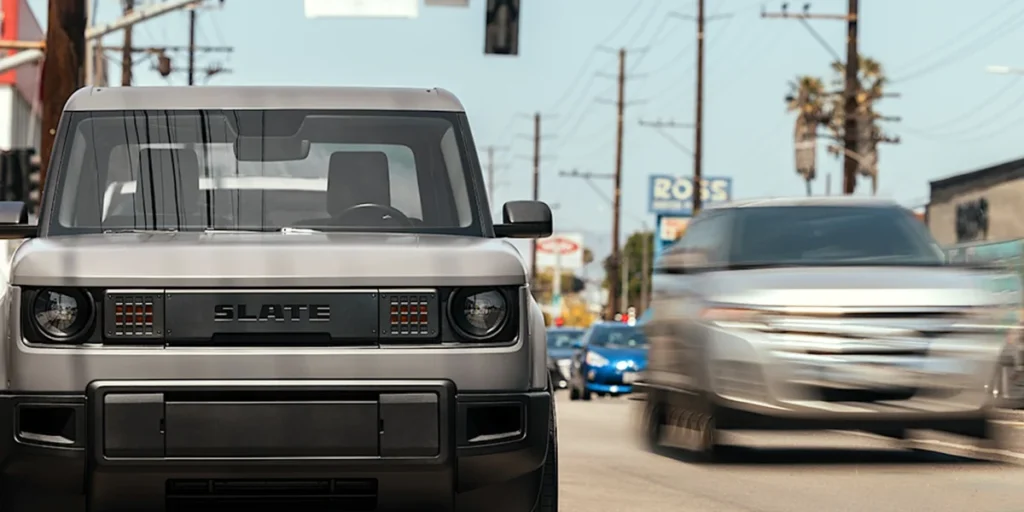
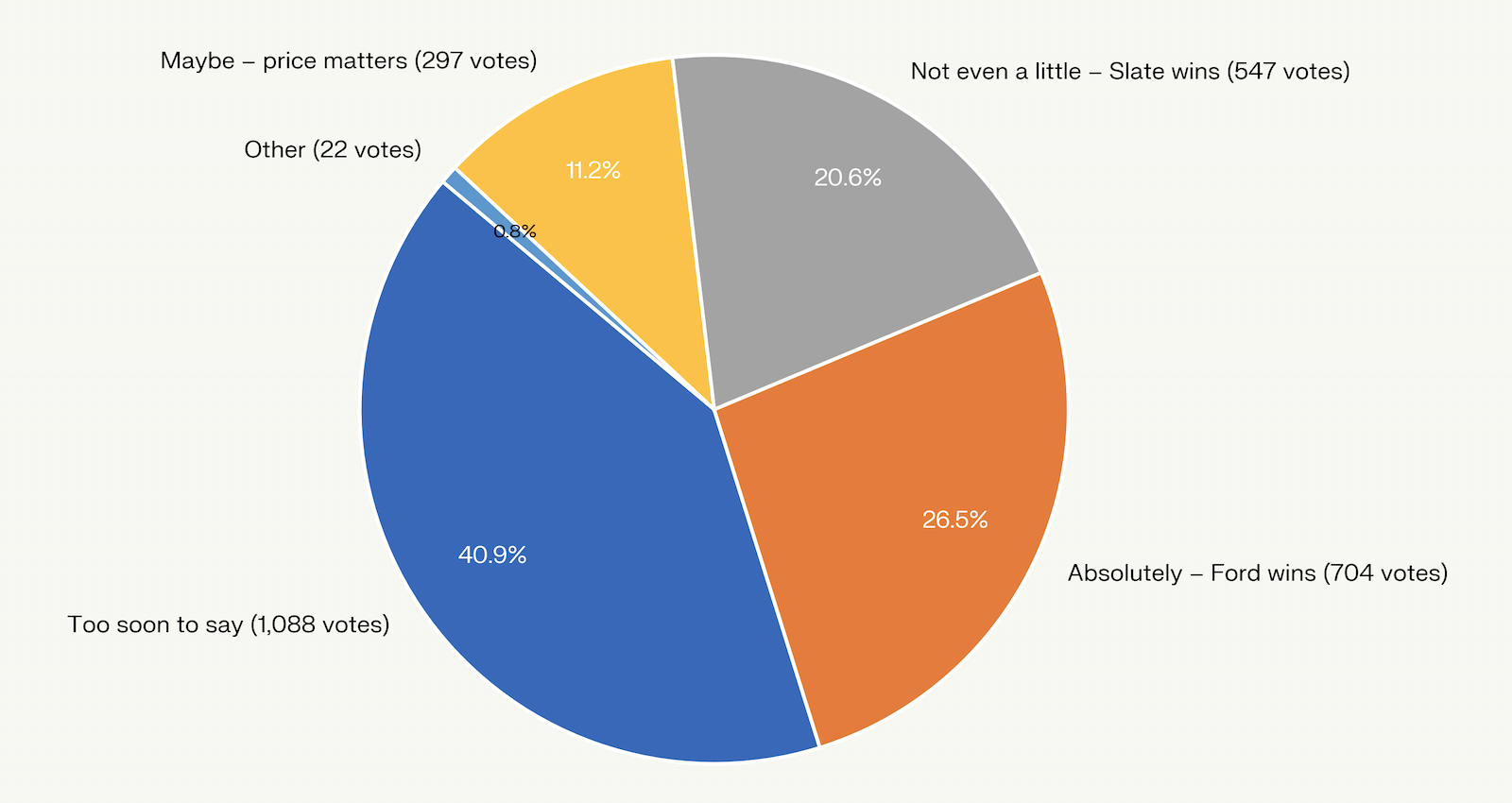
The burgeoning electric vehicle market, already a dynamic landscape of innovation and competition, is facing a new potential disruption with the recent announcement of Ford’s upcoming all-electric Fathom pickup truck. Priced competitively at an estimated $30,000, the Fathom has ignited a robust discussion among industry observers and consumers alike, raising critical questions about its impact on nascent EV startups, particularly Slate Auto. A recent survey conducted by Electrek, a leading publication in the EV space, polled nearly 2,700 readers on whether Ford’s entry into this segment would effectively preempt Slate’s market debut before it even officially launches. The results, while varied, indicate a significant degree of uncertainty and strategic consideration among potential buyers, with a substantial portion of respondents adopting a wait-and-see approach.
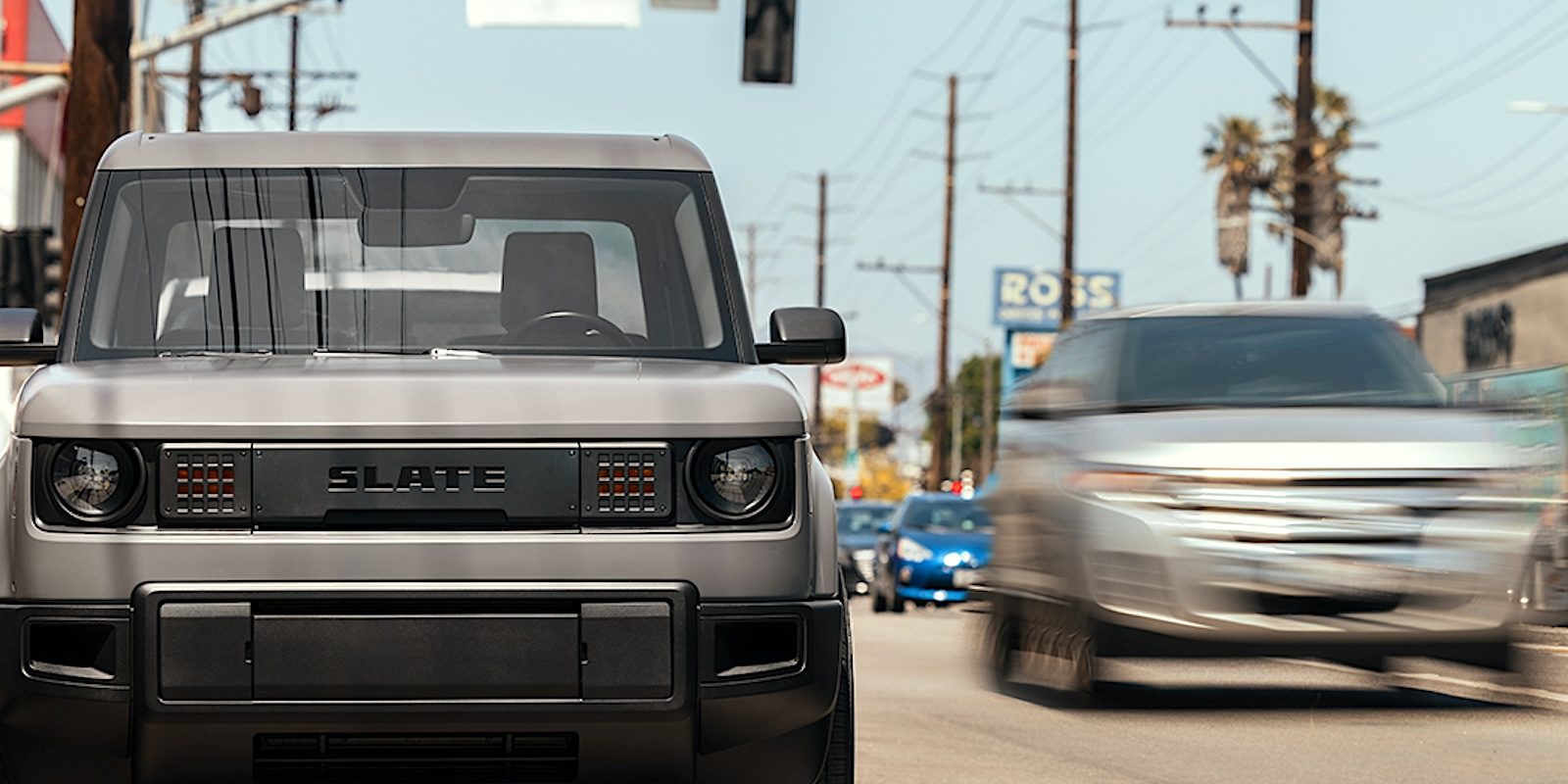
The core of the debate centers on the stark contrast between the established automotive giant Ford and the ambitious newcomer Slate Auto. Ford’s Fathom promises to deliver an electric pickup at a price point that challenges existing market expectations, leveraging the brand’s extensive manufacturing capabilities, established supply chains, and vast dealer network. In contrast, Slate Auto, a startup backed by prominent investors, including figures associated with Amazon’s Jeff Bezos, aims to carve out a niche with a more focused, potentially minimalist, and cost-effective electric vehicle offering. The survey’s central question—"Now that we know the Ford Fathom electric truck will be just a few thousand dollars more than the bare-bones Slate, is the writing already on the wall? In other words: did Ford’s Fathom just kill the Slate before it arrived?"—captures the crux of this competitive tension.
Survey Results: A Divided Opinion
The survey’s findings reveal a nuanced perspective among Electrek readers, underscoring the complexity of consumer decision-making in the rapidly evolving EV market. While a definitive consensus did not emerge, the data points to a significant segment of the readership adopting a cautious and analytical stance.
The largest group of respondents, representing a considerable portion of the nearly 2,700 participants, opted for non-committal responses. The options "Maybe – but every penny counts for some buyers, and a few thousand dollars is a LOT of pennies!" and "Too soon to say – neither truck is even out, yet!" garnered the most votes. This suggests a pragmatic understanding among consumers that price remains a significant factor, even in the premium EV market, and that the ultimate success of either vehicle will depend on factors beyond initial price projections, including features, performance, reliability, and overall value proposition. The sentiment of "sensible people" leaning towards caution is a testament to the industry’s current state, where innovation is rapid and consumer trust is hard-won.
However, within the minority of more decisive respondents, a vibrant spectrum of opinions emerged, offering valuable insights into potential market dynamics and consumer concerns. These voices, while fewer in number, provided sharp critiques and strategic observations that could significantly influence the competitive landscape.
Critiques of Ford’s Dealer Network and the Appeal of a Direct Model
A recurring theme among more opinionated respondents was a deep-seated skepticism towards traditional automotive dealership models, particularly concerning their potential impact on Ford’s Fathom. Commenters like NickD and Scott Z articulated strong reservations, arguing that Ford’s extensive dealership network, often perceived as an advantage, could paradoxically become a liability.
NickD, in a particularly pointed observation, suggested that Ford’s dealerships might actively undermine the Fathom’s success through "ridiculous markups and terrible sales experience." This perspective highlights a potential conflict of interest where dealerships, accustomed to revenue streams from internal combustion engine vehicles and their associated service, might not be incentivized to aggressively promote or adequately support a new electric model, especially one that aims for affordability. This sentiment taps into a broader consumer frustration with the traditional car buying process, often characterized by negotiation, opaque pricing, and perceived upselling.
Scott Z echoed this sentiment, labeling dealerships as "a large anchor" around Ford’s neck. He elaborated on his personal experience, stating that for the past two decades, he has actively sought out alternatives to dealerships, citing companies like Carmax, Tesla, and Rivian as preferred purchasing environments. This preference for direct sales models, which offer transparent pricing and a streamlined customer experience, suggests a growing consumer segment that values efficiency and a no-haggle approach, a model that startups like Slate Auto are more naturally positioned to adopt. The implication is that Slate Auto, by potentially offering a direct-to-consumer sales model, could leverage this consumer dissatisfaction with traditional dealerships as a competitive advantage, even if its product is initially less refined than Ford’s.
A "Modern Model T" Vision and the Spirit of Innovation
Beyond the direct price comparisons and critiques of existing infrastructure, several commenters drew parallels between Slate Auto’s proposed approach and Ford’s historical innovations, particularly the iconic Model T. This perspective frames Slate Auto not merely as a competitor but as a potential inheritor of Ford’s original spirit of democratizing transportation.
Mrvc, a regular contributor, articulated this sentiment powerfully, suggesting that Ford’s claim of wanting a "Model T moment" might be more accurately embodied by Slate Auto. Mrvc described Slate’s envisioned product as a "modern Model T," characterized by its focus on customization, local service, and repairability, rather than franchised dealership support. The commenter highlighted Slate’s potential to offer a singular color option, emphasizing user-specific customization to meet individual or business needs. This "one color" philosophy, reminiscent of Henry Ford’s famous quote about the Model T, suggests a deliberate strategy to reduce complexity and cost, thereby making the vehicle accessible to a wider audience.
Furthermore, Mrvc expressed optimism about Slate’s long-term vision, noting their focus on reducing costs as production scales, a stark contrast to Ford’s historical tendency to increase prices annually. This forward-looking perspective suggests that while the initial price gap might be narrow, Slate’s commitment to cost reduction could widen the affordability chasm over time, making it a more compelling option for budget-conscious buyers. The caveat that Slate might not appeal to those seeking "every single piece of tech or creature features" acknowledges its targeted approach, focusing on essential functionality over luxury amenities.
The "Falcon" Analogy and Market Segmentation
Building on the historical parallels, Mark Horning invoked another significant model from Ford’s storied past: the Falcon. Horning suggested that the Fathom could represent Ford’s "Falcon moment," referencing the iconic car’s versatility and massive sales success. The Ford Falcon, introduced in 1959, was available in various configurations—two-door, four-door, wagon, and Ranchero—and achieved remarkable sales figures, exceeding a million units in its first two years. This analogy implies that Ford, with its extensive resources and brand recognition, could potentially replicate such broad market penetration with the Fathom, catering to diverse consumer needs through different variants.
This historical context is crucial for understanding the competitive dynamics. While Slate Auto might be aiming for a specific, underserved segment of the market with its basic, affordable EV truck, Ford’s potential to offer a wider range of Fathom configurations could allow it to capture a much larger share of the overall electric pickup truck market. The success of the Falcon was partly due to its ability to appeal to a wide demographic, from families to commercial users, at an accessible price point. If Ford can successfully translate this strategy to the Fathom, it could significantly limit the addressable market for more specialized players like Slate.

The "Chilling Effect" and the Power of Anticipation
Perhaps the most insightful observation regarding the immediate impact of the Fathom’s announcement came from Username Taycan. This commenter distilled the core challenge for Slate Auto down to a concept known as the "chilling effect."
Taycan argued that the primary obstacle for Slate is not necessarily the Fathom’s inherent quality or its eventual sales performance, but rather the psychological impact of the Fathom’s impending arrival on Slate’s order book. The mere existence of a credible, affordable electric truck from a major manufacturer like Ford can create hesitation among potential Slate customers. As Taycan put it, "The first problem for Slate isn’t how good the fathom is if it ever arrives, it’s the chilling effect that the idea that there is a Fathom coming has on Slate orders."
This "chilling effect" refers to the phenomenon where the anticipation of a superior or more competitively priced alternative can suppress demand for an existing product or service before the alternative is even available. Consumers who might have been on the verge of ordering a Slate may now pause, thinking, "I’d love to buy a Slate, but I want to see what the Fathom is all about before I pull the trigger." This delay can be devastating for startups that rely on early sales momentum to fund production, secure further investment, and build brand loyalty.
Ford’s own recent history in the EV market provides a cautionary tale. The company’s strategic decisions regarding charging standards, such as its adoption of Tesla’s NACS port, have led to delays and significant R&D expenditure. Ford CEO Jim Farley’s past decisions have arguably influenced consumer perception and purchasing decisions, demonstrating how a major automaker’s strategic shifts can create periods of uncertainty and waiting among its customer base. As Taycan implies, Ford itself understands the potent impact of such waiting games, a dynamic that could now be turned against a smaller competitor like Slate Auto.
Market Context and Future Implications

The announcement of the Ford Fathom and the ensuing discussion surrounding Slate Auto occur within a broader context of rapid evolution in the electric vehicle sector. Global sales of electric vehicles have been steadily climbing, driven by increasing environmental awareness, government incentives, and advancements in battery technology. The pickup truck segment, in particular, is seen as a critical battleground, given its historical popularity and the potential for significant EV adoption in this category.
Ford’s entry into the affordable electric pickup segment with the Fathom is a strategic move to capture market share and solidify its position as a leader in electrification. The company’s established brand loyalty, manufacturing scale, and distribution network provide a formidable competitive advantage. The Fathom’s target price of $30,000 positions it to appeal to a wide demographic, including mainstream consumers who may have previously found EVs to be prohibitively expensive.
For Slate Auto, the challenge is immense. As a startup, it lacks the established infrastructure and brand recognition of Ford. However, its potential advantages lie in its agility, its ability to focus on a specific market niche, and its potential to offer a more stripped-down, purpose-built vehicle that prioritizes affordability and functionality. The success of companies like Rivian, which initially targeted a premium adventure segment, demonstrates that specialized EV startups can find a foothold. Yet, the emergence of a strong competitor from an established player like Ford fundamentally alters the market dynamics.
The "chilling effect" highlighted by Taycan is a critical factor for Slate. If a significant number of potential customers adopt a wait-and-see approach due to the Fathom’s announcement, Slate’s ability to secure initial orders and demonstrate market viability could be severely hampered. This could lead to a cascade of challenges, including difficulties in securing further funding, scaling production, and even maintaining operational momentum.
The broader implications extend beyond these two specific vehicles. The competitive pressure exerted by Ford’s Fathom could force other EV startups to re-evaluate their pricing strategies, product development roadmaps, and go-to-market approaches. It underscores the reality that the EV market is maturing, and while opportunities for innovation abound, established automakers are increasingly leveraging their scale and resources to compete directly with newer entrants.
Conclusion: A Shifting Landscape

The question of whether Ford’s Fathom has "killed the Slate before it arrived" is not definitively answered by the Electrek survey, but the results offer a compelling snapshot of the competitive anxieties and strategic considerations at play. While a majority of respondents adopted a prudent "too soon to say" stance, the strong opinions voiced by a significant minority highlight key vulnerabilities and potential advantages for both players.
Slate Auto’s success may hinge on its ability to maintain its unique value proposition—a focus on affordability, customization, and a direct sales model—while navigating the disruptive force of Ford’s market entry. The perception of dealerships as a potential impediment for Ford, and the historical resonance of Ford’s own innovative past, offer potential avenues for Slate to differentiate itself. However, the "chilling effect" of the Fathom’s announcement represents a tangible and immediate threat, capable of dampening demand and complicating Slate’s path to market.
Ultimately, the true impact of the Ford Fathom on Slate Auto will unfold over the coming months and years. It will depend on the Fathom’s final specifications and pricing, Ford’s execution of its sales and marketing strategies, and Slate’s ability to adapt and execute its own vision in an increasingly competitive electric vehicle landscape. The debate, as reflected in the survey results, is far from over, and the battle for the affordable electric pickup truck segment promises to be one of the most closely watched narratives in the automotive industry.