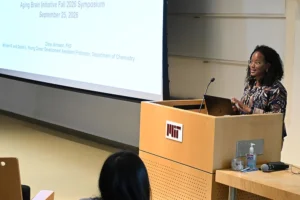
The rapid proliferation of artificial intelligence (AI) and data science has fundamentally restructured the landscape of modern knowledge acquisition, particularly within the sensitive domain of healthcare. As machine learning models become increasingly integrated into diagnostic tools and treatment development, the necessity for a workforce—and a citizenry—capable of critically evaluating these systems has never been more urgent. In response to this need, the Raspberry Pi Foundation recently hosted the fourth installment of its ongoing research seminar series, "Teaching about AI in the Arts, Humanities, and Sciences." During this session, Kathy Jessen Eller of The Concord Consortium presented a comprehensive overview of the Data Science, AI & You (DSAIY) program, a groundbreaking semester-long curriculum designed to equip high school students with the analytical tools required to dismantle the "black box" of medical AI.
The seminar highlighted a growing tension in contemporary education: while students are increasingly adept at using generative AI tools to complete coursework, there is significant evidence suggesting a decline in critical engagement with the outputs of these tools. This phenomenon, often described as "cognitive offloading," occurs when users delegate intellectual labor to algorithms without verifying the accuracy of the results against primary sources. In the context of healthcare, where algorithmic errors can lead to life-altering consequences, the stakes of such passive consumption are exceptionally high. The DSAIY program, phonetically referred to as "Daisy," seeks to mitigate these risks by shifting the pedagogical focus from AI consumption to AI construction and critique.
The Structural Framework of the DSAIY Curriculum
The DSAIY initiative is structured as a rigorous, semester-long course that moves beyond theoretical discussion into hands-on technical application. Developed by The Concord Consortium, the program is built on the premise that true AI literacy is impossible without a foundational understanding of data science. The curriculum guides students through the entire machine learning pipeline, beginning with data collection and preparation, progressing through model training and testing, and concluding with deployment and ethical evaluation.
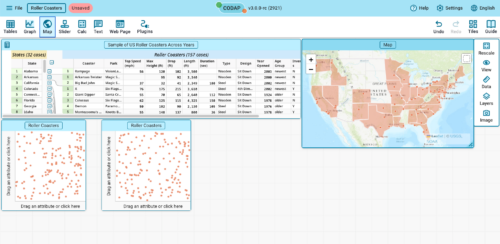
Central to the DSAIY experience is the use of CODAP (the Common Online Data Analysis Platform). CODAP is a free, web-based tool specifically engineered for educational environments to lower the barrier to entry for complex data analysis. Unlike professional-grade software that requires extensive coding knowledge, CODAP provides a highly visual, interactive interface. This allows students to engage with large datasets, such as those found in clinical trials or public health records, by clicking on individual data points to view the "story" behind each case. By visualizing data in this manner, students transition from viewing numbers as abstract entities to understanding them as representations of human health and experience.
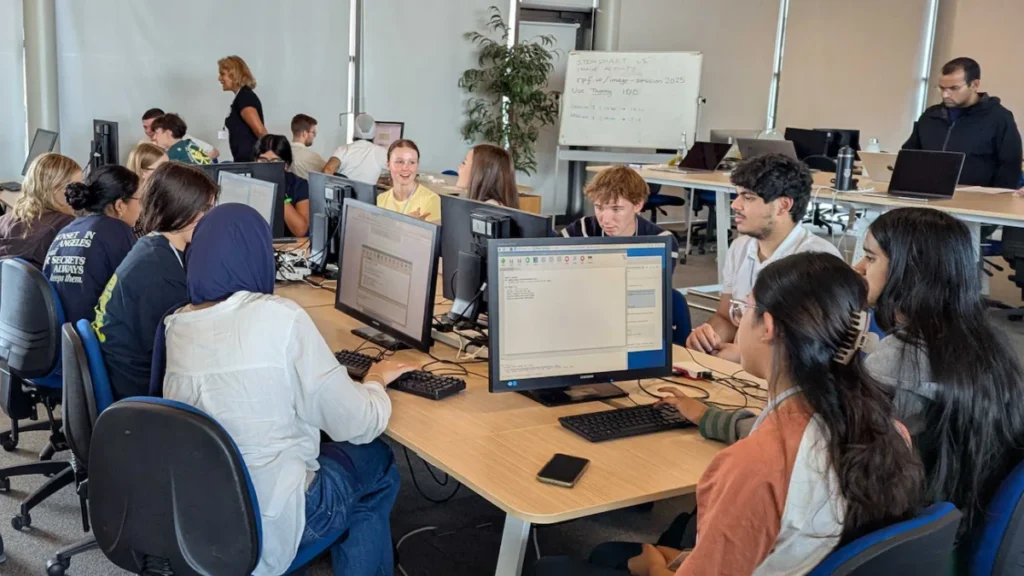
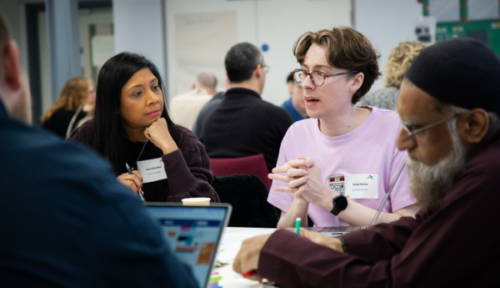
The program culminates in an "AI-a-thon," a collaborative event modeled after professional hackathons. During this event, students work in cross-disciplinary teams that include their peers, teachers, data scientists, and medical clinicians. This interaction provides students with a rare opportunity to see how their classroom learning translates into real-world professional environments, emphasizing that AI development is not a solitary technical task but a social and collaborative process.
Case Studies in Bias: The Pulse Oximetry Example
One of the most impactful components of the DSAIY curriculum is its focus on algorithmic bias through real-world healthcare examples. A primary case study used in the program involves the pulse oximeter, a device that became a household name during the COVID-19 pandemic. Pulse oximeters measure blood oxygen saturation by passing red and infrared light through the skin. However, historical data and recent clinical studies have demonstrated that these devices can yield inaccurate readings for individuals with darker skin pigmentation, as melanin can absorb the light and lead to overestimated oxygen levels.
In the DSAIY classroom, students do not merely read about this disparity; they investigate it. By collecting their own blood oxygen data and using CODAP to plot the results, students observe the inherent variability in biological measurements. They are then tasked with making difficult decisions about their datasets, such as whether to remove outliers or how to account for different skin tones in their models. This exercise forces students to grapple with the ethics of data cleaning and the potential for "mathematical laundering," where biased human decisions are hidden behind the perceived objectivity of an algorithm.

This hands-on approach leads to a deeper level of questioning. Students begin to ask: Who was included in the original training data for this medical device? What are the implications of an inaccurate reading for a patient in an emergency room? By grounding AI education in the tangible realities of healthcare, the program ensures that students understand that "bias" is not just a technical error, but a social injustice reflected in code.
Implementation and Demographic Impact in Rhode Island
The effectiveness of the DSAIY program has been demonstrated through its initial implementation in Rhode Island, USA. At the time of the seminar, 11 teachers had successfully delivered the curriculum to a diverse cohort of over 800 students. The implementation strategy emphasized heavy support for educators, providing four days of intensive professional development followed by ongoing technical assistance. This support is crucial, as many teachers—like their students—may not have formal backgrounds in computer science or advanced statistics.
The demographic data from the Rhode Island pilot suggests that the DSAIY program is successfully reaching groups traditionally underrepresented in STEM. Participation among female students has been notably high. One participating educator noted that his DSAIY sections saw higher female enrollment than any of his other computer science offerings. Analysts suggest that this may be due to the curriculum’s focus on healthcare and social impact—fields that often resonate more strongly with students who are motivated by communal goals and the desire to solve human-centric problems rather than purely technical ones.
Furthermore, the program has proven accessible to students across a wide spectrum of prior experience. Many participants entered the course with no prior knowledge of Python or statistical modeling. By the end of the semester, these students were not only writing code to train machine learning models but were also presenting their findings to professional clinicians with confidence.
Data Literacy as the Foundation of AI Literacy
The central thesis of Kathy Jessen Eller’s presentation was that AI literacy is essentially an extension of data literacy. In an era where large language models (LLMs) like ChatGPT can generate authoritative-sounding prose on any subject, the ability to "interrogate the data" is the only reliable defense against misinformation. When students understand how a model is trained—how data is labeled, weighted, and filtered—they lose the tendency to view AI as an infallible oracle.
This shift in perspective is vital for the future of democratic participation. As AI systems are increasingly used to determine insurance premiums, predict disease outbreaks, and allocate hospital resources, the public must be able to demand transparency and accountability. By teaching students to reason about data, the DSAIY program prepares them to be critical stakeholders in a high-tech society.
The seminar also addressed the role of educators in this new landscape. Rather than banning the use of AI tools, the DSAIY approach suggests that teachers should lean into the technology, using it as a starting point for deeper investigation. For example, a teacher might use an AI-generated diagnosis as a "straw man" that students must then prove or disprove using raw clinical data. This pedagogical strategy transforms the AI from a labor-saving device into a critical-thinking catalyst.
Broader Implications and the Future of Computing Education
The work being done through the DSAIY program reflects a broader shift in computing education research. There is a growing consensus that computer science should not be taught in isolation but should be integrated across the curriculum—linking with biology, social studies, and ethics. The Raspberry Pi Foundation’s seminar series continues to explore these intersections, with upcoming sessions scheduled to discuss "Social Explainable AI" (Social XAI) and "Critical Computational Literacy" (CCL).
The long-term impact of programs like DSAIY extends beyond the classroom. By fostering a generation of "data-literate" citizens, the education system can help ensure that the benefits of AI are distributed equitably. If students from diverse backgrounds understand how to build and audit these systems, they are more likely to enter the workforce as developers and policymakers who prioritize fairness and inclusion.
In conclusion, the Data Science, AI & You curriculum provides a robust model for how schools can address the challenges of the AI revolution. By moving beyond the "how-to" of tool usage and focusing on the "why" and "at what cost" of algorithmic decision-making, the program empowers youth to take an active role in shaping the future of healthcare. As AI continues to evolve, the critical thinking skills developed through such curricula will remain the most essential tool in any student’s arsenal, ensuring that technology serves humanity rather than the other way around.