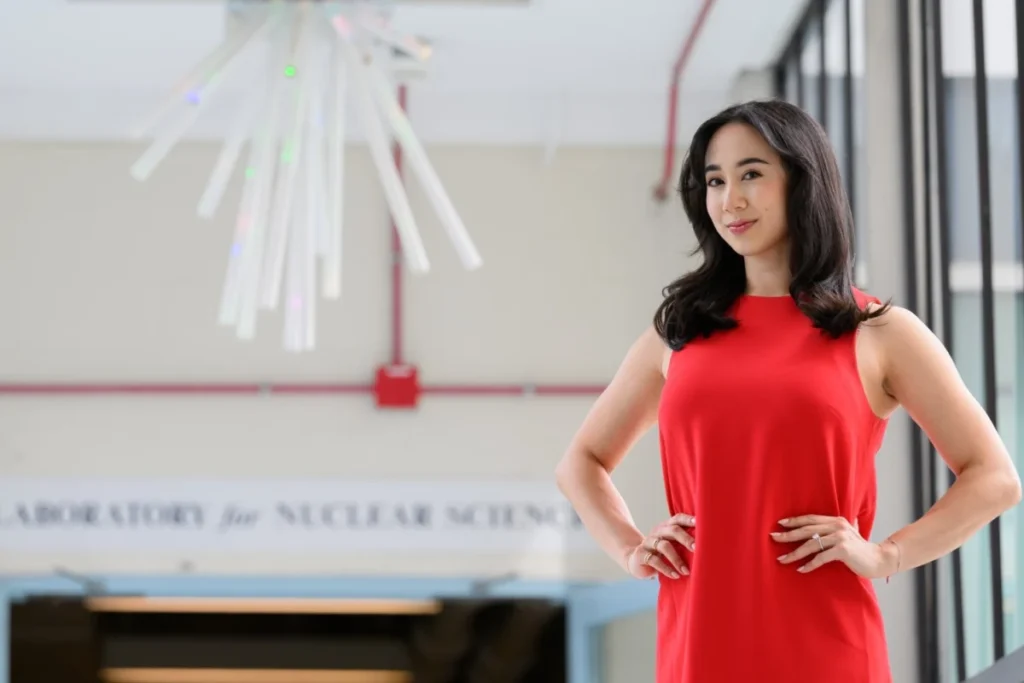
The search for dark matter remains one of the most significant challenges in modern astrophysics, representing a quest to identify the substance that constitutes approximately 85 percent of all matter in the known universe. Despite its overwhelming presence, dark matter has never been directly detected, leaving a massive void in the Standard Model of particle physics. Jessica Fry, a fifth-year doctoral candidate in the Laboratory for Nuclear Science (LNS) at the Massachusetts Institute of Technology (MIT), is currently at the forefront of this global effort. Her journey to the heights of theoretical and experimental physics is unique, marked by a professional detour through the world of Broadway and a disciplined approach to science that mirrors the rigor of elite performance art.
The Mystery of the Missing Universe
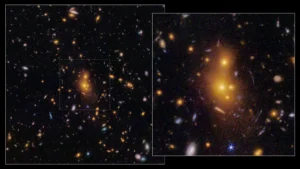
For nearly a century, the scientific community has grappled with the "missing mass" problem. Observations of galactic rotation curves—the speed at which stars orbit the center of galaxies—consistently show that galaxies possess far more gravity than can be accounted for by visible stars, gas, and dust. According to the laws of Newtonian dynamics and general relativity, galaxies should fly apart unless held together by an invisible, non-luminous substance. This substance, termed dark matter, does not emit, absorb, or reflect light, making it entirely transparent to traditional astronomical instruments.
While several candidates for dark matter have been proposed, including Weakly Interacting Massive Particles (WIMPs), Fry’s research focuses on a more elusive theoretical particle: the axion. Originally proposed in the late 1970s to solve the "strong CP problem" in quantum chromodynamics—a theoretical discrepancy regarding why the strong nuclear force respects certain symmetries—the axion has emerged as a leading dark matter candidate. Unlike WIMPs, axions are theorized to be incredibly light, with masses many orders of magnitude smaller than an electron. At such low masses, axions behave less like individual particles and more like a pervasive, coherent wave that permeates the galaxy.
A Chronology of Dual Disciplines
Jessica Fry’s trajectory into the world of high-stakes particle physics began in the San Francisco Bay Area, an environment saturated with scientific innovation. Growing up near the SLAC National Accelerator Laboratory, she was exposed to the culture of "Big Science" from an early age. However, her primary focus during her youth was dance. Beginning at age three, Fry entered the world of competitive dance, eventually performing on national stages.
The intersection of her two worlds occurred during high school when a teacher provided her with two decommissioned detectors from SLAC. Rather than treating them as relics, Fry researched experimental papers from the 1960s, successfully replicated a particle detection experiment, and documented her findings. This experience provided the catalyst for her dual pursuit of physics and performance.
At Stanford University, Fry maintained a rigorous double major in physics and theater and performance studies. Her undergraduate years were defined by a high-stakes balancing act between academic excellence and professional artistic opportunities. During her sophomore year, she faced a pivotal moment: an audition for a Broadway revival of David Henry Hwang’s M. Butterfly. The audition coincided with her midterm examinations, necessitating a cross-country flight to New York and an immediate return to California to complete her testing.
After a month of uncertainty, during which she secured a prestigious research internship at CERN (the European Organization for Nuclear Research) in Switzerland, Fry received word that she had been cast in the Broadway production. Her summer was split between the frontiers of particle physics in Geneva and the rehearsal halls of New York City. This two-year hiatus from Stanford allowed her to immerse herself in diverse movement disciplines, including ballet, contemporary jazz, traditional Māori dance, and Peking opera-style movement.
The Occupational Hazards of Performance
Despite her success on the stage, Fry began to experience a profound psychological shift. In the professional theater world, where success is often predicated on the subjective judgments of casting directors and critics, she found her sense of self-worth becoming increasingly externalized. She describes this as an "occupational hazard," where one begins to trust external opinions more than internal convictions.
This realization prompted a return to Stanford to complete her degrees and a subsequent application to graduate programs. Her choice of MIT was driven by the institutional scale and "scientific energy" of the Laboratory for Nuclear Science. The LNS is a cornerstone of MIT’s research infrastructure, functioning with a level of resources and personnel that rivals entire physics departments at other leading universities.
Engineering the Detection of Axions
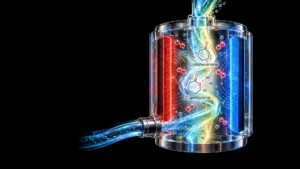
Fry’s current work involves the development and operation of two sophisticated experiments designed to "listen" for the faint signals of dark matter. These experiments are predicated on the theory that in the presence of a powerful magnetic field, axions can convert into detectable photons, creating a weak, oscillating electric current.
The first experiment, ABRACADABRA (A Broadband/Resonant Approach to Cosmic Axion Detection with a Bayesian B-Ring Apparatus), is currently operational at MIT. The second, DMRadio (Dark Matter Radio), is a larger-scale collaboration being constructed at Stanford. Both utilize a toroidal (doughnut-shaped) magnet setup. The methodology is analogous to tuning a car radio: because the exact mass of the axion is unknown, researchers must systematically tune their detectors across a range of frequencies, looking for a specific resonance that matches the axion’s signal.
The technical challenges are immense. The signal Fry is searching for is buried beneath layers of thermal noise and environmental interference. To isolate the signal, the experiments utilize quantum amplifiers and superconducting circuits cooled to temperatures near absolute zero. Fry’s expertise lies in the data analysis and the refinement of these detection methods, identifying the "rip current" caused by axion interactions within the magnetic field.
Institutional Support and Mentorship
At MIT, Fry works under the guidance of Professor Lindley Winslow, a prominent figure in the Neutrino and Dark Matter Group. Winslow, who also navigated a choice between competing passions in her early career, views Fry’s background in performance as an asset to her scientific work. According to Winslow, the discipline required for elite dance—a constant drive for refinement, a demand for critical feedback, and the ability to perform under pressure—translates directly to the "fearlessness" required in experimental physics.
The Neutrino and Dark Matter Group at MIT operates on a collaborative model, integrating four principal investigators and their respective research teams. This structure allows Fry to engage with experts across various subfields of nuclear and particle physics, fostering an environment where theoretical predictions and experimental engineering are closely aligned.
Broader Implications and the Future of Dark Matter
The discovery of the axion would be a transformative event in the history of science, likely warranting Nobel Prize consideration for the teams involved. It would provide the first direct evidence of the substance that dictates the large-scale structure of the universe and would offer a solution to the long-standing strong CP problem in quantum mechanics.
Fry’s contributions have already been recognized by the broader community; she was named to the Forbes 30 Under 30 Science list for 2026. This accolade underscores the potential impact of her work as she enters the final stages of her PhD program. As she focuses on completing the data analysis for DMRadio, Fry remains optimistic about the timeline for discovery.
The hunt for dark matter is shifting from a state of theoretical speculation to one of high-precision experimental verification. Fry’s conviction that dark matter will be detected within her lifetime reflects a broader sentiment in the physics community: that the "dark" sector of the universe is finally within reach. For Fry, the transition from the stage to the laboratory represents not a departure from storytelling, but a shift to a more fundamental narrative—one that explains the very fabric of reality. As she continues to "tune" her detectors, the scientific world waits to see if the universe is ready to reveal its most well-kept secret.