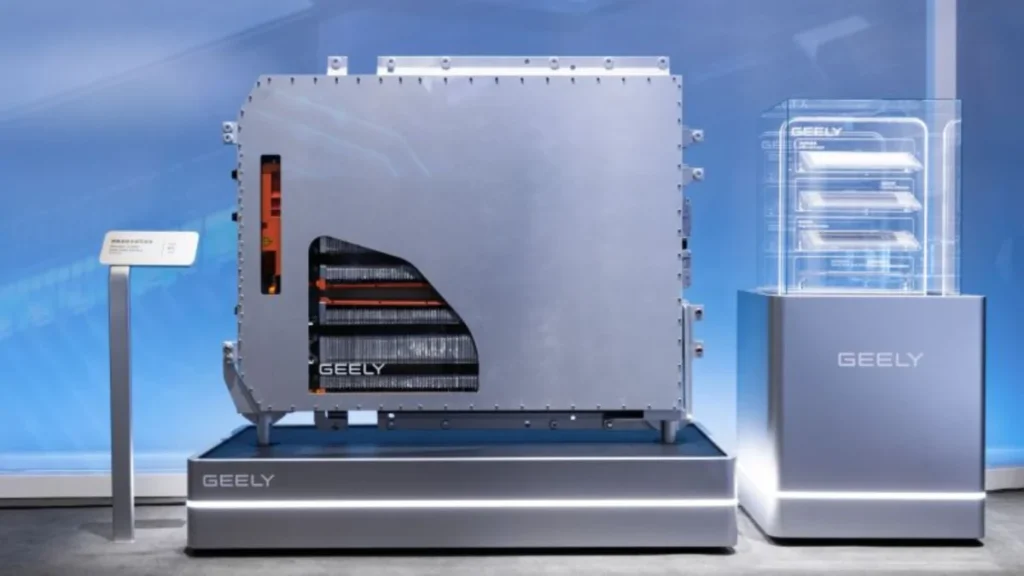
The long-anticipated solid-state battery revolution has received its most emphatic endorsement yet from a major global automotive player. Chinese automotive giant Geely Holding has officially announced an ambitious timeline to commence pilot deployments of groundbreaking solid-state battery technology across its extensive and diverse portfolio of vehicle brands by 2027. This strategic move is poised to usher in a new era of electric mobility, impacting prestigious marques such as Volvo, Zeekr, Polestar, Lotus, Lynk & Co, and Smart, among others within the Geely ecosystem. The company’s claims are significant, promising technical specifications that could redefine electric vehicle performance and address long-standing consumer concerns about range, charging speed, and battery longevity.
The Long-Awaited Promise of Solid-State Technology
For years, solid-state batteries (SSBs) have been hailed as the "holy grail" of electric vehicle power storage. Unlike conventional lithium-ion batteries that rely on flammable liquid electrolytes to shuttle ions between electrodes, SSBs utilize a solid material for this crucial function. This fundamental shift offers several compelling advantages, chief among them enhanced safety, higher energy density, faster charging capabilities, and a longer operational lifespan. The elimination of volatile liquid components drastically reduces the risk of thermal runaway and fire, a critical safety improvement for electric vehicles. Furthermore, solid electrolytes are generally more stable, allowing for the use of more energetic electrode materials like lithium metal, which can significantly boost energy density.
The journey to commercializing solid-state batteries has been fraught with complex engineering challenges. Researchers and engineers worldwide have grappled with issues such as maintaining stable contact between the solid electrolyte and electrodes, managing ion conductivity at varying temperatures, and developing cost-effective manufacturing processes capable of mass production. Despite these hurdles, the potential benefits have driven relentless investment and research across the globe, with numerous automotive manufacturers and battery developers racing to be the first to bring this transformative technology to market. Geely’s announcement represents a pivotal moment, shifting the narrative from speculative research to a concrete timeline for real-world application.
Geely’s Ambitious Technical Specifications: A Deep Dive
Geely’s announcement is not merely about a timeline; it’s underpinned by bold technical claims that, if realized, would represent a generational leap in battery performance. The company states its solid-state battery packs will achieve an energy density of 500 Wh/kg. To put this into perspective, this figure effectively doubles the energy performance of Geely’s current liquid-based "Golden Brick" cells, which currently stand at a respectable 250 Wh/kg.
-
Doubling Energy Density: An energy density of 500 Wh/kg is transformative. Current high-performance lithium-ion batteries typically hover around 250-300 Wh/kg at the cell level, and even less at the pack level due to the weight of housing, cooling systems, and battery management electronics. Doubling this density means that electric vehicles could store twice as much energy in the same physical space and with the same weight, or achieve the same range with significantly smaller and lighter battery packs. This has profound implications for vehicle design, potentially allowing for more interior space, lighter overall vehicle weight, and improved driving dynamics. For consumers, it translates directly into less range anxiety and more practical usability for long-distance travel. For example, Tesla’s 4680 cells are estimated to be in the 270-300 Wh/kg range, while CATL’s Qilin battery, an advanced liquid-based design, aims for over 250 Wh/kg at the pack level, highlighting the competitive advantage 500 Wh/kg would offer.
-
Unprecedented Range: This leap in energy density is projected to enable Geely’s upcoming electric cars to effortlessly surpass the 1,000-kilometer (approximately 621-mile) threshold on a single charge. This range directly rivals, and in many cases exceeds, that of traditional long-distance diesel vehicles. Achieving such a range would largely eliminate the frequent stops currently associated with long EV road trips, making electric vehicles a truly viable and convenient option for intercity travel and even transcontinental journeys. It significantly narrows the perceived gap between electric and internal combustion engine (ICE) vehicles, thereby removing one of the primary psychological barriers to widespread EV adoption.
-
Rapid Recharging: "Measured in Minutes": Beyond range, charging speed remains a critical factor for consumer acceptance. Geely’s claim of charging "measured in minutes" is particularly ambitious. While current fast-charging technologies can replenish an EV battery from 10% to 80% in 20-30 minutes under ideal conditions, true "minutes" charging, akin to refueling a gasoline car, has remained elusive. Solid-state batteries hold the promise of ultra-fast charging due to their stable solid electrolyte, which can theoretically handle higher current densities without the issues of dendrite formation (short-circuiting structures) or excessive heat generation that plague liquid electrolytes during rapid charging. If Geely can deliver on this, it would fundamentally alter the charging experience, making "filling up" an EV as quick and seamless as with a petrol car.
-
Million-Kilometer Lifespan: Durability and degradation are significant concerns for prospective EV buyers. The prospect of a battery needing costly replacement after a few years has deterred many. Geely’s solid-state technology is reportedly designed to offer an operational lifespan of up to 1 million kilometers (roughly 621,000 miles). This exceptional longevity directly addresses concerns over battery degradation and the associated replacement costs, allowing vehicles to potentially outlast conventional ownership cycles. Such durability would significantly improve the long-term resale value of second-hand electric cars, making EVs a more attractive investment and fostering a healthier used-car market for electric vehicles. Moreover, a million-kilometer battery could open doors for advanced applications like vehicle-to-grid (V2G) power services, where EVs can feed electricity back into the grid, further enhancing their economic and environmental value.
-
Enhanced Safety: A cornerstone advantage of solid-state batteries is their inherent safety. By replacing flammable liquid electrolytes with solid materials, the risk of thermal runaway, fire, and explosions during collisions or short circuits is drastically reduced. This fundamental design change mitigates a key safety concern that has occasionally plagued lithium-ion battery technology, offering greater peace of mind to vehicle occupants and emergency responders.
-
Extreme Temperature Resilience: Geely is not developing this technology in isolation. The automaker revealed a crucial materials partnership with Dow Chemical, a global leader in chemical and materials science. Bo Tong, Dow’s key account technical leader, confirmed the development of a specialized solid-state cell adhesive. This adhesive is engineered to remain "rock-solid" across an extreme temperature range, from a brutal -40°C to 120°C (-40 to 248 degrees Fahrenheit). This wide operating window is critical because traditional liquid batteries lose significant efficiency and capacity in freezing conditions due to slowed ion movement and increased internal resistance. The ability of Geely’s solid-state battery to preserve its structural integrity and performance through harsh winter freezes and intense fast-charging cycles alike marks a significant breakthrough, ensuring reliable performance regardless of environmental extremes. This resilience further broadens the geographical appeal and practicality of electric vehicles.
Strategic Partnerships and Collaborative Innovation
The collaboration with Dow Chemical underscores a critical aspect of advanced battery development: it requires interdisciplinary expertise. The specialized solid-state cell adhesive developed by Dow is more than just a bonding agent; it’s a key enabler for the entire battery pack’s thermal and structural stability. In solid-state batteries, maintaining consistent contact between the solid electrolyte and the electrodes is paramount for efficient ion flow. A robust adhesive capable of withstanding extreme temperatures and mechanical stresses is vital to prevent delamination and ensure consistent performance over the battery’s long lifespan. This partnership highlights the complex ecosystem required to bring such cutting-edge technology to fruition, involving not just automakers and battery manufacturers, but also specialized material science companies.
The Global Race to 2027: A New Benchmark
Geely’s aggressive timeline places it squarely in a global race to commercialize solid-state battery technology. Intriguingly, Geely’s announcement of 2027 for pilot deployments coincides with identical trial production targets from several other prominent Chinese battery and EV manufacturers, including BYD, CATL, Gotion High-Tech, and CALB. This convergence suggests that 2027 is rapidly becoming a de facto global industry deadline for early solid-state battery deployment, particularly within the highly competitive Chinese market, which is already a world leader in EV adoption and battery production.
Beyond China, numerous other global players are heavily invested in the solid-state race. Japanese giant Toyota, a long-time proponent of solid-state technology, has also announced ambitious plans, targeting initial prototypes by 2027-2028, and aims for even higher energy densities in the future. American startups like QuantumScape (backed by Volkswagen) and Solid Power (partnered with BMW and Ford) are making significant strides, focusing on different solid electrolyte chemistries (sulfide, oxide, polymer). South Korean conglomerates like Samsung SDI and LG Energy Solution are also heavily invested, as are European automakers such as Mercedes-Benz and Stellantis through various partnerships. The intense competition underscores the immense strategic and economic value associated with being a leader in this next-generation battery technology. For China, specifically, securing leadership in solid-state batteries would further solidify its dominance in the global EV supply chain and reduce its reliance on potentially volatile international battery material markets.
Navigating the Hurdles: Technical Readiness and Mass Production
Despite the exciting prospects, the path to mass-produced solid-state batteries is not without significant challenges. CATL Chairman Robin Zeng, a leading figure in the global battery industry, earlier cautioned that solid-state development still resides around Level 4 on the 9-point Technology Readiness Level (TRL) scale. This assessment is critical: TRL 4 signifies that "component and/or breadboard validation in a laboratory environment" has been achieved, meaning partial-scale prototypes work under controlled conditions. However, a significant gap remains between TRL 4 and TRL 9, which represents "actual system proven in flight operations" or full commercial deployment.
The challenges for scaling from TRL 4 to mass production are formidable. They include:
- Manufacturing Complexity: Producing solid electrolytes and integrating them into cells requires entirely new manufacturing processes, often involving ultra-clean environments and precise material handling, which are costly and difficult to scale.
- Cost of Materials: Many proposed solid electrolyte materials are currently expensive to produce at scale, posing a significant hurdle to achieving cost parity with traditional lithium-ion batteries.
- Interfacial Resistance: Ensuring low resistance at the interface between the solid electrolyte and electrodes remains a technical challenge. High resistance can impede ion flow, leading to power loss and heat generation.
- Dendrite Growth: While solid electrolytes are largely resistant to dendrite formation compared to liquids, some solid materials can still be susceptible, particularly when using lithium metal anodes, which are crucial for achieving ultra-high energy densities.
- Cell Cycling and Degradation: Ensuring long-term stability and minimal degradation over thousands of charge-discharge cycles in real-world automotive conditions is another major hurdle.
These technical and economic hurdles mean that while pilot deployments are a crucial step, achieving true mass production at competitive costs will require substantial further innovation and investment. Industry analysts widely acknowledge that the transition from laboratory success to automotive-grade mass production is a multi-year, multi-billion-dollar endeavor.
Implications for the Automotive Industry and Consumers
If Geely and its partners successfully meet their 2027 pilot targets and eventually scale production, the implications for the automotive industry and consumers will be profound:
- Accelerated EV Adoption: By addressing the primary consumer pain points of range anxiety, slow charging, battery degradation, and safety concerns, solid-state batteries could significantly accelerate the global adoption of electric vehicles, moving them from early adopters to the mainstream.
- Redefining Vehicle Design: Lighter, smaller, and safer battery packs would give designers unprecedented freedom, allowing for more flexible vehicle architectures, increased passenger and cargo space, and potentially even new vehicle categories.
- Economic Shifts: The shift to solid-state technology could trigger significant changes in the automotive supply chain, creating new demand for specific raw materials and manufacturing equipment. It could also lead to the emergence of new market leaders in battery production.
- Environmental Impact: More efficient and longer-lasting EVs with extended range would further reduce reliance on fossil fuels, contributing significantly to global decarbonization efforts and improved air quality in urban centers.
The Road Ahead: Validation and Commercialization
Geely’s scheduled 2027 pilot deployment offers a tangible timeline for the real-world validation of these ambitious solid-state claims. Critical variables beyond headline numbers, such as consistent cold-weather performance, actual charging speeds under varying conditions, production yields, and ultimately, the overall cost of these advanced battery packs, will determine the long-term success and commercial viability of the technology.
The pilot phase will be crucial for gathering invaluable data on battery performance in diverse operational environments, refining manufacturing processes, and optimizing supply chains. If Geely and its ecosystem of brands can deliver on their promises and the production hardware meets expectations, it could fundamentally reshape consumer perception of electric vehicles and indeed, the entire automotive landscape. The days of diesel dominance, particularly for long-haul applications, may finally be numbered, paving the way for a truly electrified and sustainable future in transportation. Geely’s bold declaration marks not just a corporate milestone, but a significant step forward in the global transition towards advanced electric mobility.