Detroit, MI – September 17, 2026 – General Motors is poised to reassert its dominance in the full-size pickup truck segment with the upcoming launch of significantly updated Chevrolet Silverado and GMC Sierra models, featuring entirely new V8 engine options. This strategic move comes as regulatory pressures on vehicle emissions ease in the United States, allowing domestic automakers to once again prioritize robust engine configurations that have long been the preference of truck buyers. The forthcoming powertrains are designed to address lingering concerns and past issues associated with GM’s current V8 offerings, aiming to restore confidence and meet the evolving demands of the market.
The landscape of automotive manufacturing has been in constant flux, particularly concerning emissions standards. For years, manufacturers have been under intense pressure to reduce the carbon footprint of their vehicle fleets, leading to widespread adoption of smaller displacement engines, turbocharging, and electrification. However, this push for efficiency often came at the expense of the raw power and visceral appeal that many consumers associate with larger, naturally aspirated engines, especially within the truck segment. The United States’ recent recalibration of its emissions policies has provided an opportune moment for companies like General Motors to pivot back towards more traditional, higher-displacement engine architectures, a move that is being met with considerable anticipation by truck enthusiasts and commercial users alike.
Addressing Past Concerns: A New Generation of V8s
GM’s commitment to offering V8 engines in its full-size trucks has been a cornerstone of its strategy, a decision that has evidently resonated with a segment of the buying public resistant to engine downsizing. However, the current V8 offerings, particularly the 6.2-liter L87, have not been without their challenges. Reports and customer feedback have highlighted issues stemming from potential machining defects. These concerns included the possibility of debris in connecting rods and crankshafts, which could lead to compromised oil flow through clogged oil pathways. Furthermore, accusations of misaligned oil galleries from the factory added to a growing unease among owners.
These issues necessitated significant action from General Motors, including a substantial recall and revised oil viscosity recommendations, often advising owners to switch to a heavier oil blend. This situation not only impacted customer satisfaction but also cast a shadow over the reliability of these flagship V8 engines. For the smaller, but still significant, 5.3-liter L76 V8, a powerplant with a longer production history, the problems were perceived as less severe but not entirely absent. Recent iterations of this engine have faced scrutiny regarding issues with hydraulic lifters. The prevailing theory points towards the active fuel management (AFM) system, designed to improve fuel economy by deactivating cylinders, as a potential culprit. This challenge is not unique to GM; many manufacturers employing similar cylinder deactivation technologies have encountered related reliability concerns, leading to a burgeoning aftermarket for disabling these systems.
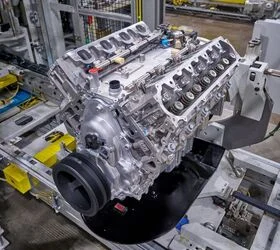
In response to these challenges and to meet the demands for enhanced performance and reliability, General Motors has undertaken a comprehensive redesign for its 2027 model year V8 engines. The outgoing 5.3-liter and 6.2-liter V8s are being replaced by entirely new displacements: a 5.7-liter and a 6.6-liter, respectively. Crucially, both new engines are built upon the advanced small-block architecture that first debuted in the highly acclaimed C8 Corvette. This integration of cutting-edge technology from GM’s performance car division into its truck lineup signals a significant upgrade in engineering and capability.
Enhanced Performance and Technological Advancements
The new 5.7-liter V8 is projected to deliver a formidable 402 horsepower and 428 pound-feet of torque. This represents a substantial leap forward, outperforming its 5.3-liter predecessor by nearly 50 horsepower and 50 pound-feet of torque. The larger 6.6-liter V8 is equally impressive, boasting an estimated 481 horsepower and 501 pound-feet of torque. This output not only significantly surpasses the outgoing 6.2-liter engine but also positions it as a potent contender in its class.
These performance gains are attributed to several key engineering advancements. Both new V8s feature increased displacement and higher compression ratios, with the 5.7-liter operating at 12.0:1 and the 6.6-liter at 12.5:1. Beyond fundamental mechanical improvements, GM has incorporated an updated throttle body and a redesigned intake manifold, engineered to optimize airflow and enhance the engines’ aspiration capabilities.
A notable aspect of the new V8s is GM’s strategic decision to implement a dual-injection system, combining both direct injection and port injection. While direct injection has become a de facto standard for its ability to boost performance and efficiency, it has also been criticized for contributing to carbon buildup on intake valves, necessitating more frequent maintenance for some owners. By retaining port injection alongside direct injection, GM aims to mitigate this common drawback, offering a more robust and potentially cleaner-burning fuel delivery system. This approach acknowledges and addresses a significant point of contention among drivers who have experienced the downsides of direct injection alone.
General Motors appears to be making a concerted effort to instill confidence in the lubrication systems of these new V8s, directly addressing the engine seizure concerns that plagued earlier models. The revised engines are equipped with a variable oil pump, designed to optimize oil pressure and flow based on engine load and operating conditions. Additionally, the inclusion of supplementary oil feed locations and an integrated oil cooler are all geared towards ensuring consistent and effective lubrication, thereby enhancing engine longevity and durability. The manufacturer’s recommendation for a heavier 0W-30 oil further underscores this focus on robust lubrication.
Tom Bishop, General Motors’ Chief Engineer for Small Block engines, expressed enthusiasm for the new powertrains. "These new V8 engines advance GM’s legendary Small Block architecture with greater capability, more advanced technology and the strength of GM’s manufacturing footprint behind them," Bishop stated. "They’re engineered to provide truck customers the confidence and performance they expect from a GM V8." The claim that the larger of the two new V8s will be the most powerful naturally aspirated V8 engine in its class is a significant marketing advantage, especially in the highly competitive pickup truck market where bragging rights are a powerful selling tool.
Powertrain Options and Market Positioning
While the new V8 engines are undoubtedly the headline act, General Motors will continue to offer a diverse range of powertrains for its 2027 light-duty truck lineup, catering to a variety of customer needs. The 2.7-liter TurboMax engine, known for its impressive maximum payload capacity in the 1500 series pickups, will remain a viable option. For those prioritizing towing capabilities, the 3.0-liter TurboMax Diesel continues to be the preferred choice.
The outgoing 5.3-liter V8, despite its perceived shortcomings, was often lauded as a well-rounded option, offering a strong balance between towing capacity (up to 13,700 pounds) and maximum payload (2,170 pounds). The new 6.6-liter V8, while more powerful, is expected to trail slightly in these specific metrics, underscoring the nuanced trade-offs within the powertrain offerings. Ultimately, the precise towing and payload figures will be subject to specific configurations, optional equipment, and whether the vehicle is a Chevrolet Silverado or a GMC Sierra.
All engines for the 2027 GM light-duty truck lineup will be mated to a 10-speed automatic transmission, a transmission that has become a standard for smooth power delivery and efficient operation across the automotive industry. Furthermore, an optional 34-gallon fuel tank will be available, offering extended range, particularly beneficial for diesel models, with GM claiming a potential for up to 900 miles between fill-ups. While gasoline-powered trucks will not achieve this exact figure, owners can anticipate substantial range improvements.
Analysis of Broader Implications
The introduction of these new V8 engines by General Motors represents a significant bet on the enduring appeal of traditional gasoline powerplants, even as the industry increasingly looks towards electrification. This strategy is likely informed by a keen understanding of the truck market’s specific demands and a belief that internal combustion engines, when engineered for performance and durability, can remain competitive for the foreseeable future. The regulatory tailwinds in the US have certainly created a more favorable environment for this approach.
The emphasis on addressing past reliability concerns, particularly regarding engine lubrication and machining, is a critical step in rebuilding consumer trust. The comprehensive redesign, incorporating lessons learned from both successful and problematic previous generations, suggests a commitment to long-term quality. The integration of technology from GM’s performance division, such as the small-block architecture, hints at a more holistic approach to engine development that prioritizes both power and refinement.
However, certain aspects of GM’s truck design may continue to be points of contention for some buyers. The retention of Dynamic Fuel Management (cylinder deactivation) and auto-stop start systems, while aimed at improving fuel economy, has not always been met with universal approval. The absence of a traditional oil dipstick, replaced by electronic monitoring, is another feature that some drivers find less intuitive or reassuring. While fuel efficiency gains are a clear benefit, the potential impact of these technologies on long-term mechanical dependability remains a factor that will be closely watched by consumers and industry analysts alike.
Manufacturing and Market Launch
The production of these new small-block V8 engines will be centered at GM’s Flint Engine Operations facility. Additional manufacturing capacity is also being allocated to plants in Tonawanda and St. Catharines, Canada, ensuring a robust supply chain for these critical components.
The first vehicles to feature these new V8 powertrains will be the 2027 GMC Sierra 1500 and the Chevrolet Silverado 1500, with their official launch anticipated later this year. Pricing details and a comprehensive overview of any additional model year updates for these trucks are expected to be released closer to their market debut. The success of these new engines will not only shape the perception of GM’s trucks but also influence the broader trajectory of V8 engine development in the American automotive landscape. The industry will be closely observing how these revamped powertrains perform in real-world conditions over the coming years, with reliability and customer satisfaction being the ultimate arbiters of their success.
[Images: General Motors]