A groundbreaking innovation from the University of Hong Kong (HKU) has unveiled a novel stainless steel, dubbed SS-H2, designed to address one of the most significant challenges in the burgeoning green hydrogen sector: the development of electrolyzers robust enough to withstand corrosive seawater environments while remaining economically viable for large-scale clean energy production. This material breakthrough promises to dramatically reduce the cost of structural components in electrolyzers, potentially accelerating the global transition towards a hydrogen-powered economy.
The Global Imperative for Green Hydrogen and the Seawater Conundrum
In the face of escalating climate change and the urgent need to decarbonize global energy systems, hydrogen has emerged as a crucial energy carrier. Its potential to store renewable energy, fuel heavy transport, and decarbonize industrial processes like steel and chemical production is immense. Among the various methods of hydrogen production, "green hydrogen," produced by splitting water using electricity from renewable sources (solar, wind), is the most environmentally benign. Unlike "grey hydrogen" (from fossil fuels with emissions) or "blue hydrogen" (from fossil fuels with carbon capture), green hydrogen offers a truly zero-emission pathway.
However, the widespread adoption of green hydrogen faces substantial hurdles, not least of which is the cost of production. A major component of this cost lies in the electrolyzers themselves, particularly the materials required to withstand the harsh conditions of water splitting. While freshwater is often used as a feedstock, its availability can be limited, and the energy and infrastructure required for desalination add further expense and environmental impact. Seawater, on the other hand, is an almost inexhaustible resource, making it an incredibly attractive option for hydrogen production. Yet, its high salinity, abundance of chloride ions, and propensity for undesirable side reactions present an extreme challenge to conventional materials, leading to rapid corrosion and degradation of electrolyzer components.
Current industrial practices for hydrogen production, even from desalted seawater or acidic solutions, typically rely on expensive materials like titanium, often coated with precious metals such as gold or platinum, for their structural integrity and corrosion resistance. These high material costs contribute significantly to the overall capital expenditure of electrolyzer systems, impeding their scalability and economic competitiveness against fossil fuel alternatives.
HKU’s SS-H2: A New Material Paradigm for Extreme Environments
At the forefront of addressing this critical materials challenge is a research team at HKU’s Department of Mechanical Engineering, led by Professor Mingxin Huang. Their recent development of SS-H2, or Stainless Steel for Hydrogen Production, represents a significant leap forward. This specialized stainless steel exhibits remarkable corrosion resistance under conditions that would typically push standard stainless steel alloys beyond their operational limits, making it an ideal candidate for direct seawater electrolysis and other demanding electrolyzer environments. The findings, published in the prestigious journal Materials Today under the title "A sequential dual-passivation strategy for designing stainless steel used above water oxidation," underscore a paradigm shift in material design for high-potential applications.
The core innovation of SS-H2 lies in its unique "sequential dual-passivation" strategy. Conventional stainless steels derive their corrosion resistance primarily from a thin, passive film of chromium oxide (Cr2O3) that forms on the surface when chromium in the alloy oxidizes. While effective in many corrosive environments, this chromium-based protective layer has an inherent limitation. At high electrical potentials, specifically around ~1000 millivolts (mV) relative to a saturated calomel electrode (SCE), the stable Cr2O3 can be further oxidized into soluble hexavalent chromium (Cr(VI)) species, leading to what is known as transpassive corrosion. This threshold is well below the approximately 1600 mV required for efficient water oxidation in electrolysis, rendering traditional stainless steels unsuitable for such applications. Even advanced alloys like 254SMO super stainless steel, known for its exceptional pitting resistance in marine environments, succumb to this high-voltage limitation in the extreme electrochemical conditions of hydrogen production.
SS-H2 overcomes this fundamental barrier by building a second, manganese-based protective layer on top of the initial chromium oxide film. This ingenious mechanism unfolds sequentially: first, the familiar Cr2O3 layer forms. Then, crucially, at around ~720 mV, a distinct manganese-based layer begins to form, augmenting the primary defense. This dual-layer protection enables SS-H2 to maintain its integrity in chloride-containing environments up to an ultra-high potential of 1700 mV.
The discovery of manganese’s beneficial role in enhancing corrosion resistance at high potentials is particularly striking and, as acknowledged by the researchers, counter-intuitive. Historically, manganese has been widely perceived as an element that impairs, rather than improves, the corrosion resistance of stainless steel. Dr. Kaiping Yu, the first author of the Materials Today article and a PhD student supervised by Professor Huang, articulated the initial disbelief within the team: "Initially, we did not believe it because the prevailing view is that Mn impairs the corrosion resistance of stainless steel. Mn-based passivation is a counter-intuitive discovery, which cannot be explained by current knowledge in corrosion science. However, when numerous atomic-level results were presented, we were convinced. Beyond being surprised, we cannot wait to exploit the mechanism." This statement highlights the profound nature of the discovery, challenging long-held scientific assumptions in corrosion science.
Economic Implications: Dramatically Reducing Electrolyzer Costs
The economic implications of SS-H2 are potentially transformative for the green hydrogen industry. By replacing costly titanium-based structural materials with this new, highly resistant stainless steel, the financial barrier to large-scale electrolyzer deployment could be significantly lowered. The HKU team’s analysis revealed that SS-H2 can perform comparably to the titanium-based structural materials currently employed for hydrogen production from desalted water or acid. The stark difference, however, lies in the material cost: stainless steel is inherently far more economical than titanium, especially when the latter requires additional precious metal coatings.
To put this into perspective, the HKU report estimated the total cost for a 10-megawatt (MW) Proton Exchange Membrane (PEM) electrolysis tank system at approximately HK$17.8 million (around US$2.28 million) at the time of the study. Structural components alone accounted for a substantial 53% of this expense. The team’s projections indicate that substituting these costly structural materials with SS-H2 could lead to an astonishing reduction in the cost of structural materials by approximately 40 times. This level of cost saving could fundamentally alter the economic landscape of green hydrogen production, making it more competitive with established, carbon-intensive methods. Such a dramatic cost reduction would directly impact the Levelized Cost of Hydrogen (LCOH), a key metric for evaluating the economic viability of hydrogen production pathways. Lower LCOH is essential for green hydrogen to scale and play its intended role in the global energy transition.
The "Super Steel" Legacy: A Chronology of Innovation
The development of SS-H2 is not an isolated incident but rather the latest triumph in Professor Mingxin Huang’s long-running "Super Steel" Project at HKU. This ambitious research program has consistently pushed the boundaries of materials science, delivering a series of high-impact innovations over the past decade. The project first garnered significant attention in 2017 and 2020 with the creation of ultra-strong and ultra-tough Super Steel, materials designed for extreme structural applications. More recently, in 2021, the team achieved global recognition for producing anti-COVID-19 stainless steel, a material with inherent antimicrobial properties.
The journey from the initial observation of manganese’s unusual behavior to the validated SS-H2 and its publication was a meticulous six-year endeavor. This extended timeline underscores the complexity of materials science research, involving rigorous experimentation, atomic-level characterization, and the development of robust scientific explanations for unexpected phenomena. Professor Huang emphasized the strategic focus of his lab: "Different from the current corrosion community, which mainly focuses on the resistance at natural potentials, we specialize in developing high-potential-resistant alloys. Our strategy overcame the fundamental limitation of conventional stainless steel and established a paradigm for alloy development applicable at high potentials. This breakthrough is exciting and brings new applications." This long-term commitment to fundamental research, coupled with a clear vision for practical application, has been a hallmark of the "Super Steel" Project’s success.
From Laboratory to Industrial Scale: Patents and Production Milestones
The impact of the SS-H2 discovery extends beyond academic publication. Recognizing its immense potential, the HKU team has actively pursued the protection of their intellectual property, submitting patent applications in multiple countries. At the time of the HKU announcement, two patents had already been granted authorization, signifying the novelty and industrial applicability of the technology.
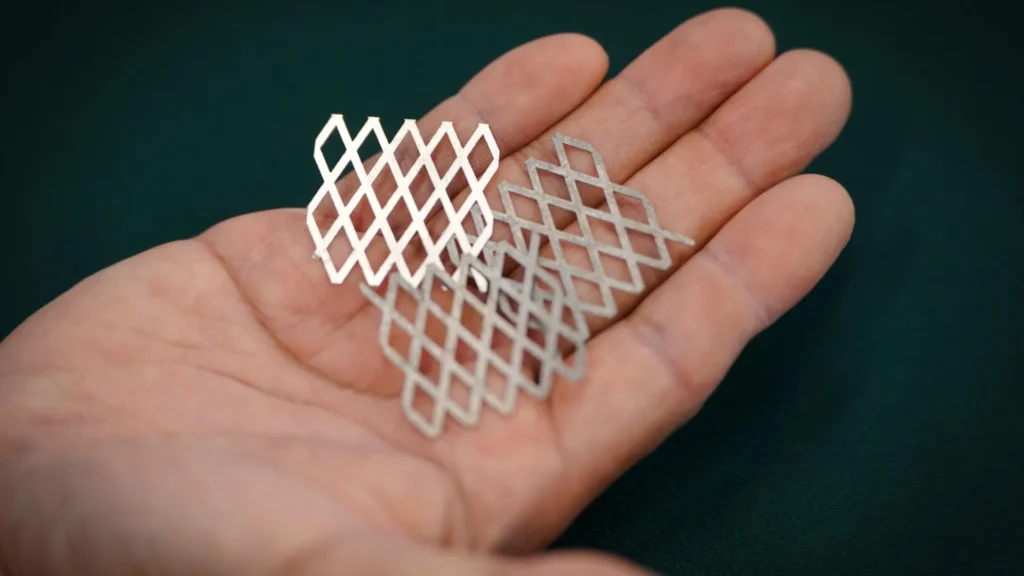
Furthermore, the research has already moved into the initial stages of industrialization. In a significant step towards commercial viability, the team reported the successful production of tons of SS-H2-based wire in collaboration with a factory in Mainland China. This demonstrates the material’s manufacturability at scale, a crucial factor for its adoption in real-world applications. Professor Huang acknowledged the ongoing efforts: "From experimental materials to real products, such as meshes and foams, for water electrolyzers, there are still challenging tasks at hand. Currently, we have made a big step toward industrialization. Tons of SS-H2-based wire has been produced in collaboration with a factory from the Mainland. We are moving forward in applying the more economical SS-H2 in hydrogen production from renewable sources." While the transformation of wire into complex electrolyzer components like meshes and foams requires further engineering and optimization, the initial production milestone is a strong indicator of the material’s readiness for broader industrial integration.
Broader Context and Reinforcing Research in Seawater Electrolysis
The timely nature of the SS-H2 breakthrough is reinforced by ongoing global research into direct seawater electrolysis. Even years after the initial SS-H2 study was published in 2023, the fundamental challenges it addresses—namely, corrosion-resistant materials, long-lasting electrodes, chlorine suppression, and system designs capable of enduring real seawater conditions rather than idealized laboratory solutions—remain central to the field.
A 2025 review in Nature Reviews Materials continued to describe direct seawater electrolysis as a promising technology, yet explicitly highlighted persistent bottlenecks such as corrosion, detrimental side reactions, metal precipitates, and limited operational lifetimes as significant hurdles. Similarly, other recent research, including a 2025 publication in Nature Communications, has explored various strategies to improve the durability of stainless steel-based electrodes in natural seawater, often involving protective catalytic layers. These include the application of nickel-iron (NiFe) based coatings and platinum (Pt) atomic clusters to enhance performance and resistance. Researchers have also reported on corrosion-resistant anode strategies built upon stainless steel substrates, further underscoring that stainless steel remains a pivotal material focus in the quest to make seawater electrolysis practical and commercially viable.
This continuing stream of research does not diminish the significance of the SS-H2 discovery; rather, it amplifies it. While many recent efforts concentrate on applying coatings or catalysts to existing stainless steel substrates to mitigate corrosion, the HKU team’s approach is fundamentally different. SS-H2 tackles the problem at its root by introducing a new alloy design strategy that intrinsically alters how stainless steel protects itself. This innovative internal defense mechanism offers a potentially more robust and cost-effective solution compared to surface modifications, which can be prone to wear, delamination, or degradation over time. The field is still actively searching for materials that can survive the punishing combination of saltwater chemistry, high electrical potentials, and the demanding operational cycles of industrial-scale hydrogen production. SS-H2, with its self-forming second protective shield, stands out as a material innovation that directly addresses these core requirements from an intrinsic metallurgical perspective.
Expert Perspectives and Future Outlook
The implications of SS-H2 extend beyond the immediate cost savings. By enabling the direct use of abundant seawater, it removes the need for energy-intensive desalination, making green hydrogen production geographically more flexible and potentially reducing its overall environmental footprint. This could unlock coastal regions as prime locations for large-scale green hydrogen hubs, leveraging both renewable energy resources (like offshore wind) and readily available water.
While Professor Huang and his team have made remarkable progress, they are also realistic about the journey ahead. The transformation of experimental materials into fully integrated components for commercial electrolyzers, such as specialized meshes and foams, still presents significant engineering challenges. These include optimizing manufacturing processes, ensuring long-term stability under continuous industrial operation, and integrating the new material seamlessly into existing electrolyzer designs. However, the fundamental material science breakthrough has laid a robust foundation for these subsequent engineering efforts.
The development of SS-H2 is more than just a materials science surprise; it represents a concrete, practical step towards making clean hydrogen production economically viable and scalable. For an industry where cost and durability are often the deciding factors in a technology’s transition from laboratory curiosity to industrial reality, a stainless steel that can build its own high-potential-resistant second shield is a game-changer. This innovation brings the world closer to a future powered by abundant, affordable green hydrogen, accelerating the global shift towards a sustainable and decarbonized energy system.