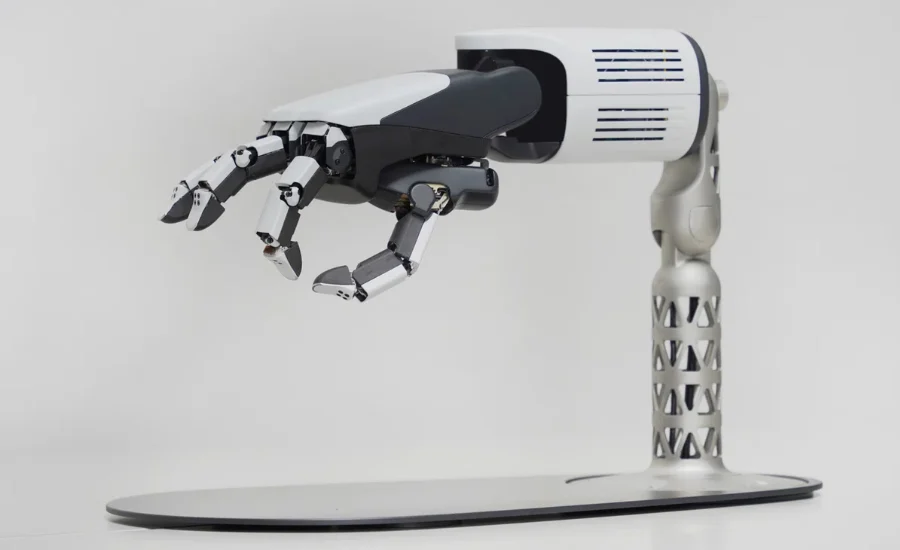
TOKYO – Honda, a global leader in automotive and robotics innovation, is making significant strides in the development of a sophisticated multi-fingered robotic hand, a breakthrough poised to revolutionize automated manufacturing processes. This advanced robotic appendage is engineered to perform complex manipulation tasks, such as screwdriving, connecting and disconnecting electrical terminals, and other intricate operations that have historically proven challenging for traditional automation systems. This initiative marks a crucial evolution in Honda’s extensive robotics research, extending beyond its iconic ASIMO humanoid and confronting a fundamental hurdle faced by manufacturers integrating humanoid and physical AI systems: bridging the gap between a robot’s ability to navigate factory environments and its capacity to reliably manipulate tools and components designed for human hands.
The Genesis of Advanced Dexterity: Honda’s Robotic Vision
Honda’s journey into robotics spans decades, deeply rooted in its pioneering work with bipedal robots and the internationally recognized ASIMO. This rich legacy has established the company as a formidable force in the field, with technologies developed through these ambitious programs subsequently finding applications in autonomous driving, advanced mobility systems, and its ongoing, cutting-edge robotics research. The multi-fingered hand represents the culmination of this continuous innovation, pushing the boundaries of what robots can achieve in precise, human-like interaction with their environment.
Unlike many conventional robotic grippers that predominantly function as extensions of simple clamping mechanisms, Honda’s approach has been holistic and integrated. According to Kenichiro Sugiyama, a lead researcher at Honda, the company has focused on developing the mechanical hardware, sophisticated control systems, and artificial intelligence in concert. This synergistic development strategy is crucial for achieving the level of dexterity and responsiveness required for delicate tasks. The latest iteration of Honda’s multi-fingered hand is approximately the size of a human hand, meticulously designed to combine remarkable strength with exceptional responsiveness and precision. This design philosophy enables the technology to reproduce a vast array of human hand movements, making it adept at performing detailed tasks that demand fine motor skills, such as the precise insertion of screws or the careful handling of sensitive electrical connectors.
The "Last Millimeter" Challenge: A Paradigm Shift in Robotics
The manufacturing sector has long grappled with the limitations of automation, particularly when it comes to tasks requiring fine motor skills and adaptive manipulation. While robots have become increasingly proficient at navigating complex factory floors, transporting goods, and performing repetitive, high-volume assembly, the reliable manipulation of parts, tools, and equipment originally designed for human hands remains a significant bottleneck. This challenge, often termed the "last millimeter problem," highlights the difficulty robots face in dealing with deformable, slippery, or otherwise difficult-to-handle objects, such as a piece of fabric or a wet glass. These nuanced interactions require a level of tactile feedback, adaptive force control, and real-time decision-making that far exceeds the capabilities of most current robotic systems.
Kenichiro Sugiyama elaborates that, historically, a major technical challenge in robotics centered on locomotion – enabling robots to walk and navigate autonomously. However, significant advancements in learning-based AI have made robotic walking increasingly commonplace, shifting the industry’s primary focus. Today, the frontier of innovation has unequivocally moved towards manipulation. This shift underscores the growing recognition that for robots to truly integrate into diverse manufacturing and service environments, they must master the art of dexterous interaction with the physical world, moving beyond simple pick-and-place operations to engage in complex, adaptive handling.
Embodied AI: Learning Through Physical Interaction

Central to Honda’s strategy for enhancing robotic dexterity is the concept of embodied AI. Unlike traditional AI systems that are primarily trained using vast datasets of text, images, or video, embodied AI learns through direct, physical interaction with the real world. This approach leverages sensor information generated as a robot physically engages with objects and its environment, allowing it to build a deeper, more intuitive understanding of physical properties and interaction dynamics. Honda’s methodology involves combining real-world movements with sophisticated simulation environments to train its robotic systems, creating a robust learning loop.
The precision and repeatability of the underlying hardware are paramount for the effectiveness of embodied AI training. Sugiyama emphasizes that even minute adjustments – position changes measured in mere millimeters or force adjustments of only a few newtons – can profoundly influence the quality and efficacy of the training data. This highlights a crucial synergistic relationship: more precise hardware and refined control systems directly enable superior AI training, while subsequent improvements in AI algorithms can, in turn, lead to enhanced robot control and more sophisticated manipulation capabilities. This iterative process of refinement between hardware and software is key to unlocking advanced robotic dexterity.
Industry Implications and the Future of Manufacturing
The successful resolution of the "last millimeter problem" by innovations like Honda’s multi-fingered hand carries profound implications for manufacturers across various sectors. It promises to significantly expand the range of assembly operations that robots can perform autonomously, particularly those tasks that necessitate the manipulation of tools and components originally designed with human ergonomics in mind. This includes intricate assembly processes in electronics, automotive manufacturing, medical device production, and consumer goods, where precision and adaptability are critical.
The global industrial robotics market is projected to continue its robust growth, driven by factors such as labor shortages, the increasing demand for higher productivity, and the push towards greater efficiency and cost reduction. Dexterous manipulation, once a distant goal, is now becoming a tangible reality, with market segments like collaborative robots (cobots) – designed to work safely alongside humans – seeing particularly rapid expansion. These cobots, when equipped with advanced multi-fingered hands, could take on more complex and variable tasks, freeing human workers for roles requiring higher-level cognitive functions, creativity, or direct human interaction.
Analysts predict that the integration of such advanced robotic hands could unlock billions in economic value by automating tasks that currently require human intervention due to their complexity. This not only addresses challenges posed by aging workforces in many industrialized nations but also enhances safety by allowing robots to handle hazardous or ergonomically challenging tasks. The ability to handle diverse materials and perform adaptable operations will also boost manufacturing flexibility, enabling companies to more quickly reconfigure production lines for new products or customize existing ones.
A New Version for Enhanced Performance
Recognizing the continuous demand for greater capabilities, Honda recently unveiled a new version of its multi-fingered hand. This iteration incorporates a proprietary transmission mechanism, specifically engineered to combine even greater strength with an unparalleled level of dexterity. This advancement suggests a relentless pursuit of perfection, aiming to empower the robotic hand with the ability to exert substantial force when needed, while retaining the delicate touch required for the most intricate operations. Such innovations are critical for tackling the truly complex, variable tasks encountered in real-world manufacturing environments.
In conclusion, Honda’s ongoing development of its multi-fingered robotic hand signifies a pivotal moment in the evolution of industrial automation. By systematically addressing the fundamental challenges of dexterous manipulation through an integrated approach of advanced hardware, sophisticated control systems, and embodied AI, Honda is not merely creating a new tool; it is laying the groundwork for a future where robots can seamlessly integrate into and transform the most intricate aspects of manufacturing and beyond. This commitment to innovation, rooted in decades of robotics research, promises to redefine productivity, efficiency, and the very nature of work in the modern industrial landscape.