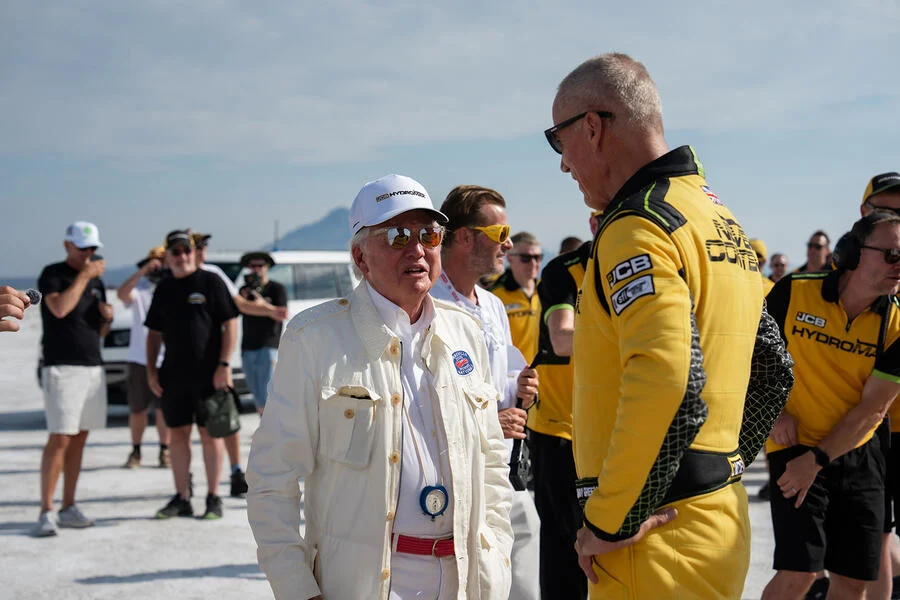
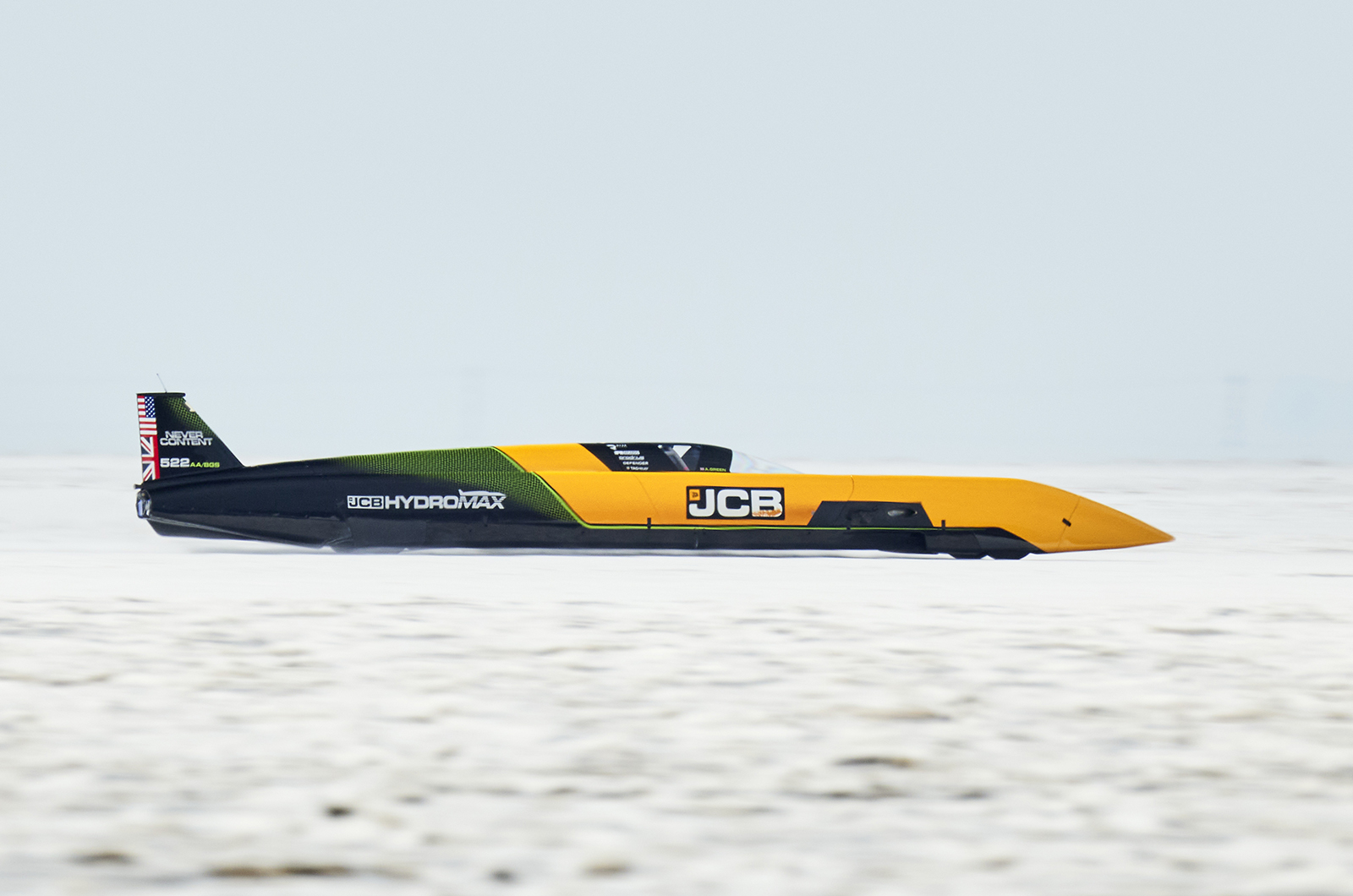
The quest to push the boundaries of automotive speed has always been a magnet for innovation and daring individuals. The Bonneville Salt Flats, a vast, otherworldly expanse in Utah, has served as the ultimate proving ground for such endeavors, its desolate beauty matched only by its challenging conditions. It was here, amidst the stark brilliance of "The Salt," that the ambitious project behind the JCB Hydromax aimed to etch its name into the annals of speed history, targeting a monumental 406mph land speed record powered by hydrogen. This endeavor, far from being a straightforward race against the clock, was a complex journey of engineering, scientific exploration, and unwavering dedication, as revealed in the intricate details of its development and execution.
The Allure of The Salt and the Hydrogen Frontier
The Bonneville Salt Flats, named after explorer Benjamin Bonneville, hold a unique place in the hearts of those who pursue extreme velocity. More than just a dried-up lakebed, it is a place of profound geological significance and historical resonance for speed record chasers. Its hot, dry, and exposed environment presents a formidable adversary, yet its sheer vastness and pristine, unbroken surface offer an unparalleled opportunity for achieving extreme speeds in a straight line. This inhospitable yet irresistible landscape has witnessed countless attempts to shatter existing records, each striving to conquer not just the distance, but the very limits of mechanical and human capability.
The decision to pursue a land speed record with a hydrogen-powered vehicle represents a significant leap forward in sustainable high-performance technology. While gasoline and jet fuel have dominated previous land speed campaigns, the push towards decarbonization has brought hydrogen into focus as a viable, albeit complex, alternative. The JCB Hydromax project, spearheaded by a team with a deep understanding of high-speed engineering and a commitment to environmental innovation, sought to demonstrate the potential of hydrogen not just as a fuel for everyday transport, but as a potent force capable of achieving unprecedented velocities.
The Ambitious Target: 406mph and Beyond
The specific target of 406mph was not arbitrary. It represented a significant leap beyond existing records for hydrogen-powered vehicles and aimed to place the Hydromax among the fastest machines ever to grace The Salt. Achieving such speeds requires a meticulous interplay of aerodynamics, power, traction, and driver skill. The vehicle’s design had to be optimized to cut through the air with minimal drag, its powertrain had to deliver immense and consistent thrust, and its chassis and tires needed to withstand unimaginable forces.
The choice of Andy Green, a seasoned pilot with experience in setting land speed records, including the outright world record with ThrustSSC, was crucial. His expertise in handling extreme speeds and understanding the nuances of the Bonneville environment provided a vital human element to the complex equation of a record attempt. His role was not merely to operate the vehicle, but to be an integral part of the data collection and feedback loop, providing invaluable insights into the vehicle’s performance under immense duress.
Engineering the Hydrogen Beast: A Chronology of Development
The journey to Bonneville was a long and arduous one, marked by stages of design, fabrication, testing, and refinement. While the exact timeline of the JCB Hydromax project is detailed within the project’s internal documentation, a general chronology can be inferred from the nature of such ambitious undertakings:
Phase 1: Conceptualization and Design (Years Prior to Attempt)
- Initial Research: The team would have conducted extensive research into the feasibility of hydrogen as a high-performance fuel, analyzing its energy density, combustion characteristics, and the challenges associated with its storage and delivery at high pressures.
- Aerodynamic Modeling: Sophisticated computer simulations and wind tunnel testing would have been employed to design a body that minimizes drag and maximizes stability at extreme speeds. This would involve shaping the vehicle to manage airflow effectively, preventing lift and ensuring predictable handling.
- Powertrain Design: The core of the Hydromax would be its hydrogen-powered propulsion system. This likely involved a bespoke engine or a hybrid system combining hydrogen fuel with advanced turbine technology to generate the immense power required. Key considerations would include efficient fuel injection, combustion control, and heat management.
- Chassis and Suspension: A robust chassis capable of withstanding immense forces and a sophisticated suspension system designed for high-speed stability on an uneven surface would have been paramount. Materials like carbon fiber and high-strength alloys would have been considered for their lightweight and durable properties.
Phase 2: Fabrication and Component Testing (Months to Years Before Attempt)
- Manufacturing: The intricate components of the Hydromax, from the hydrogen storage tanks to the engine internals and aerodynamic body panels, would have been manufactured with extreme precision.
- Subsystem Testing: Individual components and subsystems, such as the fuel delivery system, ignition, and cooling, would have undergone rigorous testing in controlled environments to ensure their reliability and performance.
- Powertrain Bench Testing: The hydrogen powertrain would have been tested on dynamometers to measure its power output, efficiency, and stability under simulated load conditions.
Phase 3: Initial Vehicle Assembly and Low-Speed Testing (Months Before Attempt)
- Vehicle Integration: All the manufactured components would be assembled into the complete Hydromax vehicle.
- Static Testing: Once assembled, the vehicle would undergo static tests to check all systems, including electrical, hydraulic, and fuel.
- Low-Speed Shakedown Runs: The vehicle would be taken to a controlled test track or a less challenging section of the Bonneville Salt Flats for initial low-speed shakedown runs. These tests are crucial for identifying any immediate issues with handling, braking, and basic system operation.
Phase 4: High-Speed Testing and Record Attempts (During the Bonneville Season)
- Incremental Speed Increases: The team would gradually increase the speed of the Hydromax, closely monitoring performance data and making adjustments as needed.
- Data Acquisition: Sophisticated telemetry systems would continuously collect data on speed, acceleration, engine parameters, tire temperatures, and aerodynamic forces.
- Record Runs: The official record attempts would be conducted under strict Fédération Internationale de l’Automobile (FIA) regulations, requiring two runs in opposite directions within a specified time frame to establish an average speed.
The Technical Backbone: Supporting Data and Innovations
The JCB Hydromax’s pursuit of a 406mph record hinges on cutting-edge technology. While specific technical specifications are often proprietary, general areas of innovation can be highlighted:
- Hydrogen Fuel System: This would involve advanced high-pressure storage tanks, a precise fuel injection system capable of delivering hydrogen under extreme conditions, and sophisticated sensors to monitor fuel flow and pressure. The efficiency of the hydrogen combustion process is critical for maximizing power output while minimizing waste.
- Aerodynamics: The vehicle’s shape would be a masterpiece of aerodynamic engineering. Features like a streamlined cockpit, a carefully sculpted underbody, and strategically placed spoilers or wings would manage airflow to provide downforce for stability and minimize drag. The use of Computational Fluid Dynamics (CFD) would have been instrumental in optimizing these elements.
- Propulsion System: The heart of the Hydromax could be a highly modified internal combustion engine optimized for hydrogen, or potentially a hybrid system that incorporates a hydrogen-fed turbine. The challenge lies in achieving consistent and powerful combustion of hydrogen, which burns faster and at higher temperatures than gasoline. Advanced cooling systems would be essential to manage the heat generated.
- Materials Science: The use of lightweight yet incredibly strong materials like carbon fiber composites for the chassis and body panels would be crucial for reducing weight and increasing the vehicle’s power-to-weight ratio. High-strength alloys would be used for critical structural components and engine parts.
- Tires: Specialized tires capable of withstanding the immense centrifugal forces and friction at speeds exceeding 400mph are a significant engineering feat in themselves. These tires would need to be robust, heat-resistant, and designed for optimal grip on the salt surface.
- Data Acquisition and Control Systems: A sophisticated array of sensors and a high-speed data acquisition system would be vital for monitoring every aspect of the vehicle’s performance. This data would be used for real-time adjustments and post-run analysis, allowing the team to understand how the vehicle is behaving and identify areas for improvement.
Reactions and Implications: A Glimpse into the Future
The success or even the determined attempt of the JCB Hydromax to set a hydrogen land speed record carries significant implications:
- Validation of Hydrogen Technology: A successful record would serve as a powerful testament to the potential of hydrogen as a high-performance fuel, challenging perceptions and encouraging further investment in hydrogen-based propulsion systems across various sectors.
- Technological Advancement: The engineering challenges overcome in developing the Hydromax would likely lead to spin-off technologies applicable to other fields, from aerospace to industrial power generation.
- Inspiration for Future Generations: Such a daring feat of engineering and human endeavor would undoubtedly inspire a new generation of engineers, scientists, and drivers to pursue ambitious goals in automotive innovation and sustainable technology.
- Environmental Consciousness in Extreme Performance: The project highlights a growing trend of integrating environmental considerations into even the most extreme forms of motorsport and record-breaking attempts, demonstrating that high performance and sustainability can coexist.
While the official statements from the JCB team and Andy Green would provide the most direct insights, the underlying narrative is one of pushing boundaries. The anticipation surrounding such an attempt would have generated considerable buzz within the motorsport and engineering communities. The "special, wonderful breed of individuals" drawn to The Salt are not just thrill-seekers; they are pioneers who, through their relentless pursuit of speed, drive technological progress and expand the horizons of what is considered possible. The quest for the 406mph hydrogen record in the JCB Hydromax is more than just a race; it’s a bold declaration of intent for the future of high-performance, sustainable mobility.