A doctoral researcher at the University of Sydney has achieved a significant milestone in the field of astrobiology and materials physics by successfully synthesizing cosmic dust within a controlled laboratory setting. Linda Losurdo, a PhD candidate specializing in materials and plasma physics at the University’s School of Physics, has effectively recreated a microscopic analog of the interstellar medium inside a glass vacuum chamber. This experiment provides a groundbreaking methodology for studying the chemical precursors of life, suggesting that the fundamental building blocks of biology may have been forged in the violent environments surrounding aging stars and supernovae long before the Earth was even a nascent planet.
By combining specific ratios of nitrogen, carbon dioxide, and acetylene, Losurdo simulated the gaseous mixtures found in the outer envelopes of carbon-rich stars. When subjected to high-energy electrical discharges, these gases transitioned into a plasma state, resulting in the formation of complex, carbonaceous dust particles. These laboratory-grown grains mirror the material found in the far reaches of the galaxy—the same matter that is eventually incorporated into comets, asteroids, and meteorites. The results of this study, which bridge the gap between plasma physics and observational astronomy, were recently published in The Astrophysical Journal, a peer-reviewed publication of the American Astronomical Society.
The Chemistry of Life: Understanding the CHON Connection
The significance of Losurdo’s research lies in the specific chemical composition of the dust produced. The laboratory-generated particles contain intricate combinations of carbon, hydrogen, oxygen, and nitrogen. In the scientific community, these are collectively referred to as "CHON" molecules. These four elements are the primary constituents of all known life on Earth, forming the backbone of amino acids, DNA, and proteins.
For decades, astronomers have observed the "infrared signatures" of these elements in deep space, but the exact mechanisms of their formation remained a subject of theoretical modeling. By producing these materials on Earth, Losurdo has demonstrated that these life-essential elements can be synthesized through high-energy plasma reactions. "We no longer have to wait for an asteroid or comet to come to Earth to understand their histories," Losurdo stated. "You can build analogue environments in the laboratory and reverse engineer their structure using the infrared fingerprints."
This "reverse engineering" allows scientists to understand the thermal and radiative history of the universe. The dust formed in the Sydney lab acts as a proxy for the material ejected by "puffed out" giant stars or found within "cosmic nurseries"—dense clouds of gas and dust where new stars and planetary systems are born. The ability to create this material at will provides a window into the ancient chemical pathways that distributed organic molecules throughout the early solar system.
Replicating the Extreme Environments of Space
The experimental setup designed by Losurdo and her supervisor, Professor David McKenzie, was engineered to mimic the harsh conditions of the interstellar medium (ISM). To begin the process, the researchers utilized high-efficiency vacuum pumps to evacuate air from glass tubes, reaching pressures that approximate the near-vacuum of space.
Once the vacuum was established, the team introduced a precise mixture of precursor gases:
- Acetylene ($C_2H_2$): Serves as the primary carbon source, known for its role in forming polycyclic aromatic hydrocarbons (PAHs) in space.
- Carbon Dioxide ($CO_2$): Provides the necessary oxygen and additional carbon.
- Nitrogen ($N_2$): The critical component for the "N" in CHON, essential for nitrogenous bases in genetic material.
To catalyze the reaction, the researchers applied an electrical potential of approximately 10,000 volts across the gas mixture. This triggered a "glow discharge," a type of plasma where the gas becomes ionized. In this high-energy state, electrons and ions collide with the neutral molecules, shattering their chemical bonds. As these fragments cool and collide, they recombine into increasingly complex molecular chains. Over the course of approximately one hour, these molecules aggregated into solid particles, which settled onto silicon chips placed at the base of the tubes.
The resulting dust was not merely a black soot; in many samples, the particles exhibited a crystalline, sparkling quality, resembling the microscopic fragments found in primitive meteorites. Professor McKenzie noted that this laboratory approach allows for the manipulation of variables—such as ion impact intensity and temperature—that are impossible to control when observing a star thousands of light-years away.
A Chronology of Cosmic Delivery
The research contributes to a long-standing debate regarding the "delivery" versus "in-situ" formation of organic matter on Earth. Current astrophysical models suggest a specific timeline for the arrival of these materials:
- 4.56 Billion Years Ago: The formation of the Solar System begins from a rotating disk of gas and dust.
- 4.5 to 3.8 Billion Years Ago: The "Late Heavy Bombardment" period occurs. During this time, the young Earth is repeatedly struck by a massive influx of asteroids and comets.
- The Delivery Phase: Scientists believe these impactors carried vast quantities of carbonaceous dust and complex organics to the Earth’s surface, potentially seeding the planet with the ingredients necessary for the first self-replicating molecules.
- 3.5 Billion Years Ago: The earliest undisputed evidence of microbial life appears in the fossil record.
Losurdo’s work supports the theory that the organic material delivered during this era was not necessarily formed on the asteroids themselves, but was inherited from the earlier, high-energy environments of the stars that preceded our Sun. By proving that CHON-rich dust can form in the plasma of stellar envelopes, the study reinforces the idea that the universe is naturally predisposed toward the creation of organic chemistry.
Bridging Physics and Astronomy: The Infrared Fingerprint Library
One of the most practical applications of this research is the creation of a comprehensive database of infrared (IR) "fingerprints." Every molecule absorbs and emits light at specific frequencies, creating a unique spectroscopic signature. Astronomers use telescopes, such as the James Webb Space Telescope (JWST), to detect these signatures in distant nebulae.
However, identifying a signature in space is difficult if there is no "control" sample to compare it to on Earth. The Sydney team plans to build a library of IR signatures from different types of laboratory-grown dust. By varying the ratios of gases and the energy of the plasma, they can create a wide array of "analogue" materials.
"This helps us interpret what a meteorite or asteroid fragment has been through over its lifetime," Professor McKenzie explained. "Its chemical signature holds a record of its journey." If an astronomer detects a specific IR signal in a star-forming region, they can now look at the Sydney database to find a matching signature. This would reveal the exact temperature, pressure, and chemical conditions present in that distant part of the galaxy.
Academic Recognition and Future Implications
The impact of this research has already been recognized by the international scientific community. Late last year, Linda Losurdo received the award for best presentation at the Annual Meeting of the Meteoritical Society, a prestigious gathering of scientists dedicated to the study of planetary materials. Her ability to synthesize materials that so closely match the "unidentifiable" organic matter in meteorites has opened new doors for planetary science.
The study was supported by the Australian Research Council and the University of Sydney node of Microscopy Australia. These organizations provided the advanced imaging and analytical tools necessary to verify the chemical structure of the dust at a molecular level.
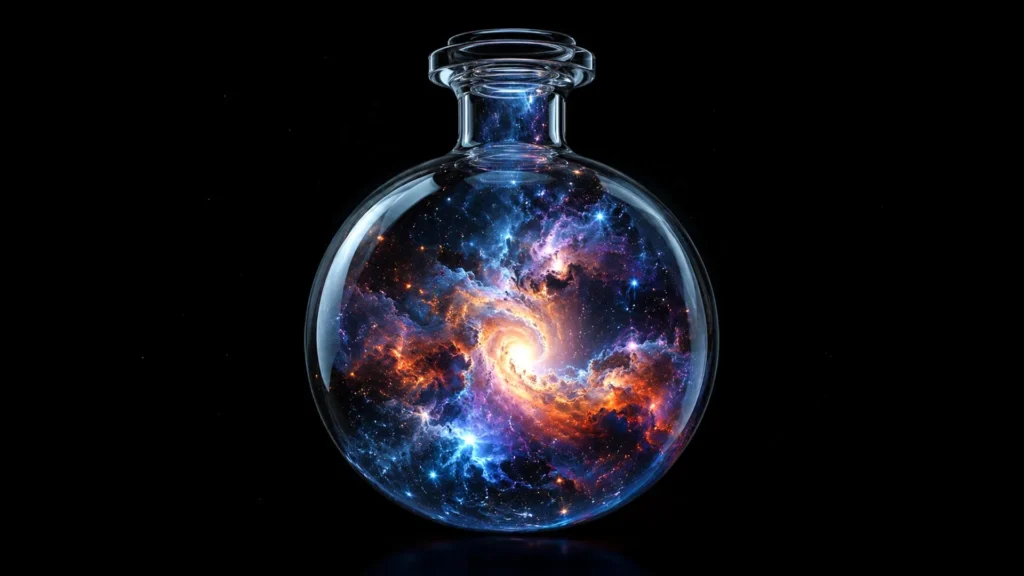
The implications of "recreating the universe in a bottle" extend beyond the study of the past. As humanity looks toward deep-space exploration and the search for life on moons like Enceladus or Europa, understanding how organic dust behaves under radiation and vacuum is vital. Losurdo’s experiment proves that the transition from simple gases to complex prebiotic precursors is a robust and perhaps common process in the cosmos.
By providing a terrestrial laboratory for the study of celestial phenomena, the University of Sydney team has equipped the next generation of astronomers with the tools to decode the history of our solar system. The sparkling dust on a silicon chip in Sydney may hold the final clues to how the cold, dark reaches of space gave rise to the warmth of life on Earth.