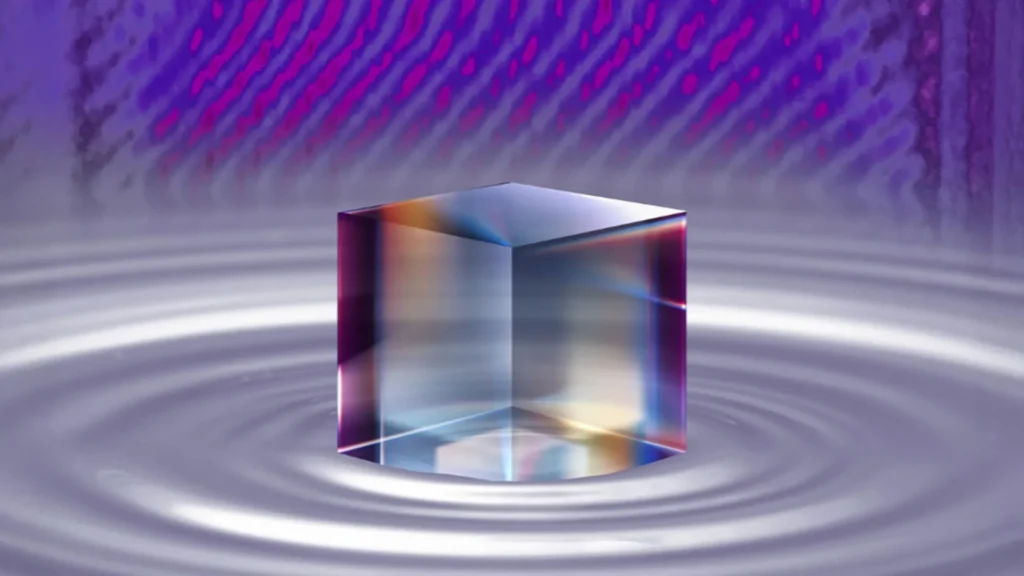
In a landmark study published in the journal Nature Physics, a team of researchers led by Lawrence Livermore National Laboratory (LLNL) has successfully resolved a two-decade-old scientific conflict regarding the behavior of diamond under extreme conditions. By utilizing some of the world’s most powerful laser systems, the scientists were able to measure the melting point of diamond at pressures three times greater than those found at the center of the Earth’s core. This breakthrough not only provides a definitive answer to a long-standing thermodynamic puzzle but also holds the potential to revolutionize inertial confinement fusion (ICF) energy production and our understanding of the internal structures of ice giant planets like Neptune and Uranus.
For over 20 years, the scientific community has been divided over the exact temperature at which diamond—the hardest known natural material—transitions from a solid to a liquid state under high pressure. Previous laboratory measurements and theoretical computer simulations, based on the principles of quantum mechanics, had consistently produced conflicting results, with discrepancies in temperature reaching as high as 20 percent. The new findings from LLNL finally bring experimental data into alignment with theoretical models, providing a unified framework for the physics of carbon at the extreme limits of pressure and temperature.
A Two-Decade Scientific Impasse
The mystery surrounding the melting of diamond dates back to the early 2000s. In 2004, LLNL scientist Jon Eggert and his colleagues performed pioneering experiments that yielded a startling observation: when diamond melts at high pressure, it becomes denser in its liquid state than it was as a solid. This phenomenon is rare in nature, though it is famously observed in water, where ice floats because liquid water is denser. In the context of carbon, this meant that solid diamond would theoretically float on a sea of liquid carbon under the crushing pressures of planetary interiors.
Despite the importance of Eggert’s discovery, the experimental temperatures recorded at the time did not match the predictions made by advanced computer simulations. Theorists utilizing quantum mechanical models found that their calculations consistently suggested melting temperatures significantly different from those observed in the laboratory. "No matter what the theorists did—even with the most advanced computer simulation techniques—they could not reproduce the experiments," noted Marius Millot, an LLNL scientist and lead author of the new study. This gap in understanding created a persistent "temperature gap" that hampered the development of more accurate models for high-energy-density physics.
Adding to the complexity was a second mystery involving the potential for an intermediate phase of carbon. Experiments conducted at Sandia National Laboratories using the Z machine—a massive electromagnetic device—suggested that diamond might transform into a different crystalline structure before eventually melting into a liquid. While computer simulations supported the possibility of this intermediate phase, it had never been directly observed, leaving scientists to wonder if the path from solid diamond to liquid carbon was more convoluted than previously believed.
The Omega Laser Facility and the Physics of Shock Compression
To resolve these discrepancies, the LLNL team turned to the University of Rochester’s Laboratory for Laser Energetics (LLE), specifically the Omega Laser Facility. The facility allows researchers to subject materials to "dynamic compression," a process where intense laser energy is used to simulate the most extreme environments in the universe.
The experimental process involved taking microscopic samples of diamond and subjecting them to laser-driven shockwaves. When the lasers hit the outer layer of the sample, they vaporize the material instantly. This rapid vaporization creates a "rocket effect," launching a powerful, high-velocity shockwave inward through the remaining diamond. This shockwave compresses the material to pressures exceeding 2,000 Gigapascals (GPa)—more than 20 million times the atmospheric pressure at sea level—and heats it to temperatures hotter than the surface of the sun.
Capturing data during such an event is a monumental technical challenge. The extreme pressure and temperature conditions exist for only a billionth of a second. During this fleeting interval, the researchers had to measure the material’s atomic structure, temperature, density, and optical reflectivity. To do this, they employed ultra-fast X-ray diffraction, a diagnostic tool that uses X-ray pulses to "photograph" the arrangement of atoms in real-time.
"This was the first time that shock-compressed diamond was probed with X-ray diffraction all the way up to melting," Millot explained. The task was further complicated by the nature of carbon itself. As a small, lightweight atom, carbon scatters X-rays very weakly. The signal the researchers needed to capture was incredibly faint, requiring the development of improved diagnostic equipment and high-sensitivity sensors at the LLE facility.
Resolving the Phase Transition and Temperature Discrepancies
The results of the Omega experiments provided clear answers to both the temperature mystery and the question of intermediate phases. By utilizing the new, more precise diagnostics, the team found that the melting temperature of diamond was approximately 1,000 degrees different from the original 2004 measurements. This updated temperature matched the predictions of quantum mechanical simulations almost perfectly, effectively closing the 20-year gap between theory and experiment.
"While it was frustrating to discover that our original temperature measurements were off by more than 1,000 degrees, it is exciting to see such a dramatic improvement in data quality with our new diagnostics," said Jon Eggert, reflecting on the evolution of the research.
Furthermore, the X-ray diffraction data definitively showed that diamond remains in its signature cubic crystalline structure until the very moment it melts. There was no evidence of an intermediate crystalline phase, as had been suggested by the Sandia Z machine experiments. The researchers hypothesize that the speed of the shockwave is the deciding factor; because the compression happens so rapidly, the carbon atoms do not have sufficient time to rearrange into a different crystal lattice. They remain "trapped" in the diamond structure until the heat becomes so intense that the bonds break and the material turns to liquid.
Implications for Fusion Energy and the National Ignition Facility
The resolution of the diamond melting curve has immediate and profound implications for the pursuit of fusion energy. At LLNL’s National Ignition Facility (NIF), scientists use diamond capsules to house the hydrogen fuel required for inertial confinement fusion. In these experiments, 192 powerful lasers are focused on a target, creating an implosion that compresses the fuel to the point where nuclear fusion occurs, releasing massive amounts of energy.
A critical stage in this process involves the first shockwave hitting the diamond capsule. To ensure a smooth and symmetrical implosion, the diamond must melt into a uniform fluid. If the melting is incomplete or irregular, it can cause instabilities that "mix" the diamond shell with the fusion fuel, cooling the reaction and preventing ignition. To avoid this, NIF scientists have traditionally used a very strong initial shock to guarantee total melting.
However, the new data suggests that diamond melts at a lower pressure than previously thought. "Our work indicates that we could use slightly slower initial shocks and still achieve full melting of the diamond in our NIF implosions," Millot said. A slower shock makes the fusion fuel more compressible, which is a key factor in increasing the energy yield. According to current models, applying these findings could potentially triple the energy gain of fusion experiments, bringing the world closer to a viable, clean energy source.
Diamond Rain and the Evolution of Ice Giants
Beyond the laboratory, the study offers a rare glimpse into the "hearts" of the solar system’s ice giants, Neptune and Uranus. These planets are composed largely of water, ammonia, and methane. Under the intense pressures found deep within their interiors, scientists have long theorized that carbon—separated from methane—could crystallize into diamonds. These diamonds would then sink through the liquid mantle toward the core, a phenomenon colloquially known as "diamond rain."
Because the LLNL experiments examined diamond at pressures and temperatures exceeding those expected inside Neptune and Uranus, the findings provide a high-fidelity foundation for planetary modeling. Understanding whether carbon exists as a solid or a liquid at specific depths helps scientists calculate the viscosity of the planetary mantle, which in turn influences how heat is transported from the core to the surface. This data is essential for understanding the magnetic fields and the long-term thermal evolution of these distant worlds.
Conclusion and Future Frontiers
The successful reconciliation of experimental data and quantum simulations marks a major milestone in high-pressure physics. The study demonstrates that even the most established materials can still hold secrets that require decades of technological advancement to uncover.
Looking ahead, the LLNL team plans to utilize the even greater power of the National Ignition Facility to push diamond to further extremes. Future research will investigate the stability of the diamond structure when subjected to multiple, successive shockwaves—a process that more closely mimics the complex conditions of a full-scale fusion implosion. By continuing to probe the limits of carbon, researchers are not only perfecting the "jewelry of the stars" but are also unlocking the keys to the future of energy and our understanding of the cosmos.
The study included contributions from a diverse team of specialists, including Federica Coppari, Amy Lazicki, Yong-Jae Kim, Otto Landen, Vladimir Smalyuk, and Peter Celliers, with technical support from Renee Posadas and Eric Folsom. The research was supported by the Laboratory Directed Research and Development (LDRD) program at LLNL, highlighting the ongoing commitment to fundamental science that drives technological innovation.