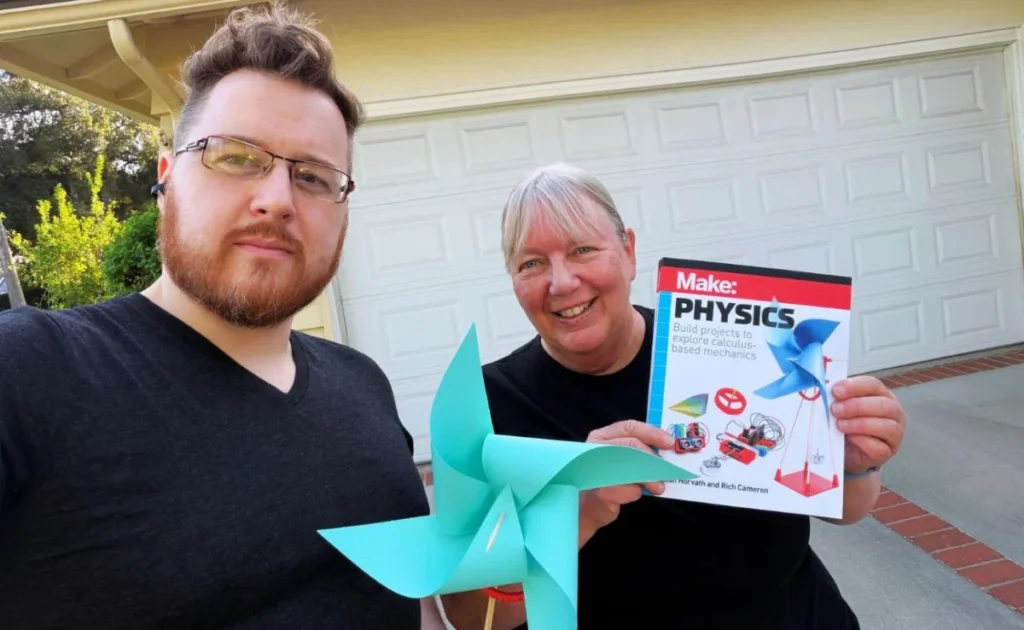
On Friday, July 24, 2026, at 1 PM Pacific Time, the global maker community and the scientific education sector will convene for a specialized "Make: Live" session hosted by Dale Dougherty, the founder of Make: Magazine and a pioneer of the Maker Movement. The session is dedicated to the launch and exploration of "Make: Physics," a new instructional text authored by Joan Horvath and Rich Cameron. This latest addition to the Maker Shed library represents a significant shift in STEM (Science, Technology, Engineering, and Mathematics) pedagogy, aiming to bridge the gap between abstract mathematical theory and tangible, hands-on experimentation. The event will feature a panel of experts including the authors, educators, and advocates for inclusive science, providing a comprehensive look at how modern maker tools like 3D printers and microcontrollers are reshaping the way students and adults alike engage with the laws of the physical universe.
Redefining Physics Education through Maker Culture
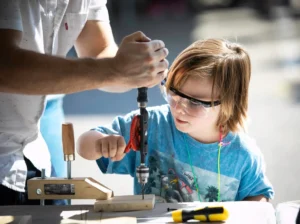
The traditional approach to physics education has long relied on a "lecture-and-lab" model, where laboratories often involve pre-assembled kits and "cookbook" instructions that students follow to achieve a predetermined result. Joan Horvath and Rich Cameron, who have spent more than a decade training educators and scientists in maker technology, argue that this passive approach often fails to spark true understanding or curiosity. Their new book, "Make: Physics," seeks to disrupt this cycle by introducing a "learn-by-doing" methodology tailored for advanced high school students, first-year college engineering undergraduates, and "lifetime learners" who may have felt alienated by conventional science curricula.
The core philosophy of the work is the democratization of laboratory equipment. In many educational settings, high-quality physics apparatus can cost thousands of dollars, creating a barrier for underfunded schools or home-based learners. By utilizing maker-level materials—such as the BBC micro:bit, 3D-printed components, and affordable sensors—Horvath and Cameron demonstrate that high-level physics experiments can be conducted with precision and rigor using tools that are already present in many modern households and "fab labs."
The Authors: A Decade of Maker Pedagogy
Joan Horvath and Rich Cameron are well-known figures in the maker ecosystem, having authored numerous books on 3D printing, CAD (Computer-Aided Design), and electronics. Their collaboration focuses on the "how" and "why" of technology, moving beyond the mere operation of machines to the application of those machines in solving complex problems. In "Make: Physics," they tackle some of the most challenging topics in the introductory physics sequence: kinematics, energy, momentum, and rotation.
During the upcoming Make: Live session, the authors will detail their journey in developing these projects. Their approach is unique in that it does not shy away from the mathematical foundations of physics. Instead of treating calculus as an isolated subject, the book integrates it directly into the physical projects. By seeing how a derivative describes the instantaneous change in a 3D-printed vehicle’s velocity, or how an integral calculates the work done by a variable force, students can develop a more intuitive grasp of the relationship between mathematics and the physical world.
Bridging the Gap Between Calculus and Physical Intuition
One of the primary hurdles for students entering engineering or physics tracks is the transition from algebra-based science to calculus-based science. Historically, these two subjects have been taught in silos, leading to a disconnect where students can solve equations on paper but cannot visualize the concepts in a laboratory setting.
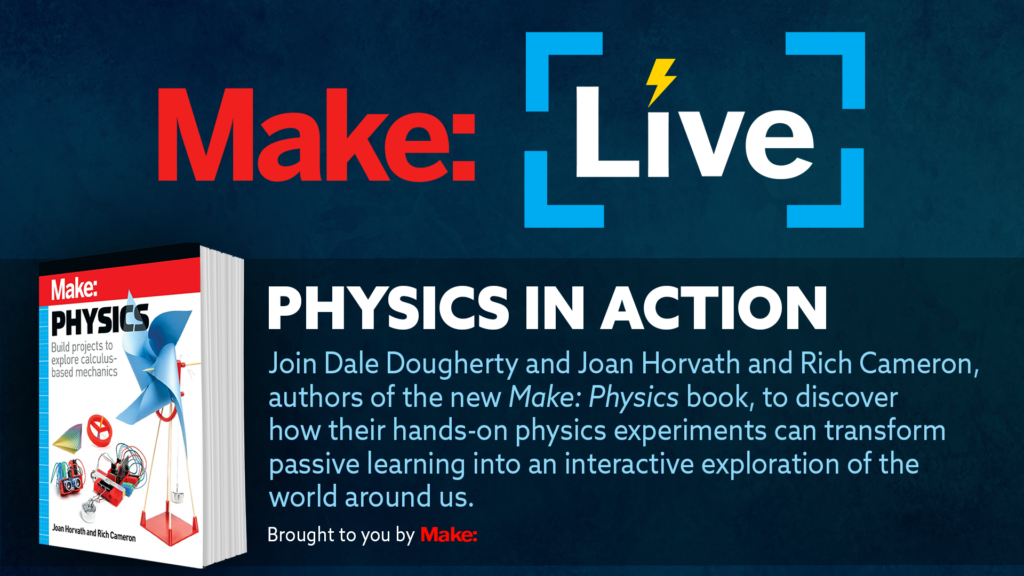
"Make: Physics" addresses this by creating "simple models" that serve as physical manifestations of mathematical functions. The July 24 session will demonstrate how the authors use BBC micro:bit processors to collect real-time data. These microcontrollers, which are equipped with built-in accelerometers and magnetometers, allow students to capture high-frequency data that can then be analyzed using the principles of calculus. This real-time feedback loop transforms an abstract equation into a lived experience, a method that educational psychologists have long identified as superior for long-term retention and conceptual mastery.
The Panel: Educator and Advocate Perspectives
To provide a holistic view of the book’s impact, the Make: Live session includes two distinguished guests who bring practical and inclusive perspectives to the discussion.
Dr. Simon Huss, the STEAM Director at Windward School, will provide the educator’s viewpoint. Windward School has been at the forefront of integrating "Maker Spaces" into its core curriculum. Dr. Huss is expected to discuss the behavioral changes observed in students when they are tasked with building their own experimental rigs rather than using "black box" equipment. According to preliminary educational data from similar STEAM initiatives, students who engage in "constructivist" learning—where they build the tools of their own education—show higher levels of engagement and a 20-30% increase in problem-solving efficacy compared to traditional cohorts.
Joining Dr. Huss is Dr. Mina Sun, a scientist and prominent advocate for blind and non-visual learners. Her participation highlights a critical, yet often overlooked, aspect of the Maker Movement: accessibility. In STEM fields, visual data (graphs, charts, and screen-based simulations) often dominates the learning experience, creating barriers for the visually impaired. However, the hands-on nature of "Make: Physics" offers a tactile alternative. Through 3D-printed models and haptic feedback systems, concepts like torque or the curvature of a trajectory can be felt and manipulated. Dr. Sun’s insights will emphasize how maker-based science can be a powerful tool for universal design, ensuring that the world of physics is open to everyone regardless of their visual acuity.
Supporting Data: The Rise of Maker-Based STEM
The release of "Make: Physics" comes at a time when the demand for "maker-literate" graduates is at an all-time high. A 2024 report on global engineering trends suggested that by 2030, the ability to prototype and iterate using digital fabrication tools will be a "baseline requirement" for 75% of new engineering roles. Furthermore, the "Maker Education" market has seen a compound annual growth rate (CAGR) of over 15% since 2020, as schools transition away from static textbooks toward dynamic, project-based learning modules.
The BBC micro:bit, a cornerstone of the book’s technical projects, has seen widespread adoption, with over 10 million devices distributed to schools worldwide. By leveraging this existing infrastructure, Horvath and Cameron are tapping into a global network of students who are already familiar with the hardware but may not have yet applied it to the rigors of classical mechanics.
Chronology of the Event and Future Implications
The Make: Live session scheduled for July 24 is part of a broader series of "Author Spotlights" intended to support the 2026-2027 academic year. Following the live broadcast, the session will be archived for educators to use as a resource in their classrooms.

The timeline for the event’s influence is expected to follow a specific trajectory:
- Launch (July 2026): Initial introduction to the maker community and early adopters in the homeschooling and "prosumer" markets.
- Pilot Integration (Fall 2026): Schools like Windward and various university "Maker Labs" will begin integrating "Make: Physics" projects into their introductory mechanics courses.
- Feedback and Iteration (Early 2027): Community-driven updates and additional 3D-printable designs will likely emerge on platforms like Discord and Maker Share, enriching the book’s ecosystem.
- Scaling (Summer 2027 and Beyond): The methodology is expected to influence future "Make:" titles, potentially expanding into topics like Electromagnetism, Optics, and Quantum Mechanics using similar maker-centric approaches.
Broader Impact and Scientific Literacy
Beyond the classroom, "Make: Physics" and the accompanying Make: Live session represent an effort to revitalize scientific literacy among the general public. In an era of rapid technological advancement, understanding the fundamental principles of the physical world—how things move, how energy is conserved, and how machines work—is essential for informed citizenship.
By empowering "lifetime learners" to reignite their passion for science, Horvath and Cameron are addressing a significant societal gap. Many adults feel intimidated by the math-heavy nature of science; however, by presenting these concepts through the lens of making, the authors lower the barrier to entry. This approach fosters a culture of "scientific agency," where individuals feel capable of investigating the world around them rather than merely consuming technology.
The inclusion of the community through the official Make: Discord server and other social platforms ensures that the conversation does not end when the live session concludes. It fosters a collaborative environment where students in California can discuss their 3D-printed pendulum data with learners in London or Tokyo, creating a global laboratory that transcends physical boundaries.
As the July 24 session approaches, the anticipation within the maker and educator communities underscores a growing consensus: the future of science education is not just in the reading of books, but in the building of things. Through the combined efforts of Dale Dougherty, Joan Horvath, Rich Cameron, and their distinguished guests, "Make: Physics" is poised to become a foundational text for a new generation of thinkers who are not afraid to get their hands dirty in the pursuit of knowledge.