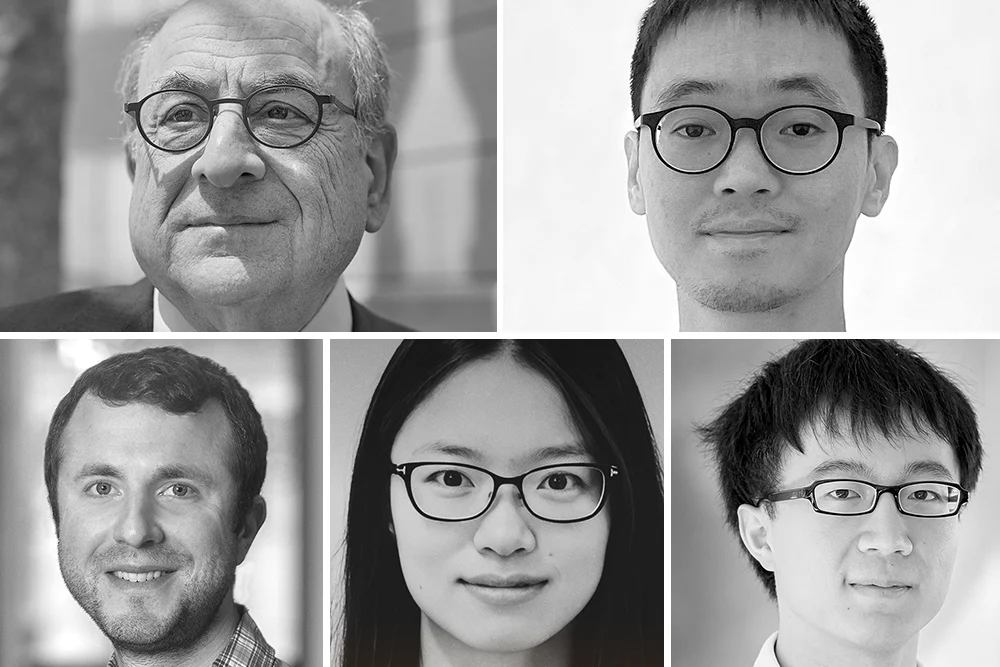
The scientific community recently convened in Los Angeles to celebrate the 12th annual Breakthrough Prize ceremony, an event often referred to as the "Oscars of Science." Among the luminaries honored for their transformative contributions to human knowledge were several distinguished affiliates of the Massachusetts Institute of Technology (MIT). These researchers, ranging from veteran professors to rising stars in the fields of physics and mathematics, have pushed the boundaries of what is possible in gene editing, cosmology, and theoretical physics. The recognition underscores MIT’s enduring role as a central hub for global innovation and its capacity to produce scholars who tackle the world’s most complex challenges, from curing genetic blood disorders to mapping the expansion of the universe.
The Breakthrough Prize: Context and Significance
Founded in 2012 by Sergey Brin, Priscilla Chan and Mark Zuckerberg, Julia and Yuri Milner, and Anne Wojcicki, the Breakthrough Prizes have become the most generous scientific awards in the world. Each of the primary prizes—awarded in Life Sciences, Fundamental Physics, and Mathematics—comes with a $3 million purse. Additionally, the New Horizons Prizes in Physics and Mathematics, valued at $100,000 each, are awarded to early-career researchers who have already made a substantial impact on their respective fields.
The 2024 gala, held on April 18 at the Academy Museum of Motion Pictures, served as a platform to highlight the intersection of rigorous academic inquiry and practical, life-saving application. For the MIT community, the evening was a validation of decades of research, particularly in the realm of genomic medicine and the fundamental laws governing the subatomic and galactic scales.
Revolutionizing Hematology: The Work of Stuart H. Orkin
One of the most significant highlights of the evening was the awarding of the Breakthrough Prize in Life Sciences to Stuart H. Orkin ’67. Orkin, an alumnus of the MIT Department of Biology and currently a professor of pediatrics at Harvard Medical School and an investigator at the Howard Hughes Medical Institute, shared the honor with Swee Lay Thein of the National Institutes of Health. Their joint research has fundamentally altered the trajectory of treatment for sickle cell disease and beta-thalassemia.
Sickle cell disease, a painful and life-threatening genetic disorder, affects millions worldwide, particularly those of African, Mediterranean, and Middle Eastern descent. For decades, the condition was considered incurable, with treatment limited to managing symptoms and preventing crises. Orkin’s research focused on the biological transition from fetal hemoglobin to adult hemoglobin. He discovered that while adult hemoglobin carries the mutation responsible for "sickling," fetal hemoglobin does not.
Orkin and his team identified a "master switch"—the BCL11A gene—that shuts down the production of fetal hemoglobin shortly after birth. By utilizing CRISPR-Cas9 gene-editing technology to disable this switch, researchers were able to restart the production of fetal hemoglobin in adults. This breakthrough led directly to the development of Casgevy, the first CRISPR-based medicine to receive regulatory approval for any human disease. The clinical implications are profound: patients who once faced a lifetime of blood transfusions and debilitating pain now have the potential for a functional cure.
Advancing Neurogenetics: Bryan Traynor and the Fight Against ALS
The Life Sciences category also recognized Bryan Traynor, a former student in the Harvard-MIT Program in Health Sciences and Technology (HST). Traynor shared the Breakthrough Prize with Rosa Rademakers for their identification of the most prevalent genetic cause of amyotrophic lateral sclerosis (ALS) and frontotemporal dementia (FTD).
ALS is a progressive neurodegenerative disease that affects nerve cells in the brain and spinal cord, leading to loss of muscle control and, eventually, respiratory failure. Traynor’s work involved the discovery of a specific hexanucleotide repeat expansion in the C9orf72 gene. This genetic anomaly was found to be responsible for a significant percentage of both familial and sporadic cases of ALS and FTD. By pinpointing this common genetic thread, Traynor has provided a concrete target for drug developers, paving the way for antisense oligonucleotide therapies and other precision medicine approaches that seek to silence the toxic effects of the mutated gene.
New Horizons in Physics: From Symmetries to the Big Bang
The physical sciences saw strong representation from MIT faculty and alumni through the New Horizons in Physics Prize. This award is specifically designed to recognize junior researchers who are performing foundational work that could redefine our understanding of the universe.
Shu-Heng Shao and Generalized Symmetries
Shu-Heng Shao, an assistant professor of physics at MIT and a researcher in the MIT Center for Theoretical Physics—a part of the Leinweber Institute—was recognized for his work in quantum field theory (QFT). Shao shared the prize with Clay Córdova, Thomas Dumitrescu, and Yifan Wang PhD ’16. Their collective work focuses on the "theory of generalized symmetries."
In classical physics, symmetries (such as the conservation of energy or momentum) are the bedrock of physical laws. However, in the complex world of quantum field theory, traditional definitions of symmetry are often insufficient to describe the behavior of particles and forces at extremely high energies or small scales. Shao and his colleagues developed a more expansive framework for symmetry that allows physicists to classify and understand phases of matter and quantum phenomena that were previously inscrutable. This work has deep implications for condensed matter physics and the ongoing effort to unify gravity with quantum mechanics.
J. Colin Hill and the Cosmic Microwave Background
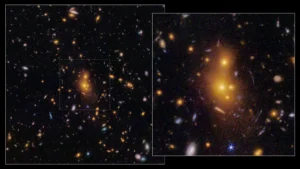
J. Colin Hill ’08 was honored for his contributions to cosmology, specifically regarding the expansion and composition of the universe. Hill, along with a team of researchers including Dillon Brout and Maria Vincenzi, has utilized data from the Cosmic Microwave Background (CMB)—the "afterglow" of the Big Bang—to refine our measurements of the Hubble constant.
The Hubble constant describes the rate at which the universe is expanding, but a persistent discrepancy known as the "Hubble Tension" exists between different methods of measurement. Hill’s work involves advanced statistical analyses of CMB data, helping to rule out certain errors and providing a clearer picture of the dark energy and dark matter that dominate the cosmos. His research is critical for determining the ultimate fate of the universe and understanding the initial conditions that allowed for the formation of galaxies.
Excellence in Mathematics: Hong Wang and Harmonic Analysis
In the realm of mathematics, Hong Wang PhD ’19 received the New Horizons in Mathematics Prize. Wang, who completed her doctoral studies at MIT, was recognized for her significant advances in harmonic analysis. This branch of mathematics involves the study of how complex signals or functions can be decomposed into simpler, fundamental waves (such as sine and cosine waves).
Wang’s work specifically addresses the "restriction conjecture," a notoriously difficult problem in the field that has implications for partial differential equations and number theory. By developing new geometric techniques to understand how these waves interact and interfere with one another, Wang has solved problems that had remained open for decades. Her recognition highlights the importance of abstract mathematical research in providing the tools necessary for breakthroughs in other scientific disciplines, including imaging technology and signal processing.
Chronology of Research and Discovery
The accolades presented at the 2024 Breakthrough Prize ceremony are the culmination of a timeline that spans over half a century of academic rigor:
- 1967: Stuart Orkin graduates from MIT, beginning a career focused on the molecular basis of blood diseases.
- 2008: J. Colin Hill completes his undergraduate studies, entering the field of cosmology during a period of rapid advancement in satellite-based observations.
- 2011: Bryan Traynor and his team publish their landmark findings on the C9orf72 gene expansion, linking ALS and FTD.
- 2012: The Breakthrough Prize Foundation is established, aiming to provide scientists with the same level of recognition and financial support usually reserved for entertainers and athletes.
- 2018-2019: Hong Wang completes her PhD at MIT, publishing pivotal papers on the restriction problem in harmonic analysis.
- 2023: The FDA approves Casgevy, the CRISPR treatment born from Orkin’s research, marking a historic milestone in genetic medicine.
- April 18, 2024: The MIT affiliates are formally honored at the Los Angeles gala.
Supporting Data and Institutional Impact
The success of these individuals reflects a broader trend of MIT’s dominance in the global research landscape. According to recent institutional data, MIT researchers are consistently among the most cited in the world, particularly in the fields of biotechnology and physical sciences. The Department of Biology and the Department of Physics at MIT have historically produced a high volume of Nobel laureates and Breakthrough Prize winners, a testament to the institute’s "mens et manus" (mind and hand) philosophy.
The economic and social impact of these discoveries is also quantifiable. The market for gene-editing therapies, catalyzed by Orkin’s work, is projected to reach tens of billions of dollars by the end of the decade. More importantly, the social value of providing a cure for sickle cell disease—a condition that disproportionately affects underserved populations—is immeasurable in terms of quality of life and reduced healthcare costs.
In the realm of physics, the work of Shao and Hill contributes to the "Big Science" economy. Their research informs the design of next-generation telescopes and particle colliders, projects that involve thousands of jobs and billions of dollars in international investment.
Official Responses and Professional Implications
While the Breakthrough Prize Foundation provides the platform, the responses from the academic community emphasize the collaborative nature of these achievements. In statements following the ceremony, colleagues of the winners noted that these prizes often recognize the leader of a lab, but the work is the result of years of effort by graduate students, postdocs, and technical staff.
The recognition of Shu-Heng Shao and Hong Wang, in particular, highlights the importance of supporting early-career faculty. By providing these researchers with the New Horizons Prize, the foundation ensures that they have the financial freedom and professional prestige to continue taking risks in their research.
Industry analysts suggest that the awarding of the Life Sciences prize to Orkin and Traynor will likely accelerate investment in "genomic medicines." As the success of CRISPR-based treatments becomes evident, venture capital and pharmaceutical interest in similar gene-silencing or gene-activation therapies for other conditions is expected to surge.
Broader Implications for the Future of Science
The 2024 Breakthrough Prizes serve as a reminder of the essential role that fundamental research plays in societal progress. Whether it is the abstract "generalized symmetries" of Shu-Heng Shao or the biological "master switch" of Stuart Orkin, these discoveries begin with a simple question about how the world works.
For MIT, these awards reinforce its status as a premier institution for scientific inquiry. The diversity of the awards—spanning from the infinitesimal scales of quantum fields to the vast reaches of the early universe, and from the mathematical foundations of waves to the genetic code of human life—illustrates the interdisciplinary strength of the MIT community.
As these laureates return to their laboratories and classrooms, their recognition serves as an inspiration for the next generation of scientists. The transition of sickle cell disease from an incurable condition to a treatable one, achieved within a single human lifetime, stands as a powerful testament to the efficacy of the scientific method and the profound impact of dedicated research. The ongoing work of Hill, Shao, and Wang ensures that the mysteries of the universe and the complexities of mathematics will continue to be unraveled, promising a future where today’s theoretical challenges become tomorrow’s solved problems.