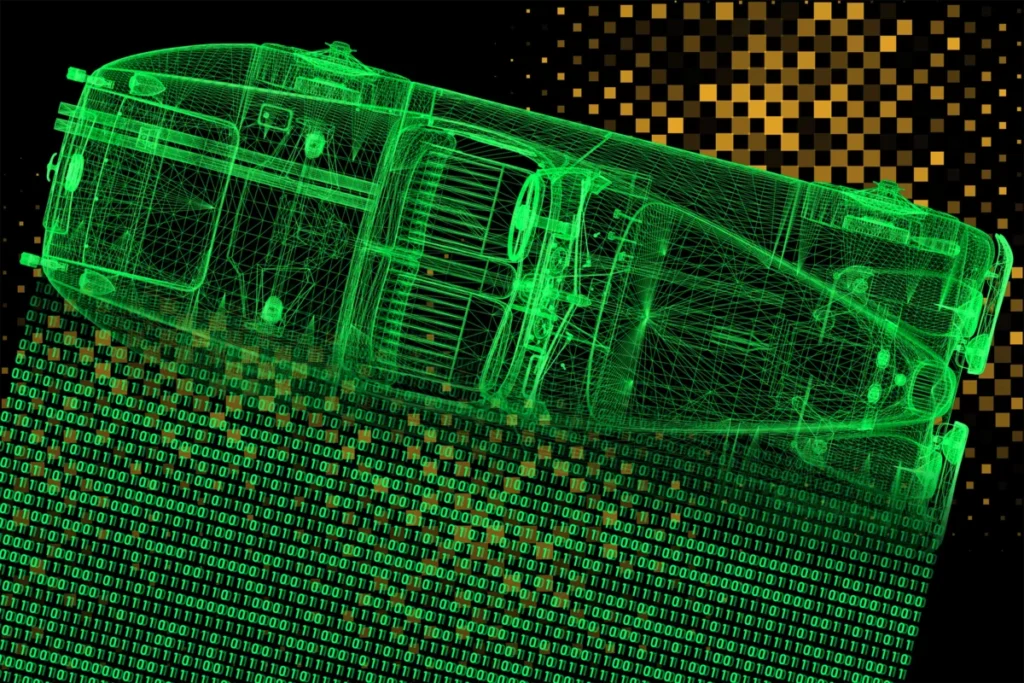
Engineers across industries, from aerospace to automotive, routinely leverage advanced vision-language models (VLMs) in the initial stages of design ideation for complex components. The subsequent crucial step involves translating these conceptual blueprints into precise, functional 3D models using sophisticated computer-aided design (CAD) software. These CAD models are indispensable for rigorous virtual simulations, such as crash tests, durability assessments, and performance evaluations, which are critical before any physical prototyping or manufacturing commences. In a significant advancement for the field, researchers from the Massachusetts Institute of Technology (MIT), in collaboration with experts from Red Hat and IBM, have developed a novel system that dramatically enhances the ability of vision-language models to automatically convert 2D designs into highly accurate and functional CAD programs. This breakthrough promises to streamline the rapid prototyping process, substantially reduce costs, and potentially unearth innovative design solutions that might otherwise be overlooked, all while utilizing a fraction of the computational resources traditionally required.
The newly developed system, dubbed GIFT (Geometric Inference Feedback Tuning), represents a paradigm shift in AI-driven design automation. Unlike previous approaches, which often struggled with the precision and functionality demanded by real-world engineering applications, GIFT teaches a VLM to refine its own outputs by learning from its errors. This self-correcting mechanism allows the system to generate CAD programs that are not only more accurate but also more robust and executable within standard CAD environments. The research, recently presented at the prestigious International Conference on Machine Learning (ICML), marks a pivotal moment in the quest for truly autonomous and intelligent design tools.
The Evolution of Design and AI’s Integral Role
The journey from a conceptual idea to a tangible product has historically been a lengthy and resource-intensive process. For centuries, designers and engineers relied on manual drafting, physical prototypes, and iterative testing. The advent of Computer-Aided Design (CAD) in the mid-20th century revolutionized this landscape. Early CAD systems, initially developed in the 1960s, transformed engineering by allowing designers to create, modify, analyze, and optimize designs digitally. Over the decades, CAD software evolved from basic 2D drafting tools to sophisticated 3D parametric modeling platforms, becoming the backbone of modern product development in virtually every industry. Today, the global CAD software market, valued at approximately $10 billion in 2023, is projected to exceed $15 billion by 2030, reflecting its indispensable role and continued growth.
Despite the immense capabilities of modern CAD, the initial translation of a designer’s intent, often expressed through sketches, images, or textual descriptions, into a precise 3D model remains a significant bottleneck. This is where artificial intelligence, particularly vision-language models, has begun to play an increasingly vital role. VLMs are designed to process and understand information from both visual and textual inputs, making them ideal candidates for interpreting complex design specifications. Engineers have increasingly turned to these models to accelerate the ideation phase, allowing for quicker exploration of design variations.
However, existing VLMs often face a critical limitation when applied to CAD generation: the scarcity of diverse, high-quality datasets for training. Traditional VLM approaches, when tasked with converting a 2D image into executable CAD code, frequently produce models that are geometrically imprecise, functionally incomplete, or simply "simple shapes inadequate for practice," as highlighted by Faez Ahmed, associate professor of mechanical engineering at MIT and a co-senior author of the paper. This gap between AI’s conceptual understanding and the stringent demands of engineering precision has been a significant hurdle in fully automating the design process. The MIT-led research directly addresses this challenge by introducing an innovative method for self-generated, high-quality training data.
GIFT: A Self-Correcting Paradigm for CAD Generation
At the core of this breakthrough is GIFT, an acronym for Geometric Inference Feedback Tuning. Unlike conventional data augmentation techniques, which typically involve randomly altering existing data (e.g., tweaking colors, sizes, or shapes in images) to create more training samples, GIFT adopts a "model-aware" approach. It actively probes the VLM’s capabilities and systematically identifies its weaknesses, then generates targeted data designed specifically to rectify those deficiencies.
The process begins with GIFT tasking a pre-trained VLM to generate CAD code for a given 2D design problem multiple times in parallel. This iterative process allows GIFT to gauge the model’s proficiency and pinpoint instances where it struggles. As Giorgio Giannone, lead author and a research affiliate in MIT’s Design Computation and Digital Engineering (DeCoDE) Lab, explains, "For a model, generating CAD query code that is almost correct is not that hard, but generating code that is perfectly correct and can be executed is much more challenging for a standard VLM."
GIFT’s ingenuity lies in its ability to capitalize on these "near-misses." When the VLM produces code that is geometrically close but not perfectly executable, GIFT intervenes. It intelligently adjusts these near-correct solutions, transforming them into fully successful and executable CAD programs. Both these refined successful solutions and the original near-misses are then incorporated into a new, enriched dataset. This dataset is not just larger; it is strategically curated to teach the VLM precisely how to overcome the specific types of errors it frequently commits. By focusing on these "in-between cases" – where the model might only solve a problem 50 percent of the time – GIFT ensures that the training data directly addresses the VLM’s most pertinent learning opportunities. This feedback loop, where the model’s own mistakes are transformed into valuable learning experiences, eliminates the need for extensive human intervention in correcting errors, making the data augmentation process entirely automatic and scalable.
Furthermore, GIFT employs a technique known as inference-time scaling. This allows the system to improve the outputs of an already trained (static) VLM without the computationally intensive and costly process of retraining the entire model from scratch. This flexibility empowers users to dictate the computational budget for GIFT, tailoring its operation to their specific time and resource constraints. The efficiency gains are substantial: GIFT achieved significantly higher accuracy in generating CAD programs while using only approximately 20 percent of the computation compared to competing techniques. The resulting CAD models demonstrated superior alignment with the shapes of ground-truth models, a critical metric for engineering applications.
A Collaborative Effort and Its Recognition
The development of GIFT is the result of a collaborative effort spanning academia and industry. The research team includes Giorgio Giannone (MIT, Red Hat), Anna Claire Doris (MIT), Amin Heyrani Nobari (MIT), Kai Xu (Red Hat), and co-senior authors Akash Srivastava (IBM, MIT-IBM Computing Research Lab) and Faez Ahmed (MIT, DeCoDE Lab, MIT-IBM Computing Research Lab). This interdisciplinary collaboration, particularly the involvement of the MIT-IBM Computing Research Lab, underscores the commitment to advancing fundamental AI research with direct industrial applications.
The acceptance and presentation of this research at the International Conference on Machine Learning (ICML), one of the premier global conferences for artificial intelligence, speaks volumes about its scientific rigor and potential impact. It places GIFT on a prominent stage, signaling its significance to the wider AI and engineering communities.
Broader Impact and Future Implications
The implications of GIFT extend far beyond the research lab, promising to reshape several facets of the engineering and manufacturing landscape:
-
Accelerated Product Development: By significantly reducing the time and effort required to translate 2D designs into functional 3D CAD models, GIFT can dramatically shorten product development cycles. This means faster innovation, quicker market entry for new products, and enhanced competitiveness for companies across various sectors, from consumer electronics to heavy machinery. The current rapid prototyping process, though faster than traditional methods, still involves considerable manual CAD work, which GIFT aims to minimize.
-
Cost Reduction: Automating a labor-intensive and expert-dependent stage of the design process directly translates into cost savings. Reduced engineering hours, fewer design iterations, and optimized resource allocation contribute to a more economical product development pipeline. For industries with tight margins, these savings can be substantial.
-
Enhanced Innovation and Design Exploration: Freeing engineers from the often tedious and repetitive task of manual CAD modeling allows them to dedicate more time to creative problem-solving, advanced analysis, and exploring a wider array of design possibilities. GIFT’s ability to identify beneficial design choices that might otherwise be overlooked could lead to novel geometries, improved performance, and more sustainable product designs. This empowers designers to push the boundaries of what’s possible, fostering a new era of engineering creativity.
-
Workforce Transformation: While AI automation often raises concerns about job displacement, the more likely scenario in engineering is a transformation of roles. Engineers will transition from manual CAD creation to supervising AI systems, validating their outputs, and focusing on higher-level strategic design challenges. This necessitates upskilling and a greater emphasis on AI literacy within the engineering profession.
-
Toward Trustworthy AI in Engineering: As Faez Ahmed aptly states, "What excites me about this work is that it gives many image-to-CAD-code models a way to improve themselves, learning from their own errors rather than waiting for more human-made data — and that brings trustworthy AI design tools much closer to everyday engineering." The self-improving nature of GIFT builds a foundation for more reliable and trustworthy AI systems that can operate with greater autonomy and accuracy in critical engineering applications.
Looking ahead, the researchers envision expanding GIFT’s capabilities beyond mere geometric accuracy. The immediate future work includes teaching models to generate CAD programs that inherently improve the performance and manufacturability of 3D models. This means considering factors like material stress, thermal properties, ease of assembly, and production costs directly within the AI-driven design process. Furthermore, applying the system to larger models and more diverse CAD generation tasks will broaden its applicability and impact across the entire spectrum of engineering challenges. This research lays a robust foundation for a future where AI acts as an intelligent co-pilot, not just assisting, but actively enhancing and optimizing the creation of virtually every physical product around us.