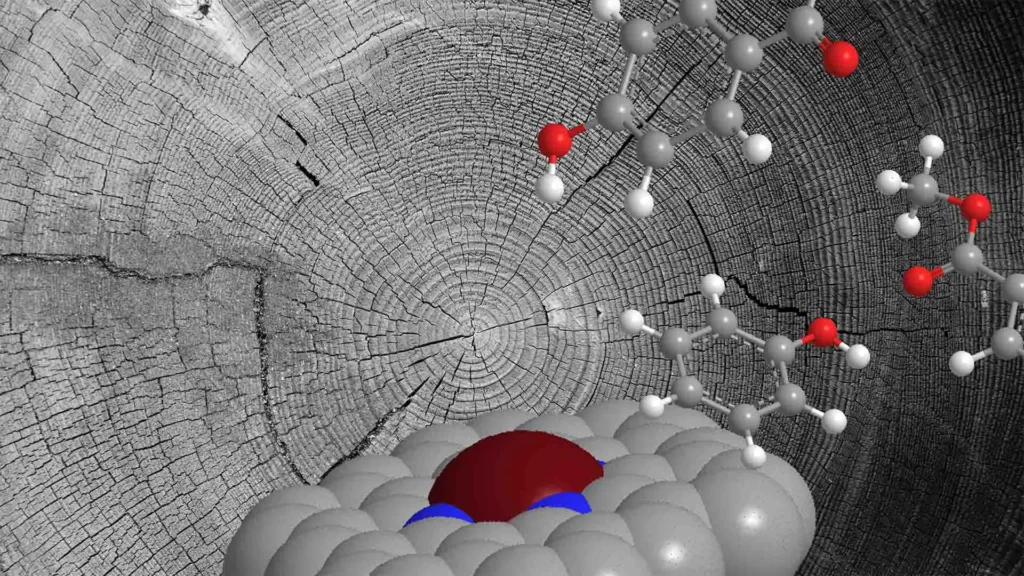
The global transition toward a circular economy has reached a significant milestone as an international research team, including prominent chemical engineers from the United Kingdom and China, has successfully developed a highly efficient single-atom catalyst capable of breaking down lignin, one of nature’s most resilient organic polymers. Published in the prestigious journal ACS Catalysis, the study details a novel method for converting agricultural and forestry waste into high-value aromatic chemicals, potentially providing a sustainable alternative to petroleum-based manufacturing. The research, led by a team including Dr. Christopher Parlett, Xinyue Zhou, and Yutao Jiang, addresses a decades-old bottleneck in biorefinery technology: the inability to efficiently disassemble the complex molecular architecture of lignin without resorting to extreme temperatures or environmentally damaging reagents.
Lignin is a complex oxygen-rich organic polymer that, along with cellulose and hemicellulose, forms the chief structural materials in the support tissues of most plants and algae. It is particularly crucial in the formation of cell walls, lending wood and bark their characteristic rigidity and resistance to decay. From an industrial perspective, lignin represents the largest renewable source of aromatic compounds on Earth, accounting for up to 35% of terrestrial biomass. Despite this abundance, it has long been treated as a low-value byproduct of the paper and pulp industry, often burned for low-grade heat rather than being utilized for its chemical potential. The primary obstacle has been its "recalcitrance"—a term used by scientists to describe its resistance to chemical or biological degradation.
The Challenge of Lignin Valorization
To understand the significance of this breakthrough, one must first look at the chemical composition of lignin. Unlike cellulose, which is a linear polymer of glucose that can be relatively easily broken down into fermentable sugars, lignin is a three-dimensional, amorphous network of aromatic rings connected by various carbon-oxygen (C-O) and carbon-carbon (C-C) bonds. These bonds are notoriously stable. Traditional methods to break them often result in "re-polymerization," where the broken fragments quickly fuse back together into an even more complex and unusable char.
Current industrial processes that attempt to valorize lignin often require temperatures exceeding 400 degrees Celsius and high-pressure hydrogen gas, or the use of concentrated acids and bases. These conditions are not only energy-intensive but also degrade the quality of the resulting chemicals. The research team’s new single-atom catalyst (SAC) offers a departure from these "brute force" methods, providing a precision tool that operates under significantly milder conditions.
Engineering the Single-Atom Catalyst
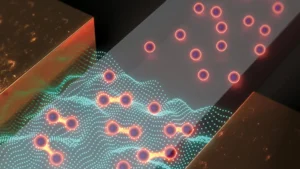
The breakthrough lies in the architecture of the catalyst itself. Conventional catalysts often rely on metal nanoparticles—clumps of thousands of atoms—where only the atoms on the surface can participate in a reaction. This is inherently inefficient, especially when using expensive noble metals like ruthenium. The team instead developed a "single-atom catalyst," where individual ruthenium atoms are isolated and anchored within a nitrogen-doped carbon framework.
This design ensures that every single ruthenium atom is transitionally active, maximizing the efficiency of the metal used. By embedding the ruthenium within a nitrogen-doped carbon matrix, the researchers created a specific coordination environment known as a Ru-N4 site. In this configuration, one ruthenium atom is bonded to four nitrogen atoms. This specific geometry alters the electronic properties of the ruthenium, making it exceptionally effective at activating oxygen molecules from the surrounding environment.
Decoding the Molecular Mechanism
One of the most significant contributions of the study is the detailed mapping of the catalytic process at the atomic level. Using a sophisticated combination of laboratory experiments and computational modeling—specifically Density Functional Theory (DFT)—the researchers were able to observe how the Ru-N4 sites interact with lignin’s molecular bonds.
The process begins with the activation of molecular oxygen. The Ru-N4 site facilitates the transfer of electrons to oxygen, creating highly reactive oxygen species. These species act as molecular "scissors," specifically targeting the ether linkages (C-O bonds) and the more stubborn C-C bonds that hold the lignin framework together. The study revealed that the catalyst lowers the activation energy required for these specific bond-cleavage steps, allowing the reaction to proceed at lower temperatures than previously thought possible.
"Understanding exactly how these catalysts work at the atomic level allows us to design better materials for converting renewable resources into valuable chemicals," explained Dr. Christopher Parlett, a Lecturer in Chemical Engineering. This mechanistic insight provides a blueprint for future catalyst design, moving the field away from trial-and-error experimentation toward rational, data-driven engineering.
Experimental Results and Performance Data
The efficiency of the new catalyst was demonstrated through a series of rigorous tests. Initially, the researchers used "model compounds"—simplified molecules that mimic the linkages found in lignin—to establish a baseline for performance. Under optimized conditions, the ruthenium single-atom catalyst achieved nearly 100% conversion of these model compounds.
The reaction yielded high concentrations of phenol and other aromatic monomers. Phenol is a critical industrial chemical used in the production of plastics, adhesives, and pharmaceuticals, with a global market value in the billions of dollars. Currently, almost all phenol is produced via the cumene process, which relies on petroleum feedstocks.
Moving beyond laboratory models, the team tested the catalyst on "real-world" lignin samples extracted from various biomass sources, including agricultural residues. Even with these more complex and "dirty" feedstocks, the catalyst maintained high performance. It successfully deconstructed the raw lignin into a suite of aromatic building blocks. These products are essential precursors for sustainable aviation fuels, bio-based plastics, and high-performance resins.
A Timeline of Catalytic Evolution
The development of this catalyst represents the latest stage in a long-term shift within the field of heterogeneous catalysis. For decades, the industry relied on bulk metals. In the early 2000s, the focus shifted to nanotechnology, where researchers found that shrinking metal particles to the nanoscale (1-100 nanometers) significantly increased their surface area and activity.
However, even nanoparticles have "hidden" atoms in their core that do not contribute to the reaction. The emergence of Single-Atom Catalysis over the last decade represents the ultimate limit of atom economy. By ensuring that 100% of the metal is exposed and active, SACs like the one developed by Parlett’s team offer the highest possible efficiency. This is particularly important for the economic viability of biorefineries, where the cost of catalysts can often make or break the commercial feasibility of a process.
Implications for the Global Chemical Industry
The broader implications of this research are profound. The chemical industry is currently one of the largest emitters of greenhouse gases, largely due to its dependence on fossil fuels for both energy and raw materials. Transitioning to a biomass-based feedstocks is essential for meeting international climate targets, such as those outlined in the Paris Agreement.
By providing a more efficient way to "upcycle" lignin, this research supports the "Lignin-First" biorefinery concept. In this model, the goal is to extract and valorize lignin at the beginning of the biomass processing stage, rather than treating it as a waste product to be disposed of. This could significantly improve the profit margins of biorefineries, making them more competitive with traditional oil refineries.
Furthermore, the use of mild reaction conditions—lower temperatures and the absence of harsh, corrosive chemicals—reduces the environmental footprint of the manufacturing process itself. It also lowers the capital expenditure required for industrial plants, as less expensive materials can be used for the reactors when corrosive chemicals are not involved.
Future Directions and Scaling Up
While the results published in ACS Catalysis are promising, the journey from laboratory success to industrial implementation involves several challenges. The next steps for the research team will likely involve testing the catalyst’s long-term stability and its resistance to "poisoning"—a process where impurities in the raw biomass coat the catalyst and deactivate it over time.
Additionally, scaling up the production of single-atom catalysts remains a frontier in chemical engineering. Ensuring that the ruthenium atoms remain perfectly isolated and do not "clump" together into nanoparticles during large-scale manufacturing is a technical hurdle that must be overcome.
However, the international collaboration between the Department of Chemical Engineering and its global partners suggests a robust path forward. The integration of advanced characterization techniques and computational chemistry has provided a level of clarity that was previously missing in lignin research.
As the world seeks to decouple economic growth from fossil fuel consumption, the ability to transform "waste" into "wealth" becomes paramount. This single-atom catalyst breakthrough does more than just break chemical bonds; it helps break the world’s reliance on the linear, petroleum-derived chemical economy, paving the way for a truly circular and sustainable future. Through the work of Dr. Parlett and his colleagues, the "notoriously difficult" molecular structure of lignin is finally becoming a manageable and valuable resource for the next generation of green manufacturing.