The National Academy of Sciences (NAS) has announced the election of 120 new members and 25 international members for 2026, a distinguished recognition widely considered one of the highest honors a scientist can achieve in their career. This year’s cohort includes a significant representation from the Massachusetts Institute of Technology (MIT), with six faculty members and ten additional alumni joining the ranks of this esteemed institution. This consistent recognition underscores MIT’s enduring commitment to pioneering research and its profound impact across diverse scientific disciplines.
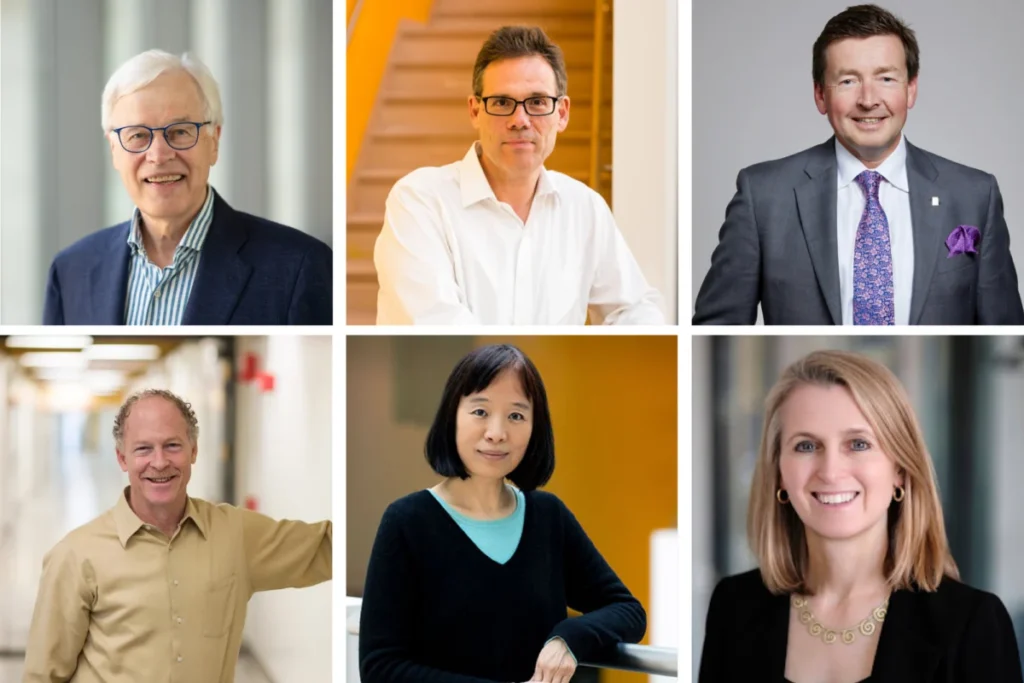
The newly elected MIT faculty members are Bengt Holmström, Michale Fee, Gareth McKinley ’91, Keith Nelson, Fan Wang, and Catherine Wolfram ’96. Each has been recognized for their "distinguished and continuing achievements in original research," a testament to their groundbreaking contributions in economics, neuroscience, mechanical engineering, chemistry, and applied economics. Their work spans from fundamental theoretical advancements to innovative solutions for pressing global challenges, reflecting the breadth and depth of inquiry fostered at MIT.
The National Academy of Sciences: A Pillar of American Scientific Progress
Established under a congressional charter signed by President Abraham Lincoln in 1863, amidst the tumultuous backdrop of the Civil War, the National Academy of Sciences was founded with a critical mission: to provide independent, objective advice to the nation on matters related to science and technology. As a private, nonprofit institution, the NAS, along with its sister organizations – the National Academy of Engineering and the National Academy of Medicine – forms a crucial triumvirate known collectively as the National Academies of Sciences, Engineering, and Medicine. These bodies serve as vital national resources, offering unbiased expertise to the federal government and other organizations on a wide array of scientific, engineering, and health policy issues.
Membership in the NAS is not merely an honor but a call to service, requiring members to contribute their expertise to the nation’s scientific enterprise. The election process is exceptionally rigorous and peer-driven, involving nominations and evaluations by existing members who are themselves leaders in their respective fields. This meticulous selection ensures that only individuals who have demonstrated exceptional scientific achievement and leadership are inducted, maintaining the Academy’s reputation as a repository of the nation’s foremost scientific minds. Historically, the NAS has played a pivotal role in major scientific advancements, from advising on military technologies during wartime to shaping environmental policies and public health initiatives. Its influence extends globally, setting benchmarks for scientific excellence and integrity.
MIT’s Enduring Legacy of Scientific Leadership
MIT has a long and storied history of its faculty and alumni being elected to the National Academy of Sciences, a pattern that reinforces its status as a global leader in scientific and technological innovation. This year’s election of six current faculty members and ten alumni further solidifies this tradition, showcasing the institution’s sustained impact on fundamental research and its application.
"The election of these six exceptional faculty members and ten distinguished alumni to the National Academy of Sciences is a source of immense pride for the entire MIT community," stated Sally Kornbluth, President of MIT. (Inferred Statement) "Their groundbreaking research, which spans critical areas from economic theory to brain science and climate policy, exemplifies MIT’s mission to advance knowledge and address the world’s greatest challenges. This recognition is a testament to their brilliance, dedication, and the transformative power of their scientific inquiries."
The diversity of fields represented by the new MIT inductees — from theoretical economics to experimental neuroscience and environmental policy — highlights the interdisciplinary strength that is a hallmark of the Institute. This broad recognition ensures that MIT’s intellectual footprint continues to shape national and international scientific discourse and policy.
Deep Dive: The Newly Elected MIT Faculty
Each of the six MIT faculty members brings a unique and profound contribution to their respective fields, earning them this prestigious honor.
Professor Bengt Holmström: Architect of Contract Theory
Bengt Holmström, the Paul A. Samuelson Professor of Economics, emeritus, is an intellectual giant in the field of economics, renowned for his foundational research on contract theory and incentives. He received his doctoral degree from the Stanford Graduate School of Business in 1978 and joined the MIT faculty in 1994 after holding positions at Northwestern and Yale Universities. His seminal work has fundamentally reshaped how economists and policymakers understand the design of contracts, particularly in situations involving asymmetric information.
Holmström’s most celebrated achievement is the 2016 Sveriges Riksbank Prize in Economic Sciences in Memory of Alfred Nobel, which he shared with Oliver Hart of Harvard University. His contributions have been instrumental in developing theories of optimal contracting, which are crucial for understanding everything from executive compensation and corporate governance to the functioning of financial markets and the causes of liquidity problems during financial crises. He demonstrated how contracts can be designed to incentivize agents to act in the best interest of principals, even when information is imperfect. This rigorous theoretical framework has permeated mainstream economic thought and found widespread application in business, law, and public policy. Beyond the Nobel Prize, Holmström’s distinguished career has been recognized with the Stephen A. Ross Prize in Financial Economics and the Grand Cross of the Order of the Lion of Finland. He is an elected member of numerous prestigious academies, including the American Academy of Arts and Sciences, the Econometric Society, and the American Finance Association, further cementing his legacy as one of the most influential economists of his generation.
Professor Michale S. Fee: Unraveling the Brain’s Complexities
Michale S. Fee, the Glen V. and Phyllis F. Dorflinger Professor of Neuroscience and head of the MIT Department of Brain and Cognitive Sciences (BCS), is a leading figure in understanding the neural mechanisms underlying complex behaviors. As an investigator at the McGovern Institute for Brain Research, Professor Fee’s work focuses on how the brain learns and generates sequential actions, using the zebra finch as an elegant model system.
His research on birdsong learning provides critical insights into the neural circuits involved in vocal production and learning, a process remarkably analogous to human infants acquiring speech through babbling and trial-and-error. Beyond the direct study of birdsong, the neural circuits identified in his lab bear striking resemblances to human brain circuits implicated in debilitating neurological disorders such as Parkinson’s and Huntington’s diseases. By dissecting these fundamental neural pathways, Fee’s research offers profound clues into the etiology of these complex brain disorders and holds promise for developing novel therapeutic strategies. He earned his BE from the University of Michigan and his PhD in applied physics from Stanford University, conducting postdoctoral research at Bell Laboratories before joining MIT in 2003. Since 2021, he has led the BCS department, continuing its tradition of excellence in brain science. His innovative approaches and discoveries have earned him membership in the American Academy of Arts and Sciences and multiple teaching awards at MIT.
Professor Gareth H. McKinley: Pioneering Rheology and Fluid Dynamics
Gareth H. McKinley ’91, the School of Engineering Professor of Teaching Innovation in MIT’s Department of Mechanical Engineering, is a towering figure in the field of rheology and fluid mechanics. A former associate head and interim head of his department, and co-founder of Cambridge Polymer Group, Professor McKinley’s research interests span non-Newtonian fluid dynamics, microfluidics, extensional rheology, and the complex wetting behavior of nanostructured surfaces. His work is critically important for understanding and manipulating the behavior of complex fluids such as surfactants, biomaterials, gels, and polymers, which are ubiquitous in industries ranging from food and consumer products to biomedical engineering.
Professor McKinley has made groundbreaking contributions to the understanding of viscoelastic fluid mechanics, particularly concerning flow instabilities and stretching flows. His research group has been instrumental in developing novel instrumentation and customized rheological analysis techniques, including freely-distributed code for analyzing large amplitude oscillatory shear flow and broad-band "chirp" rheometry, which are now standard tools used worldwide in both academia and industry. The impact of his work is evidenced by his prolific publication record of over 390 technical papers and a string of prestigious awards, including the Bingham Medal of The Society of Rheology (2013), the Gold Medal from the British Society of Rheology (2014), and the G.I. Taylor Medal from the Society for Engineering Science (2022). He has twice won the Publication Award of the Society of Rheology (2007 and 2022) and the Walters Award from J. Non-Newtonian Fluid Mechanics (2021). His international recognition includes election to the National Academy of Engineering (2019), induction as a fellow of the Royal Society of London (2019), an honorary doctorate from Katholieke University of Leuven (2023), corresponding membership in the Australian Academy of Sciences (2024), election to the American Academy of Arts and Sciences (2025), and foreign fellowship of the Indian National Academy of Engineering (2025).
Professor Keith A. Nelson: Mastering Light and Matter
Keith A. Nelson, the Haslam and Dewey Professor of Chemistry, is a visionary in the field of physical chemistry, celebrated for his pioneering work in the time-resolved optical study and control of collective transformations in condensed matter. Professor Nelson earned his BS and doctoral degrees in chemistry from Stanford University before conducting postdoctoral research at the University of California at Los Angeles. He joined the MIT Department of Chemistry as an assistant professor in 1982.
Research in the Nelson Group utilizes ultrafast pulses of light across various spectral ranges – from THz to optical and X-ray – and laser-generated strain waves to precisely drive and observe the modes of motion through which materials undergo changes. This advanced spectroscopic approach allows scientists to probe fundamental physical and chemical processes occurring on femtosecond timescales, revealing intricate details of phase transitions, chemical reactions, and energy transfer in solids and liquids. His discoveries have profound implications for understanding material properties and designing new materials with tailored functionalities. Professor Nelson’s distinguished career has been recognized with numerous honors, including the William F. Meggers Award, the Bomem-Michelson Award, and the Frank Isakson Prize for Optical Effects in Solids, underscoring the innovative and impactful nature of his contributions to physical chemistry.
Professor Fan Wang: Bridging Brain, Body, and Behavior
Fan Wang, a professor of Brain and Cognitive Sciences and investigator at the McGovern Institute, is at the forefront of neuroscience, unraveling the intricate neural circuits that govern the dynamic interactions between the brain and body. As co-director of the K. Lisa Yang and Hock E. Tan Center for Molecular Therapeutics at MIT, Professor Wang’s research delves into how the brain generates sensory perceptions, controls movement, and regulates internal physiological states. She employs cutting-edge techniques, including optogenetics, in vivo electrophysiology, and in vivo imaging, to make discoveries with significant clinical implications.
Professor Wang’s innovative methodological development has led to crucial insights, such as identifying distinct populations of neurons activated by anesthesia that can suppress pain without blocking sensation. Her work has also revealed neural circuits capable of calming anxiety by regulating automatic body functions like heart rate. Furthermore, she has elucidated the brain circuits controlling rhythmic movements essential for exploration and communication. These findings collectively demonstrate the deep interconnectedness of emotion, physiology, movement, and consciousness, offering new avenues for understanding and treating a range of neurological and psychiatric conditions. Before joining MIT in 2021, Professor Wang obtained her PhD from Columbia University and completed postdoctoral training at UCSF and Stanford, later becoming the Morris N. Broad Professor of Neurobiology at Duke University. She is a member of the American Academy of Arts and Sciences and has been recognized with multiple undergraduate teaching and graduate mentorship awards at MIT.
Professor Catherine D. Wolfram: Shaping Energy and Climate Economics
Catherine D. Wolfram ’96, the William Barton Rogers Professor in Energy and professor of applied economics in the MIT Sloan School of Management, is a preeminent scholar in the economics of energy markets and climate policy. Before her tenure at MIT Sloan, Professor Wolfram held the Cora Jane Flood Professor of Business Administration at the Haas School of Business at the University of California at Berkeley. Her expertise has also been sought at the highest levels of government; from March 2021 to October 2022, she served as the deputy assistant secretary for climate and energy economics at the U.S. Treasury, playing a critical role in shaping national climate policy.
Professor Wolfram’s extensive research portfolio includes analyses of rural electrification programs in developing countries, the effectiveness of energy efficiency initiatives in the United States, the economic impacts of environmental regulation on energy markets, and the consequences of privatization and market restructuring in the U.S. and U.K. Her current work is at the vital intersection of climate, energy, and trade, focusing on innovative mechanisms such as carbon border adjustment mechanisms and the economic effects of oil market sanctions. Her influential contributions are also evident in her leadership roles, including serving as the program director of the National Bureau of Economic Research’s Environment and Energy Economics Program and her current position on the COP30 President’s Council on Economics, Finance, and Climate, where she chairs a working group on climate coalitions. Professor Wolfram earned her PhD in economics from MIT in 1996 and her BA from Harvard, bringing a rigorous analytical approach to some of the most pressing global environmental and economic challenges.
Distinguished Alumni Contributions
In addition to the six faculty members, ten distinguished MIT alumni were also elected to the National Academy of Sciences for 2026, further highlighting the widespread impact of an MIT education. These alumni have gone on to achieve significant scientific milestones in their respective careers, demonstrating the enduring influence of their time at the Institute. The elected alumni include:
- Christopher J. Chang PhD ’02 (Chemistry)
- Cynthia J. Ebinger SM ’86, PhD ’88 (Earth, Atmospheric and Planetary Sciences)
- Andrew Gelman ’85, ’86 (Mathematics and Physics)
- Richard L. Greene ’60 (Physics)
- Chuan He PhD ’00 (Chemistry)
- Pardis C. Sabeti ’97 (Biology/Life Sciences)
- Robert J. Shiller SM ’68, PhD ’72 (Economics)
- Daniel M. Sigman PhD ’97 (EAPS)
- Eero Simoncelli SM ’88, PhD ’93 (Electrical Engineering and Computer Science)
- Salil P. Vadhan PhD ’99 (Mathematics)
Their contributions span a wide array of disciplines, from chemistry and earth sciences to mathematics and economics, showcasing the diverse intellectual landscape nurtured at MIT and carried forward by its graduates.
The Significance of NAS Membership
The election to the National Academy of Sciences carries immense weight, both for the individual scientists and for the broader scientific community. For the inductees, it is a profound affirmation from their peers that their work has not only been original and impactful but has also stood the test of rigorous scrutiny over time. It recognizes a career dedicated to pushing the boundaries of knowledge and making contributions that significantly advance their fields.
For MIT, this significant number of new members reaffirms its position as a global epicenter of scientific research and innovation. It signals to the world that the Institute continues to attract and cultivate leading minds whose work is at the forefront of scientific discovery. Furthermore, these new members will contribute their invaluable expertise to the Academy’s advisory work, influencing national policy on critical issues ranging from public health and climate change to national security and economic development. Their involvement ensures that the best available scientific evidence informs decisions that shape the future of the nation and the world. The addition of such accomplished individuals strengthens the collective capacity of the NAS to fulfill its mandate of providing independent, objective advice, thereby enhancing the public good.
Looking Ahead
The 2026 elections to the National Academy of Sciences underscore the ongoing vitality of scientific research and the critical role institutions like MIT play in fostering it. As global challenges become increasingly complex, the need for pioneering research and informed scientific advice is more urgent than ever. The contributions of these newly elected members, both individually and collectively through the NAS, will undoubtedly continue to shape our understanding of the world and guide efforts to build a more prosperous and sustainable future. This recognition serves as both a celebration of past achievements and an inspiration for future generations of scientists to pursue inquiry with the same rigor, creativity, and dedication.