Researchers at the Massachusetts Institute of Technology (MIT) have achieved a significant breakthrough in maritime sustainability with the development of wedge-shaped vortex generators that, when attached to a ship’s hull, can reduce drag by up to 7.5 percent. This advancement promises substantial reductions in overall ship emissions and considerable savings in fuel expenses, offering a tangible pathway toward meeting ambitious global decarbonization targets for the shipping industry. The findings were detailed in a paper titled "Net Drag Reduction in High Block Coefficient Ships and Vehicles Using Vortex Generators," which was formally presented at the Society of Naval Architects and Marine Engineers (SNAME) 2025 Maritime Convention held in Norfolk, Virginia. This convention, a cornerstone event for professionals in naval architecture and marine engineering, serves as a crucial platform for disseminating cutting-edge research and fostering collaboration within the industry.
The development arrives at a critical juncture for the International Maritime Organization (IMO), which has set a stringent goal to reduce the carbon intensity of international shipping by at least 40 percent by 2030, using 2008 levels as a baseline. Achieving such an ambitious target necessitates a multi-faceted approach, integrating innovations in ship design, propulsion systems, fuel alternatives, and operational strategies. The MIT team’s work directly addresses the need for effective and implementable drag reduction technologies, which are fundamental to improving fuel efficiency and consequently lowering greenhouse gas emissions.
Genesis of the Innovation: Computational Power Meets Experimental Validation
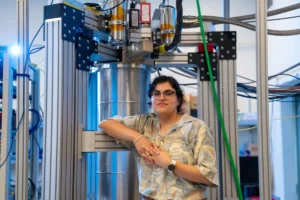
The research team, comprising José del Águila Ferrandis, Jack Kimmeth, and Michael Triantafyllou from MIT Sea Grant and the Department of Mechanical Engineering, alongside Alfonso Parra Rubio and Neil Gershenfeld of the Center for Bits and Atoms, employed a sophisticated methodology to arrive at their optimized design. Their approach combined the power of computational fluid dynamics (CFD) with rigorous experimental testing, guided by advanced artificial intelligence (AI) optimization methods. This synergistic approach allowed for rapid iteration and refinement of the vortex generator’s design parameters.
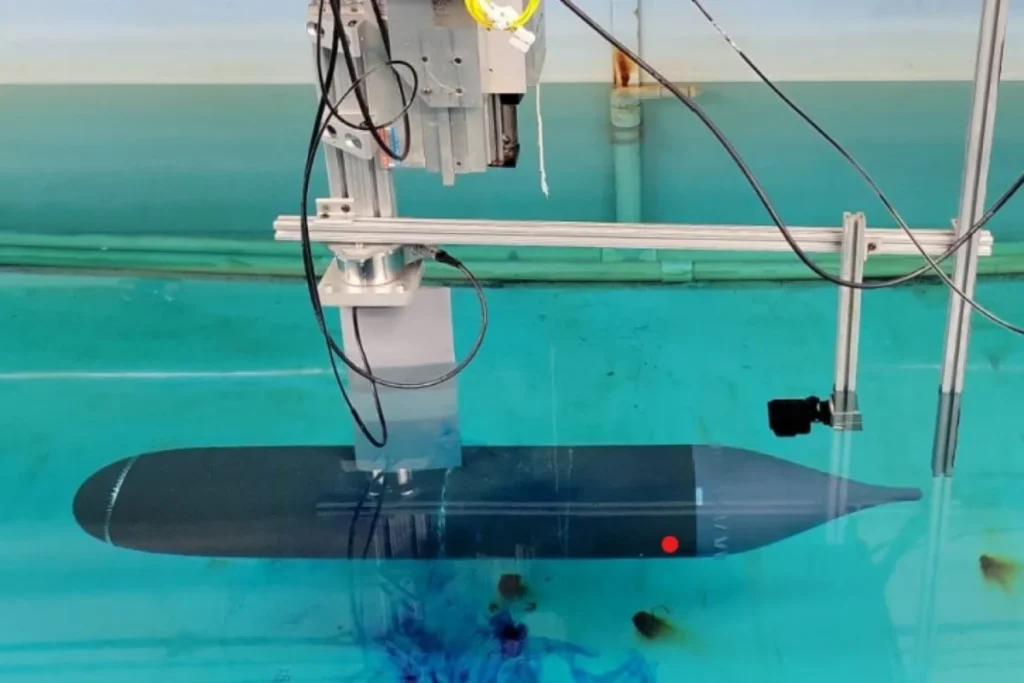
The initial phase involved extensive CFD analysis to establish parametric trends, essentially mapping out how different shapes and sizes of vortex generators would affect the fluid dynamics around a ship’s hull. This computational modeling provided a broad understanding of the potential design space. Following this, the researchers utilized rapid prototyping techniques to produce multiple iterations of hull designs incorporating vortex generators. These prototypes were then subjected to experimental testing to validate the CFD predictions and to identify the most effective configurations. Scale models of an axisymmetric hull were particularly instrumental in this process. These models were tested in various configurations: a bare tail, a tail fitted with delta wing vortex generators, and crucially, a tail equipped with the newly developed wedge vortex generators. The experimental results definitively pointed to the wedge-like vortex generators as the optimal shape for achieving significant drag reduction.
The Science Behind the Efficiency: Delaying Turbulent Flow Separation
The underlying principle behind the effectiveness of these wedge vortex generators lies in their ability to manipulate the airflow – or in this case, the water flow – around the hull. Through meticulous flow visualization techniques, the researchers observed that the vortex generators actively delay turbulent flow separation. Normally, as water flows along the hull, it can detach from the surface, creating areas of turbulence and increasing drag. This phenomenon is particularly pronounced in ships with high block coefficients, which have fuller hull forms.
By introducing small, controlled vortices, the wedge-shaped generators energize the boundary layer of water close to the hull. This energized layer is more resistant to separation, allowing the water to flow more smoothly along the hull for a longer duration. The consequence of this smoother flow is a reduction in the size of the wake behind the vessel, which is essentially the turbulent region of disturbed water left in its path. A smaller wake directly translates to reduced resistance. Furthermore, this improved flow uniformity benefits the propulsion system. When the propeller and rudder operate in a more uniform flow, their efficiency increases, leading to further energy savings.
Professor Michael Triantafyllou, a distinguished figure in mechanical engineering and the director of MIT Sea Grant, elaborated on the significance of their findings: "We document for the first time experimentally a reduction in fuel required by ships using vortex generators, relatively small structures in the shape of a wedge attached at a specific point of the ship’s hull." This experimental validation marks a crucial step beyond theoretical or purely computational predictions, demonstrating a real-world impact on fuel consumption.
A Legacy of Innovation: From Aircraft Wings to Maritime Vessels
It is noteworthy that vortex generators are not entirely new to the world of fluid dynamics. They have a well-established history of application in aircraft wing design, where their primary function is to maintain lift and delay the onset of stalling, particularly at higher angles of attack. The principle is similar: to keep the airflow attached to the wing surface. However, the application of vortex generators for drag reduction specifically on large commercial ships represents a novel and significant extension of their utility. This study is pioneering in demonstrating their efficacy in the challenging environment of maritime transport.
Versatility and Integration: A Pathway to Widespread Adoption
A key advantage of the wedge vortex generators is their modular adaptability. The design allows for integration into a wide array of hull forms, including those of bulk carriers and tankers, which are among the most prevalent types of vessels in global trade and often have high block coefficients. The efficiency gains are not limited to new builds; these devices can be retrofitted onto existing fleets, offering a cost-effective solution for immediate emissions reduction.
Moreover, the vortex generators are designed to be synergistic with, or even potentially replace, existing drag-reduction technologies. For instance, they can complement pre-swirl stators, which are fixed fins mounted in front of propellers to impart a rotational motion to the water flow, thereby improving propeller efficiency. By working in concert or as a more efficient alternative, the vortex generators can enhance overall system performance.
Quantifiable Impact: A Case Study in Fuel Savings
To illustrate the tangible economic and environmental benefits, the researchers provided an illustrative example. They estimate that retrofitting a 300-meter Newcastlemax bulk carrier, a class of very large bulk carriers, with these wedge vortex generators, and operating it at a typical speed of 14.5 knots over a cross-Pacific route, would result in significantly reduced emissions. The projected annual fuel savings for such a vessel are estimated to be approximately $750,000. This figure underscores the considerable financial incentive for shipping companies to adopt this technology, which directly translates into a reduction in their carbon footprint.
Collaborative Development and Future Directions
The groundbreaking research was supported through the CBA Consortium, an initiative that fosters collaboration between academia and industry. Notably, the research involved close partnership with Oldendorff Carriers, a major shipping company that operates a substantial fleet of approximately 700 bulk carriers worldwide. This collaboration ensured that the research was grounded in practical industry needs and that the findings were directly applicable to real-world maritime operations.
Building upon these promising results, an extension of this research is currently underway, supported by the MIT Maritime Consortium. This consortium, established in 2025, is a testament to the growing recognition of the need for interdisciplinary research and collaboration to modernize the commercial fleet. Led by MIT professors Themis Sapsis and Fotini Christia, the Maritime Consortium aims to address critical gaps in fleet modernization through a concerted effort involving academia, industry stakeholders, and regulatory agencies. This ongoing work is expected to further refine the technology and explore its application across an even broader spectrum of maritime applications.
Broader Implications for the Maritime Sector and Global Climate Goals
The implications of this MIT research extend far beyond a single technological advancement. It represents a concrete step towards achieving the IMO’s ambitious decarbonization goals. By offering a practical, cost-effective, and scalable solution, the wedge vortex generators have the potential to be widely adopted across existing fleets, thereby accelerating the transition to a more sustainable maritime sector.
The shipping industry, responsible for transporting approximately 90 percent of global trade, is a significant contributor to greenhouse gas emissions. Reducing the energy consumption of this vital sector is therefore paramount in the global effort to combat climate change. Technologies like the MIT-developed vortex generators, which offer substantial fuel savings and emissions reductions without requiring a complete overhaul of vessel infrastructure or a reliance on nascent, expensive alternative fuels, are crucial enablers of this transition.
The successful integration of such innovations is also likely to spur further research and development in related fields. As the industry becomes more receptive to advanced drag reduction techniques, we may see increased investment in hull optimization, advanced coatings, and other efficiency-enhancing technologies. The collaborative model employed by MIT, involving close ties with industry partners like Oldendorff Carriers and initiatives like the Maritime Consortium, provides a blueprint for how academic research can effectively translate into impactful industrial solutions.
In conclusion, the development of wedge-shaped vortex generators by MIT researchers represents a significant leap forward in the quest for a more sustainable maritime industry. The combination of advanced computational modeling, rigorous experimental validation, and a focus on practical implementation has yielded a technology that promises substantial fuel savings, reduced emissions, and a tangible contribution to global climate action. As the shipping world navigates the complexities of decarbonization, innovations like these offer a beacon of hope and a clear path toward a greener future for global trade.