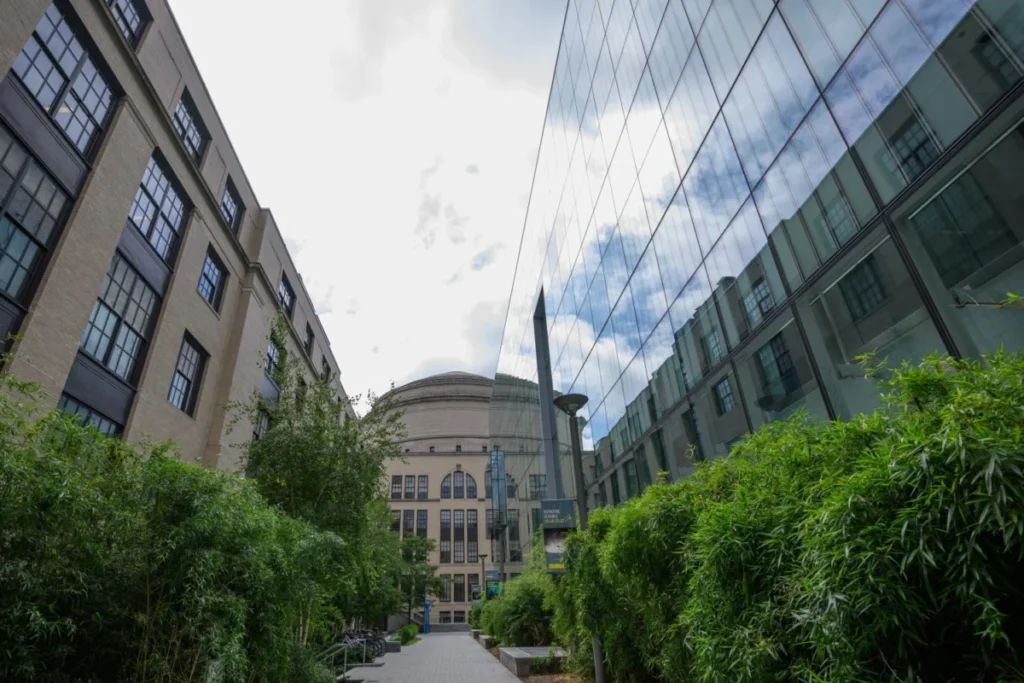
The Massachusetts Institute of Technology (MIT) has officially unveiled the MIT Quantum Initiative (QMIT) Postdoctoral Fellowship program, a strategic endeavor designed to accelerate interdisciplinary research and foster the next generation of scientific pioneers in the rapidly evolving field of quantum information science. Supported by a significant grant from the Gordon and Betty Moore Foundation, this fellowship represents a cornerstone of MIT’s broader strategy to bridge the gap between fundamental quantum theory and transformative applications across a wide array of scientific and engineering disciplines. By providing elite early-career researchers with the resources, mentorship, and collaborative environment inherent to MIT’s ecosystem, the program aims to redefine the boundaries of what is possible in computation, sensing, communication, and materials science.
The launch of this fellowship comes at a critical juncture in the global "quantum race," where the transition from laboratory experimentation to industrial and societal utility requires a workforce capable of thinking across traditional academic silos. QMIT’s vision is rooted in the belief that the most profound breakthroughs in quantum technology will not emerge from physics or engineering in isolation, but rather from the synthesis of these fields with biology, chemistry, and artificial intelligence.
A Strategic Framework for Quantum Discovery
The MIT Quantum Initiative was established in December 2025 as a cross-Institute strategic priority. Its mission is to unify the diverse quantum research efforts scattered across MIT’s departments and labs, creating a centralized hub for innovation that can address some of the most pressing challenges in national security, industrial efficiency, and scientific discovery. The newly announced fellowship is the primary vehicle for attracting the "intellectual capital" necessary to fuel this mission.
According to Anantha Chandrakasan, MIT Provost and the Vannevar Bush Professor of Electrical Engineering and Computer Science, the timing of the fellowship is essential. "Quantum science and technology is in a period of extraordinary opportunity, opening new pathways to solving problems across computation, materials, sensing, and communication," Chandrakasan stated. He emphasized that programs like the QMIT Fellowship are vital for attracting high-caliber researchers whose unconventional ideas will likely dictate the trajectory of the field for decades to come.
The fellowship is structured to allow scholars the freedom to pursue high-risk, high-reward research. Unlike traditional postdoctoral roles that may be tied to a specific grant or a single principal investigator’s project, QMIT Fellows are encouraged to act as bridges between different research groups. This mobility is intended to spark "collision-based" innovation, where insights from one domain—such as quantum algorithms—can be applied to solve long-standing problems in another, such as molecular dynamics or climate modeling.
Interdisciplinary Synergy: Beyond Traditional Physics
While quantum mechanics has historically been the domain of theoretical and experimental physics, the QMIT Fellowship is intentionally broad in its scope. Eligible applicants include researchers from physics, chemistry, and materials science, as well as those working on the fundamental aspects of biological and Earth sciences. This inclusivity reflects a growing consensus in the scientific community: quantum effects are ubiquitous, and understanding them requires a multi-faceted approach.
Danna Freedman, the Frederick George Keyes Professor of Chemistry and faculty director of QMIT, highlighted this shift toward interdisciplinarity. "Quantum science is becoming increasingly interdisciplinary," Freedman noted. "Some of the most exciting breakthroughs will come from researchers who combine deep expertise in quantum with new perspectives from other fields. This fellowship is designed to create exactly those kinds of opportunities."
One illustrative example of this vision is the emerging field of quantum biology. Researchers are increasingly investigating whether quantum phenomena—such as coherence or tunneling—play a role in biological processes like photosynthesis, enzyme catalysis, or avian navigation. A QMIT Fellow might work at the intersection of atomic physics and biology to develop quantum sensors capable of monitoring cellular activity at unprecedented scales, potentially revolutionizing the way we understand and treat disease.
Furthermore, the fellowship encourages exploration into the convergence of artificial intelligence (AI) and quantum science. This "AI-Quantum" nexus is two-fold: using machine learning to optimize the design of quantum circuits and materials, and utilizing quantum computers to accelerate the training of complex AI models. By embedding fellows in an environment where both AI and quantum research are world-class, MIT seeks to lead this high-stakes technological frontier.
The Role of the Gordon and Betty Moore Foundation
The financial backing for the QMIT Fellowship program is provided by the Gordon and Betty Moore Foundation, an organization with a storied history of supporting basic science and path-breaking research. The foundation’s involvement underscores the philanthropic sector’s recognition of quantum science as a foundational pillar of future human progress.
The Moore Foundation’s grant is specifically tailored to support the independence of these early-career scholars. In many academic settings, postdoctoral researchers are limited by the specific objectives of their funding sources. The QMIT program, however, provides a level of autonomy that is rare in the sciences. This independence is seen as a prerequisite for the type of creative, "out-of-the-box" thinking required to move quantum technology from the "NISQ" (Noisy Intermediate-Scale Quantum) era into the era of fault-tolerant, universal quantum computing.
Chronology and Future Milestones
The timeline for the QMIT Fellowship program reflects a long-term commitment to institutional growth and talent cultivation:
- December 2025: The MIT Quantum Initiative is formally launched as a strategic Institute-wide effort to consolidate and accelerate quantum research.
- Early 2026: The inaugural cohort of QMIT Fellows is selected following a rigorous global search for candidates demonstrating both technical excellence and interdisciplinary potential.
- 2026 Academic Year: The first group of fellows begins their appointments at MIT, integrating into various laboratories and departments.
- Fall 2026: Applications for the second cohort of fellows are scheduled to open, signaling the program’s transition into a permanent fixture of MIT’s academic landscape.
- 2027 and Beyond: The program expects to see the first wave of research outputs, including peer-reviewed publications and potential patent filings, resulting from the fellows’ collaborative projects.
Integration Within the MIT Quantum Ecosystem
One of the most significant advantages for QMIT Fellows is the sheer breadth of the MIT research ecosystem. Fellows will not work in isolation; they will be embedded in a network of world-renowned facilities and centers, including:
- The Research Laboratory of Electronics (RLE): A premier site for quantum information physics and engineering.
- MIT Lincoln Laboratory: A federally funded research and development center (FFRDC) that provides a unique bridge between academic research and national security applications.
- The MIT-Harvard Center for Ultracold Atoms (CUA): A collaborative powerhouse focused on the study of matter at temperatures near absolute zero, where quantum effects are most pronounced.
- The Departments of Physics and Electrical Engineering and Computer Science (EECS): Providing the theoretical and hardware foundations for the fellows’ work.
Ian Waitz, MIT’s Vice President for Research and the head of QMIT, emphasized that the fellowship is an investment in the "unforeseen." "Quantum research, in the next few years and across a wide range of domains, is going to make the impossible possible," Waitz said. He believes that the fellows will act as catalysts, bringing "tremendous new quantum capabilities to unforeseen, creative, and transformative applications."
Analysis: The Global and Economic Implications
The establishment of the QMIT Fellowship program carries implications that extend far beyond the walls of the Cambridge, Massachusetts campus. As nations like China, the United Kingdom, and members of the European Union ramp up their own national quantum strategies, the United States faces a critical need to maintain its competitive edge. Talent retention and development are at the heart of this geopolitical struggle.
From an economic perspective, the "Quantum Economy" is projected to grow into a multi-billion-dollar industry by the 2030s. Companies in the pharmaceutical, logistics, and financial sectors are already investing in quantum-ready workforces to prepare for the day when quantum advantage becomes a reality. By training leaders who understand both the physics of the qubit and the practical needs of industry, MIT is positioning itself—and its graduates—to lead the commercialization of quantum technologies.
Furthermore, the emphasis on interdisciplinary work addresses a major bottleneck in the field: the "language barrier" between physicists who build quantum hardware and the software engineers and domain experts who need to use it. QMIT Fellows, by design, will be the translators and architects who build the software stacks, the error-correction protocols, and the application-specific algorithms that will make quantum computers useful for the real world.
Conclusion
The MIT Quantum Initiative Postdoctoral Fellowship is more than just a funding opportunity; it is a strategic response to the shifting landscape of modern science. By prioritizing interdisciplinary collaboration and providing early-career researchers with unprecedented autonomy, MIT is setting a new standard for how quantum leaders are trained. As the inaugural fellows begin their work in 2026, the scientific community will be watching closely to see how these young scholars turn the "impossible" into the "possible," shaping the future of technology and our understanding of the universe in the process.