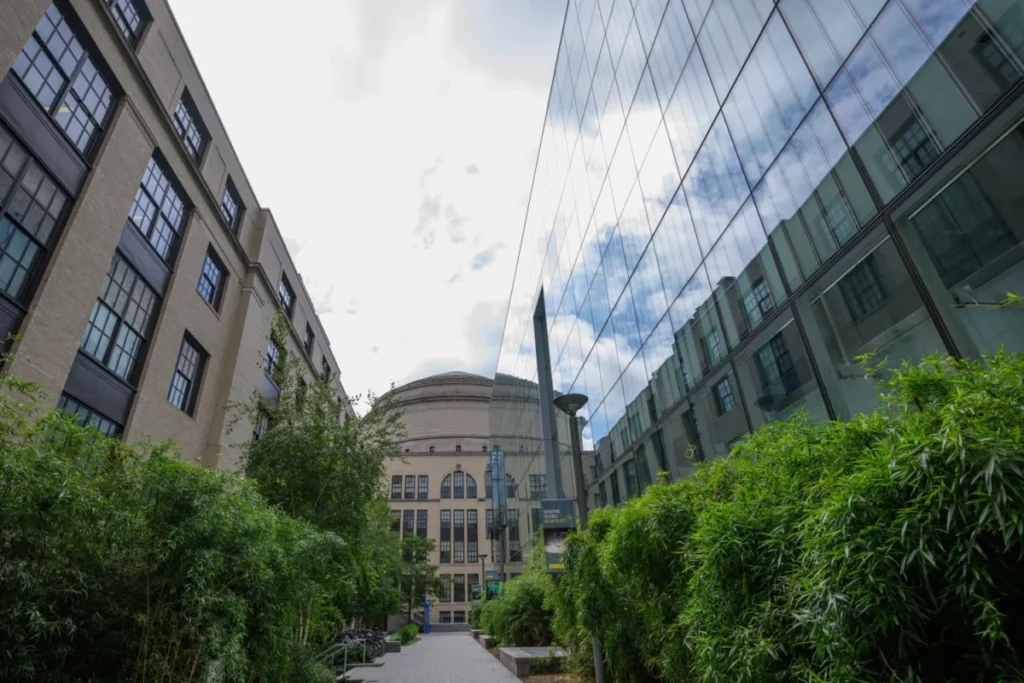
The Massachusetts Institute of Technology (MIT) has officially announced the launch of a prestigious new postdoctoral fellowship program under the auspices of the MIT Quantum Initiative (QMIT). This program is strategically designed to catalyze interdisciplinary research and foster the development of early-career scientists who will lead the next wave of innovation in quantum science and technology. Supported by a substantial grant from the Gordon and Betty Moore Foundation, the fellowship represents a significant expansion of MIT’s commitment to advancing a field that promises to redefine the boundaries of computation, communication, and sensing.
The QMIT Fellowship program emerges at a pivotal moment in the "Second Quantum Revolution," a period characterized by the transition from theoretical quantum mechanics to the engineering of functional quantum devices. By providing high-level resources and a collaborative environment, the initiative aims to attract the world’s most promising young researchers to Cambridge, Massachusetts, where they will work at the intersection of various scientific domains.
A Vision for Interdisciplinary Quantum Excellence
The core philosophy of the QMIT Fellowship is the belief that the most transformative breakthroughs in quantum technology will not occur in isolation. Instead, they will arise from the cross-pollination of ideas across traditional academic silos. While quantum mechanics has historically been the domain of theoretical and experimental physics, its applications are increasingly relevant to chemistry, materials science, biology, and even the atmospheric sciences.
Danna Freedman, the Frederick George Keyes Professor of Chemistry and faculty director of QMIT, emphasized the necessity of this multifaceted approach. According to Freedman, the fellowship is specifically structured to encourage researchers to bring perspectives from outside the traditional quantum core. By merging deep expertise in quantum states with insights from other fields, the program seeks to unlock solutions to problems that were previously deemed insurmountable.
One such area of exploration is quantum biology. Researchers are increasingly looking at how quantum effects, such as coherence and tunneling, might play roles in biological processes like photosynthesis, enzyme catalysis, and avian navigation. A QMIT Fellow might, for instance, utilize quantum sensing techniques to monitor chemical reactions within a single cell with unprecedented precision—a feat that requires a mastery of both atomic physics and molecular biology.
Strategic Funding and the Gordon and Betty Moore Foundation
The realization of this fellowship program is made possible through the support of the Gordon and Betty Moore Foundation. Known for its "Measurement Science Initiative" and its history of funding basic research that lacks immediate commercial application but holds immense long-term value, the foundation’s involvement underscores the importance of the QMIT program.
Philanthropic support of this nature is critical in the quantum sector, where the "valley of death" between laboratory discovery and industrial scaling can be wide. By funding postdoctoral positions, the Moore Foundation is investing in human capital—the "intellectual infrastructure" necessary to sustain the growth of the quantum ecosystem. This grant allows MIT to offer competitive stipends and research budgets, ensuring that the best minds are not deterred by the high costs associated with cutting-edge experimental work.
Chronology of the MIT Quantum Initiative
The launch of the fellowship is a key milestone in a timeline of strategic institutional growth at MIT. While MIT has been a leader in quantum research for decades—hosting pioneers like Peter Shor, who developed the foundational quantum factoring algorithm in 1994—the formal consolidation of these efforts is a more recent development.
In December 2025, MIT officially launched QMIT as a strategic institute-wide initiative. This move was intended to unify the disparate quantum research groups scattered across the campus, from the Department of Physics to the Department of Electrical Engineering and Computer Science (EECS). The goal was to create a centralized hub that could interface with industry partners, government agencies, and international research bodies.
Following the 2025 launch, QMIT spent much of 2026 establishing its administrative framework and defining its core research pillars. The announcement of the postdoctoral fellowship in late 2025 (for the 2026 academic year) serves as the first major recruitment drive under this new banner. The inaugural cohort of fellows is expected to begin their appointments in the fall of 2026, with subsequent application cycles opening annually to build a continuous pipeline of talent.
The MIT Quantum Ecosystem: A Collaborative Network
Fellows selected for the QMIT program will not work in a vacuum. They will be integrated into one of the most robust research environments in the world. MIT’s quantum ecosystem includes several world-class laboratories and centers that provide the physical and intellectual tools necessary for advanced research.
Central to this ecosystem is the Research Laboratory of Electronics (RLE), which has long been a site for pioneering work in quantum information science. Additionally, the MIT-Harvard Center for Ultracold Atoms (CUA) provides a unique collaborative space where researchers from two of the world’s leading universities work together on the manipulation of atoms at temperatures near absolute zero—a requirement for many quantum computing and simulation platforms.
For fellows interested in the transition from fundamental science to applied technology, the MIT Lincoln Laboratory offers a bridge to national security and industrial applications. Lincoln Laboratory is a Department of Defense Federally Funded Research and Development Center (FFRDC) that specializes in advanced electronics and system integration. Access to such facilities allows QMIT Fellows to see their theoretical models tested in high-stakes, real-world environments.
The fellowship also emphasizes the importance of the Department of Physics and the Department of Electrical Engineering and Computer Science. These departments provide the theoretical rigor and engineering expertise needed to build the next generation of quantum hardware, from superconducting qubits to topological insulators.
Research Pillars and Emerging Frontiers
The QMIT Fellowship program is organized around five primary research pillars, though it remains open to emerging interdisciplinary fields:
- Quantum Computing: Developing scalable architectures for quantum processors, improving error correction protocols, and discovering new quantum algorithms.
- Quantum Sensing and Precision Measurement: Utilizing quantum states to create sensors with sensitivity far beyond the standard quantum limit, with applications in medical imaging, navigation, and fundamental physics.
- Quantum Materials: Exploring new phases of matter, such as Weyl semimetals and high-temperature superconductors, which could provide the building blocks for more stable quantum devices.
- Quantum Simulation: Using controllable quantum systems to simulate complex quantum phenomena that are impossible to model on classical supercomputers, such as the behavior of complex molecules or high-energy particles.
- Quantum Networks: Building the infrastructure for a "quantum internet" that allows for the secure transmission of quantum information over long distances using entanglement and quantum repeaters.
In addition to these pillars, the program is increasingly focused on the intersection of Artificial Intelligence (AI) and quantum science. This "Quantum-AI" nexus involves using machine learning to optimize the design of quantum circuits and, conversely, exploring how quantum computers can accelerate AI training processes.
Official Responses and Institutional Support
The leadership at MIT has expressed high expectations for the program. Anantha Chandrakasan, MIT Provost and the Vannevar Bush Professor of Electrical Engineering and Computer Science, noted that the fellowship is essential for maintaining the Institute’s competitive edge. He remarked that quantum science is currently in a period of "extraordinary opportunity," and that attracting the highest caliber of researchers is the only way to ensure MIT remains at the forefront of the field.
Ian Waitz, MIT’s Vice President for Research and the head of QMIT, echoed these sentiments. He described the fellowship as an investment in "creative and transformative applications" that are currently unforeseen. Waitz highlighted that the program is designed to make the "impossible possible," suggesting that the next decade of quantum research will yield breakthroughs that are as significant as the invention of the transistor or the laser.
Broader Impact and Global Implications
The launch of the QMIT Fellowship carries implications that extend far beyond the MIT campus. Globally, there is an intensifying race to achieve "quantum advantage"—the point at which a quantum computer can perform a task that is practically impossible for a classical computer. The United States, through the National Quantum Initiative Act, has committed billions of dollars to this effort, viewing quantum technology as a matter of national security and economic competitiveness.
By establishing a premier fellowship program, MIT is helping to ensure that the U.S. retains its leadership in the global talent market. As other nations, particularly in the European Union and East Asia, ramp up their own quantum investments, the ability to attract and retain top-tier postdoctoral scholars becomes a strategic necessity.
Furthermore, the interdisciplinary nature of the QMIT program addresses a critical gap in the current workforce. Many industries, from pharmaceuticals to finance, are eager to explore quantum solutions but lack personnel who understand both the quantum mechanics and the specific needs of their sector. QMIT Fellows, with their interdisciplinary training, will be uniquely positioned to fill these roles, acting as "translators" between the quantum lab and the commercial world.
Future Outlook and Application Timeline
As the inaugural QMIT Fellows prepare to begin their work in 2026, the Institute is already looking toward the future. The program is intended to be a permanent fixture of MIT’s research landscape. Following the first cohort, the application window for the next cycle is expected to open in the fall of 2026.
Prospective applicants will be evaluated not only on their past research achievements but also on their potential to bridge disciplines. The selection committee will look for individuals who demonstrate a "willingness to explore new intellectual frontiers," a trait that MIT considers essential for the next generation of scientific leaders.
In the coming years, the work produced by QMIT Fellows is expected to manifest in high-impact publications, new patent filings, and potentially the launch of new startup ventures. As these researchers move on to faculty positions or leadership roles in industry, the influence of the QMIT Fellowship will ripple through the scientific community, further solidifying the role of quantum technology as a cornerstone of 21st-century innovation.