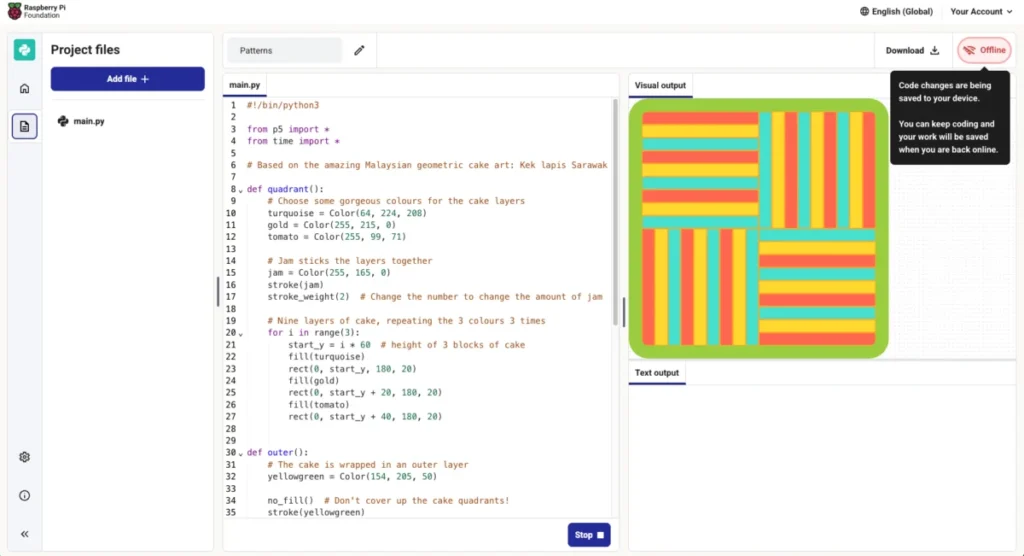
The Raspberry Pi Foundation has announced a significant technical update to its browser-based Code Editor, introducing robust offline resilience designed to protect learners and educators from the disruptions caused by unstable internet connectivity. This development marks a pivotal shift in the accessibility of computer science education, ensuring that students can continue to write, test, and run code even when their network connection fails. By leveraging modern web technologies such as service workers, the Foundation has effectively bridged the gap between traditional offline software and the convenience of cloud-based tools, specifically targeting the needs of users in regions with unreliable infrastructure or oversubscribed network environments.
Addressing the Global Connectivity Gap in Computer Science Education
The primary motivation behind this update stems from a fundamental reality of the global digital landscape: internet access is neither universal nor consistently reliable. While web-based Integrated Development Environments (IDEs) have simplified the onboarding process for new programmers by removing the need for complex software installations, they have historically introduced a single point of failure—the connection itself. In a classroom setting, a momentary drop in WiFi or a power-related network reset could result in the loss of unsaved progress, a scenario that often discourages young learners and disrupts the pedagogical flow for instructors.
To better understand these challenges, the Raspberry Pi Foundation conducted extensive field research across several key regions, including India, Kenya, and South Africa. This research revealed that connectivity issues are not limited to rural or underdeveloped areas. In major metropolitan centers, educators reported frequent interruptions due to "load-shedding"—scheduled rolling blackouts used to manage overtaxed power grids—and "brownouts," which are temporary drops in voltage. These infrastructure instabilities make "always-on" digital tools impractical for a significant portion of the global population.
Furthermore, the Foundation identified that even in well-funded educational institutions in the West, connectivity remains a bottleneck. A standard computer lab housing 30 or more students simultaneously accessing a single wireless access point can experience significant latency or total connection failure. Similarly, community-based "Code Clubs" often operate out of temporary spaces using mobile hotspots or patchy public data. By making the Code Editor resilient to these fluctuations, the Foundation is addressing a universal pain point in modern education.

Technical Implementation: The Role of Service Workers
The transition from a purely online tool to a resilient, offline-capable application was achieved through the implementation of Service Worker technology. A service worker is a specialized script that the browser runs in the background, separate from the main web page. This allows the application to intercept network requests and manage a sophisticated caching system.
When a user first visits the Raspberry Pi Code Editor while online, the service worker automatically downloads and stores the essential files required to run the environment—including the user interface, the code execution engine, and the necessary libraries—into the browser’s local cache. If the internet connection is subsequently lost, the service worker detects the failure and immediately begins serving the required files from the local cache instead of the remote server.
This architecture ensures that the editor remains functional even if the user refreshes the page while offline. Previously, a page refresh during a connection outage would result in a standard browser error or a blank screen, potentially wiping out the session data. With the new update, the environment persists, allowing the student to continue their lesson without interruption. Once the device reconnects to the internet, the service worker automatically updates the cached files to ensure the user has the most recent version of the tool, all without requiring manual intervention.
A Chronology of Development and Design Principles
The development of the offline-resilient Code Editor was not an isolated project but rather the culmination of a long-term strategy centered on inclusive design. The following timeline outlines the progression of this initiative:
- Phase I: Architecture Design (Early 2022): The Code Editor was originally built with a "client-side first" philosophy. Unlike many IDEs that compile code on a distant server, the Raspberry Pi Code Editor was designed to run code directly within the user’s browser. This initial decision laid the groundwork for future offline capabilities.
- Phase II: Field Research (Late 2022 – Mid 2023): Research teams gathered data from educators in Kenya, India, and South Africa. This phase highlighted that "intermittent connectivity" was a more common hurdle than "zero connectivity," necessitating a tool that could seamlessly transition between states.
- Phase III: Drafting EdTech Principles (Late 2023): The Foundation published its "Draft Principles for Safe and Responsible Education Technology." A core tenet of these principles is the commitment to "design for diverse needs, abilities, and contexts," which explicitly includes the mandate to not assume constant internet access.
- Phase IV: Implementation and Testing (Early 2024): Engineers integrated Service Worker APIs and optimized local storage protocols to ensure project data was saved locally on the device as the user typed.
- Phase V: Global Rollout (August 2024): The update was pushed to the live production environment, accompanied by funding and support from Cisco.
Supporting Data and the Digital Divide
The necessity of this update is underscored by global statistics on internet reliability. According to data from the International Telecommunication Union (ITU), while approximately 67% of the world’s population is online, the quality of that connection varies wildly. In many developing economies, broadband penetration remains low, and mobile data is often the primary—and expensive—means of access.

In South Africa, for instance, the national utility provider Eskom implemented over 300 days of load-shedding in 2023 alone. For a student trying to complete a coding assignment, these power cuts translate directly into lost educational hours if their tools require a constant server handshake. By enabling the Code Editor to function offline, the Raspberry Pi Foundation is effectively decoupling educational progress from infrastructure stability.
Furthermore, educational research suggests that technical friction—such as losing work due to a crash or a disconnect—is a leading cause of "computer anxiety" among novice learners. By eliminating the risk of data loss during a network drop, the Foundation is fostering a more "low-stakes" environment where students feel safe to experiment and fail without the added frustration of technical glitches.
Current Capabilities and Existing Limitations
While the update represents a significant leap forward, the Raspberry Pi Foundation has been transparent about the current technical boundaries of the tool. The Code Editor is currently a "resilient web app" rather than a fully standalone, downloadable application.
What is now possible offline:
- Continuing to write and edit code after an initial online load.
- Running and testing code within the browser.
- Refreshing the browser page without losing the editor interface or current progress.
- Automatic local saving of project data to the device’s storage.
What still requires an active connection:
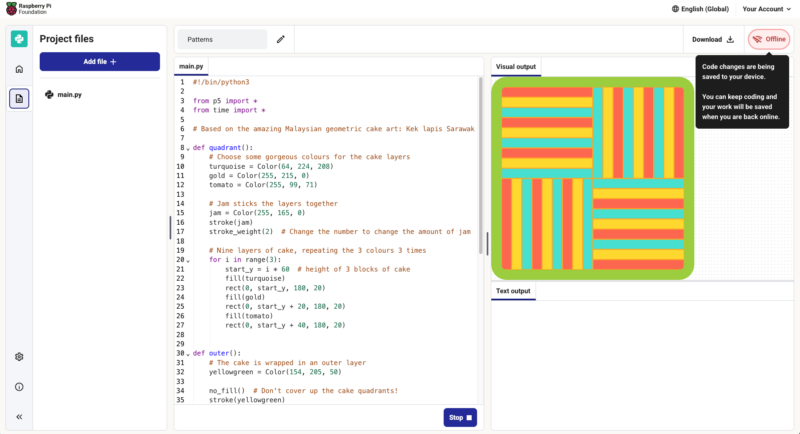
- Initial Loading: The user must be online to navigate to the Code Editor URL for the first time in a session to allow the service worker to initialize.
- Cloud Synchronization: Features such as logging into a Raspberry Pi account to save projects to the cloud or sharing projects via a URL remain disabled until a connection is restored.
- External Assets: If a coding project relies on external images or data hosted on other websites, those specific assets may not load while offline unless they were previously cached.
The Foundation has indicated that they intend to continue expanding the offline feature set, potentially looking into deeper integration with local file systems and more advanced caching of educational content and tutorials.
Broad Implications for the Future of EdTech
The move by the Raspberry Pi Foundation, supported by funding from Cisco, reflects a broader trend in the technology sector toward "Local-First" software. As the industry realizes that the "always-online" model excludes billions of potential users, there is a renewed focus on building applications that prioritize local data ownership and resilience.
For the educational sector, this update sets a new benchmark for "responsible EdTech." It challenges the assumption that modern learning must be tethered to high-speed fiber optics. By providing a professional-grade coding environment that respects the constraints of the user’s environment, the Foundation is democratizing access to the digital economy.
Industry analysts suggest that this approach could influence other major players in the EdTech space. As more schools move toward Chromebooks and other web-centric hardware, the demand for "offline-ready" web applications is expected to surge. The Raspberry Pi Foundation’s implementation serves as a case study in how to use standard web APIs to solve high-impact social problems.
The Foundation has invited feedback from the global community, particularly from those working in challenging infrastructure environments, to further refine the tool. As the Code Editor continues to evolve, its success will likely be measured not just by the number of users, but by the diversity of the environments in which those users are able to learn, create, and innovate.