Belgium-based Mirmex Motor is poised to revolutionize the electric micromotor industry with its proprietary approach to manufacturing power-dense windings. Utilizing advanced printed circuit technology, Mirmex produces motors that are remarkably 50% more compact and exhibit 70% greater dynamism compared to comparable slotless motors equipped with conventional copper-wire windings. This innovation also boasts a significant threefold reduction in heat waste, addressing a critical challenge in high-performance motor applications.
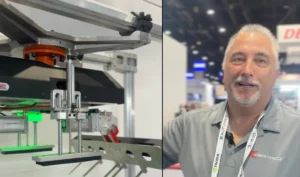
The company’s offerings span a comprehensive range, including bare windings, stators, as well as frameless and fully assembled motors, available in both radial and axial-flux architectures. This versatility was highlighted by Francisco Diaz of Mirmex Motor at the recent MD&M West event, a premier gathering for the medical device manufacturing industry. The inherent advantages of Mirmex’s technology position its motors as ideal candidates for a diverse array of demanding applications, including motorized surgical tools, active prostheses, advanced drones, critical aerospace designs, precision industrial equipment, and sophisticated robotics systems.
The Limitations of Conventional Motor Manufacturing
For decades, the performance of electric motors has been inextricably linked to their copper windings. The traditional process of manufacturing these windings is notoriously complex and labor-intensive. Copper wires, often fine and delicate, must be meticulously wound into precise coil geometries. This intricate task is challenging to execute consistently, leading to variations in motor performance and efficiency.
During the prototyping phase, engineers frequently resort to assembling these windings by hand, a testament to the difficulty and precision required. This manual process is time-consuming, expensive, and limits the ability to rapidly iterate on designs. Once a design is finalized for mass production, manufacturers typically invest in specialized, often prohibitively expensive, and inflexible machinery. These machines are dedicated to winding specific coil designs, meaning that any significant design alteration or the introduction of a new motor model necessitates substantial retooling or the acquisition of new equipment. This rigidity hinders innovation and increases the barrier to entry for new motor designs. Furthermore, the physical constraints of traditional wire winding limit the achievable winding density and the geometric complexity of the coils, directly impacting a motor’s power density, efficiency, and overall form factor. The inherent resistance of copper wires also generates heat, which must be managed through cooling systems, adding to the motor’s size, weight, and complexity.
Mirmex Motor’s Breakthrough: AI-Driven Printed Stator Technology
In stark contrast to these conventional methods, Mirmex Motor employs an innovative, AI-driven approach to create its winding patterns. This revolutionary process begins with sophisticated artificial intelligence algorithms that design intricate and optimized winding geometries. These patterns, impossible to achieve through traditional wire-winding techniques, are then precisely printed onto strips of flexible circuit board.
The manufacturing process is remarkably adaptable. For axial flux architectures, these printed strips are laid flat, maximizing surface area for magnetic interaction. For radial flux architectures, the strips are expertly closed into tubular forms. A cornerstone of Mirmex’s innovation is the high degree of automation in both the manufacturing and validation phases. This not only ensures unparalleled precision and consistency but also significantly reduces production costs and lead times compared to manual or semi-automated winding processes.
The flexibility of this printed circuit technology allows for an unprecedented level of customization and optimization. By varying critical parameters such as the conductor sizes, thicknesses, interconnections, and even the fundamental pattern itself, the winding can be meticulously tailored. This optimization capability allows Mirmex motors to be precisely engineered for a vast range of different applications, diverse operating environments, and specific performance constraints. This level of design freedom stands in stark contrast to the rigid limitations of traditional winding, where design choices are often dictated by manufacturing feasibility rather than optimal performance. The result is a motor that not only competes effectively with other synchronous and slotless brushless direct current (SBLDC) motors but often surpasses them in key performance metrics due to its superior winding architecture.
Unpacking the Performance Advantages
The technological leap represented by Mirmex’s printed-stator motors translates into several significant performance advantages that are critical for modern high-tech applications.
Compactness and Miniaturization: The claim of being 50% more compact than comparable slotless motors is a game-changer. This reduction in size is primarily achieved through the ability of printed circuits to create extremely dense and precise winding patterns that maximize the utilization of available space. Traditional wire windings, even in slotless designs, inherently have gaps and limitations in how tightly wires can be packed. Printed circuits, conversely, allow for continuous, highly integrated conductor paths that eliminate wasted space. This compactness is crucial for industries where miniaturization is paramount, such as in medical implants, micro-robotics, and portable electronics, enabling smaller, lighter, and more aesthetically pleasing devices without compromising power.
Enhanced Dynamics and Responsiveness: The 70% increase in dynamism refers to the motor’s ability to respond quickly and precisely to changes in load or command. This superior dynamic performance stems from several factors inherent in the printed winding design. The precise and uniform nature of the printed conductors minimizes electrical losses and parasitic effects, leading to a more direct and efficient conversion of electrical energy into mechanical motion. Furthermore, the lower inertia often associated with these designs allows for faster acceleration and deceleration. In applications like robotic arms or surgical instruments, this translates to smoother, more accurate movements, enabling complex tasks with higher precision and speed. For drones, it means quicker maneuvers and better control in challenging flight conditions.
Superior Thermal Management: One of the most compelling advantages is the threefold reduction in heat waste. Heat generation is a major limiting factor in motor performance and longevity. Excessive heat can degrade insulation, demagnetize magnets, and reduce overall efficiency. Mirmex’s printed windings likely achieve this dramatic reduction through a combination of factors. The optimized conductor paths minimize electrical resistance, thereby reducing I²R losses (heat generated by current flowing through resistance). Additionally, the planar or tubular nature of the printed windings may allow for more efficient heat dissipation pathways compared to tightly packed traditional wire coils, which can trap heat. Less heat waste directly translates to higher continuous power output for a given motor size, extended operational lifespan for the motor and surrounding components, and a reduced need for bulky, heavy, or complex active cooling systems. This is particularly vital in sealed environments or applications where space and weight are at a premium, such as implantable medical devices or aerospace components.
Manufacturing Efficiency and Flexibility: Beyond performance, the automated manufacturing and validation processes offer significant operational benefits. The ability to vary conductor sizes, thicknesses, interconnections, and patterns through AI-driven design and printing allows for unparalleled customization without the need for extensive retooling. This flexibility enables rapid prototyping, quicker iterations, and efficient production scaling for diverse motor specifications, ultimately leading to faster time-to-market and reduced manufacturing costs.
Revolutionizing Key Industries: From Healthcare to Aerospace
The transformative capabilities of Mirmex Motor’s printed-stator technology are set to make a profound impact across several high-stakes industries.

Medical Devices: In the realm of healthcare, precision, reliability, and miniaturization are non-negotiable. Motorized surgical tools, from endoscopic instruments to robotic-assisted surgery systems, demand motors that are powerful yet small enough to fit within confined spaces, generate minimal heat to protect delicate tissues, and offer exceptional control for intricate procedures. Mirmex motors, with their compact size, high dynamics, and low heat waste, are ideally suited to enhance the capabilities of these tools, potentially enabling new, less invasive surgical techniques. Similarly, active prostheses, designed to restore functionality and provide a more natural experience for amputees, benefit immensely from lightweight, powerful, and responsive motors that can mimic biological movements with precision and efficiency, reducing user fatigue and improving overall quality of life.
Drones and Aerospace: The burgeoning drone market and the shift towards electric propulsion in aerospace present a fertile ground for Mirmex’s innovation. For drones, higher power density means more thrust for a given motor weight, leading to increased payload capacity or extended flight times. The enhanced dynamics allow for more agile and stable flight, crucial for surveillance, delivery, or recreational drones. In aerospace, where every gram counts, the compactness and efficiency translate directly into fuel savings (for hybrid systems) or extended range for fully electric aircraft. Low heat generation is also critical for reliable operation in varying atmospheric conditions and within tightly integrated systems.
Robotics and Industrial Automation: The rapid expansion of robotics, from collaborative robots (cobots) in manufacturing to autonomous mobile robots (AMRs) in logistics, demands motors that are precise, robust, and compact. Mirmex motors can enable smaller, lighter robot joints with greater torque density, leading to more dexterous and capable robots. Their dynamic response is essential for tasks requiring rapid and accurate movements, such as pick-and-place operations or intricate assembly. The reduced heat waste also contributes to longer operational cycles and lower maintenance needs in industrial environments.
Precision Industrial Equipment: Beyond robotics, any industrial application requiring high-precision motion control, such as semiconductor manufacturing equipment, scientific instruments, or advanced optical systems, can benefit from motors that offer superior dynamics and control within a compact footprint. The ability to customize winding patterns allows for motors perfectly tuned to specific operational requirements, optimizing performance and efficiency for specialized machinery.
The Global Stage: Mirmex Motor at MD&M West
Mirmex Motor’s participation and presentation at MD&M West underscore the strategic importance of the medical device sector for their innovative technology. MD&M West, held annually in Anaheim, California, is one of the world’s largest medical device design and manufacturing events, attracting thousands of engineers, innovators, and industry leaders. For Mirmex, showcasing their printed-stator motors at such a prominent forum provided a crucial platform to introduce their disruptive technology directly to key decision-makers and potential partners in the medical field.
Francisco Diaz’s statements at the event served to articulate the core advantages and product offerings of Mirmex Motor, emphasizing how their unique manufacturing approach addresses long-standing challenges in motor design for medical applications. The context of MD&M West amplified the relevance of Mirmex’s claims regarding compactness, dynamics, and thermal efficiency, as these are paramount considerations for medical device developers constantly striving for smaller, more powerful, and safer instruments. The event allowed for direct engagement with a target audience keenly interested in cutting-edge solutions that can enhance patient care and surgical outcomes.
Industry Reception and Expert Commentary
While specific quotes from industry experts at MD&M West were not detailed, the implications of Mirmex Motor’s technology suggest a highly positive reception from the medical device, aerospace, and robotics communities. Industry analysts observing the trends in miniaturization and efficiency within these sectors have long identified the motor as a critical component ripe for innovation.
Experts in motor design and advanced manufacturing foresee Mirmex’s approach as a significant step forward in overcoming the physical limitations of traditional winding. The ability to design complex winding patterns with AI and produce them through automated printing represents a paradigm shift from a manufacturing perspective. This could lead to a wave of interest from major players in medical technology looking to develop next-generation surgical robots or active prosthetics that are currently constrained by motor size and performance. Similarly, leading aerospace and drone manufacturers are likely to explore how Mirmex’s power-dense, efficient motors can contribute to lighter, longer-endurance, and more capable platforms. The competitive landscape for micromotors is intense, with established players constantly seeking incremental improvements. Mirmex’s technology, however, offers a foundational change that could challenge existing market leaders by enabling motor characteristics previously deemed unattainable. This innovative manufacturing process is also expected to attract interest from venture capital firms and strategic investors looking to capitalize on disruptive technologies in high-growth markets.
The Future of Electric Micromotors: A Paradigm Shift?
The emergence of Mirmex Motor’s printed-stator technology heralds a potential paradigm shift in the design and manufacture of electric micromotors, with far-reaching implications across technological, economic, and environmental fronts.
Technological Advancements: This technology has the potential to unlock entirely new product categories and drastically improve the performance of existing ones. Imagine even smaller, more agile surgical robots, highly integrated and discreet wearable medical devices, or drones capable of unprecedented flight durations and payload capacities. The ability to precisely tailor motor characteristics for specific applications means that engineers will no longer be limited by off-the-shelf motor specifications but can design the motor as an integral, optimized part of their system. This bespoke approach fosters greater innovation across various engineering disciplines. Furthermore, the principles of AI-driven design and printed electronics applied to motor windings could inspire similar advancements in other electromagnetic components, such as sensors, actuators, and transformers.
Economic Impact: The automated manufacturing process promises significant economic benefits. Reduced labor costs, increased production speed, and enhanced consistency can lead to more cost-effective production of high-performance motors. This could democratize access to advanced motor technology, allowing smaller enterprises to develop sophisticated products. Moreover, the flexibility in design and production could foster greater domestic manufacturing capabilities for critical components, reducing reliance on complex global supply chains. As the technology matures and scales, it could disrupt the traditional motor manufacturing industry, prompting established companies to invest in similar advanced manufacturing techniques or seek partnerships with innovators like Mirmex.
Environmental Impact: The threefold reduction in heat waste directly translates to higher energy efficiency. More efficient motors consume less electricity to perform the same amount of work, contributing significantly to global sustainability goals. In an era where energy conservation is paramount, this efficiency gain across countless applications, from consumer electronics to industrial machinery, could lead to substantial reductions in overall energy consumption and carbon emissions. The manufacturing process itself, being automated and potentially less reliant on complex material handling associated with wire winding, might also offer environmental advantages in terms of resource utilization and waste generation.
Challenges and Outlook: Despite its promising potential, Mirmex Motor will likely face challenges in scaling production to meet anticipated demand, navigating intellectual property complexities, and achieving widespread market adoption against entrenched competitors. However, the fundamental advantages of their technology, particularly in industries demanding high performance within compact and thermally constrained environments, suggest a robust future. Continuous research and development will be crucial to further refine the printing processes, explore new materials, and expand the range of motor types that can benefit from this innovation.
Paving the Way for a New Generation of Electric Motors
Mirmex Motor stands at the forefront of a new era in electric micromotor technology. By leveraging AI-driven design and advanced printed circuit manufacturing, the Belgian company has developed a solution that addresses critical limitations of conventional motors, offering unparalleled compactness, dynamism, and thermal efficiency. The potential to revolutionize industries from medical devices and aerospace to robotics and precision industrial equipment is immense. As Mirmex Motor continues to develop and scale its proprietary technology, it is poised to not only provide more options for printed-stator motors but also to fundamentally transform how electric motors are conceived, designed, and manufactured, paving the way for a generation of devices that are smaller, smarter, and more sustainable.