A groundbreaking development from the University of Hong Kong (HKU) promises to reshape the landscape of green hydrogen production. A team of researchers at HKU has engineered a new class of stainless steel, dubbed stainless steel for hydrogen (SS-H₂), designed specifically to overcome the inherent limitations of conventional stainless steel when exposed to highly corrosive environments, particularly those encountered in seawater electrolysis. This innovation not only addresses a significant technological hurdle but also holds the potential to drastically reduce the cost of producing green hydrogen, a critical fuel for a decarbonized future.
The research, spearheaded by Professor Mingxin Huang of HKU’s Department of Mechanical Engineering, introduces a material capable of withstanding the severe electrochemical conditions necessary for splitting water, especially when using abundant and readily available seawater. This advancement is a pivotal step towards making green hydrogen production more scalable, economical, and environmentally sustainable, moving away from reliance on expensive desalinated water or highly purified sources. The findings, which detail a novel "sequential dual-passivation" strategy, were recently published in the esteemed journal Materials Today under the title "A sequential dual-passivation strategy for designing stainless steel used above water oxidation." The technology has already secured two patents, with several more patent applications pending across various countries, underscoring its significant commercial and industrial potential.
The Global Imperative for Green Hydrogen and Its Production Challenges
The global push for decarbonization has thrust green hydrogen into the spotlight as a cornerstone of future energy systems. Produced by splitting water into hydrogen and oxygen using electricity generated from renewable sources like solar and wind, green hydrogen offers a clean fuel that can power industries, heavy transport, and serve as a long-duration energy storage solution. Unlike grey hydrogen, which relies on fossil fuels and releases significant carbon emissions, or blue hydrogen, which incorporates carbon capture technologies, green hydrogen promises a truly zero-emission pathway.
However, the widespread adoption of green hydrogen faces several formidable challenges, chief among them being the cost of production and the durability of the equipment used for electrolysis. Electrolysis, the process central to hydrogen generation, requires robust materials that can endure aggressive chemical and electrical environments. When seawater is introduced as the feedstock, these challenges are amplified exponentially. Seawater, with its high concentration of chloride ions, is notoriously corrosive, accelerating material degradation and compromising the efficiency and lifespan of electrolyzers. Current solutions often involve the use of costly materials such as titanium, frequently coated with even more expensive precious metals like platinum or gold, to resist this corrosion. These material costs represent a substantial portion of the total investment in an electrolyzer system, making green hydrogen economically less competitive than its fossil fuel-derived counterparts.
The global green hydrogen market, valued at approximately USD 2.5 billion in 2022, is projected to surge to over USD 130 billion by 2032, according to various market analyses. This exponential growth underscores the urgent need for cost-effective and scalable production technologies. The development of SS-H₂ directly addresses this critical need by offering a viable, affordable alternative to premium materials, thereby potentially accelerating the green hydrogen transition on a global scale.
Unpacking the SS-H₂ Innovation: Overcoming a Century-Old Limitation
For over a century, stainless steel has been indispensable in applications demanding corrosion resistance, a property primarily attributed to its chromium content. When chromium (Cr) in the steel interacts with its environment, it forms a thin, passive film of chromium oxide (Cr₂O₃) on the surface. This protective layer acts as a barrier, preventing further corrosion of the underlying metal. However, this protection has a well-documented Achilles’ heel in high-voltage electrochemical applications.
Under sufficiently high electrical potentials, the protective chromium oxide layer can undergo further oxidation, transforming into soluble Cr(VI) species. This process marks the onset of "transpassive corrosion," where the passive layer breaks down, leaving the steel vulnerable to degradation. In conventional stainless steels, this critical breakdown typically occurs at an electrical potential of approximately 1000 millivolts (mV) relative to a saturated calomel electrode (SCE). The fundamental problem for water electrolysis is that the essential water oxidation reaction, a prerequisite for hydrogen production, demands a significantly higher potential, around 1600 mV. This substantial mismatch has historically rendered conventional stainless steel unsuitable for many high-voltage electrochemical processes, including efficient water splitting. Even advanced alloys like 254SMO super stainless steel, lauded for its exceptional resistance to pitting corrosion in seawater, succumbs to this transpassive corrosion at elevated electrical potentials, limiting its utility in electrolyzers.
Professor Huang’s team has ingeniously circumvented this long-standing limitation through their innovative "sequential dual-passivation" strategy. Instead of relying solely on the traditional chromium oxide layer, SS-H₂ forms a second, unexpected protective layer on top of it. This novel layer is manganese-based and begins to form at a lower potential, around 720 mV. The synergistic action of these two distinct passive layers allows SS-H₂ to maintain remarkable corrosion resistance in chloride-rich environments, such as seawater, at electrical potentials reaching an unprecedented 1700 mV. This capability is paramount, as it comfortably exceeds the 1600 mV required for water oxidation, thereby enabling the material to function effectively under the demanding conditions of seawater electrolysis.
What makes this discovery particularly astonishing is the pivotal role of manganese. Traditionally, manganese has been viewed by corrosion scientists as detrimental to the corrosion resistance of stainless steel, often associated with promoting localized corrosion. Dr. Kaiping Yu, the first author of the study and a PhD student supervised by Professor Huang, articulated the initial skepticism within the team: "Initially, we did not believe it because the prevailing view is that Mn impairs the corrosion resistance of stainless steel. Mn-based passivation is a counter-intuitive discovery, which cannot be explained by current knowledge in corrosion science. However, when numerous atomic-level results were presented, we were convinced. Beyond being surprised, we cannot wait to exploit the mechanism." This statement highlights the paradigm shift brought about by their findings, challenging established doctrines in corrosion science and opening new avenues for material design.
A Legacy of Innovation: The "Super Steel" Project Timeline
The development of SS-H₂ is the latest triumph in Professor Mingxin Huang’s ambitious "Super Steel" Project, a research initiative dedicated to pushing the boundaries of material science. This project has a rich history of breakthroughs, demonstrating a consistent commitment to developing high-performance alloys with novel properties.
The journey began well before the current SS-H₂ achievement:
- 2017: The team first garnered international attention for developing exceptionally strong and tough forms of Super Steel, demonstrating superior mechanical properties compared to existing alloys.
- 2020: Further advancements were made, refining the Super Steel’s properties and expanding its potential applications in high-stress environments.
- 2021: In a timely response to a global health crisis, Professor Huang’s team unveiled stainless steel with anti-COVID properties, showcasing the versatility and interdisciplinary nature of their materials research.
- Six Years of Dedicated Research (leading to SS-H₂): The development of SS-H₂ itself was a painstaking process, spanning nearly six years. This extensive timeline involved the initial discovery of the unusual steel, followed by rigorous atomic-level investigations to fully understand its unique corrosion resistance mechanism. The culmination of these efforts led to its publication in Materials Today and the subsequent pursuit of industrial applications.
Professor Huang emphasizes a distinct philosophy driving his research group: "Different from the current corrosion community, which mainly focuses on the resistance at natural potentials, we specialize in developing high-potential-resistant alloys. Our strategy overcame the fundamental limitation of conventional stainless steel and established a paradigm for alloy development applicable at high potentials. This breakthrough is exciting and brings new applications." This focus on high-potential resistance distinguishes their work and positions them at the forefront of developing materials for advanced electrochemical energy systems.
Profound Economic and Environmental Implications
The economic implications of SS-H₂ are potentially transformative. Current proton exchange membrane (PEM) electrolysis systems, a leading technology for green hydrogen production, necessitate expensive components made from titanium and coated with precious metals like gold or platinum, particularly when operating with desalinated water or acidic solutions. These high-grade materials significantly inflate the capital expenditure of electrolyzer installations. For instance, a 10-megawatt PEM electrolysis tank system is estimated to cost approximately HK$17.8 million (approximately USD 2.27 million). Structural components alone, primarily made from these exotic materials, can account for as much as 53% of the total system cost.
The introduction of SS-H₂ offers a compelling alternative. By replacing these exorbitantly priced titanium and precious metal components with a far more economical stainless steel, the researchers project a staggering reduction in the cost of structural materials—by approximately 40 times. This dramatic cost reduction could fundamentally alter the economic viability of green hydrogen production, making it significantly more competitive with conventional hydrogen sources and accelerating its integration into global energy portfolios.
Beyond direct cost savings, the environmental benefits are equally profound. The ability to utilize seawater directly for electrolysis eliminates the need for energy-intensive and costly desalination processes, conserving freshwater resources and reducing the overall environmental footprint of hydrogen production. This unlocks vast, untapped potential for green hydrogen generation in coastal regions worldwide, where freshwater scarcity often limits industrial development. Increased access to affordable green hydrogen will play a crucial role in decarbonizing hard-to-abate sectors such as steelmaking, chemical production, and heavy-duty transportation, contributing significantly to global climate change mitigation efforts.
From Laboratory to Industrial Scale: Challenges and the Road Ahead
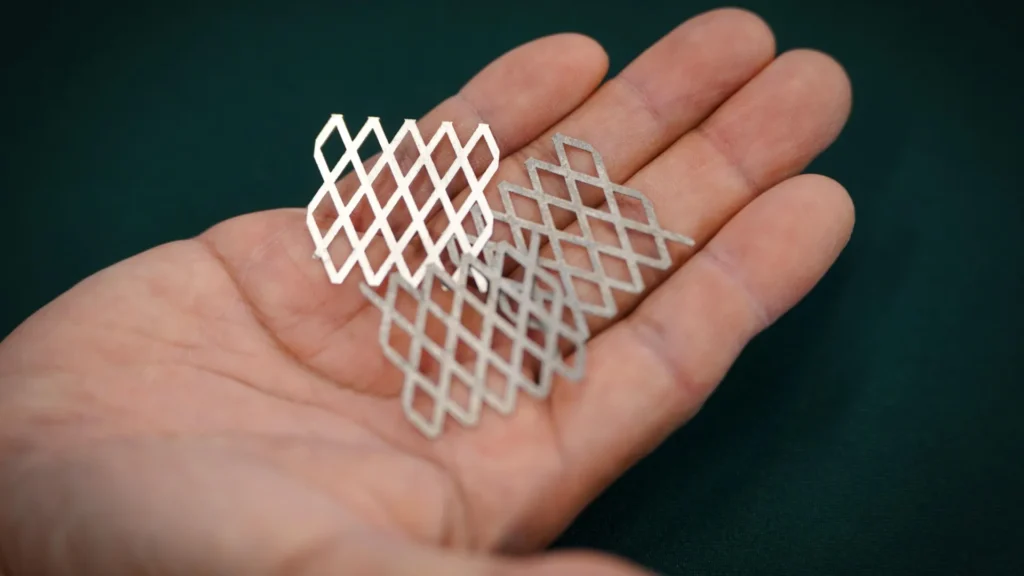
While the laboratory results for SS-H₂ are exceptionally promising, the transition from experimental material to widespread industrial deployment still presents significant engineering challenges. Electrolyzers require components in various practical forms, such as intricate metal meshes and foams, not just simple bulk materials. Scaling up production to these complex geometries while maintaining the material’s integrity and performance is a critical next step.
Nevertheless, Professor Huang’s team is already actively engaged in moving SS-H₂ toward large-scale industrialization. "From experimental materials to real products, such as meshes and foams, for water electrolyzers, there are still challenging tasks at hand," Professor Huang acknowledges. "Currently, we have made a big step toward industrialization. Tons of SS-H₂-based wire has been produced in collaboration with a factory from the Mainland. We are moving forward in applying the more economical SS-H₂ in hydrogen production from renewable sources." This collaboration signifies a crucial bridge between academic research and practical manufacturing, indicating a strong commitment to commercializing the technology.
The successful integration of SS-H₂ into commercial electrolyzers will depend on continued rigorous testing, optimization for various operational conditions, and robust manufacturing processes. If SS-H₂ proves its reliability and durability in large-scale industrial settings, its unique combination of high corrosion resistance and drastically lower material costs positions it as a potential game-changer. This innovation could provide a cheaper, more sustainable pathway to green hydrogen production from renewable energy and seawater, ultimately accelerating the global transition to a cleaner energy future. Industry experts and energy stakeholders are likely to follow the progress of SS-H₂ with keen interest, as the quest for cost-effective and environmentally sound green hydrogen solutions intensifies. The University of Hong Kong’s latest Super Steel breakthrough represents not just an advancement in material science, but a beacon of hope for a more sustainable planet.