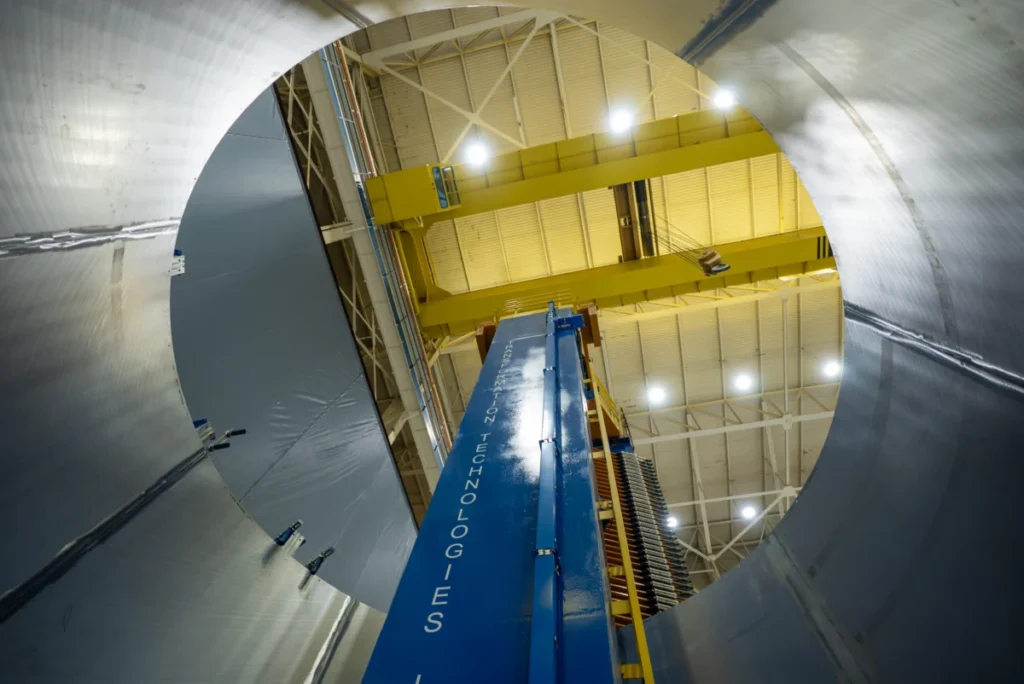
Inside a cavernous, multi-story warehouse at NASA’s Marshall Space Flight Center in Huntsville, Alabama, a massive metallic cylinder, destined to be a crucial component of the Space Launch System (SLS) rocket, undergoes a meticulous transformation. A sophisticated cutting machine systematically works its way through the thick metal, leaving behind a shimmering trail of fine shavings and a distinct metallic aroma. Engineers, their focus unwavering, monitor the operation from a bank of computers, tracking the precise rate of progress: approximately 13 centimeters per minute, a pace that slows slightly at the intricate joins of the structure. The process requires four complete passes to finalize the cut.
This precisely executed trimming operation signifies a pivotal advancement in the development of hardware for the Artemis III mission, now slated for orbit in the upcoming year. The spacer, a critical element being modified, will serve as part of the SLS rocket’s upper stage for this ambitious undertaking. This particular phase of work is a direct result of NASA’s strategic decision in February to reconfigure Artemis III. Initially envisioned as the program’s inaugural lunar landing mission, the objective has been shifted to a demonstration mission in low-Earth orbit. In this revised scenario, an SLS rocket will propel four astronauts aboard an Orion capsule to practice rendezvous and docking maneuvers with test articles representing Blue Origin’s Blue Moon and SpaceX’s Starship lunar landers.
This accelerated timeline and altered mission profile have spurred considerable ingenuity among NASA engineers. "We’ve managed to come up with some flight hardware in a very short amount of time," remarked Brent Gaddes, the adapter and spacer lead at NASA Marshall, during a site visit on August 13th. The need to accommodate the new Artemis III mission objectives, which do not require the full thrust of the standard SLS upper stage – the Interim Cryogenic Propulsion Stage (ICPS) designed to propel Orion towards lunar orbit – prompted a significant adjustment.
A "Hodgepodge" Rocket for Artemis III: Resourcefulness in Action
In April, NASA made the strategic decision to substitute the ICPS with a spacer for the Artemis III mission. This allows the sole remaining ICPS to be reserved for Artemis IV, thereby increasing the probability of keeping the original lunar landing target for that mission on schedule for 2028. Concurrently, NASA is actively pursuing a standardization of the SLS design. This initiative involves foregoing a long-envisioned upgrade with a bespoke upper stage in favor of adapting an existing commercial design, a move aimed at streamlining future production and increasing launch cadence. With the Artemis III launch target of 2027 rapidly approaching, preparations for this flight and subsequent missions are in full swing at NASA Marshall, the center responsible for overseeing SLS development and the Human Landing Systems program.
John Blevins, NASA’s chief engineer for SLS, described the current state of Artemis III’s rocket as a "hodgepodge" due to the extensive repurposing of existing hardware and test articles to meet the stringent deadline. This resourceful approach is central to the mission’s feasibility. For the spacer, engineers opted for a "barrel" shape, meticulously designed with two flanges to replicate the critical barrel section of the ICPS. "The outer mold line and interfaces will remain the same," explained Patrick Hull, the engineering lead for the center’s Spacecraft/Payload Integration and Evolution Office.
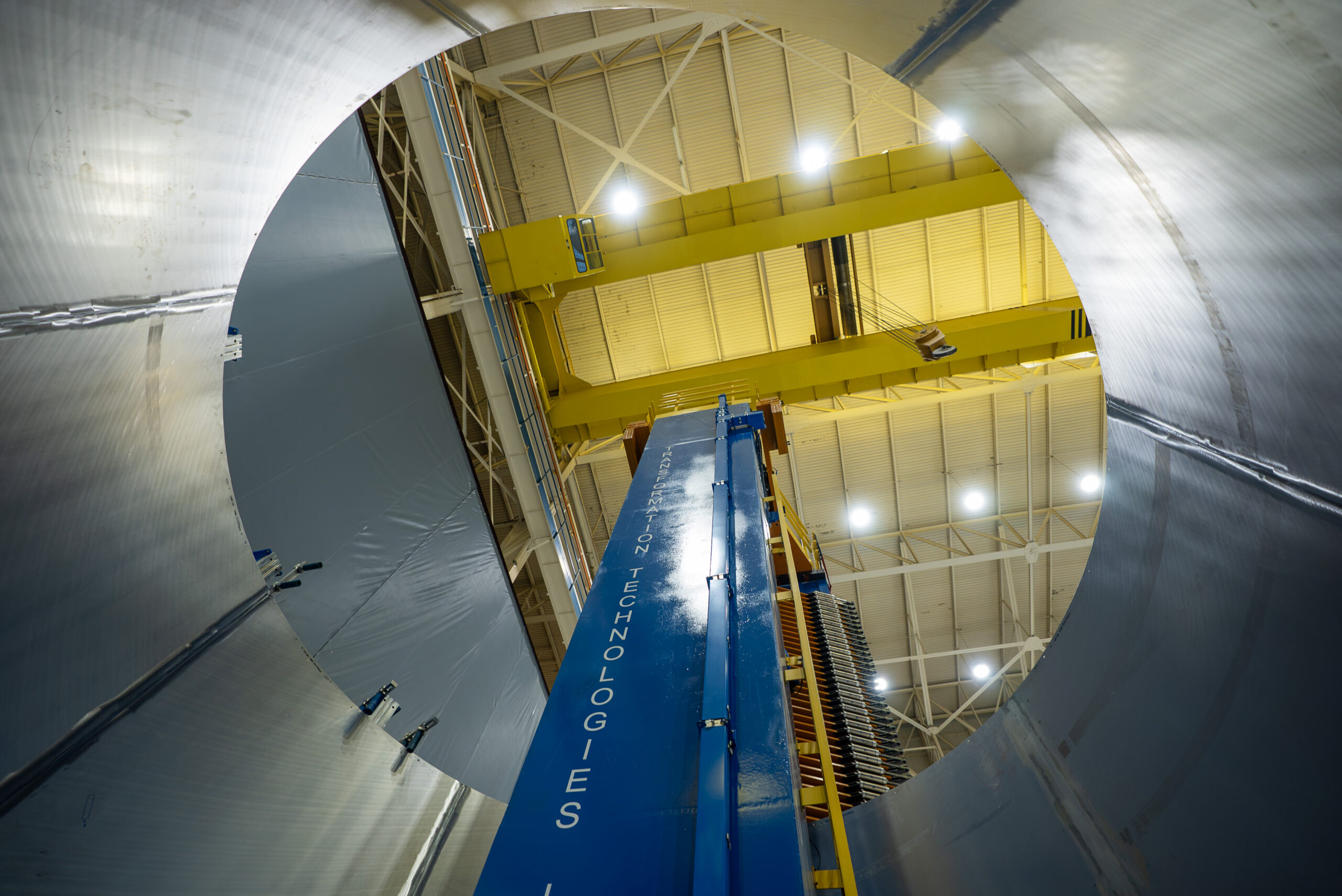
The imperative to avoid delays associated with procuring new materials led to an innovative solution: utilizing aged but thoroughly vetted components. "We found old material – 30-year-old material – and studied it, inspected it, measured it and cleaned it up," Hull elaborated. This repurposed material originates from the external tanks of the Space Shuttle program. Further augmenting this resourceful strategy, engineers sourced a ring forging from the "boneyard" – a storage facility for retired aerospace assets – which was a leftover from the Ares program.
The timeline for this undertaking is remarkably compressed. "We started this work in April, and here we are in August. We have a barrel built. We have rings built, and we are aiming for a December completion date. This will be a total of an eight-month build for flight hardware," Hull stated. This accelerated development cycle underscores the program’s agility in adapting to evolving mission requirements.
Simulating the Future: Rigorous Testing in the SLS Systems Integration Lab
In parallel with the modifications to the rocket’s upper stage, engineers are conducting extensive launch simulations within the center’s SLS Systems Integration Lab. This state-of-the-art facility integrates mockup hardware with actual flight software, offering a realistic environment for testing. The lab features a massive, semicircular rack, approximately the width of the rocket’s core stage, equipped with representative avionics and flight computers. Notably, this entire setup is intentionally configured upside down to enhance accessibility for engineers working on these critical systems.
Dustin Baker, the facility’s testing lead, and Ariel Kramer, the lab manager, highlighted the focused nature of their testing efforts. "The testing that we’re going to focus on is the changes from Artemis II," Baker said, emphasizing that these modifications are minimal and primarily centered around the new spacer configuration. "We’ve already done the development testing and the dry runs," he added, with formal verification testing scheduled to commence in October.
The crucial adapters required to connect the spacer to the core stage below and the Orion capsule above are also being repurposed. Blevins confirmed that structural test articles, originally built and tested prior to the Artemis I mission in 2022, are being utilized. This strategic decision allows the already manufactured flight versions of the Orion Stage Adapter (OSA) and Launch Vehicle Stage Adapter (LVSA), which were designed for integration with the ICPS, to be preserved for the Artemis IV mission.
The LVSA test article, according to Blevins, was not initially expected to be used for a flight mission. However, it has "earned its way in" for Artemis III, with the decision to incorporate it made "literally just weeks ago." The OSA test article, being "more overbuilt," offered a greater degree of confidence for repurposing from the outset. Gaddes provided further insight into the OSA’s preparation, describing its recent relocation from the cleanroom to the paint shop for exterior coating.
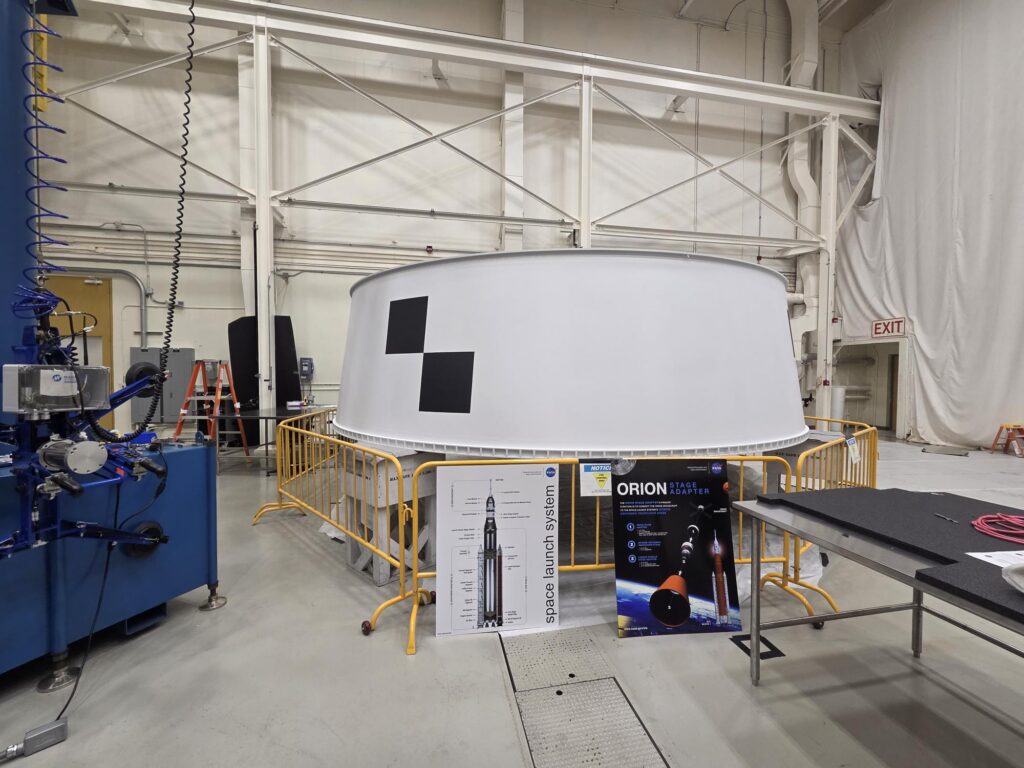
The OSA test article also incorporates a repurposed component for its diaphragm, the bowl-shaped internal layer designed to protect the Orion capsule. "We had materials left over from Block 1B," Gaddes explained, referring to a canceled SLS upgrade that was to feature a new Exploration Upper Stage. "We had all that composite material sitting in the freezer with a finite shelf life," he continued, prompting Marshall engineers to utilize it for a new diaphragm, which has since undergone precise machining to allow for bolting into the structural test article. Despite this unique amalgamation of hardware, Hull expressed confidence that, "if you’re a ways away, the rocket’s going to look like Artemis I and Artemis II."
A Choreographed Dance of Lunar Landers: Testing for the Moon
While Blue Origin and SpaceX have conducted extensive ground testing of their respective lunar lander docking systems, Artemis III will mark the inaugural orbital deployment of these technologies. The approximately two-week mission is designed to feature Orion first docking with a Blue Moon Mark 2 test article. NASA has stated that "up to two crew members" will then enter its cabin. Subsequently, Orion is scheduled to rendezvous and dock with the Starship test lander, though astronauts will not enter this vehicle.
Kent Criswell, lead systems engineer for the Human Landing Systems program, conveyed strong confidence in the progress of both lander developments. "For Blue, [the work is] to build their lunar crew module," he stated. A Blue Origin spokesperson confirmed that the company’s recent collaborative efforts with NASA Marshall have concentrated on testing the BT-7 thrusters crucial for their lander.
Regarding SpaceX, Criswell indicated that the company will select a Starship vehicle from its production line and modify it with the necessary docking adapter, confirming they are "on track." While SpaceX did not provide a direct comment, NASA Administrator Jared Isaacman recently indicated that the company "has already started cutting hardware for that test vehicle."
The remaining milestones for the lander program include "multiple design reviews," Criswell noted. He anticipated that a "really big meeting" will soon address how the companies’ testing efforts will "verify that [they’re] building the right thing to meet our requirements." Isaacman echoed this optimism during a mid-August press conference at Kennedy Space Center, emphasizing the significant value of the Artemis III mission in mitigating risks for future lunar expeditions, including Artemis IV.
Standardizing SLS for Increased Launch Cadence
Administrator Isaacman has articulated a clear objective: to elevate the SLS launch cadence to at least one mission annually, commencing with Artemis III. In pursuit of this goal, NASA awarded a contract in March to United Launch Alliance (ULA) for the Centaur V upper stage, which powers ULA’s Vulcan Centaur rockets. This new configuration is slated to debut on Artemis V, currently targeted for late 2028.
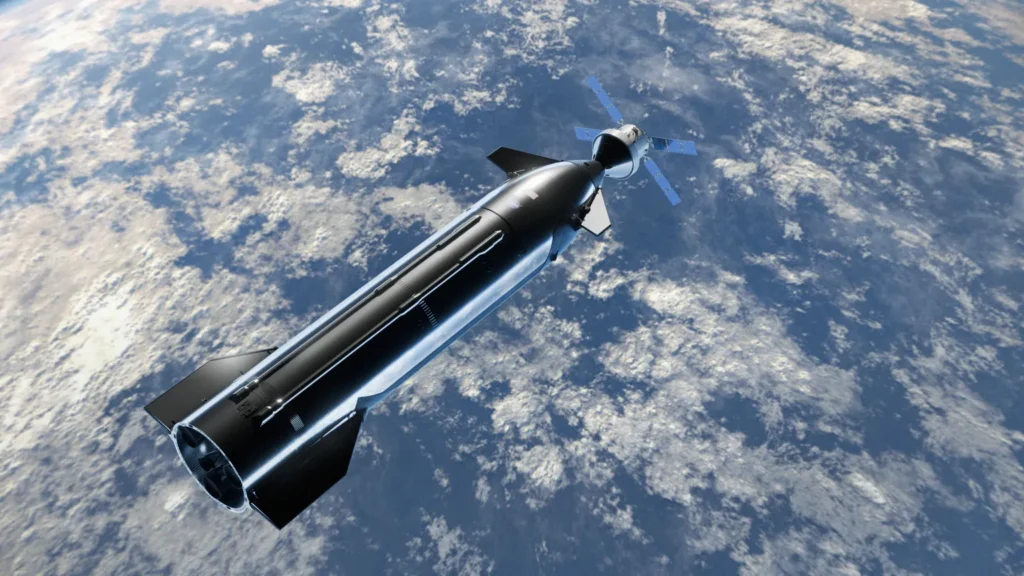
The Centaur V is projected to "be able to send bigger payloads deeper than ICPS," according to Blevins, though it is not as large or as capable as the originally envisioned Exploration Upper Stage (EUS) design. The Centaur V features two RL10 engines, in contrast to the ICPS’s single engine, and possesses slightly larger dimensions. Gaddes confirmed that NASA is actively engaged in designing new adapters to accommodate the Vulcan stage.
The Block 1B upgrade had planned for the SLS flight computers to be housed within the EUS. However, under the current standardization plan, these computers will remain within the core stage, mirroring the original configuration. Blevins clarified that the ICPS was always intended as a temporary solution, and the Centaur V is being integrated with a long-term perspective. This involves closer collaboration with ULA’s software developers and NASA to ensure critical crew safety features are incorporated. A ULA spokesperson expressed enthusiasm for the ongoing collaboration, stating, "we look forward to working through this and continuing our support."
Wind tunnel testing of the Centaur V is progressing "well underway" at NASA’s Ames Research Center. Blevins highlighted that crucial testing is being conducted this week to determine the optimal flight parameters for the new stage. While he characterized the design as "strategically complete," Blevins acknowledged that NASA anticipates making some modifications based on the ongoing test results. He concluded by emphasizing the successful standardization of the core stage and expressed confidence that the Centaur V integration will be the final step in achieving comprehensive mission standardization for the SLS program. This strategic evolution of the SLS program, driven by both ambitious exploration goals and pragmatic engineering solutions, signals a robust commitment to advancing human spaceflight capabilities.