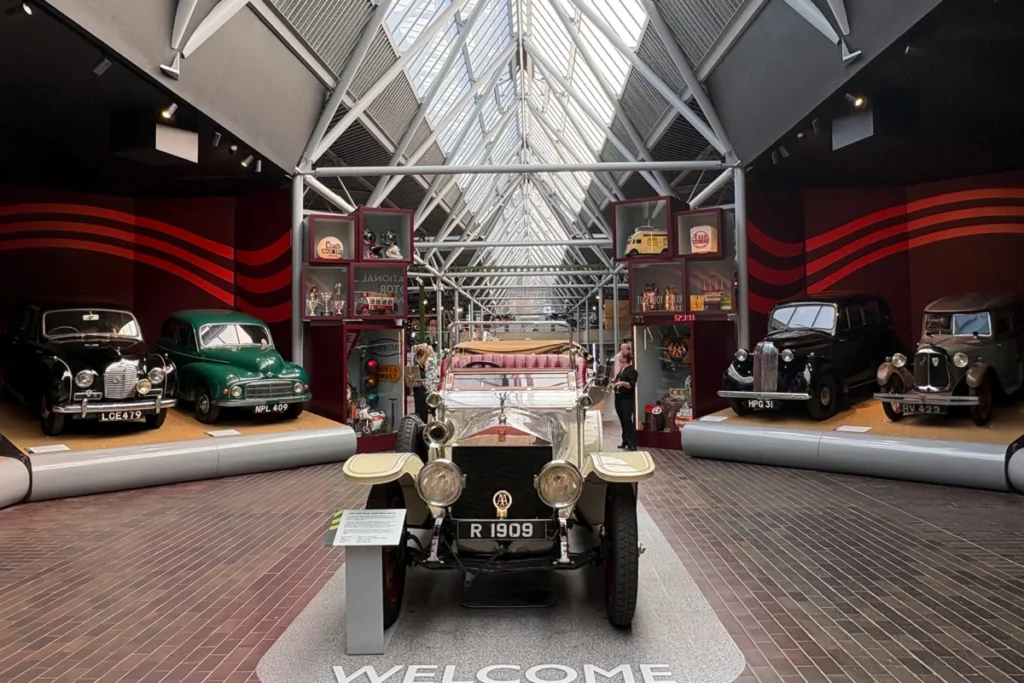
The future of one of Britain’s most iconic motoring heritage sites, the National Motor Museum at Beaulieu, has been plunged into uncertainty following the National Motor Museum Trust’s announcement of plans to relocate. This significant development emerges from behind-the-scenes tensions concerning funding, governance, and the long-term strategic direction of the esteemed institution. The trust confirmed this week that it has initiated a search for a new home as its current lease at Beaulieu approaches its conclusion.
The trust asserts that a move will provide an unparalleled opportunity to modernise the museum, significantly expand its crucial educational remit, and more effectively fulfil its national mandate as a custodian of automotive history. While this announcement may raise concerns among enthusiasts and the public, the trust has been quick to reassure visitors that there will be no immediate changes to the visitor experience. The current lease still has four years remaining, providing a substantial period for transition planning.
In parallel, Beaulieu Enterprises Limited, the commercial entity responsible for the grounds and broader Beaulieu attraction, has issued its own statement aiming to allay public apprehension. The company has pledged that a motor museum will continue to operate at the Beaulieu site, irrespective of the National Motor Museum Trust’s final decision. Beaulieu Enterprises Limited stated that the day-to-day visitor experience will remain largely unchanged, with motoring events continuing as scheduled. Furthermore, they highlighted that a "significant amount of the vehicles" currently on display are either directly owned by or on loan from the esteemed Montagu family, who have been intrinsically linked with Beaulieu for generations.
However, insights from a source with deep, behind-the-scenes knowledge of the situation reveal a far more intricate and contentious narrative underpinning these carefully worded public statements. This individual, who requested anonymity due to the sensitive nature of the discussions, has shed light on the complex financial and governance disagreements that appear to have precipitated this potential relocation.
The Ambitious Strategy and the Funding Hurdle
According to the well-placed source, the National Motor Museum Trust has, over several years, been meticulously developing an ambitious and forward-thinking strategy. This strategy was designed not only to modernise the museum’s facilities and exhibition approach but also to secure substantial capital investment. A primary target for this funding was the National Lottery Heritage Fund, a prestigious body that provides grants for significant heritage projects across the United Kingdom.
Crucially, the source revealed that securing this vital National Lottery Heritage Fund grant was contingent upon a revised collaboration agreement between the National Motor Museum Trust and Beaulieu Enterprises Limited. This revised agreement would have necessitated significant changes to the financial relationship and operational dynamics between the two organisations, addressing long-standing disparities in revenue sharing and governance.
"The situation is that there was no new lease to be granted," the source stated, providing a direct insight into the deadlock. "And the split of gate receipts is such that the trust couldn’t continue there in a viable fashion, and they couldn’t get the lottery money without changing the fundamental structure. So they decided to move." This statement suggests that the existing financial arrangements were not only unsustainable for the trust’s development aspirations but also a fundamental barrier to unlocking external funding crucial for its future.
Financial Disparities and Revenue Sharing
Autocar understands that the current entry fee for Beaulieu, set at £27.56, allocated only a very small proportion of this revenue directly to the National Motor Museum Trust. This entry fee, it is important to note, grants access not only to the motor museum but also to the historic Palace House, its meticulously maintained gardens, and the ruins of Beaulieu Abbey, all of which contribute to the overall visitor appeal of the Beaulieu estate.
The source further alleged that the National Motor Museum is responsible for generating approximately three-quarters of Beaulieu’s total visitor numbers. Despite this significant contribution to visitor footfall and, by extension, revenue, the museum reportedly does not receive a fair or proportionate split of the admission income. This perceived inequity in revenue sharing has been a persistent point of contention.
Further complicating matters, negotiations concerning a new lease agreement and revised commercial arrangements between the trust and Beaulieu Enterprises Limited reportedly broke down last month. This breakdown in dialogue signifies a critical juncture, indicating that attempts to find a mutually agreeable path forward within the existing framework were unsuccessful.
The Question of Collection Ownership
The disagreement appears to extend beyond financial arrangements and lease terms, reaching into the contentious issue of ownership of the museum’s extensive and invaluable collection of vehicles. Beaulieu Enterprises Limited has publicly stated that "a significant amount of vehicles in the museum are either on loan or owned by the Montagu family." This statement seeks to underscore the family’s historical connection and proprietary interest in a substantial portion of the displayed automotive heritage.
However, the well-placed source strongly disputed this characterisation, offering a starkly different perspective on ownership. "The trust owns around 250 cars; Beaulieu owns 29," the source asserted. This assertion, if accurate, suggests that the vast majority of the collection is indeed owned by the National Motor Museum Trust, directly challenging Beaulieu’s portrayal of ownership and loan arrangements. This fundamental difference in perceived ownership could have significant implications for any future operational arrangements, whether at Beaulieu or a new location.
A Potentially Accelerated Departure
The breakdown in relations between the National Motor Museum Trust and Beaulieu Enterprises Limited is likely to result in the trust accelerating its departure from Beaulieu. While the current lease extends until 2030, the escalating tensions and the inability to reach new agreements suggest that the museum might seek to move far sooner than initially anticipated. This potential acceleration, driven by the impasse, adds another layer of urgency and complexity to the situation.
Due to the sudden and unresolved nature of the split, the National Motor Museum Trust has not yet identified or secured a new location. The search is underway, but the process of finding a suitable site for an institution of this scale and significance is a considerable undertaking.
Requirements for a New Home
The source indicated that any prospective new location would need to meet stringent criteria. "Needs at least 50,000 square feet," the source specified, highlighting the substantial space required for the museum’s collection, exhibition areas, conservation facilities, and administrative functions. Furthermore, the trust is reportedly looking for a site that is "likely to be better geographically placed to serve more of the UK population." This suggests a strategic consideration for accessibility and audience reach, aiming to make the museum more convenient for a wider demographic of visitors across the country.
Historical Context and Significance
The National Motor Museum, established in 1972, is a cornerstone of British automotive history. It houses a collection of over 250 vehicles, tracing the evolution of motoring from the dawn of the 20th century to the present day. Its significance extends beyond mere display; it is a vital centre for research, conservation, and education, playing a crucial role in preserving and interpreting the nation’s motor heritage for future generations. Beaulieu, as its home for over five decades, has become synonymous with the museum, creating a deep-rooted association in the public consciousness. The estate itself, with its rich history dating back to the 13th century, provides a picturesque and historically resonant backdrop for the automotive displays. The Montagu family, custodians of Beaulieu and pioneers in the British motor industry, have been instrumental in the museum’s establishment and ongoing success. Lord Montagu of Beaulieu, a renowned motoring enthusiast and conservationist, was a driving force behind its creation, building upon his family’s long-standing connection with the automobile.
Potential Repercussions and Future Outlook
The potential departure of the National Motor Museum from Beaulieu carries significant implications. For Beaulieu Enterprises, it could mean a substantial loss of visitor numbers and revenue, given the museum’s role as a primary draw. The estate would need to adapt and potentially re-evaluate its offering to compensate for the absence of its most prominent attraction.
For the National Motor Museum Trust, the move represents a monumental challenge and opportunity. Securing a new, suitable location will require substantial investment, careful planning, and effective fundraising. However, it also presents a chance to reimagine the museum from the ground up, incorporating modern exhibition techniques, enhancing visitor engagement, and solidifying its position as a leading national heritage institution.
The public reaction is likely to be mixed, with many expressing sadness at the prospect of the museum leaving its historic home. However, the trust’s stated aims of modernisation and expansion suggest a commitment to safeguarding and enhancing the museum’s long-term viability and its ability to serve its national purpose.
The coming months will be critical as the National Motor Museum Trust navigates the complex process of finding a new home. The outcome of these discussions and decisions will undoubtedly shape the future of a cherished British institution and its invaluable contribution to the nation’s automotive heritage. The hope remains that a resolution can be found that preserves the integrity of the collection and ensures its continued accessibility and educational value for all. Until a new site is confirmed, the Beaulieu estate will continue to host the museum, allowing visitors to experience its treasures for the remaining years of the current lease. The exact timeline for the potential move, however, remains fluid, dictated by the pace of negotiations and the successful identification and acquisition of a new site.