The conventional understanding of the cosmos, often taken for granted, posits a universe that is largely uniform across vast scales. However, a groundbreaking new study by an international team of astrophysicists suggests that the universe may, in fact, be asymmetric or "lopsided," appearing different in various directions. This provocative finding, published recently, directly challenges the core assumptions underpinning the prevailing "standard cosmological model," specifically the Lambda-CDM model, which has served as the bedrock of modern cosmology for decades. The implications of such an asymmetry could necessitate a fundamental rethinking of cosmic structure, dynamics, and even the very origins of the universe.
The Bedrock of Modern Cosmology: Isotropy and Homogeneity
For much of the 20th and 21st centuries, the standard cosmological model, often referred to as Lambda-CDM (Lambda-Cold Dark Matter), has provided the most successful framework for describing the universe’s evolution and large-scale structure. A cornerstone of this model is the "Cosmological Principle," which asserts that on sufficiently large scales, the universe is both isotropic and homogeneous. Isotropy implies that the universe looks the same in all directions from any given point, while homogeneity suggests that it has the same properties (density, temperature, etc.) at every point in space. These principles vastly simplify the complex equations of Albert Einstein’s theory of General Relativity, leading to the Friedmann-Lemaître-Robertson-Walker (FLRW) metric – a mathematical description of the spacetime geometry of a homogeneous, isotropic, expanding universe.
The FLRW description has been incredibly powerful, allowing cosmologists to model the universe’s expansion, the formation of large-scale structures like galaxies and galaxy clusters, and the abundance of light elements. The observational evidence for these assumptions largely stems from the Cosmic Microwave Background (CMB). Discovered in 1964 by Arno Penzias and Robert Wilson, the CMB is the faint afterglow radiation from the Big Bang, a snapshot of the universe when it was only about 380,000 years old. Its remarkable uniformity across the entire sky, varying by only about one part in a hundred thousand, has long been cited as compelling evidence for a largely isotropic and homogeneous early universe. This extraordinary smoothness has given cosmologists confidence in applying the maximally symmetric FLRW description to model the entire cosmos.
Emerging Tensions: Cracks in the Standard Model
Despite its successes, the Lambda-CDM model has faced increasing scrutiny in recent years due due to several persistent "tensions" – significant disagreements between different datasets or between theoretical predictions and observations. These tensions hint that our understanding of the universe might be incomplete, or even fundamentally flawed in certain aspects.
One of the most widely debated of these discrepancies is the "Hubble Tension." Named after Edwin Hubble, who in 1929 famously discovered that the universe is expanding, this tension refers to a significant mismatch in the measured rate of cosmic expansion. Measurements of the Hubble constant (H₀) derived from observations of the early universe, primarily from the CMB (e.g., Planck satellite data), consistently yield a lower expansion rate (around 67-68 km/s/Mpc) compared to measurements from the nearby, more recent universe using local astrophysical probes like Type Ia supernovae (e.g., Hubble Space Telescope, Gaia satellite data), which indicate a higher rate (around 73-74 km/s/Mpc). This persistent 8-10% difference has resisted numerous attempts at reconciliation, prompting some physicists to consider new physics beyond the standard model.
While the Hubble Tension has garnered considerable attention, the new study brings to the forefront another, potentially even more profound challenge: the "cosmic dipole anomaly." This anomaly, the focus of the recently published paper, strikes at the very heart of the isotropy assumption, suggesting that the universe might not look the same in all directions even on the largest scales, thereby posing a serious and direct challenge to the FLRW metric and, by extension, the entire Lambda-CDM framework.
Unpacking the Cosmic Dipole Anomaly
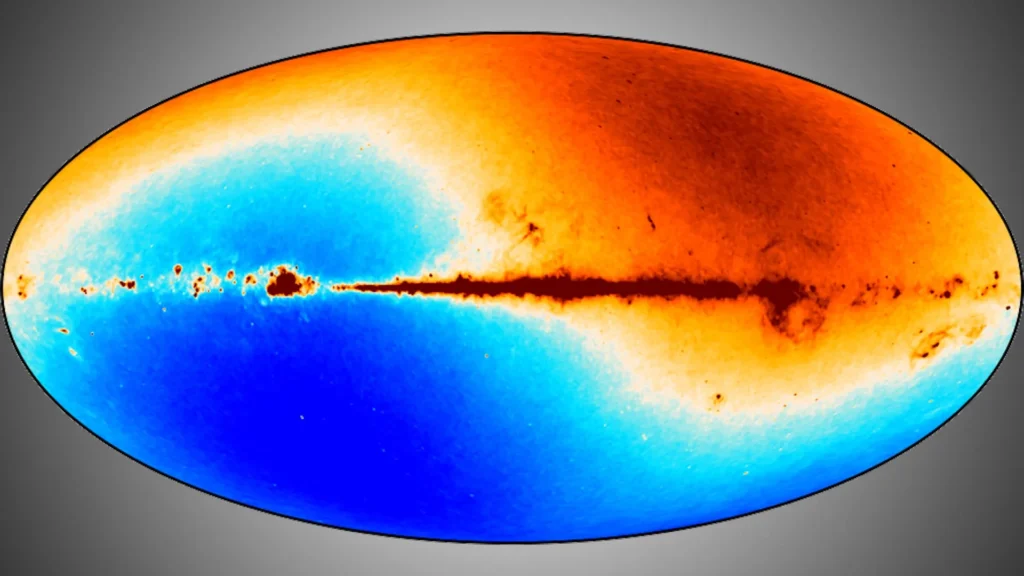
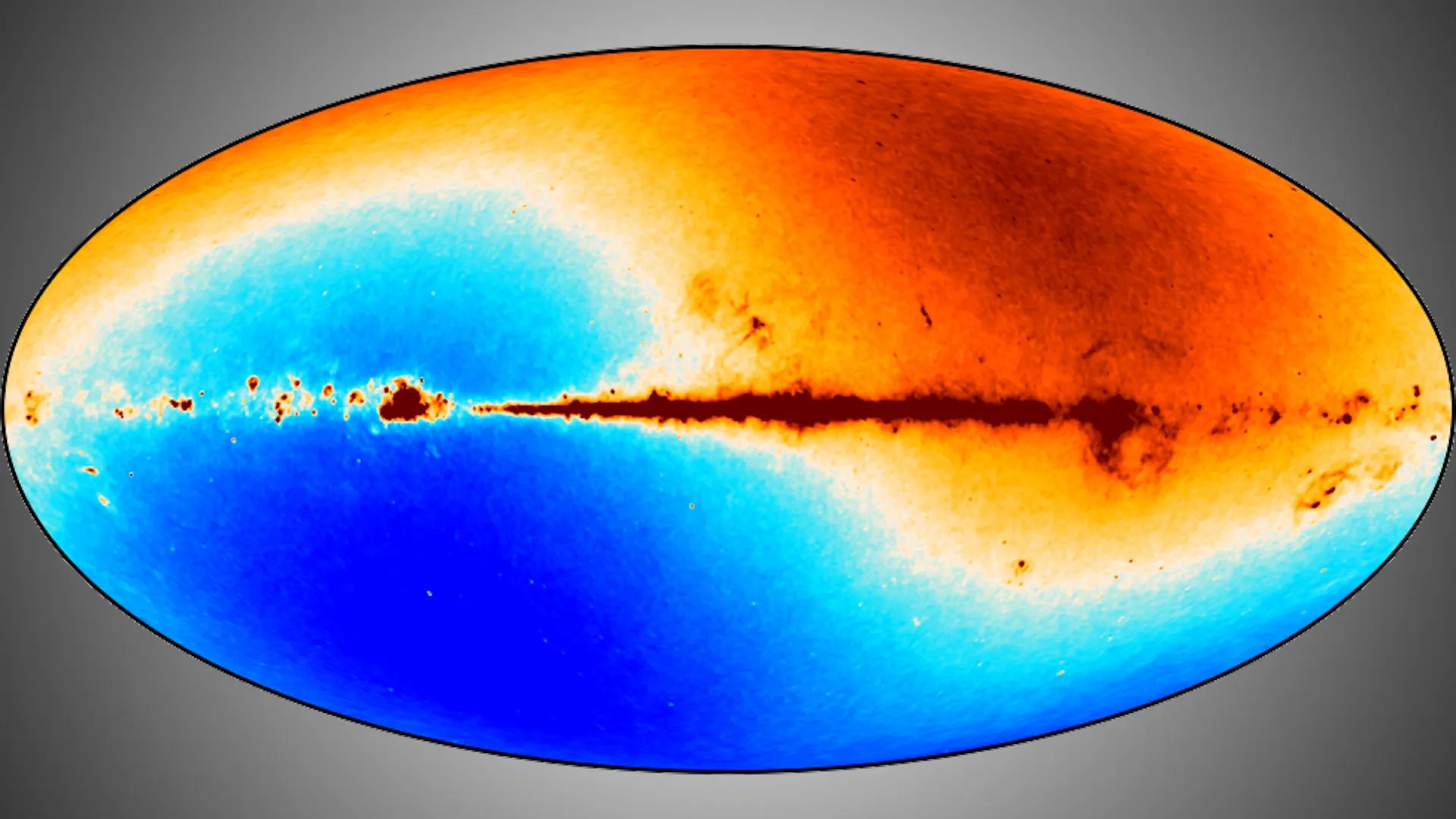
To understand the cosmic dipole anomaly, it’s crucial to first revisit the CMB. While incredibly uniform, the CMB does exhibit tiny temperature fluctuations. One of the most prominent and well-understood of these is the "CMB dipole anisotropy." This manifests as a slight temperature difference across the sky: one hemisphere appears marginally hotter, while the opposite hemisphere is cooler, by about one part in a thousand. This observed dipole is widely interpreted as a kinematic effect, caused by the motion of our own Solar System and the Local Group of galaxies relative to the CMB rest frame. As Earth moves through space, we observe the CMB photons shifted to higher energies (hotter) in the direction of our motion and lower energies (cooler) in the opposite direction, due to the Doppler effect. This kinematic dipole is perfectly consistent with the standard cosmological model, as it’s a local phenomenon rather than an intrinsic property of the universe itself.
However, the question then arises: if our local motion causes such a dipole in the CMB, should we not observe a corresponding "dipole" in the distribution of distant astronomical sources across the sky? In 1984, cosmologists George Ellis and John Baldwin proposed a critical test. They asked whether a similar dipole anisotropy exists in the sky distribution of very distant sources, such as radio galaxies and quasars. The emphasis on "very distant" is crucial; nearby sources could exhibit spurious clustering patterns that create a local dipole unrelated to our motion or the universe’s fundamental properties.
The "Ellis-Baldwin test" posits that if the FLRW assumption of a symmetrical universe is correct, then the observed dipole in the distribution of these distant astronomical sources should be directly determined and consistent with the kinematic dipole observed in the CMB. In other words, if we are moving relative to the cosmic rest frame, then the number density or flux of distant galaxies should also appear slightly boosted in the direction of our motion and diminished in the opposite direction. Consistency between the CMB dipole and the matter dipole would provide strong support for the standard Lambda-CDM model and the FLRW description. Conversely, a significant discord would directly challenge these foundational assumptions.
Failing the Ellis-Baldwin Test: The Universe’s Lopsided Revelation
For decades, the Ellis-Baldwin test remained largely theoretical, awaiting the advent of sufficiently precise and comprehensive astronomical datasets. The requirement for meticulously cataloging vast numbers of extremely distant sources across the entire sky was a formidable observational challenge. However, thanks to advancements in telescope technology and survey capabilities, such data catalogues have only recently become available, enabling a rigorous application of the test.
The outcome, as reported by the researchers, is stark: the universe appears to fail the Ellis-Baldwin test. The observed variation in the distribution of distant matter, specifically in terms of source counts or luminosity, does not match that predicted by the kinematic CMB dipole. Instead, recent studies utilizing a range of astronomical surveys have consistently found an anomalous dipole in the distribution of radio galaxies, quasars, and other distant sources that is significantly larger in magnitude and often misaligned in direction compared to the CMB dipole.
Crucially, this result has been obtained through independent observations across different wavelengths and using different types of instruments. Terrestrial radio telescopes, such as those used in large-scale radio surveys, and satellites observing at mid-infrared wavelengths have both yielded similar findings. This independent verification across disparate observational techniques, each with its own potential sources of error and systematic biases, lends significant credence to the robustness of the cosmic dipole anomaly. It suggests that the discrepancy is not merely an instrumental artifact but rather a genuine feature of the universe.
Profound Implications for Fundamental Physics
The cosmic dipole anomaly, therefore, presents a far more fundamental challenge to the standard cosmological model than even the Hubble Tension. While the Hubble Tension might be resolved by tweaking parameters within the Lambda-CDM framework or introducing new components like early dark energy, the dipole anomaly directly undermines the assumption of isotropy that underpins the FLRW metric itself. If the universe is not isotropic on large scales, then the FLRW description – which assumes perfect symmetry – is inadequate, and the entire mathematical framework of the Lambda-CDM model built upon it collapses.
The implications are truly monumental. It suggests that our current understanding of the cosmos, from its earliest moments to its present-day structure, might be fundamentally incomplete or even incorrect. The astronomical community, while increasingly acknowledging the Hubble Tension, has been slower to embrace the profound implications of the cosmic dipole anomaly. This hesitancy is perhaps understandable, as there is no easy patch or minor modification that can resolve this issue. Abandoning the FLRW description means going back to square one, requiring cosmologists to develop entirely new theoretical frameworks that can accommodate an anisotropic universe.
Such a shift would necessitate exploring alternative cosmological models, perhaps those involving a preferred direction in space or a more complex spacetime geometry than currently assumed. It could also have profound implications for our understanding of dark matter and dark energy, the mysterious components that make up some 95% of the universe’s energy density but whose nature remains elusive. If the universe is anisotropic, the interpretation of cosmic acceleration, for instance, might need to be re-evaluated.
The Path Forward: New Data, New Tools, New Models
Despite the daunting nature of this challenge, the scientific community is poised for a new era of cosmological discovery. An "avalanche of data" is expected in the coming years from next-generation observatories and satellites. Missions like the European Space Agency’s Euclid satellite, NASA’s SPHEREx (Spectro-Photometer for the History of the Universe, Epoch of Reionization and Ices Explorer), the Vera C. Rubin Observatory’s Legacy Survey of Space and Time (LSST), and the Square Kilometre Array (SKA) will provide unprecedented levels of detail and statistical power across vast swathes of the cosmos.
These new datasets will enable more precise measurements of cosmic structures, the distribution of matter, and the expansion history of the universe. They will allow for even more rigorous testing of the cosmic dipole anomaly and other tensions, potentially confirming or refining the current findings. The sheer volume and complexity of this incoming data will also necessitate the development of advanced analytical tools, particularly those leveraging recent advances in artificial intelligence (AI) and machine learning. Machine learning algorithms are uniquely suited to identifying subtle patterns, anomalies, and correlations within massive datasets, potentially uncovering new insights that human analysis alone might miss. They could be instrumental in sifting through the noise to confirm the reality of cosmic anisotropy or even in helping to construct entirely new cosmological models from the ground up.
The potential impact of these developments on fundamental physics and our understanding of the universe cannot be overstated. Should the cosmic dipole anomaly be definitively confirmed as an intrinsic feature of the cosmos, it would trigger a scientific revolution akin to the shift from Newtonian physics to Einsteinian relativity. It would force humanity to confront a universe that is far more complex and perhaps less symmetrical than we ever imagined, opening new avenues of inquiry into cosmic origins, evolution, and its ultimate fate. The journey to constructing a new cosmological model will be challenging, but it promises to be one of the most exciting and transformative endeavors in the history of science.