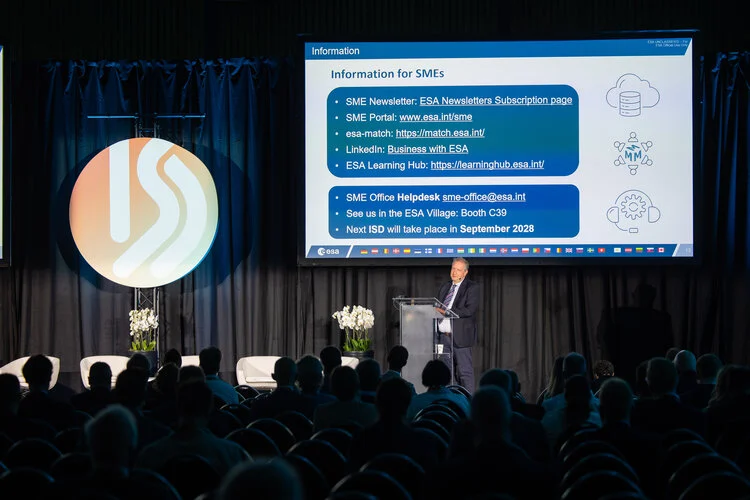
The European Space Debris Event (ISD) 2026, a pivotal gathering for the space sector, commenced on September 16th, 2026, setting a robust agenda focused on fostering innovation, driving industrial competitiveness, and championing sustainable practices within the burgeoning European space economy. Hosted by the European Space Agency (ESA), the two-day event, held on September 16th and 17th, brought together leading figures from industry, government, and research to deliberate on critical challenges and opportunities shaping the future of space exploration and utilization. The proceedings highlighted ESA’s commitment to nurturing a vibrant ecosystem of small and medium-sized enterprises (SMEs), facilitating access to growth capital, and advancing cutting-edge technologies across diverse domains.
Day 1: Laying the Foundation for Space Innovation and Investment
The inaugural day of the ISD 2026 was marked by a series of high-level discussions and targeted sessions designed to energize the European space industry. The event officially opened with an inspiring address by Josef Aschbacher, Director General of ESA, who underscored the agency’s strategic vision and its unwavering dedication to supporting European space endeavors.
Empowering European Space SMEs: A Cornerstone of Growth
A significant portion of the first day’s program in Conference Hall A was dedicated to the critical role of European Space SMEs. The session titled "European Space SMEs: Powering Innovation, Competitiveness and Growth" featured insights from Jens Kauffmann, Head of ESA’s SME Section and CFO, and Hans Bracquen, Chairman of SME4SPACE. They were joined by industry leaders Linn Friis-Liby, Head of Future Programmes at AAC Clyde Space, and Fabiana Milza, Marketing and Sales Manager at T4i, along with Ernst K. Pfeiffer, CEO of HPS GmbH and Spokesman for AKRK. This panel emphasized the indispensable contribution of SMEs to the European space landscape, highlighting their agility, specialized expertise, and capacity for disruptive innovation. Discussions likely revolved around the challenges SMEs face in accessing markets, securing funding, and navigating complex regulatory frameworks, and how ESA’s initiatives are designed to alleviate these hurdles. The presence of multiple SME representatives signaled a strong focus on practical solutions and collaborative growth strategies.
Catalyzing Commercialization and Investment in the Space Sector
Following the SME-focused session, Conference Hall A hosted a pivotal discussion on the "European Joint Commercialisation Initiative," presented by Stella Strataki from the CASSINI program at the European Commission’s Directorate-General for Defence Industry and Space (DEFIS), and Fiammetta Diani, Head of Market, Downstream & Innovation at the European Union Agency for the Space Programme (EUSPA). This initiative aims to bridge the gap between technological advancements and market deployment, fostering a more robust commercial space sector.
The presentation was followed by a dynamic panel on "Raising Growth Capital in the Space Sector," featuring prominent venture capitalists and ESA finance experts. Wojtek Walniczek, partner at OTB Ventures, and Sebastian Bélinger Villanueva of NewSpace Capital, brought invaluable perspectives from the investment community, discussing current trends, investment criteria, and the growing attractiveness of space-related ventures. Gianluigi Baldesi, Head of the Ventures and Financing Office at ESA, provided an overview of ESA’s financial support mechanisms and its role in de-risking investments for private capital. The panel, moderated by Kais Barmawi, Commercial Expert at ESA’s Commercialisation, Industrial Policy and Procurement (CIP) directorate, aimed to demystify the process of securing significant funding for ambitious space projects, a crucial step for scaling innovative companies. A presentation PDF on this initiative was made available, suggesting a desire for transparency and continued engagement.
Recognizing Excellence: ESA Supplier Awards Ceremony
The day concluded with the prestigious ESA Supplier Awards Ceremony, a testament to ESA’s commitment to recognizing and celebrating the outstanding contributions of its industrial partners. Dietmar Pilz, Director of Technology, Engineering & Quality (TEC), Christine Klein, Director of Contracts, Finance and Operational Procurement (CFO), and Michael Griffith, Senior Industrial Policy Officer, were present to honor the awardees. This ceremony not only acknowledges past achievements but also serves as a powerful incentive for maintaining high standards of quality, innovation, and reliability across ESA’s supply chain. The event underscored the collaborative nature of space exploration, where successful missions are built on strong partnerships.
Networking and Collaboration
Throughout the day, multiple networking opportunities were provided. The ISD Networking Drinks & Canapés, held in the Catering and Registration Tent, offered a relaxed environment for participants to forge new connections and deepen existing relationships. Similar networking sessions also took place in Conference Hall B, the Technology Tent, Einstein, and Newton, facilitating cross-pollination of ideas and potential collaborations among attendees.
Day 2: Technological Frontiers and Sustainable Space Futures
The second day of the ISD 2026 shifted focus towards the technological underpinnings of future space missions and the imperative of sustainability. The Technology Tent became a hub for showcasing selected results from ESA’s extensive technology development projects, offering a glimpse into the innovations that will define the next generation of space capabilities.
Technological Advancements Across Key Domains
The Technology Tent buzzed with activity, beginning with a welcome address by Leopold Summerer, Head of ESA’s Technology Department, setting the stage for a day of in-depth technical discussions. Sessions covered a wide array of critical areas:
- Cybersecurity: With the increasing reliance on interconnected space systems, cybersecurity emerged as a paramount concern. Sessions introduced by Antonions Atlasis and Laurence Duquerroy delved into the latest advancements and challenges in securing space assets against evolving threats.
- Innovative Propulsion: Jamila Mansouri, Head of Propulsion, Aerothermodynamics & Flight Vehicles Engineering Division, led discussions on cutting-edge propulsion systems, crucial for enabling longer-duration missions, greater maneuverability, and more efficient transit within the solar system.
- Electronics and Electrical Engineering (EEE): Olivier Perat and Ali Zadeh highlighted advancements in EEE components, essential for the reliability and performance of spacecraft under extreme space conditions.
- Very Low Earth Orbit (VLEO): Antje Deckert, a System Engineer, introduced the concept and potential of VLEO operations, which could unlock new possibilities for Earth observation and satellite constellations.
- Earth Observation: Michele Castorina from ESA’s Phi-Lab Invest Office presented on the latest breakthroughs in Earth observation technologies, emphasizing their role in monitoring climate change, managing natural resources, and supporting disaster response.
- Artificial Intelligence (AI) and Digitalization: Nicoletta Wagner, Head of the Future Engineering Division, addressed the transformative impact of AI and digitalization on space missions, from mission planning and data analysis to autonomous operations.
- Sustainable Space: This was a particularly significant theme, with Tiago Soares and Ross Findlay leading sessions on developing environmentally responsible space practices. Discussions likely included strategies for mitigating space debris, promoting circular economy principles in space manufacturing, and reducing the environmental footprint of space activities.
- Optical Communications and 5G/6G Non-Terrestrial Networks: Kasia Balakier and Maria Guta explored the integration of optical communications and next-generation wireless technologies into satellite networks, promising enhanced data transfer rates and expanded connectivity.
- Industrialisation & Serialisation: Michael Mallon’s session focused on scaling up space technology production, a critical step for making space applications more accessible and cost-effective.
The Technology Tent also featured a crucial session on "How to work with ESA Technology Programmes," led by Alessandro Rapisarda, Nerea Socorro, King Lam, and Michele Castorini, providing practical guidance for industry players looking to collaborate with ESA on technological development. The signing of a GSTP activity with Exail also marked a concrete step in advancing specific technologies.
Sustainability and Economic Transformation in Focus
In Conference Hall B, discussions on sustainability continued with Andrea Vena, ESA’s Chief Sustainability Officer, and Tiago Soares, Head of Clean Space & Circular Economy Office, presenting on "Implementing Life Cycle Thinking and Ecodesign in ESA Space Projects." This session underscored ESA’s growing commitment to ensuring the long-term viability and environmental responsibility of space activities. Rita Rinaldo, Head of Applications Projects and Studies Division, also addressed the "BASS Enabling Applications Call," signaling opportunities for businesses to leverage space data and services for broader societal and economic benefits.
Exploration and Industrial Synergies
Conference Hall A hosted Angelique Van Ombergen, Chief Exploration Scientist, who discussed "Exploration Science and Industrial Opportunities." This session likely highlighted how advancements in scientific exploration can spur industrial development and create new market niches, fostering a symbiotic relationship between scientific discovery and commercial enterprise.
Technology Transfer and Cross-Industry Innovation
The Einstein room hosted a unique session titled "From Space to Textile and Back: Opportunities For Technology Transfer." This event, featuring astronaut Matthias Maurer and STAM srl (ESA Technology Broker Italy), explored the potential for cross-pollination of technologies between the space sector and the textile industry. Such initiatives are vital for maximizing the return on investment in space R&D and for finding novel applications for space-derived innovations in terrestrial markets.
Financial Instruments and Collaborative Agreements
In the Technology Tent, Guiomar Perez and Giusy Menghini provided essential information on "Q&A Opportunities under Calls for Proposals for GSTP and ARTES Programmes: Contracts and Cooperative Agreements." This session was critical for companies seeking to understand and access ESA’s funding instruments, including the General Support Technology Programme (GSTP) and the Advanced Research in Telecommunications Systems (ARTES) programme, which are instrumental in driving technological development and industrial competitiveness.
Addressing EIB Lending Facility
Conference Hall B also featured a session on the "EIB Lending Facility," with representatives from ESA and the European Investment Bank (EIB) to discuss financial instruments available to support space sector investments. This highlights the growing collaboration between public funding bodies and financial institutions to mobilize capital for the ambitious projects defining Europe’s space future.
The ISD 2026 concluded with a strong emphasis on the interconnectedness of innovation, industrial growth, and sustainability, signaling a clear trajectory for the European space sector towards a more robust, competitive, and responsible future. The event served as a vital platform for dialogue, partnership, and strategic alignment, reinforcing Europe’s position as a global leader in space.